




Operations
Fleet Personal-Use Charges Edge Higher in 2026
Nearly eight in 10 surveyed fleets allow personal use of company vehicles, while just over half of respondents report charging employees for the privilege.
 MENU
MENU SEARCH
Most organizations misunderstand fleet. The best managers make sure that doesn’t happen.

If you think fleet is simple, General Mills’ Mike Camnetar would like to have a word.
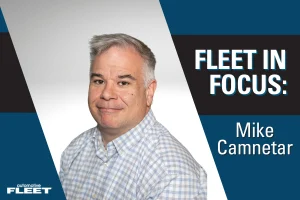
Mike Camnetar
Mike Camnetar has spent nearly three decades in fleet management, including stints at a vendor, running outsourced fleet management at GE Fleet Services, and managing General Mills' North American fleet. He serves on the NAFA board of directors and has spent full days riding along with grocery store sales reps to understand how the company’s vehicles are actually being used in the field.
He has also worked with colleagues who thought his job was simple.
“Up until last year,” he said in a recent interview, “I’d hear, ‘Oh, Mike just gives cars to people. Big deal. Anybody can do that.’”
That comment illustrates the gap between what fleet managers actually do and what the rest of their organization believes they do. Camnetar has some ways to change this.
Part of the issue, Camnetar said, is how fleet is structured in your organization. If you report into procurement, the conversation is almost always about cost-cutting. If you report to HR, it turns into employee satisfaction. If you report into operations, it’s uptime.
Each is legitimate, yet none really captures what a well-managed fleet program actually does. Fleet managers who don’t actively fill that gap will find others filling it for them, often badly.
“If you’re not educating the people around you on the dynamics of what you’re managing,” Camnetar said, “somebody else is going to walk in with a bright idea. Like, let’s put everybody on a car allowance because we could save money. And nobody’s done the math. Because they don’t understand the math.”
The car allowance example illustrates exactly how the visibility gap becomes a budget problem. Without a fleet manager who has built relationships and done the education work in advance, there is no one to push back with data. The idea gains momentum; the organization runs a hundred miles in the wrong direction, and six months later, someone reverses course.
“Fleet managers tend to huddle down and weather the storm,” Camnetar said. “Or they go find a new job. But really, you have to get in front of it.”
Getting in front of it starts with leaving your desk and seeing how your vehicles are actually being used.
For his entire career, Camnetar has spent at least two days a year riding along with his fleet drivers. The practice paid off once dramatically when a site visit revealed an obvious way to save a lot of money.
Camnetar had worked with the client on spec’ing service vans with a $4,000 to $5,000 upfit that included racks, bins, and an equipment configuration for their field technicians. On his first day visiting one of the branch locations, he got into a van and noticed some of the upfitting had been removed. He asked the technician what had happened to it.
“He said, ‘Ah, we don’t use any of that. We pull it out when it comes to the branch,’” Camnetar recalled. When he asked where it all went, the technician showed him a pallet rack at the top of the warehouse, stacked with 40 complete rack sets.
The fleet manager at that company had never left their desk to see how the vehicles were actually being used. They had kept pumping out the same spec because that’s what they had always done, but nobody had ever watched a technician work.
“When I came back from that visit, I told them: I have a million-dollar opportunity for you,” Camnetar said. “Just from spending one day in the field.”
At General Mills today, he visits grocery stores with his sales reps to understand their routes, their schedules, and what they actually need from a vehicle. The payoff is better spec decisions and more credibility.
“When I sit down with our segment leaders, I can talk their language. I know what their day looks like. And that changes the conversation completely.”
One of the most persistent misconceptions Camnetar encounters internally is the idea that a vehicle becomes free once it is paid off. The logic that would never apply to a piece of manufacturing equipment is somehow applied to a fleet vehicle.
“People tend to look at their company vehicles the way they look at their personal car,” he said. “Once it’s paid off, I’ll just keep it. It’s free now. And it’s not free. Now you’re spending on maintenance, on downtime, on remarketing at exactly the wrong time.”
Remarketing is another subject Camnetar feels strongly about. Depreciation represents roughly 40% of a vehicle’s total lifecycle cost, which surprises people outside of fleet who have never thought about residual value as a managed variable.
Most people outside of fleet don’t fully understand how an open-ended TRAC lease actually works, and under that leasing structure, the lessee is responsible for the residual value, Camnetar said. "Most people think that you just turn-in the vehicle when the lease term is up like they would experience on a closed-end consumer lease."
Getting remarketing right means understanding market cycles, knowing the optimal timing for replacement, and treating the back end of an asset’s life as seriously as the front end.
Take the supply-chain crisis in 2021 and 2022, when abnormally strong used-vehicle values turned fleet remarketing into an unexpected profit center for many organizations.
Fleet managers looked like heroes. But Camnetar knew that a conversation needed to happen. “I had to sit down with them and say: this is not going to continue. We are masking rising costs right now. After this runs its course, we’re going to be in a world where everything is more expensive.”
We all know how this scenario played out. The fleet managers who had built that educational relationship with leadership were better positioned to absorb the normalization than those who hadn’t.
The opportunity cost of downtime is another dimension that needs more light in internal conversations.
Camnetar draws on his oil-and-gas experience at GE to make the point. When a technician is the only person authorized to sign off on whether a wellhead can be turned on, every minute the technician spends sitting at a service bay could result in losses of up to $100,000 per half hour.
“That’s an extreme example,” he acknowledges, “but it shows that fleet downtime has a cost that goes well beyond the repair bill. Most organizations have never tried to calculate it.”
While telematics generates huge volumes of information — geolocation, engine speed, battery voltage, outside air temperature — it’s useless unless you know what question you want to answer before turning the system on.
“Don’t just say safety,” he said, “because everybody hides under that umbrella. Are you really going to monitor your drivers? And if you find something, how are you going to deal with it?”
Camnetar has presented his organization with breakdowns of vehicle utilization by job type and employee. The analysis starts a conversation on rightsizing, from who really needs an SUV or could do with a passenger car, the line between a vehicle as a tool or a perk, and whether their compensation structure reflects that distinction.
Artificial intelligence has helped immensely in these types of analyses. General Mills runs an internal training series called Prompt Like a Boss, which teaches employees how to get useful outputs from AI tools by asking better questions.
Camnetar uses it to synthesize large datasets and tailor presentations for internal use. “It’s not going to replace the fleet manager,” he said. “But when you’re working on making a case internally, it makes the work go much faster.”
For fleet managers who have been heads down in the day-to-day and haven’t built these internal relationships, Camnetar’s advice is to start now; don’t wait for an invitation.
Set up regular meetings with procurement, HR, and business unit leaders whose employees drive your vehicles. Don’t show up only when there’s an RFP or a crisis. Walk them through what is happening in the market, what lifecycle costs actually look like, and where the opportunities are. And do it in their language, not fleet language.
“If you walk into a C-suite meeting and you’re using terms they don’t recognize, they’re going to tune out,” he said. “But if you can connect fleet decisions to their costs, their risks, their operations, you’re going to get a very different reception.”
Staying current externally matters too. NAFA I&E, AFLA, Fleet Forward Conference, and other industry events exist precisely to give fleet professionals access to ideas and developments they can bring back into their organizations.
A fleet manager who isn’t doing that leaves a vacuum — that could get filled by people with less information and more confidence.
“Everybody thinks fleet is easy,” he said. “Until they try to do it.”
A common misconception is that fleet management is merely about giving cars to people, rather than optimizing resources and managing costs effectively.
*Summarized by AI
Loading data...

Operations
Nearly eight in 10 surveyed fleets allow personal use of company vehicles, while just over half of respondents report charging employees for the privilege.

Safety
Insights from a commercial insurance carrier and a broker show how fleets can turn video telematic data, driver coaching, and improved claims results into a stronger case at insurance renewal.

Fleet Forward
Five fleet professionals — none with programming skills — discuss how they’re using AI to build fleet solutions in-house and in a fraction of the time.
Maintenance
Vincentric’s three-year, 60,000-mile projections reveal wide differences for both scheduled and unscheduled maintenance among selected vehicle categories. Projected maintenance visits also play a factor.
State of the Fleet Industry
Most organizations misunderstand fleet. The best managers make sure that doesn’t happen.
Remarketing
A vehicle health score could improve the value of fleet vehicles at remarketing. The path to a universal standard is forming, and fleets that understand the process early will be better positioned when it arrives.

Technology
AI is no longer a luxury but the baseline for profitability in 2026. Auto haulers that adopt these tools now will quickly outpace those that use manual workflows or take a wait-and-see approach.

Fleet Forward
The job hasn’t changed, but the expectations have. Do you have a plan on how to use AI to thrive?
Maintenance
The repair crisis gets blamed on technician shortages and parts delays. But a big part of the problem is what's happening before the vehicle even reaches the shop, and that's within your control.
Remarketing
Smart remarketing begins before vehicles enter the fleet, and is built on strong data and stronger FMC partnerships.
State of the Fleet Industry
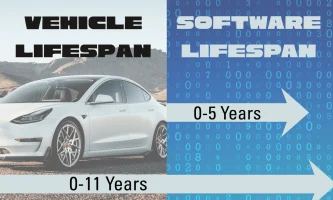
When the US’s largest EV manufacturer discontinues a model, it gives me pause to consider the software that drives it.
Operations
Here’s what is keeping fleet managers up at night this year, and what they're doing about it.
Leasing
As costs rise and scrutiny increases, fleets are refining criteria that govern eligibility for company-owned vehicles.