




Operations
Fleet Personal-Use Charges Edge Higher in 2026
Nearly eight in 10 surveyed fleets allow personal use of company vehicles, while just over half of respondents report charging employees for the privilege.
 MENU
MENU SEARCH
The job hasn’t changed, but the expectations have. Do you have a plan on how to use AI to thrive?

The AI revolution comes with the expectation that you execute data strategy at lightning speed and with infinitely more inputs.
Photo: This utilizes an AI-generated image. Refer to our Terms of Use.
How often is AI coming up in your work and casual conversations? Do you get the feeling you’re falling behind on this AI thing, even as you incorporate it more and more? Are you excited and scared? Does it feel like the role of the fleet manager is changing so fast, it’s a rug pull?
The answer is most likely, “a lot, and all of the above.”
For years, the job centered on vehicles, vendors, and operations: spec’ing units, managing maintenance, controlling costs, and keeping drivers on the road. It still does. But fleet managers have also long been expected to interpret data, connect systems, and translate insights into business decisions. In other words, act as data strategists.
That still holds true, but the AI revolution comes with the expectation that you execute data strategy at lightning speed and with infinitely more inputs.
As you assume the added responsibilities of a data strategist, how you handle this increase in speed and inputs is where the rubber meets the road.
Not long ago and even today, understanding what vehicles should be replaced or understanding where maintenance costs are trending means pulling reports, exporting data, and manually piecing together answers.
That process is changing and could disappear entirely in a few years due to advancements in generative AI and large language models (LLMs). “It helps a fleet manager to tell a story, with some basic prompts,” said Bradley Northup, fleet manager for the City of Carlsbad.
Of course, the act of prompting changes the skillset required to do the job well. “You as the fleet manager need to know the right question, and how to ask it,” Northup said.
But before you start using AI you need to architect your existing processes.
Syneos Health is embarking on a telematics integration plan that with a deliberate approach to data strategy. “We are ready to actually sit down and lay out the plan on what we’re going to capture from the data,” said Kristin Leary, director of fleet services.
That includes thinking through how data will flow across systems, how it will be stored, and how it will support safety, maintenance, and cost control.
Yet not every fleet is ready to jump straight into advanced analytics or AI-driven insights. In fact, most are still taking the first steps.
When Cesar Ayala took over the fleet at O’Connell Landscape Maintenance, he focused on standardizing policies, improving training, and making operations more measurable. “We’re getting to the point where each driver understands their requirements and their expectations,” he said.
Ayala is implementing formal driver training programs and exploring telematics, initially for compliance and driver visibility, with the goal of building a foundation that can support more advanced tools later.
While Ayala isn’t a data-ninja strategist yet, he’s starting with the necessary foundation: clear processes, consistent data, and defined expectations.
In many cases, fleets are restructuring their teams to dedicate resources to data processing. That includes managers whose main duty is to crunch telematics data, or even a job created with a sole focus on analytics, like Dallas County.
“The county actually found the need to have someone specific to data analytics,” said Reed Jackson, who serves in the new role. “My department brought me in to help translate data.”
The role supports vehicle utilization, EV planning, infrastructure placement, and risk management, driven by the fact that existing staff were already stretched managing day-to-day operations, and the volume of data, from telematics to asset management systems, was increasing.
Even with that added support, integration remains a challenge, Jackson said, as data often lives in multiple systems, requiring manual comparison and validation. Jackson is pulling reports from both his FMIS and telematics provider to compare them and see how to automate the data flow.
While by the nature of his job he’s more advanced than Ayala and Leary, their long-term goals are the same — a more connected environment where questions can be answered across multiple systems.
As the fleet manager evolves into a data strategist, the tools they use are evolving just as quickly.
Demonstrated at fleet events across the industry, fleet systems (from fleet management information systems to telematics and CRMs) are incorporating AI chatbots in their systems. Instead of navigating dashboards or building reports, users engage in a conversation with their systems.
Typing questions into an FMIS such as: “Which vehicles should I replace? What parts do I need for next week’s maintenance? Where are my highest costs coming from?” will return a structured answer based on real operational data.
Some new system functionalities allow for broad, even vague questions that will spit out answers based on combined data from multiple sources such as maintenance history, preventive schedules, and inventory levels into a single response.
The next evolution is the systems that demonstrate how to act on the information.
In the same example, a query about upcoming preventive maintenance would not just return a list of vehicles, it would generate recommended parts orders and could initiate those actions within the workflow.
This predictive modeling helps to identify component failures before they happen, recommend optimal lifecycle timing, and guide inventory planning based on upcoming demand.
Some platforms are even moving toward a “system of intelligence,” where AI is embedded across workflows, with the goal to improve areas like cost control, utilization, and administrative efficiency.
Importantly, this doesn’t eliminate the need for the fleet manager, but it changes where their value lies.
In this evolution to AI, one of the most important shifts is more behavioral than anything technological or process related.
Artificial intelligence and data platforms are making it easier than ever to access information. However, fleet managers must take a more active role in how that information is used.
While generative AI tools can return answers and make recommendations in seconds, those outputs are only as good as the inputs and the intent behind them.
Fleet managers must ensure that:
Perhaps most importantly, they must be prepared to act on the results. The responsibility of executing decisions still sits with the fleet manager who must interpret outputs, validate the recommendations, and decide which ones are actually furthering the fleets’ goals.
At NAFA I&E 2026 in Cleveland, Lori Olson of Geotab laid out a more human-centered approach to AI adoption that goes beyond tools and into how teams actually change.
Her guiding message to fleets was to start small and be intentional. Don’t try to transform everything overnight. Instead, begin with simple use cases, such as rewriting emails, summarizing reports, and asking basic questions. Build from there. As she put it, adopting AI is a “crawl, walk, run” process, not a switch to flip.
But the bigger takeaway was that the real constraint isn’t adoption of the tech, but how quickly organizations can absorb change. With the volume of new information coming at employees, adoption requires patience and compassion. Fleet leaders need to challenge their teams to use AI more, but also respect their capacity to adapt.
She was also clear that AI outputs can’t be taken at face value. They must be validated, compared against a fleet’s source data, and corrected when incorrect. You should be “harder on your AI agent than any employee,” she said.
The whole point is to have AI automate routine tasks so fleets can regain time to use for higher-level work. Fleets need to factor in how to use AI to give time back.
As tools improve, expectations rise for how quickly fleets should respond. “Every position becomes enhanced. Every position can do more,” Northup said.
That means more output from the same teams — more analysis, more responsiveness, and more strategic contribution. What once required hours of analysis is increasingly expected in minutes.
Ultimately, becoming a data strategist is less about technology and more about mindset. It requires a willingness to experiment, validate results, and continuously refine how data is used to get the job done.
Loading data...

Operations
Nearly eight in 10 surveyed fleets allow personal use of company vehicles, while just over half of respondents report charging employees for the privilege.

Safety
Insights from a commercial insurance carrier and a broker show how fleets can turn video telematic data, driver coaching, and improved claims results into a stronger case at insurance renewal.

Fleet Forward
Five fleet professionals — none with programming skills — discuss how they’re using AI to build fleet solutions in-house and in a fraction of the time.
Maintenance
Vincentric’s three-year, 60,000-mile projections reveal wide differences for both scheduled and unscheduled maintenance among selected vehicle categories. Projected maintenance visits also play a factor.
State of the Fleet Industry
Most organizations misunderstand fleet. The best managers make sure that doesn’t happen.
Remarketing
A vehicle health score could improve the value of fleet vehicles at remarketing. The path to a universal standard is forming, and fleets that understand the process early will be better positioned when it arrives.

Technology
AI is no longer a luxury but the baseline for profitability in 2026. Auto haulers that adopt these tools now will quickly outpace those that use manual workflows or take a wait-and-see approach.

Fleet Forward
The job hasn’t changed, but the expectations have. Do you have a plan on how to use AI to thrive?
Maintenance
The repair crisis gets blamed on technician shortages and parts delays. But a big part of the problem is what's happening before the vehicle even reaches the shop, and that's within your control.
Remarketing
Smart remarketing begins before vehicles enter the fleet, and is built on strong data and stronger FMC partnerships.
State of the Fleet Industry
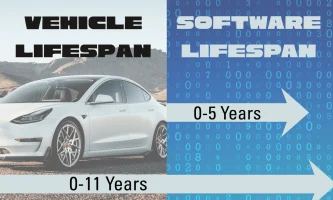
When the US’s largest EV manufacturer discontinues a model, it gives me pause to consider the software that drives it.
Operations
Here’s what is keeping fleet managers up at night this year, and what they're doing about it.
Leasing
As costs rise and scrutiny increases, fleets are refining criteria that govern eligibility for company-owned vehicles.