




Operations
Fleet Personal-Use Charges Edge Higher in 2026
Nearly eight in 10 surveyed fleets allow personal use of company vehicles, while just over half of respondents report charging employees for the privilege.
 MENU
MENU SEARCH
As costs rise and scrutiny increases, fleets are refining criteria that govern eligibility for company-owned vehicles.
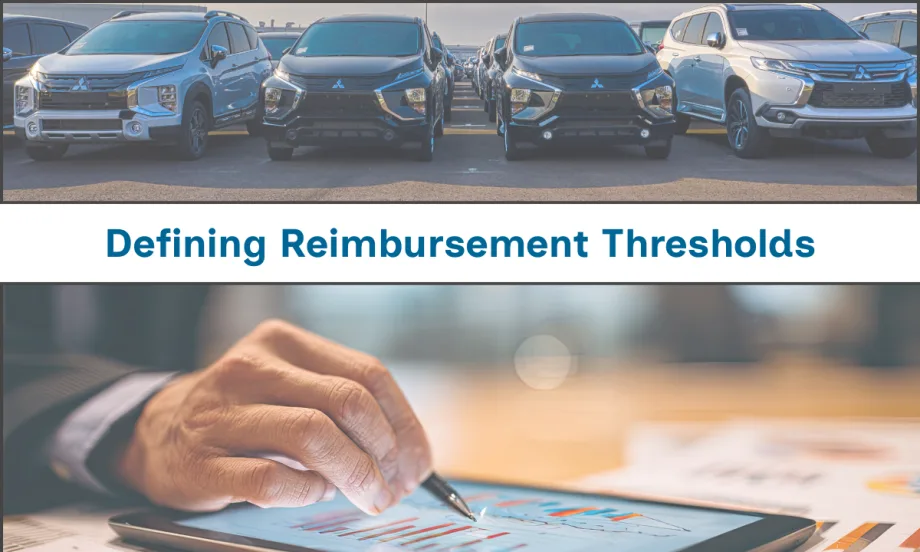
Fleet eligibility decisions increasingly hinge on detailed cost and risk analyses, not just mileage thresholds or job titles.
Image: Automotive Fleet
The company car. It became a status symbol of corporate life around the days of the Gregory Peck movie, The Man in the Gray Flannel Suit. It is still — and will continue to be — a valuable perk for attracting and retaining top talent and keeping them safe and productive.
Yet company car policies deserve periodic scrutiny, as budgets, fleet makeup, and organizational priorities change. At the same time, new reimbursement programs and greater insights gleaned from benchmarking data are introducing alternative viewpoints that challenge traditional assumptions.
As 2026 approaches, fleets are reassessing how they balance fleet and reimbursement based on asset mix, risk tolerance, and operational philosophy.
So how should fleets decide who truly needs a company vehicle in 2026, and when reimbursement makes more sense?
The foundational framework for company vehicle eligibility remains intact across the fleet industry, and most fleets still operate within familiar parameters.
“You’re going to drive so many miles a year. You’re in a client-facing role; therefore, we need to make sure you’re in a vehicle that reflects our brand. Or you’re an executive, upper-level leadership, and as a perk of working for us, this is what you get,” said Jason Kraus, vice president of operations at Mike Albert Fleet Solutions.
Mileage thresholds (commonly in the 10,000 to 15,000 annual business-mile range) continue to serve as a primary benchmark. Job function, asset necessity, and seniority still carry weight. For many fleets, the company-owned vehicle remains the default solution for roles with predictable, sustained business use.
What has changed is not the framework itself, but how it is being tested at the margins.
What still determines company vehicle eligibility today, and what has changed?
Eligibility decisions are rarely controversial at the extremes. Traditionally, employees who drive 25,000 business miles per year are clearly eligible for a company vehicle, whereas those who drive 2,000 miles are not. However, some fleets operate at far higher thresholds based on role, geography, or asset type.
For most fleets, the challenge lies in the middle ground, though that middle ground can vary from 7,000 to 20,000 miles annually. A rigid policy can lead to unintended cost, productivity, or risk outcomes.
“I don’t know an absolute dividing line,” Kraus said. “If your policy says 10,000 miles and someone misses it by 500, is that a draconian absolute? Or do you step back and look at what it really costs to replace that vehicle with rentals or reimbursement?”
In practice, fleets often discover that the hard and soft costs of not providing a company vehicle, such as short-term rental expense, administrative complexity, lost productivity, and employee dissatisfaction, can erode any theoretical savings.
Ted Chan, fleet manager at Schindler, said eligibility still rests primarily on job role and expected annual business mileage, with added consideration for tool and equipment needs, territory coverage, and customer-facing expectations.
“What’s evolved more recently is a sharper focus on who truly needs to drive, versus where shared vehicles, pooling, right-sizing, or other mobility options make sense, particularly as sustainability goals put pressure on tighter role-based eligibility,” he said.
At what point does reimbursement make more sense from a financial perspective?
The perennial question remains: Do many fleets still allocate more company vehicles than necessary, particularly for passenger-vehicle roles?
Lee Adam, director of product marketing at Cardata, said the decision deserves a full, data-driven cost comparison.
“The most important step is doing a true apples-to-apples analysis,” Adam said. “That means looking at total cost of ownership for a fleet vehicle that includes depreciation, insurance, fuel, maintenance, taxes, and administrative costs, and then comparing that directly to what reimbursement would actually cost for the same role.”
“If you’re not comparing apples to apples, it’s very easy to get the wrong answer,” she said. “If one of those (reimbursement) variables is missing from your fleet cost equation, you’re not solving the problem correctly.”
Cardata frames reimbursement as a flexible alternative when a role does not require a specialized or branded asset. For many standard sales, service, or field management roles where a typical passenger vehicle suffices, Adam said structured, IRS-compliant reimbursement programs can be viable.
Cardata estimates that fleets may spend 25–30% more to lease and maintain company vehicles than with structured reimbursement programs, though Adam noted that outcomes vary widely by vehicle class, mileage, geography, and insurance history.
Those on the fleet side, however, caution that reimbursement outcomes depend heavily on execution. Kraus said reimbursement can easily be more expensive than a company vehicle, and that reimbursement does not eliminate the company's liability.
Kraus asserted the advantages of company-owned fleets, including control over maintenance, consistent safety oversight, driver behavior monitoring, and clearer data visibility. These factors become increasingly important as liability scrutiny intensifies.
Ultimately, the breakeven mileage point varies by fleet and must be determined using each organization’s actual cost structure.
One example where reimbursement meaningfully shifted the math comes from NOV, Inc., where Kimberly Fisher manages a take-home and pooled fleet of mostly 3/4-ton pickups.
In NOV’s case, the catalyst was not cost reduction, but risk exposure. “This was driven by a very hefty insurance payout,” Fisher said. “Our risk and legal team basically said, ‘We need to get some of this liability off the road."
When NOV modeled reimbursement using its actual truck acquisition costs and prevailing IRS mileage rates, the breakeven point was far higher than traditional thresholds. “The breakeven for us right now is 21,500 business miles, based on the trucks we buy today and the IRS mileage rate,” Fisher said.
The analysis underscored how economics that work for sedans don’t necessarily translate to heavier-duty assets. As a result, NOV raised its mileage threshold for company vehicles from approximately 15,500 business miles to 18,500 miles annually for certain roles.
Fisher said the change is expected to shift roughly 300 drivers out of company-owned vehicles, though she noted that some driver resistance could reduce the net impact to closer to 200 vehicles. Even at that level, the adjustment represents a meaningful reduction in fleet size, exposure, and operating cost.
The analysis reinforced a two-tier eligibility approach, under which field technicians who require tools and equipment qualify for company trucks at much lower mileage levels, while sales and management roles face substantially higher thresholds.
Fisher was careful to note that shifting drivers to reimbursement does not eliminate liability tied to business use. However, she said removing company-owned vehicles from certain roles helped narrow the company’s exposure in situations outside core business use.
“Liability doesn’t go away just because the vehicle isn’t company-owned,” Fisher said. “But a non-company vehicle changes the risk profile in certain situations, particularly outside of work hours or when the vehicle is clearly not being used for business.”
In NOV’s case, the goal was not to eliminate risk, but to reduce the number of company-owned assets on the road and improve legal defensibility following a significant claim.
Rather than overhauling eligibility models, many fleets are making incremental adjustments.
At Essential Utilities, vice president of fleet Charlie Stevenson described a series of targeted refinements. The company recently raised its mileage threshold from 10,000 to 11,000 business miles, tightened personal-use eligibility by job level, and implemented a cap on take-home commutes.
“We evaluated the benefit to the company for allowing that commute and limited it to 35 miles one way,” Stevenson said.
Utility trucks and crew vehicles remain eligible below the mileage threshold due to operational necessity, while sedans and SUVs are subject to stricter enforcement.
“As we reviewed personal use and commute privileges, this was done to limit our liability as well as control cost,” Stevenson said.
For some organizations, reimbursement is not under consideration at all.
At Cameron Enterprises, every eligible employee receives a car. “All those eligible for a company vehicle get one,” said fleet manager Tim Lovett.
Company leadership views fleet vehicles as strategic infrastructure and essential for brand representation, safety oversight, and talent attraction.
“The vehicle you drive up to a customer is a reflection of the company,” Lovett said. “We want to ensure every sales colleague has a reliable and safe mode of transportation, and it’s a perk that helps us attract the best of the best.”
Sales employees receive company vehicles regardless of annual mileage, though most drive between 2,000 and 3,000 miles per month. Vehicles are tiered by performance, closely maintained, and replaced with aggressive cycles.
Lovett said Cameron has chosen not to use a reimbursement program, in part due to liability concerns related to vehicle condition and maintenance control. “Our goal is to monitor vehicle maintenance and condition to best position our fleet with safety top of mind.”
Across models, data quality has become a defining factor in eligibility decisions.
Kraus argues telematics is foundational, not just for safety and maintenance, but for determining who should have a company vehicle in the first place.
“If you want to electrify your fleet, you need telematics. If you want managed maintenance, you need telematics. If you want to understand who gets a company car, you need telematics,” he said.
Others note that reimbursement platforms and expense systems can deliver compliance without constant vehicle monitoring, an approach that may resonate with executive drivers or reimbursed populations.
In reality, many fleets operate hybrid environments. Executive vehicles often lack telematics entirely, creating visibility gaps even as accountability expectations increase.
So how should fleets decide if reimbursement or company-managed vehicles are right for them?
The evolving debate underscores a simple reality: there is no universal rule for company vehicle eligibility in 2026.
For many fleets, company-owned vehicles remain the most practical, controllable, and defensible solution. For others, reimbursement plays a targeted, strategic role.
The risk lies not in choosing one model over another, but in applying it too broadly, without a detailed data analysis.
“A fleet manager’s job is to identify all the options — even the bad ones,” Kraus said. “But the recommendation should only be the option with the highest likelihood of success.”
Loading data...

Operations
Nearly eight in 10 surveyed fleets allow personal use of company vehicles, while just over half of respondents report charging employees for the privilege.






Safety
Insights from a commercial insurance carrier and a broker show how fleets can turn video telematic data, driver coaching, and improved claims results into a stronger case at insurance renewal.
Fleet Forward
Five fleet professionals — none with programming skills — discuss how they’re using AI to build fleet solutions in-house and in a fraction of the time.
Maintenance
Vincentric’s three-year, 60,000-mile projections reveal wide differences for both scheduled and unscheduled maintenance among selected vehicle categories. Projected maintenance visits also play a factor.
State of the Fleet Industry
Most organizations misunderstand fleet. The best managers make sure that doesn’t happen.
Remarketing
A vehicle health score could improve the value of fleet vehicles at remarketing. The path to a universal standard is forming, and fleets that understand the process early will be better positioned when it arrives.
Technology
AI is no longer a luxury but the baseline for profitability in 2026. Auto haulers that adopt these tools now will quickly outpace those that use manual workflows or take a wait-and-see approach.
Fleet Forward
The job hasn’t changed, but the expectations have. Do you have a plan on how to use AI to thrive?
Maintenance
The repair crisis gets blamed on technician shortages and parts delays. But a big part of the problem is what's happening before the vehicle even reaches the shop, and that's within your control.
Remarketing
Smart remarketing begins before vehicles enter the fleet, and is built on strong data and stronger FMC partnerships.
State of the Fleet Industry
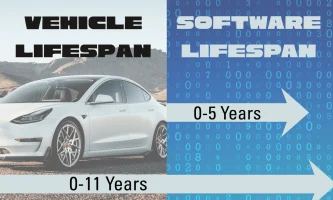
When the US’s largest EV manufacturer discontinues a model, it gives me pause to consider the software that drives it.
Operations
Here’s what is keeping fleet managers up at night this year, and what they're doing about it.
Leasing
As costs rise and scrutiny increases, fleets are refining criteria that govern eligibility for company-owned vehicles.