




Oil Market Turbulence Is Complicating Fleet Cost Planning
Rapid swings in crude oil prices driven by the conflict in the Middle East could create longer-term cost pressures for fleets, affecting fuel prices, supply chains, and vehicle strategy, says NTEA’s Andrew Wrobel.
March 13, 2026


Even when pump prices don’t track crude exactly, volatility can keep fuel costs elevated longer than fleets might expect.
Credit: Automotive Fleet
4 min to read
Oil prices climbing toward $100 per barrel are grabbing headlines, but for the commercial vehicle industry, the bigger risk isn’t as obvious: volatility. Rapid swings in the price of crude (recently, from about $61 per barrel to above $100 and back again) can make it difficult for fleets to predict operating costs or plan long-term vehicle investments.
“The risk that we have with oil price is not necessarily the fact that it’s approaching or exceeding, in some cases, $100 a barrel,” said Andrew Wrobel, commercial vehicle insight strategist for the NTEA – The Association for the Work Truck Industry. “The risk is the volatility within that.”
Fuel retailers price gasoline and diesel partly based on replacement cost, which is the expected price of the next shipment. When crude markets swing sharply, retailers raise prices to guard against future increases. Even when pump prices don’t track crude exactly, volatility can keep fuel costs elevated longer than fleets might expect.
“The longer it stays volatile, the longer fuel prices remain elevated,” Wrobel said.
Ongoing conflict in the Middle East — and uncertainty around the Strait of Hormuz, through which a significant share of global oil supply flows — has been a primary driver of recent price swings.
Should that conflict be resolved and shipping lanes stabilize, Wrobel noted, prices could return relatively quickly to earlier levels. "The goal is to make it flat, so everybody knows what to expect," he said. But until that clarity arrives, fleets are essentially planning around a variable they cannot control.
Ripple Effects Beyond the Pump
Oil volatility also extends beyond fuel prices themselves. Petroleum products are key inputs in plastics, rubber and other materials widely used in vehicle manufacturing and transportation equipment.
“When you have rising costs associated with that (volatility), you’re going to have greater GDP risks, greater inflation risks, which have greater interest rate risks,” Wrobel said.
Those broader economic pressures can eventually influence fleet investment decisions, particularly in an industry where vehicle purchases are generally financed, and equipment is expected to remain in service for a decade or more.
And those costs don't stop at fleet. When higher fuel and materials prices raise the cost of moving and producing goods, those increases tend to flow through to end consumers. At a moment when inflation remains a concern, that pass-through effect adds another layer of risk that extends well beyond fleets and trucking.
Stability Drives Fleet Decision-Making
Fleet operators do have tools to manage fuel risk, including financial hedges such as fuel futures contracts. But Wrobel cautioned that the current environment makes that lever harder to pull than it might appear. "You look at the volatility right now, it's a high risk," he said.
Buying futures when prices are swinging sharply means the hedge itself carries significant uncertainty: if you lock in today's price, it may turn out to be a peak. For most commercial fleets, that calculus doesn't pencil out, and volatility simply gets absorbed into operating costs.
That reflects a broader reality of the industry, Wrobel said: “The overall commercial vehicle industry operates successfully when there’s consistency and stability.”
What About Electrification?
Periods of rising diesel prices often prompt questions about whether fleets will accelerate a shift toward electric vehicles or other alternative fuels. However, “Fuel price is only one lever to whether or not you switch to electric or fuel cell or some alternative fuel,” Wrobel said.
Commercial fleets must also consider infrastructure availability, duty cycles, and total cost of ownership. While electric vehicles are gaining traction in certain applications—such as last-mile delivery routes—the technology still faces limitations in heavier-duty operations.
Alternative Fuels Still Have a Role
Even so, the broader conversation around powertrains continues to evolve. While electrification dominates much of the industry discussion, Wrobel said other alternative fuels still offer opportunities in specific use cases.
Biodiesel, compressed natural gas, and propane remain viable options for fleets that have the appropriate fueling infrastructure and operational profiles. “Are there growth opportunities? Yes,” Wrobel said. “Is it a high or a fast growth opportunity? Not necessarily.”
For many fleets, those fuels represent incremental steps toward emissions reduction rather than a wholesale transformation of powertrains.
Waiting For Stability
For fleet operators, the bigger challenge may not be the absolute price of oil but the difficulty of planning around it.
Until energy markets settle into a more predictable pattern, volatility is likely to remain a key factor shaping fuel budgets, vehicle strategies, and broader investment decisions across the commercial vehicle sector.
Subscribe to Our Newsletter
More Fuel
Fuel Prices Surge in September | September Fuel Update
September brought major fuel price swings, including diesel crossing $6 a gallon. Here’s how gas and diesel prices changed throughout the month, and where they stood heading into October.
Read More →
Turning Fleet Payment Data into Executive Insights
Ramel Lindsay of U.S. Bank Voyager discusses how fleets can transform payment and transaction data into actionable intelligence to reduce costs, improve oversight, and support executive decision-making.
Read More →
Why the IRS Raised Its Mileage Rate in the Middle of 2026
Fuel-price volatility drove the rare increase to 76 cents per mile, the fifth midyear adjustment since 2000.
Read More →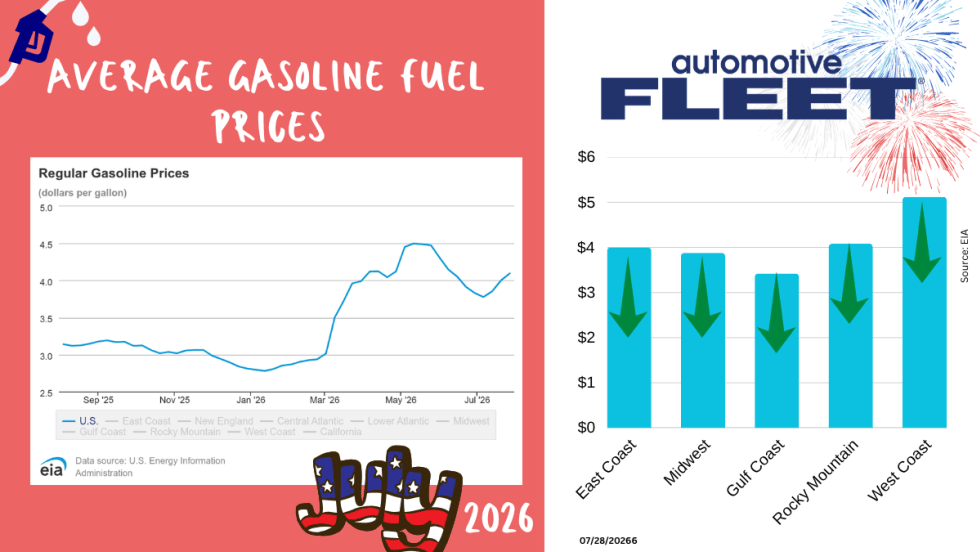
July Fuel Update: Prices Keep Rising in Light of More Conflict
Gas prices continue to rise as more and more conflicts do, too.
Read More →
Bob Adamsky on Fuel Volatility: "Don't Panic, Have a Plan."
When it comes to up and down fuel prices, Adamsky has a message for fleets: “Don’t panic.”
Read More →
How Fleets Can Gain Control of Non-Fuel Spend
Fuel often gets the spotlight, but non-fuel expenses can have a major impact on fleet costs. Ramel Lindsay of U.S. Bank Voyager discusses how fleets can gain better visibility and control over these often-overlooked expenditures.
Read More →
Fuel is Just the Start: How Middle East Tensions are Driving Up Fleet Maintenance Costs
The Middle East conflict is doing more than pushing up fuel prices. It’s also raising the cost of key maintenance products your fleet depends on, from motor oil to tires to windshield wipers. Here’s what you need to know about this budget-busting situation.
Read More →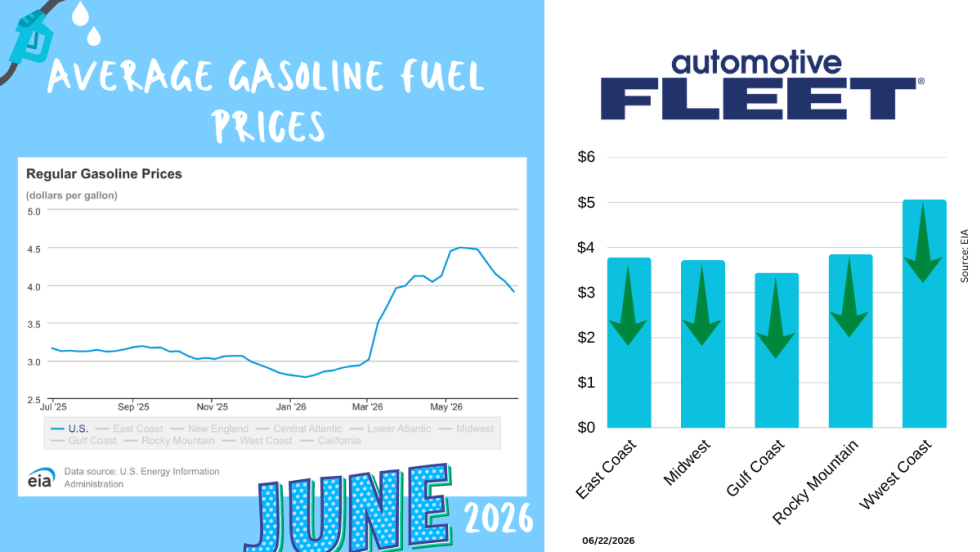
June Fuel Update: Prices Fall Below $4
Drivers are finally getting some relief at the pump. The national average gas price has dropped below $4 a gallon for the first time in months, with prices falling in 47 states as oil markets react to developments in U.S.-Iran negotiations.
Read More →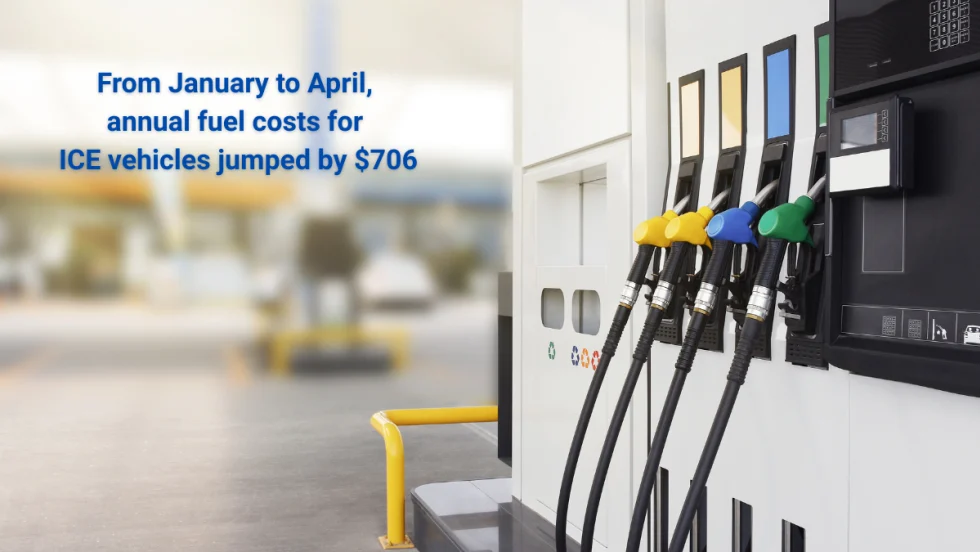
Study: How 2026's Gas Price Hikes Affect Different Vehicle Types
New data from iSeeCars reveals how rising fuel costs have affected different vehicle segments as gasoline prices climbed nearly 46% over the past four months.
Read More →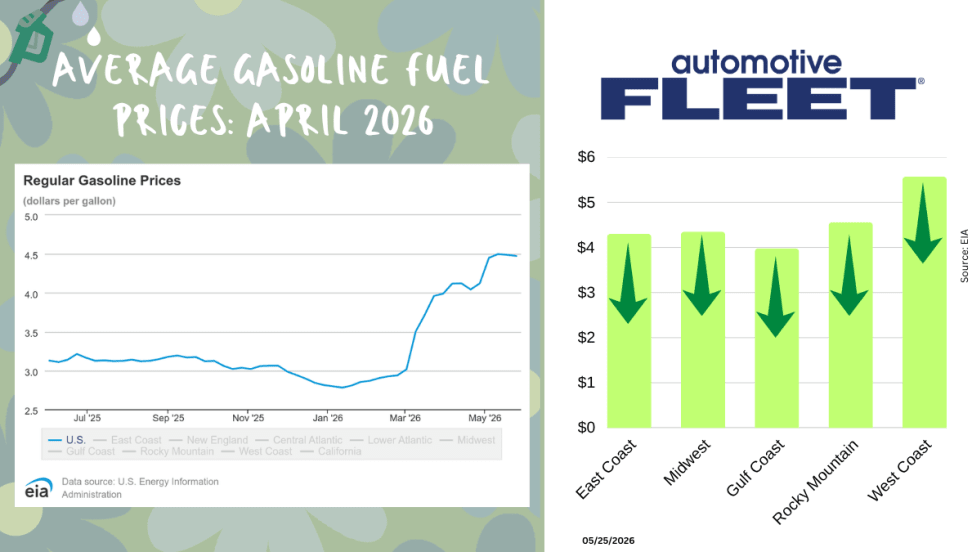
May Fuel Update: All Regions Experience Declines
Gas prices are finally easing in much of the country, but experts warn global tensions could quickly reverse the trend as the national average remains well above last month’s levels.
Read More →