




We'll be talking about this at CAR in Cleveland, April 15-16. Register now!
 MENU
MENU SEARCH
Smart remarketing begins before vehicles enter the fleet, and is built on strong data and stronger FMC partnerships.
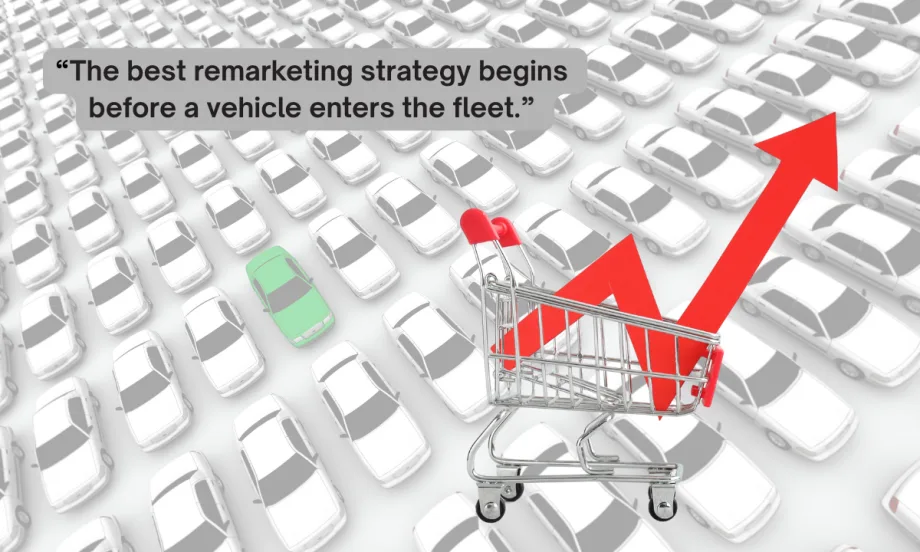
With new-vehicle sales projected to reach 15.8 million units in 2026 and fleet sales declining more sharply, remarketing returns increasingly depend on lifecycle planning, data transparency, and execution speed.
Automotive Fleet
Remember 2021, when demand far outstripped supply and the Manheim Index hit an all-time high of 257.7? Even the most uneducated remarketers were heroes. That said, we could’ve done without the next five years of volatility.
Flash forward to 2026: Cox Automotive projects new-vehicle sales will reach 15.8 million units in 2026, a 2.4% drop from 2025 levels. Fleet sales are expected to drop more sharply, by 6.1%.
A cause for alarm? Not really. Those drops are more a result of the easing of pent-up demand following the pandemic's supply chain disruptions.
“Our 2026 forecast reflects a slowing market, but still a good one,” said Cox Automotive’s interim chief economist Jeremy Robb on Jan. 6. “While we’re expecting most sales metrics to be lower compared to 2025, the expected declines are modest, and we think there will be good news on interest rates and tax returns that help the auto market in the first half of 2026.”
With new-vehicle sales projected to reach 15.8 million units in 2026 and fleet sales declining more sharply, remarketing returns increasingly depend on lifecycle planning, data transparency, and execution speed.
Automotive Fleet
The Manheim Used Vehicle Value Index is forecast to rise 2% year over year by the end of 2026, reflecting normal depreciation trends.
A normalizing market — could it be? We can never rule out a Black Swan event, which we’ve come to expect over the last six years. But for now, we’ll take stability.
Remarketing strategy and precise execution will have the greatest influence on pricing and net returns in 2026, according to Holly Vollant, manager of North American remarketing at Holman.
Remarketers have to be much smarter than they were five years ago. But how?
It’s time to apply remarketing best practices much sooner, even before vehicles enter fleets.
“Similar to most aspects of fleet management, remarketing strategies continue to move upstream, aligning with other phases of the vehicle lifecycle and involving additional fleet stakeholders,” Vollant said. “Best-in-class fleet operators and their FMC partners are embracing a holistic approach to the vehicle lifecycle equation with each phase influencing the others.”
This holistic approach means that model selection, vehicle specifications, and upfitting decisions all influence remarketing flexibility and buyer pool appeal.
“We continue to work closely with our customers to explore opportunities such as short-cycling assets or potentially modifying lease terms to leverage favorable market conditions to optimize their TCO,” said Ed Powell, director of consulting services at Holman.
When viewed as a lifecycle strategy, what factors become even more important? Speed to market and condition accuracy.
Vehicle transport delays, reconditioning bottlenecks, and title and administrative holdups all contribute to lost value. Each day a vehicle sits idle is a day it depreciates without generating revenue. In a normalizing market, “waiting for better market timing” is increasingly ineffective.
“While the secondary market remains strong, optimizing sale proceeds will hinge on speed-to-market, condition accuracy, and disciplined replacement cycling (not waiting for better market timing),” Vollant said.
What’s becoming more apparent, too, is that speed-to-market is no longer just a logistics issue; it’s also an information issue. Vehicles don’t sit just because they aren’t listed quickly; they sit because buyers can’t quickly determine whether a truck is right for their specific job.
With better information sharing, speed-to-market advantages can begin much earlier.
“Providing your remarketing partners access to full build and spec data early allows them to target the right buyers months before vehicles come out of service,” said Candy McCollum, sr. business development manager, Work Truck Solutions. “If a truck is spec’d with a specific upfit or towing package, buyers like landscape companies can be identified well in advance.”
McCollum added that some specifications once considered optional, like advanced driver assistance systems (ADAS) and lane assist, have become table stakes by 2026, particularly as fleets and buyers seek to offset rising insurance costs.
Incomplete or generic vehicle descriptions slow buyer approval cycles, especially for vocational units in which upfit details, configurations, and usage history materially affect value. The longer it takes a buyer to understand a truck’s upfit and accessories, and thus what it’s ready to do, the longer it takes to sell.
How do you share this data with buyers in an efficient, understandable way?
Telematics, maintenance, and usage data represent one of the biggest untapped opportunities to improve resale confidence and pricing in fleet remarketing.
Addressing maintenance and repair costs with data is a growing concern.
“Given the rate at which fleet vehicles are aging, many fleet operators are highly susceptible to higher operating costs driven by tariffs and labor rate increases,” Powell said.
Buyers are factoring in expensive repairs and ADAS recalibration work when evaluating bids, so any uncertainty about a vehicle's true condition directly translates into lower offers.
“Evidence is building that good data will increase resale value by full percentage points,” said Jay Collins, VP at WEX.
That confidence is especially important for vocational vehicles, where usage patterns vary widely. Mileage alone doesn’t tell the full story. “For vocational assets, buyers want data on engine hours, idle time, and how the vehicle was actually used,” McCollum said.
The ability to demonstrate vehicle health through data — not just condition reports but actual maintenance history, usage patterns, and telematics verification — reduces buyer uncertainty. This transparency can differentiate fleet vehicles from retail trade-ins and command premium pricing, like Carfax provides vehicle history transparency in the consumer market.
OEM and telematics data are increasingly available, but the challenge lies in packaging them. Fleets that can present clean, verified vehicle health data (a digital “source of truth,” as McCollum suggests) to buyers gain a pricing advantage.
McCollum also recommends that sellers bundle "sister units," or identical units that allow buying in volume with predictable buyer pools and maintenance needs.
Digital remarketing has efficiencies, but physical auction execution still influences price and buyer confidence.
“Despite the sustained growth of digital platforms, physical, in-lane auctions still have a profound influence on buyer confidence and pricing,” Vollant said. “Today, successful remarketing programs seamlessly blend digital efficiency with hands-on oversight to optimize time-to-sell and maximize returns.”
However, sellers are demanding more from their auction partners than lane space.
“Sellers who fail to audit, visit, and, when necessary, hold their auction partners accountable for performance will likely see returns decline as secondary markets continue to normalize,” Vollant said.
What should fleets do with this remarketing advice going forward?
Fleet management company involvement in remarketing is increasing, but the quality of that involvement varies significantly. When FMCs have access to vehicle history, usage data, and maintenance records, they can better position vehicles and set realistic reserve prices.
The key is active partnership. Fleets need to audit results, understand how their vehicles are being positioned, and hold FMCs accountable for execution. Those willing to engage more deeply with the remarketing process — visiting auctions, reviewing condition reports, analyzing results — consistently outperform those who simply hand over keys and wait for checks.
While fleets can't control macro markets, they can control timing, condition accuracy, data transparency, and lifecycle alignment.
The fleets that treat remarketing as a strategic process — starting at acquisition and maintained throughout the vehicle's life — will realize measurably better returns than those that treat it as a transactional afterthought.
“Access to market data is no longer a differentiator; how you leverage that information and how quickly you're able to do so will define success,” Vollant said.
Loading data...

Operations
Nearly eight in 10 surveyed fleets allow personal use of company vehicles, while just over half of respondents report charging employees for the privilege.

Safety
Insights from a commercial insurance carrier and a broker show how fleets can turn video telematic data, driver coaching, and improved claims results into a stronger case at insurance renewal.

Fleet Forward
Five fleet professionals — none with programming skills — discuss how they’re using AI to build fleet solutions in-house and in a fraction of the time.

Maintenance
Vincentric’s three-year, 60,000-mile projections reveal wide differences for both scheduled and unscheduled maintenance among selected vehicle categories. Projected maintenance visits also play a factor.
State of the Fleet Industry
Most organizations misunderstand fleet. The best managers make sure that doesn’t happen.

Remarketing
A vehicle health score could improve the value of fleet vehicles at remarketing. The path to a universal standard is forming, and fleets that understand the process early will be better positioned when it arrives.

Technology
AI is no longer a luxury but the baseline for profitability in 2026. Auto haulers that adopt these tools now will quickly outpace those that use manual workflows or take a wait-and-see approach.

Fleet Forward
The job hasn’t changed, but the expectations have. Do you have a plan on how to use AI to thrive?

Maintenance
The repair crisis gets blamed on technician shortages and parts delays. But a big part of the problem is what's happening before the vehicle even reaches the shop, and that's within your control.
Remarketing
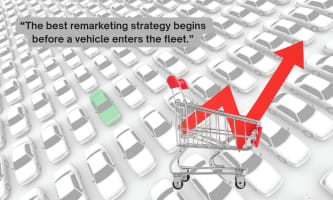
Smart remarketing begins before vehicles enter the fleet, and is built on strong data and stronger FMC partnerships.
State of the Fleet Industry
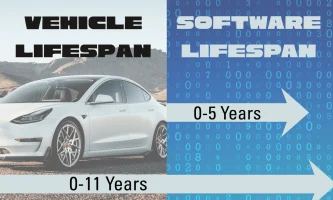
When the US’s largest EV manufacturer discontinues a model, it gives me pause to consider the software that drives it.
Operations
Here’s what is keeping fleet managers up at night this year, and what they're doing about it.
Leasing
As costs rise and scrutiny increases, fleets are refining criteria that govern eligibility for company-owned vehicles.