




Coaching Is Not Training, Even When AI Is Doing It
AI-powered safety platforms can detect risky behaviors and deliver immediate feedback. But effective driver development still requires a foundation of training followed by coaching that reinforces those skills.
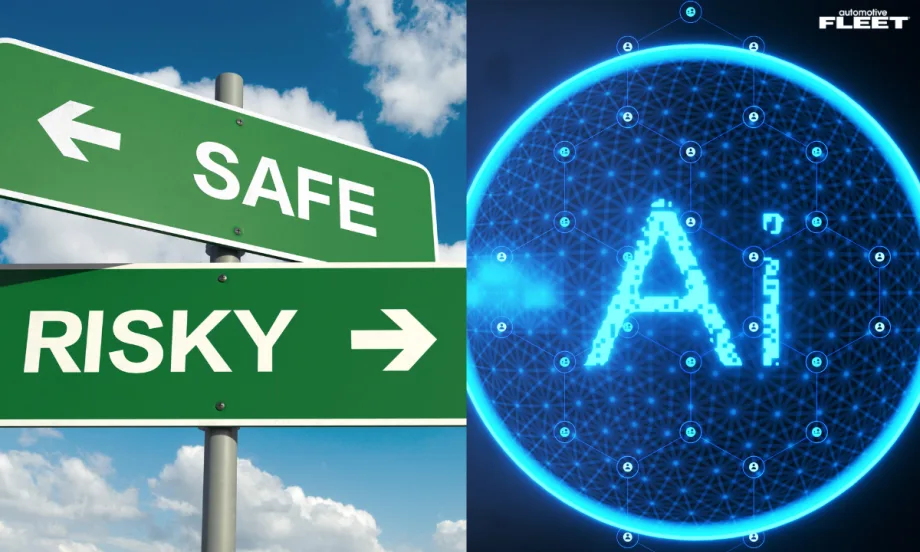
The debate over AI-driven fleet safety tools centers on whether technology can replace foundational driver training or only reinforce skills drivers have already learned through structured instruction.
Automotive Fleet
- AI-powered safety platforms can detect and provide feedback on risky driving behaviors.
- A foundational training program is essential for developing effective driving skills.
- Continued coaching is necessary to reinforce and maintain driving skills.
*Summarized by AI
Coaching is not training, and training is not coaching. The two activities serve distinct purposes. Why, then, are they treated as interchangeable by an increasing share of the driver risk management and safety industry?
The confusion doesn’t come from wordplay or academic jargon. It’s because the safety industry is increasingly forgetting that every high-consequence skilled work discipline follows one clear, non-negotiable sequence: training comes first, and then coaching.
Pilots train before they fly. Surgeons train before they operate. Soldiers train before they deploy. Coaching refines what training built. Reverse the order, or skip the training entirely, and correction lacks a foundation to build upon.
This matters now more than ever. In the driver risk management and safety industry, a growing share of technology companies are marketing platforms that reverse this one-two sequence. For instance, cameras with AI platforms detect risky behaviors, speak to drivers via an avatar, send weekly summaries, and assign short video lessons when they identify recurring issues.
These platforms are marketed as effective and efficient alternatives to curriculum-based training programs and in-person trainers.
The technology is genuinely impressive. The promise is appealing, and the math appears favorable. Yet the premise is deeply flawed because it inverts the only sequence that has ever produced safe drivers in any setting.
Imagine a racing team puts a new driver in a Cup car with no prior racing experience. No karting. No late models. No developmental series. No track time. The car is wired with sensors for a spotter to watch the line and an engineer to monitor the telemetry. Whenever the driver makes a mistake, someone’s voice comes over the radio and explains what he did wrong.
We all know how this experiment ends. It ends at a wall, probably in the first half-lap. Not because the technology is inadequate. Not because the coaching isn’t well-intentioned and timely. It happens because no amount of in-the-moment correction can replace a skill-based foundation.
This experiment seems absurd, as it should, since no serious racing program would dare try it. Every elite driver in motorsport had years of structured training that made them coachable at the professional level, refining and reinforcing what training had built.
Still, a growing portion of the fleet safety industry is selling coaching as a serious safety program, letting technology do the work at a fraction of the cost of live, in-person, and behind-the-wheel training.
Coaching Presumes a Curriculum
In any discipline, the purpose of coaching is to refine a learned skill against a defined framework. A football coach references the playbook. A golf coach references swing mechanics. A piano teacher references scales and technique the student has already learned and practiced. The framework gives the coach and learner a shared vocabulary, allowing corrections to translate directly into behavior change.
Remove the training framework, and coaching becomes a list of observations. Corrections without a framework produce compliance, not behavior change.
Most of what is marketed as AI coaching today lacks a behavioral framework. AI platforms detect infractions such as following too closely, harsh braking, mobile use, and speeding. Infractions are not a training framework; they are merely a list of what the cameras see.
A driver who has never been taught visual habit management, space management, or hazard anticipation hears “you followed too closely” without a frame of reference. In other words, the system flagged risky behavior but did not provide the driver with the context needed to address the missing skill.
When a trained driver hears the same words, he or she knows exactly what they mean. Drivers trained on a foundational training system like the 5Keys® hear “Key 4” and immediately known to leave themselves an out. The correction lands on a skill foundation, not just illuminates the error. This helps the driver understand why following distance matters and how to maintain it across thousands of small decisions every day. That is exactly what coaching is supposed to do: refine a learned skill.
The Sequence is Not Optional
Driving, like every professional discipline with a cost of error, follows the same sequence of train first, measure second, and coach third. Professional driving skills are built through deliberate practice against a defined model, where the learner can fail safely. Measurement verifies behavioral change, and coaching refines skills as the stakes rise.
Reverse the sequence, and the structure collapses. You cannot reinforce a skill that was never built. You cannot coach against a framework the driver was never taught. Vendors marketing automated coaching are correct in saying that AI delivers correction at scale. Yet they are wrong to claim that correction at scale substitutes for training. It does not, never has been, nor will ever be — even when AI is twice as accurate, and the avatar twice as charming!
The data supports this. NETS analysis of organizations that pair behavioral training with coaching shows a 20 to 30 percent reduction in crash rates. These results are driven by the combination, not by either layer alone.
Organizations today are being told that a train-first, coach-second sequence is optional. For example, you may have heard a vendor say, “Let the platform do the work your training program used to do.” The industry should openly reject that claim. Accepting it carries a cost in avoidable collisions, injuries, and ongoing risk to driver safety, even though that risk could objectively be reduced.
What the Numbers Say
Some vendors marketing AI coaching platforms have impressive collision-reduction figures of 70 to 75 percent based on real customer data. Such claims are intentionally misleading. Their own customer success materials report that a typical customer sees a 35-40% reduction, which leaves roughly 40 percentage points between the marketing claim and the average outcome.
The vendors do not explain the gap. They cannot, because it undermines their own point.
What separates the customers who hit the headline number from those stuck at the average is a coaching program tied to a behavioral framework that their drivers are trained in and understand.
The customers achieving the headline number are running a real safety program alongside the platform. Those stuck at the average are running the platform alone. The vendors’ own data provide the clearest evidence that using an AI platform without a behavioral foundation leaves most achievable gains in safety performance on the table.
Why Remedial Training Fails
A second failure point of AI safety platforms is worth examining: “event-triggered training.” When AI detects repeated unsafe behavior, the system automatically assigns the driver a short corrective-action lesson, which is marketed as “innovative personalization.”
This is, in fact, remedial training. By definition, event-triggered training occurs after the driver has failed to demonstrate a skill they should have been taught.
Imagine the same pedagogy elsewhere. A pilot crashes; the airline assigns a flight school module. A surgeon nicks an artery; the hospital queues up an anatomy video. The absurdity of this is obvious in every context except driver safety, where people are trying to persuade the industry that learning after a failure is equivalent to learning before it.
Any serious safety and risk management program teaches behaviors first, in conditions where the driver can absorb the principle without consequence. The principle is then reinforced through coaching that references it by name. Event-triggered modules are useful for reinforcement but are not a substitute for foundational instruction. Selling them as a substitute is the clearest evidence that vendors marketing automated coaching have never built the training component of a safety program.
The Safety Professional Question
A final element in misleading safety pitches deserves to be named. Several vendors are telling safety leaders that their platforms deliver efficiency by reducing staffing and operational costs. In effect, they are proposing that a safety program no longer requires safety professionals.
Elite organizations in every other discipline employ coaches because proof of their effectiveness is abundant. Data makes good coaches better, not replaces them. A safety program without safety professionals leading it is just a notification system with a friendly interface.
Training Cannot Be Skipped
The telematics industry is trying to sell a simple claim: detection plus correction equals education. The platform detects unsafe behavior and corrects the driver through a combination of avatars, alerts, summaries, and event-triggered eLearning. This reverse sequence does not produce a trained driver.
Detection plus correction equals correction, not training. Correction can change a behavior in the moment. Only training builds the underlying skills and behaviors, the mental model, and the habit of mind that produce safe behavior across the thousands of decisions drivers make every day when no one is watching.
Consider what this marketing claim requires you to believe: a driver who has never been taught the principles of visual habit management, space management, or hazard anticipation can be coached on those principles by a system that has also never taught them to anyone.
Moreover, this claim requires you to believe that a thirty-second video assigned after a near-miss is equivalent to weeks of structured instruction. It also requires you to believe that the driver can skip the curriculum and still emerge competent.
No other discipline accepts this. Pilots cannot skip flight school. Surgeons cannot skip residency. Employees and contractors who drive for work purposes in any type of vehicle, large or small, should not be the exception.
Some platforms for safety and risk management want you to believe that driver training is optional beyond a basic license test, which no serious safety program leader would accept.
Organizations that value a safety culture understand this. Until technology providers recognize that training must come first, their platforms will continue to post impressive marketing numbers, while their average customers plateau at half those numbers. This leaves a gap, paid for by collisions and injuries that did not have to happen.
More Safety

Fleet Manager’s Ultimate Playbook: Navigating the New Standard in OEM Connectivity
Rising operating costs, driver safety concerns, and unplanned downtime are putting unprecedented pressure on modern fleets. Discover how fleet managers use embedded OEM connectivity and real-time vehicle data to cut TCO, prevent downtime, and protect drivers without aftermarket telematics hardware.
Read More →
From Driver Well-Being to EV Charging | AF News Recap
Mental health belongs in the fleet safety conversation. This week, we’re looking at five ways fleets can support employee well-being before a crisis, plus Holman’s expansion in Mexico, new one-day Fleet Forward passes, and why EV charging demand is outpacing infrastructure growth.
Read More →
Nexar-Nauto Merger Aims to Give Fleets Better Safety Intelligence Through Larger Driving Dataset
Stefan Heck tells Automotive Fleet that combining more than 10 billion miles of driving history with Nexar's AI models will give fleets deeper insights into driver risk and roadway conditions than either company could provide independently.
Read More →
Don't Wait for a Crisis: 5 Ways to Build Mental Health Into Your Fleet Safety Program
For Suicide Prevention Month, fleet and safety leaders have an opportunity to put mental health where it belongs: at the center of workplace safety.
Read More →
How Camera Data Can Strengthen a Fleet’s Insurance Renewal
Insights from a commercial insurance carrier and a broker show how fleets can turn video telematic data, driver coaching, and improved claims results into a stronger case at insurance renewal.
Read More →
The Safest Fleets Aren’t the Ones with the Most Technology
You’ve made the telematics investment. Here’s how to capture the other half of its value and build the safest fleet on the road.
Read More →
Hidden in Plain Sight: Fleet Compliance Risks
Fleet compliance isn't just about having policies — it's about consistently enforcing them. This practical guide reveals six hidden compliance risks common in public sector and shared fleet operations and outlines proven strategies to improve visibility, accountability, and audit readiness
Read More →
NETS Sets 2026 Fleet Safety Benchmark Conference for Indianapolis
The Sept. 15–17 program will feature fleet benchmarking data, case studies, emerging technologies, and implementation strategies while running alongside the NSC Safety Congress & Expo.
Read More →
Off-the-Job Crashes Account for 43% of Employers’ $61.7 Billion Crash Burden
NETS quantifies costs dispersed across fleet, risk, HR, and other departments while providing new per-crash benchmarks for employers.
Read More →
Ram Recalls More Than 1.27 Million 1500 Pickups for Seat Belt Anchor Issue
The recall affects certain 2019-2026 Ram 1500 pickups that may have improperly attached second-row seat belt buckle anchors.
Read More →