




The Next Fleet War Won't Be Won on Specs Alone
The 2026 Stellantis Pro One Fleet Preview was less about vehicles and more about what happens after you buy them.

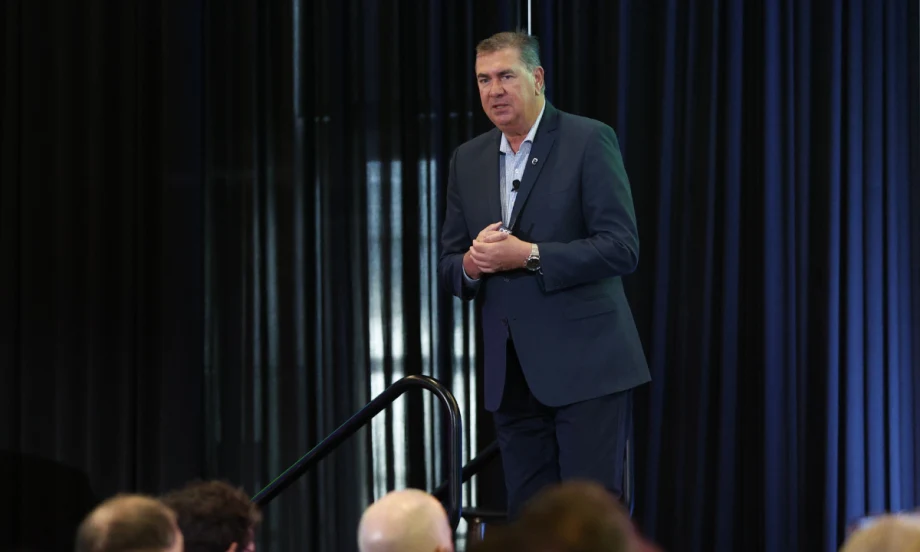
"The vehicle is becoming the tool that will give us the data and connectivity we need to successfully manage cost, safety, and the user experience," said Michael Ferreira during the 2026 Stellantis Pro One Fleet Preview.
Stellantis
Automakers’ fleet previews are high-class events with the primary goal of engaging customers, diving into product, and driving brand excitement. Throw in nice dinners, entertainment, networking, and track time with trucks and vans, and halo cars that will never make it into fleets.
Stellantis held its 2026 Pro One Fleet Preview at the M1 Concourse in Pontiac, Michigan, on June 4. It had all of the above. This year, the halo was the polar opposite of a track star, but at the center of fleet — the all-new Ram ProMaster City. The return of the small van will fill a much-needed gap in the market. Orders open soon, production starts this year, and vans will be at dealers in Q1 2027.
Stellantis is promising nine new vehicles for North America by 2030, but the real news wasn’t on wheels — it was the customer relationship, which is as important as the vehicles themselves.
Let’s own up to an industry reality — over the last decade, the traditionally strong relationship between fleets and automakers has eroded. We can cite a few reasons, not simply the fault of the OEMs: supply chain strains, sales staff turnover that strains personal relationships, and the growing complexity of doing business through portals and systems rather than people.
Stellantis used this preview to demonstrate how it is tackling this issue head-on, specifically through a state-of-the-art, digitally integrated commercial fleet ecosystem. I’ve been attending fleet previews for 20 years, yet have never experienced such an in-depth vision of how an automaker intends to connect every stage of the fleet lifecycle — from vehicle ordering and upfitting to telematics, maintenance, service, and uptime management — into a single, transparent customer experience.
Michael Ferreira, senior vice president of U.S. fleet sales and Pro One Next, opened the day by joking that the preview felt like a "wedding" and that he felt like the groom. The metaphor was fitting.
The Pro One Next Ecosystem
Just about everything flows through Pro One Next, an ecosystem that combines connected vehicle data, predictive maintenance, AI-powered support tools, dealer integration, upfitter coordination, and uptime management under one umbrella.
The goal is to guide a fleet customer through the entire vehicle lifecycle: configure, upfit, track, monitor, service, and manage within a single platform. "The vehicle is becoming the tool that will give us the data and connectivity we need to successfully manage cost, safety, and the user experience," Ferreira told attendees.
It is an ambitious vision, and one that the company acknowledged it has not always lived up to. Ferreira did not shy away from bringing up the past quality and recall issues. But past that admission, Ferreira outlined the steps Stellantis has taken to improve quality, reduce downtime, strengthen service support, and rebuild trust with fleet customers.
That candor carried weight, as it is rare at a fleet preview, though Stellantis is certainly not alone.
Vehicle as Data Source, Not Just Hardware
The foundation of this ecosystem is connectivity. Chandresh Patel, head of data and software services, said that by 2028, an estimated 85% of fleets operating 500 or more vehicles will be leveraging connected vehicle data.
Stellantis' position is that native vehicle data pulled directly from embedded modems without aftermarket devices is a fundamentally different category from anything delivered through hardware retrofits.
Activation across an entire fleet happens via a single API call, often same-day, without pulling vehicles off the road. A 500-vehicle deployment that might require weeks of scheduling and $75,000–$100,000 in hardware costs with a third-party solution can be live within 24 hours at no hardware expense.
The data itself spans more than 100 standardized vehicle signals: driver behavior, fuel and energy consumption, real-time diagnostics, safety signals including seatbelt status and airbag events, and diagnostic trouble codes pulled directly from individual control units.
The platform is designed to feed existing telematics service providers — Geotab, Motive, Samsara, and others — rather than replace them, Patel said.
The connected vehicle is the starting point for everything else Stellantis announced.
The Pro One Portal Is the Door to Everything
Tying the data layer to the operational layer is the Pro One Portal, set to launch later in 2026.
It’s a single “digital front door” that consolidates fleet management, connected services, data subscriptions, vehicle health monitoring, and the Custom Fit upfitting platform into a single login. This addresses what fleet managers cite as a daily frustration: too many systems, too many logins, too many phone calls just to get a complete picture of their fleet.
The portal brings together fleet management, connected services, native vehicle data, and upfitting workflows in a single platform. The intent is to give fleet managers greater visibility in vehicle operations, maintenance, and order status from one place.
Solving the Oldest Question in Fleet: Where's My Truck?
Walking through that front door, Custom Fit is where the most chronic fleet frustration gets addressed. Ryan Pritchard, who supports the Custom-Fit platform development, organized his presentation around the questions fleet managers ask constantly: "Where's my truck?" and "Where's my quote?"
Pritchard explained that between the placement of an order and a vehicle arriving at its final destination, there can be eight to 12 parties involved — OEM, upfitter, logistics provider, dealer, and fleet buyer at a minimum — each operating in its own system. The result is a chain of phone calls, spreadsheets, and emails that consumes time no one can bill for and generates errors no one catches until it's too late.
Custom Fit addresses this by giving each vehicle what Pritchard called its own passport, or a shared record that can be accessed with the right permissions at each stage of production and delivery. Upfitters confirm receipt, log progress, and update completion status while dealers and fleet buyers track orders in real time.
In pilot testing, the platform shaved three days off average order cycles by pulling up information that previously required a phone call to retrieve.
100% Uptime? Not Exactly, But…
Stellantis repeatedly referenced a goal of 100% uptime. While that’s simply not realistic in real life, the target serves as a north star for the effort to keep vehicles on the road as much as possible.
Darren Bradshaw, senior vice president, parts and services for Stellantis North America, noted that the field support team has grown 200%. Regional technical advisors dedicated to fleet vehicles — including upfitted units — are expanding toward a 7-to-1 dealer-to-technical-resource ratio.
A national fleet parts pricing program now covers 800 dealers. More than 120 dealers are actively performing mobile service. Centralized billing is reducing administrative friction for fleets managing maintenance across multiple markets.
Those initiatives are bearing fruit, including a 17% reduction in warranty cases opened more than five days company-wide.
And this is low-key cool: the Uptime Command Center, a dedicated staffing operation that is less helpline and more a managed uptime service.
Essentially, Pro One agents handle fleet-specific service coordination, which is separate from standard warranty and recall support. The center is designed to route priority service appointments directly to dealer systems and communicate electronically with drivers and fleet managers.
Introducing Stella and Truck Norris
Layered across the entire ecosystem is AI, introduced in two forms.
Pritchard live-demo’d Stella, the customer-facing AI assistant that gives vehicle recommendations, builds quotes with fleet-specific pricing, schedules service appointments, checks recall status, and monitors fleet health in real time.
Next to Stella is “Truck Norris,” an internal knowledge agent trained on fleet-specific operational data, designed to answer the questions that currently require a call to a product specialist or a search through technical documentation.
Pritchard made sure to point out that both handle the time-consuming tasks, but neither is the decision-maker; it’s the fleet manager who still exercises judgment.
Now Comes the Execution
Whether Pro One Next delivers on its full promise will depend on execution at the dealer level, the pace of platform adoption, and whether the uptime and service improvements hold at scale.
And Stellantis’s competitors aren’t standing still. Regardless, the message was clear: the next war will be won through the customer experience, not just the product.
More Blog Posts

How to Win a Fleet Manager Award: Make Your Nomination Count
Strong fleet accomplishments can go unrecognized when the nomination doesn’t make the case. Here’s what judges need to see.
Read More →
The Only Certainty with the New Tariff Threat Is Uncertainty
Trump’s Canadian tariff threat will not move production overnight, but the uncertainty could influence ordering and pricing now. Longer term, forces beyond tariffs may determine which North American plants survive.
Read More →
What Does It Mean to Embody the Spirit of Fleet?
Presented alongside Fleet Manager of the Year, Fleet Visionary, and Fleet Hall of Fame at AFLA, the new Mike Antich Spirit of Fleet Award is unique in that it recognizes service to the overall profession. Just like Mike.
Read More →
What Separates Great Fleet Managers From Everyone Else?
What do Visionary candidates with fewer than 10 years of experience have in common with Hall of Fame nominees with a lifetime under their belts?
Read More →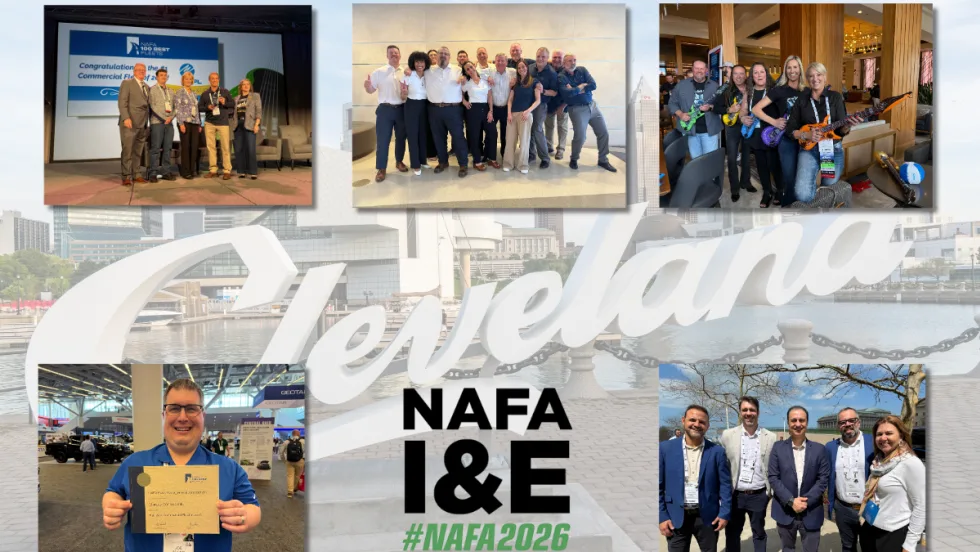
Navigating Brundlefly and Fleet AI at 2026 NAFA I&E
AI is becoming the operating layer for fleets. In Cleveland, the buzz was about harnessing AI in an increasingly complex, permanently disrupted environment.
Read More →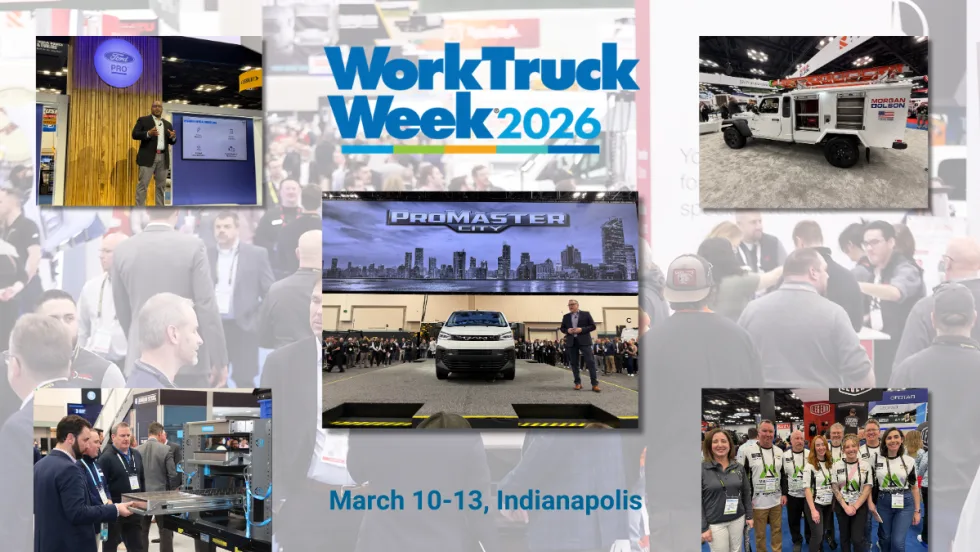
8 Trends: Work Truck Week 2026 Reveals a Fleet Industry in Reset Mode
Walking the show floor this year, the new focus was around “practical innovation” and pragmatic solutions. And oh yeah, a new small van.
Read More →
The Moment AI Became Operational
“AI isn’t assisting us anymore. It’s doing the work,” said CEO Neil Cawse at Geotab Connect 2026. What does this mean for fleet managers?
Read More →
For Mike Antich, it Was Always About the People
He stood tall in the industry in so many ways, but he measured success by the people he served.
Read More →
Solving the Flexible-Lean Fleet Paradox
The lean fleets of yesterday are the fragile fleets of today. Where do we find the balance?
Read More →
We’ve Been Here Before
If every generation of fleet managers thought they had the worst problems, what makes ours any different?
Read More →