




Winter Driving Safety for Fleet Drivers: Managing Risk Across North America
Colder weather brings lots of snow, and winter is right around the corner. Here's how fleet can prepare.
October 30, 2025

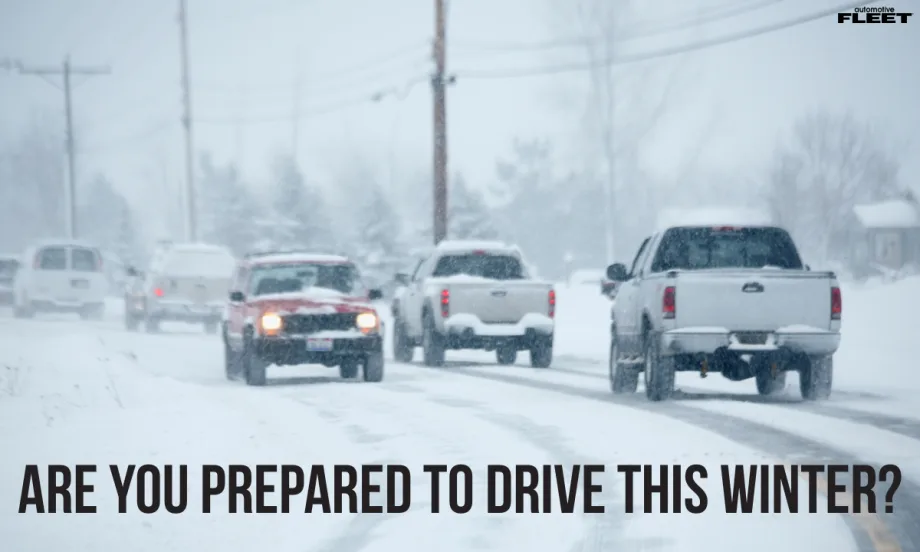
Fleet drivers across North America face diverse winter hazards—from black ice to heavy snow. Preparation, patience, and proactive driving help keep operations safe and on schedule through every storm.
Image: Automotive Fleet
5 min to read
Winter weather poses unique challenges for professional drivers across the U.S. and Canada. From
freezing rain and black ice to whiteouts and unpredictable temperature swings, conditions can shift
rapidly, and so can the risk level. Fleet drivers who anticipate these hazards and adjust their driving
behavior play a critical role in preventing incidents and keeping operations moving safely.
Southern and Coastal Fleets
In the southern and coastal regions, winter weather often means fluctuating temperatures, fog, and
occasional freezing rain. These conditions are less predictable and can catch even experienced drivers off
guard.
What fleet drivers should remember:
Monitor the weather before every route. A cold morning after overnight rain can produce black
ice or dense fog.Adjust speed and space. Even a drizzle can double the stopping distance. Maintain a minimum six-second following distance in wet conditions.
Avoid driving when ice is reported. There is no safe technique for operating on ice, and a delay
departure until conditions improve.Stay alert for seasonal visitors. Southern regions see an influx of “snowbirds” unfamiliar with
local roads and traffic patterns. Keep extra space and anticipate erratic moves.
Western and Mountain Operations
Drivers covering western routes often face a dramatic range of weather conditions within a single shift.
Rain at lower elevations can quickly become snow or sleet as altitude increases.
Safe practices include:
Check forecasts across your route, not just at your origin. Use fleet apps or dispatch notifications
for real-time updates.Be aware of chain laws. Many states and provinces, including Colorado and British Columbia,
require tire chains under specific conditions.Slow before entering overpasses and shaded curves. These surfaces freeze before main roadways.
Increase following distance. Use the 6-second rule in rain and 12-second rule in snow to maintain
adequate stopping room.Fully clear your vehicle. Snow or ice falling from a company vehicle creates danger and potential liability.
Midwestern Fleets
The Midwest’s sub-freezing temperatures make black ice a constant risk. Fog and light snow also
contribute to reduced visibility and surface traction.
Guidelines for safer driving:
Expect black ice where the road looks wet. Keep your steering straight and ease off the gas until traction returns.
Approach intersections and ramps slowly. These are high-risk areas for refreezing and loss of
control.Plan for slower travel. Dispatchers and fleet managers should factor in longer route times during the winter months.
Northern U.S. and Canada
Fleet drivers operating in northern climates face the most challenging conditions: extreme cold, heavy snow, and low visibility.
The U.S. Federal Highway Administration reports that nearly one in four weather-related crashes occurs
on snowy, slushy, or icy pavement. Transport Canada adds that roughly 30% of all collisions happen on
winter roads.
Preparation is critical:
Perform a pre-trip inspection every day. Verify tire tread, brakes, and fluid levels.
Clear all snow and ice. Many Canadian provinces have “clear roof” laws requiring drivers to
remove all snow before travel.Drive smoothly. Gentle acceleration, braking, and steering prevent skids and loss of control.
Use sunglasses. Snow glare increases fatigue and reduces visibility.
Keep your fuel tank at least half full. This prevents freeze-ups and provides heat if stranded.
Carry a full emergency kit: thermal blanket, traction aids, food, water, flashlight, and portable
charger.
Technology and Equipment
Modern fleet vehicles often include features such as four-wheel drive (4WD), all-wheel drive (AWD),
and electronic stability control (ESC).
While these systems support traction and stability, they do not eliminate the need for safe speeds or
extended stopping distances.
Even with advanced vehicle systems, physics still applies; tires have limited grip on ice.
Additional reminders:
Avoid over-reliance on technology. ESC helps correct a skid, but it cannot overcome excessive
speed.Telematics can support coaching. Use performance data to identify safe driving habits, not to
penalize drivers during winter operations.Keep tire pressure checked. Cold temperatures reduce air pressure, affecting handling and
braking.
Winter EV Fleet Considerations
Modern electric vehicles (EVs) present some unique winter-driving and fleet-management considerations.
Cold ambient temperatures slow the chemical reactions inside a lithium-ion battery, reducing its ability to
deliver power and accept a fast charge. One study found that in freezing temperatures, most EV models
averaged only ~80 % of their range compared to ideal conditions.
Pre-conditioning the Battery and Cabin
Pre-conditioning—warming up both the cabin and the high-voltage battery while the vehicle is plugged in—significantly improves winter performance. By using grid power to bring the battery and cabin to optimal
temperature before departure (or before a fast-charging session), the vehicle preserves more of its usable
range and avoids slower charging rates.
Charging strategy in cold weather
Cold weather not only reduces range but also slows charging. EVs in extreme cold may take significantly
longer to accept a charge or may reduce the charging rate until the battery is warmed Fleet drivers should
adjust by:
Keeping the vehicle plugged in whenever possible so it can maintain thermal balance and be
ready for departure.Charging to a higher state of charge in winter (for example, 80-100 % instead of typical 80 %) if
needed for longer routes or less predictable conditions.Scheduling pre-conditioning before arriving at a fast charger to maximize charging rate and
minimize time lost.
Operational impact for fleets
For fleet operations managing EVs, this means creating protocols around pre-conditioning (via telematics
triggers or driver app prompts), incorporating higher buffer charge levels in winter, and accounting for
longer route times (range loss, slower charging) in winter scheduling. Fleet vehicles parked overnight in
cold zones should ideally remain plugged in, and departure schedules should allow time for preconditioning rather than launching cold. Moreover, drivers should be trained to use lower-energy cabin heating options (such as seat- and steering-wheel heaters) rather than full-cabin HVAC when range is critical.
If You Skid
Steer gently in the direction you want the vehicle to go.
Ease off the accelerator until traction returns.
Once the vehicle stabilizes, apply gentle throttle to regain control.
If the vehicle becomes stuck:
Call dispatch and provide your exact location.
Check that the exhaust pipe is clear before running the engine.
Stay with the vehicle unless visibility is clear and conditions are safe to leave.
Fleet Readiness Before Winter
Fleet managers can strengthen safety culture before the first snowflake falls by:
Scheduling winter prep inspections (battery, tires, fluids, wipers).
Issuing cold-weather emergency kits for each vehicle.
Providing refresher training focused on space management, braking techniques, and skid
recovery.Establishing communication procedures for drivers encountering unsafe conditions.
Winter driving demands professionalism, patience, and preparation. Every driver’s decision to slow down, increase following distance, and anticipate hazards contributes to fewer crashes, lower claim costs, and safer communities.
Safety isn’t seasonal; it’s a year-round commitment that starts behind the wheel.
Subscribe to Our Newsletter
More Safety
IIHS Crash Avoidance Tests Reveal Safety Gaps in Cargo Vans and Work Trucks
New crash-avoidance ratings from the Insurance Institute for Highway Safety reveal inconsistent performance among commercial vehicles, with several popular cargo vans and heavy-duty pickups struggling to avoid collisions with other vehicles and pedestrians.
Read More →
What’s Next for Fleet? Safety, AI & Industry Recognition | AF News Recap
Could your company's culture be encouraging distracted driving? This week, we're exploring how workplace expectations affect driver safety, what AI, EVs, and autonomous vehicles could mean for the future of fleet management, and how fleet professionals can strengthen their award nominations.
Read More →
Does Your Fleet's Culture Encourage Distracted Driving?
What happens when the people responsible for enforcing safety rules are the ones setting the wrong example? The answer may reveal why some of the biggest risks to fleet drivers have little to do with what's written in the employee handbook.
Read More →
Sponsored•October 1, 2026
Fleet Manager’s Ultimate Playbook: Navigating the New Standard in OEM Connectivity
Rising operating costs, driver safety concerns, and unplanned downtime are putting unprecedented pressure on modern fleets. Discover how fleet managers use embedded OEM connectivity and real-time vehicle data to cut TCO, prevent downtime, and protect drivers without aftermarket telematics hardware.
Read More →
From Driver Well-Being to EV Charging | AF News Recap
Mental health belongs in the fleet safety conversation. This week, we’re looking at five ways fleets can support employee well-being before a crisis, plus Holman’s expansion in Mexico, new one-day Fleet Forward passes, and why EV charging demand is outpacing infrastructure growth.
Read More →
Nexar-Nauto Merger Aims to Give Fleets Better Safety Intelligence Through Larger Driving Dataset
Stefan Heck tells Automotive Fleet that combining more than 10 billion miles of driving history with Nexar's AI models will give fleets deeper insights into driver risk and roadway conditions than either company could provide independently.
Read More →
Don't Wait for a Crisis: 5 Ways to Build Mental Health Into Your Fleet Safety Program
For Suicide Prevention Month, fleet and safety leaders have an opportunity to put mental health where it belongs: at the center of workplace safety.
Read More →
How Camera Data Can Strengthen a Fleet’s Insurance Renewal
Insights from a commercial insurance carrier and a broker show how fleets can turn video telematic data, driver coaching, and improved claims results into a stronger case at insurance renewal.
Read More →
The Safest Fleets Aren’t the Ones with the Most Technology
You’ve made the telematics investment. Here’s how to capture the other half of its value and build the safest fleet on the road.
Read More →
Sponsored•August 7, 2026
Hidden in Plain Sight: Fleet Compliance Risks
Fleet compliance isn't just about having policies — it's about consistently enforcing them. This practical guide reveals six hidden compliance risks common in public sector and shared fleet operations and outlines proven strategies to improve visibility, accountability, and audit readiness
Read More →