




How Fleets Keep Fuel Flowing During Disasters
U.S. Bank Voyager explains the most common fleet payment failures during emergencies and how proactive planning helps keep vehicles moving when conditions deteriorate.
April 30, 2026

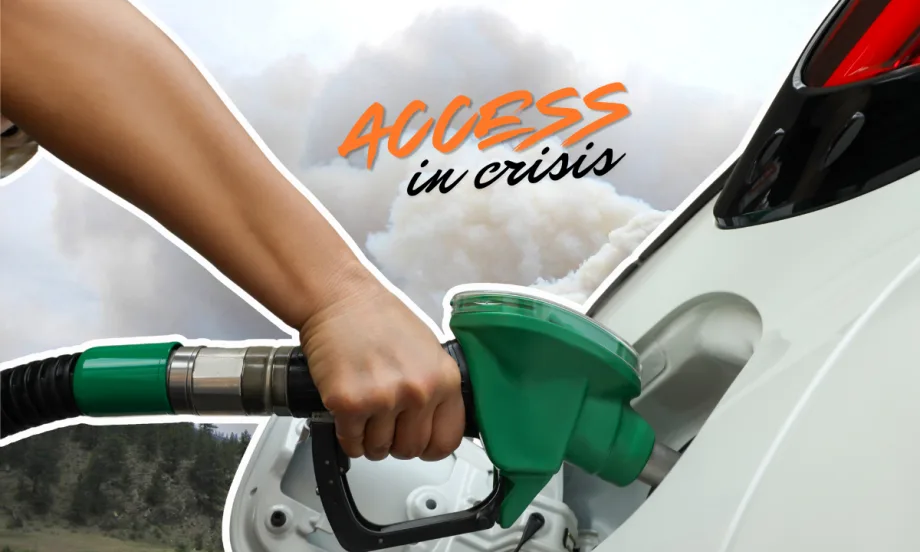
As disasters disrupt operations, fleets depend on flexible fuel controls and real-time authorization to stay on the road.
Credit: Automotive Fleet
5 min to read
When disasters strike, fleets often face operational challenges that go beyond damaged infrastructure or disrupted routes. Fuel access and payment authorization can quickly become critical issues, especially when vehicles are deployed outside their normal operating regions.
We spoke with representatives from U.S. Bank Voyager about how fleets can prepare their fuel accounts ahead of a disaster and what support is available to keep vehicles moving during emergency response.
AF: What’s the most common pain point fleets face during a disaster, from U.S. Bank/Voyager’s perspective?
USB: Across government and commercial fleets alike, declines are consistently the most common and disruptive issue during a disaster. They’re often the first visible signal that operating conditions have changed. Those declines can stem from several sources — spend limits, fraud controls, artificial intelligence safeguards, or even something as simple as incorrect PIN entry.
The work isn’t just resolving the decline itself. It’s understanding why it’s happening and responding in a way that restores access without creating unnecessary risk. That balance — keeping vehicles moving while maintaining oversight — is where much of our focus goes. From there, we work with customers to adjust limits and leverage our proprietary fraud detection tools to ensure continuity without sacrificing control.
AF: What proactive steps does Voyager recommend fleet managers take before a disaster strikes? Are there specific account settings, spend controls, or contingency plans you advise customers to set up in advance?
USB: Some customers reach out well in advance, while others operate more in real time once conditions change. In many cases, both approaches can work.
At a minimum, we encourage customers to share any planning information they have in advance. Even if they don’t know which specific cards will be used, most customers can identify the vehicles or equipment likely to be deployed.
Sharing equipment IDs or anticipated deployment details allows us to make informed adjustments in advance. When those details are connected to a fleet management system, it gives us a clearer framework to work from rather than reacting in isolation once the situation unfolds.
AF: Do you offer any pre-disaster consultation or account review services to help fleets prepare?
USB: Yes. We’ve supported disaster response for many years, and as a result, we often work with the same types of organizations repeatedly — utilities, government agencies, and key service providers. That experience allows us to review plans with a disciplined eye. We look for familiar pressure points, confirm the right vehicles are identified, ensure the appropriate states or regions are open, and make any necessary adjustments ahead of time. When changes are needed, we can implement them quickly, so customers are better positioned before conditions deteriorate.
AF: When a disaster hits, what specific spend control adjustments do you make for affected customers, and how quickly can those changes be activated?
USB: We typically begin with geographic controls, such as state restrictions, and then evaluate spend parameters based on how the fleet is operating. That can include swipes per day or dollar limits across daily, weekly, monthly, or billing cycle timeframes. Adjustments are made deliberately, not indiscriminately. We start with the constraints most likely to impede operations and expand controls only as needed. This approach gives fleets the flexibility to respond in the field while preserving visibility and accountability.
AF: Can controls be expanded temporarily to cover fuel types, geographic regions, or purchase categories outside a fleet’s normal parameters? What does that process look like?
USB: While our platform doesn’t restrict fuel types directly, we can accommodate temporary needs by temporarily increasing approved dollar limits to cover higher-cost fuels when necessary. We can also adjust geographic controls to support deployment beyond a fleet’s typical operating area.
Those changes can be made before a disaster begins or after it’s already underway. Temporary flexibility is most effective when it’s purposeful and revisited as conditions stabilize, and that’s how we approach these adjustments.
AF: Is there a dedicated emergency line or escalation path for fleet managers who need immediate account changes during a crisis?
USB: If a customer has a relationship manager or account manager, we recommend starting with them, as they understand the broader context of the account. If not, customers can contact customer service or the fraud group directly.
The priority is ensuring there’s always a clear escalation path to someone who can make informed decisions quickly. Whether through an established relationship or immediate support channels, our goal is to act fast without losing sight of the full operating picture.
AF: You mentioned working with utilities and governments to move vehicles beyond normal coverage regions. Can you walk me through a real-world example of how that works?
USB: This most often occurs with hurricanes, where the path and impact area can shift rapidly. In those situations, we actively monitor weather conditions and anticipate how customers may need to redeploy assets. There are times when we proactively reach out to government agencies or utilities ahead of landfall.
In other cases, once an event has occurred, we identify ways to assist immediately. We’ve adjusted controls on customers’ behalf when a direct hit was imminent, so vehicles could move without delay. The focus is always on helping customers respond effectively while maintaining appropriate safeguards.
AF: Regarding fraud and security, when controls are loosened during emergencies, how does Voyager protect against fraud or misuse?
USB: Fraud monitoring never stops. Our artificial intelligence–based fraud detection operates in real time, 24/7/365, regardless of whether a disaster is occurring or controls have been adjusted. Even when operational parameters change, the underlying discipline remains the same. Every transaction is continuously evaluated, with alerts reviewed in the context of both the customer’s typical behavior and the evolving situation. Flexibility in one area does not mean reduced vigilance in another.
AF: Does Voyager’s support extend beyond the immediate disaster response window?
USB: Yes. Our support spans the entire lifecycle of a disaster. We aim to engage with customers before an event, support them during active response, and assist afterward as operations normalize.
Post-disaster recovery often requires as much attention as the response itself. If restrictions need to be reapplied or controls returned to pre-disaster settings, we help customers do that. When bandwidth is limited, we step in to help ensure accounts are protected and returned to steady-state conditions.
Subscribe to Our Newsletter
More Disaster Response
From Storm Prep to Emergency Response: The Growing Role of Telematics in Disaster Management
Telematics is transforming disaster response by giving fleets real-time visibility, improving routing, readiness, and coordination when every second counts.
Read More →
Disaster Readiness Is Not a Fleet Count, It’s a Stress Test of the Whole System
Fleet readiness isn’t about your vehicle count. It’s about condition, capacity, and whether your system can actually perform under stress.
Read More →
The Waffle House Effect: How They Impacted How Storms are Measured While Keeping Hot Meals Ready
Why one restaurant chain became a benchmark for disaster response and what fleets can learn about readiness, operations, and recovery.
Read More →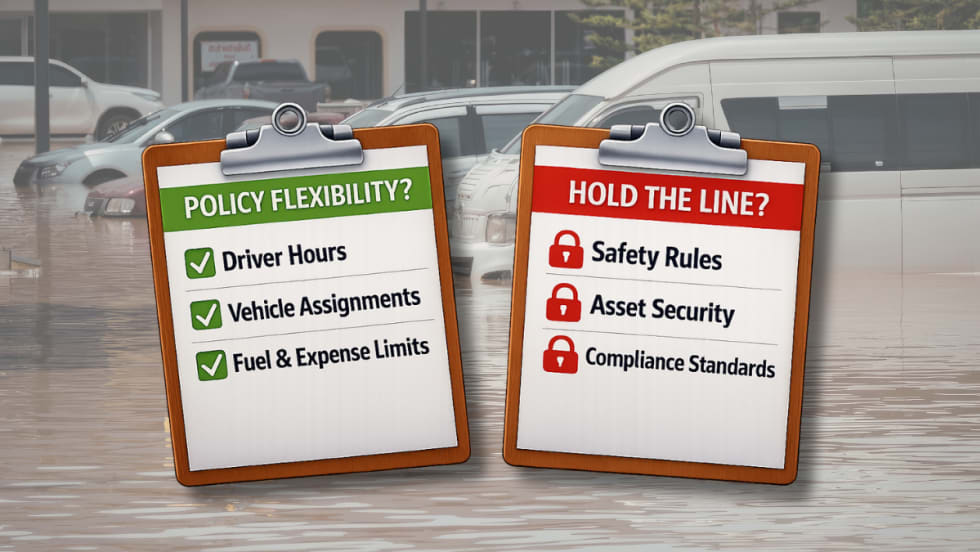
Adapting Fleet Policy When Disasters Strike
In the middle of natural disasters fleet managers must shift priorities to protect people and assets. What policy items should be loosened, and when should the line be held?
Read More →
When Fuel Runs Out, the Fleet Plan Falls Apart
When disaster hits, fleets fail on fuel, power, and idle planning. See the energy gaps fleet managers need to fix before the next storm.
Read More →
The Missing Data Point in Disaster Response
Human reports fill the gaps that telematics can’t during disasters. Here’s how fleets can use structured input (not social chaos) to respond faster and safer.
Read More →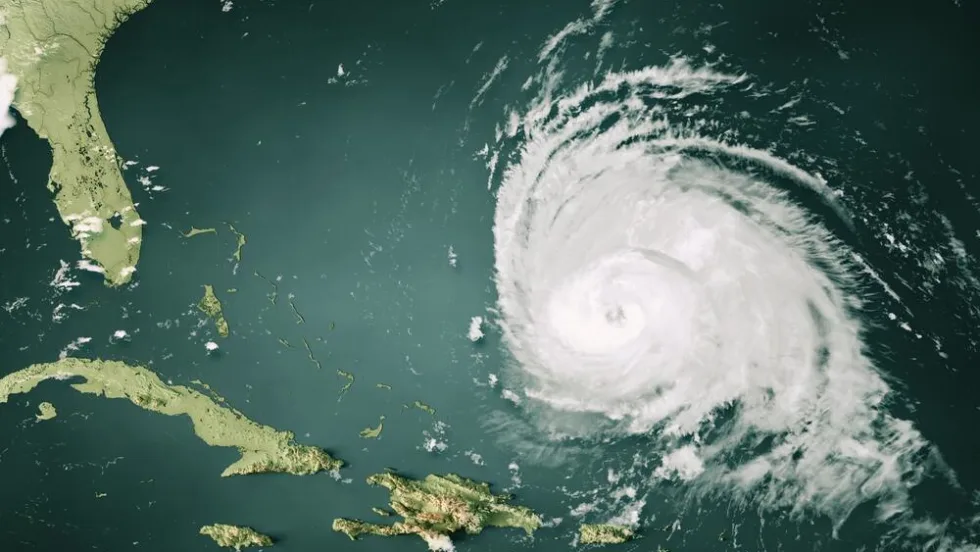
Essential Strategies for Fleet Preparation and Protection During Hurricane Season
Prepare your fleet for hurricane season with proactive strategies to protect drivers, vehicles, and assets before, during, and after the storm.
Read More →
When Disaster Strikes: Equipping Your Fleet for Survival and Recovery
Discover how fleets can stay operational during hurricanes, wildfires, floods, and storms with strategic planning, technology, and data-driven maintenance.
Read More →
Mobilizing for Recovery When it Matters Most
When disaster strikes, reliable transportation becomes a lifeline for recovery, ensuring first responders and relief crews can reach those in need most.
Read More →
My GPS Position on Weather Apps
Discover how hyper-local weather alerts paired with GPS telematics can protect workers from sudden storms. Are your crews prepared for the unexpected?
Read More →