




Disaster Readiness Is Not a Fleet Count, It’s a Stress Test of the Whole System
Fleet readiness isn’t about your vehicle count. It’s about condition, capacity, and whether your system can actually perform under stress.

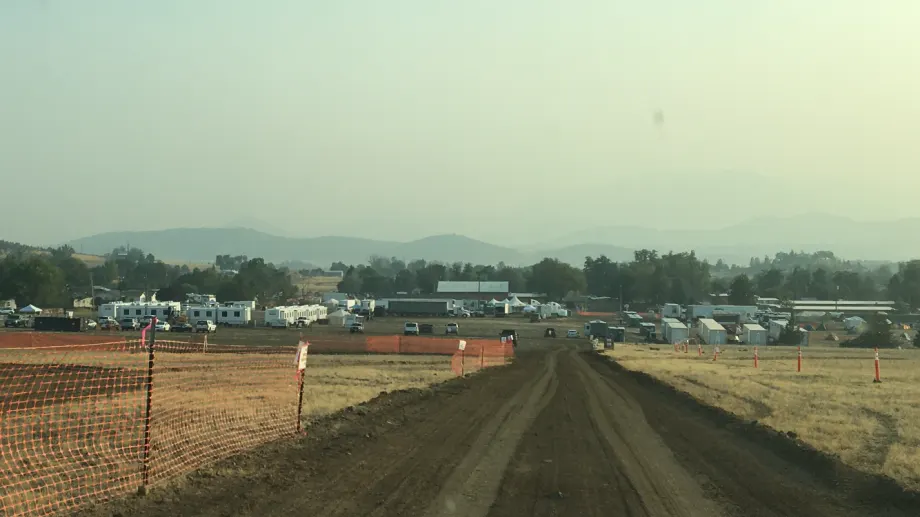
Large-scale incidents require coordinated staging areas to manage personnel, vehicles, and resources.
RTA Fleet Management
- Disaster readiness evaluates the entire system's ability to function under stress, not just the number of vehicles available.
- The condition and capacity of each vehicle are crucial to determining overall readiness.
- A comprehensive stress test of the fleet system reveals true preparedness for unforeseen events.
*Summarized by AI
There is a moment in every disaster response when the plan stops being a plan and starts being a reality test. That is usually the moment when organizations find out whether they were actually prepared or just professionally optimistic.
On paper, most emergency plans look pretty good. There is a resource list. There is a communications flow. There is a chain of command. There are procedures for fueling, staging, dispatching, and support. In calm conditions, it can all read as logical, complete, and reassuring.
But disasters do not care how polished the binder looks.
They care whether the vehicles you are counting on will start, whether the people who fix them are available, whether your fuel strategy holds when normal delivery patterns break down, whether your shop can absorb a surge, whether your backup units are actually road-ready, and whether anyone can see the full operating picture clearly enough to make smart decisions in real time.
That is the difference between a plan that exists and a system that performs.
And that is really the heart of what Scott Conlon, Steve Saltzgiver, and Tony Yankovich of RTA are getting at. From slightly different angles, all three are pointing to the same uncomfortable truth. Fleet readiness is routinely misunderstood because too many organizations still treat it like an inventory question when it is really an operational endurance question.
Tony Yankovich put it best. “Most leaders think in terms of ‘Do we have enough vehicles?’ The better question is ‘Can our system sustain output under stress?’”
That question is bigger. It is harder. It is also the right one.
Because when disaster hits, readiness is not decided by how many assets appear on a report. It is determined by whether the entire support system behind those assets can continue functioning when demand spikes, conditions change, and small weaknesses become costly very quickly.
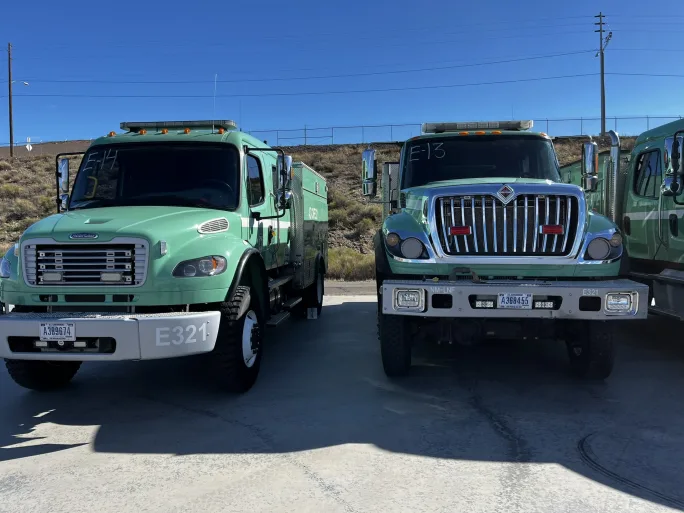
From staged fleets to field camps, disaster response quickly reveals whether operations can hold up under real-world pressure, not just on paper.
RTA Fleet
Why So Many Disaster Plans Fail Anyway
One of the more frustrating aspects of disaster planning is that failure usually does not stem from a total lack of effort. Most organizations do put time into preparedness. They build plans. They hold meetings. They document processes. They identify critical functions. Nobody is sitting around hoping to be caught flat-footed.
And yet, plans still fail in execution all the time.
Saltzgiver explained why with brutal simplicity. “Disaster plans fail because they’re built on assumptions instead of verified conditions,” he said. “They’re logically sound, but no one validates whether the underlying resources can actually perform under stress.”
That is a sharp point, and it gets at the real problem. A lot of planning is built on a chain of assumptions that feels reasonable until the environment turns volatile.
The fleet management system shows the unit as available, so it is counted as available. The backup generator was fine the last time someone checked, so it got assumed into the plan. There is a fuel vendor on paper, so fuel continuity is treated as covered. A shop typically handles routine maintenance, so leaders assume it can also extend to emergency support. The communications process exists, so people assume it will still work when networks are overloaded or teams are scattered.
Disaster response has a way of stripping all of that down to one blunt question. Did anyone actually verify this?
That is why Saltzgiver’s approach starts earlier and goes deeper than many organizations are used to. His first point is not to update the spreadsheet or revise a checklist. It starts with a real risk assessment. Understand the hazards that actually fit your geography and operating environment. Wildfires. Hurricanes. Earthquakes. Civil unrest. Flooding. Major power disruption. Then identify the actual vulnerabilities those risks expose, including fuel supply, communications, staffing, and access to vehicles and facilities.
That matters because readiness is always contextual. A fleet that looks prepared for routine service delivery may be nowhere near prepared for evacuation support, public safety backup, wildfire staging, or extended power outages. If leaders do not define which operations are truly mission-critical, everything gets treated as equally important, and that is usually the first step toward confusion.
Saltzgiver’s point here is not academic. It is practical. Plans fail when they are built on generalized confidence instead of specific validation.
The Most Common Readiness Myth in Fleet
If there is one myth this whole conversation keeps circling back to, it is this: if a vehicle is assigned, listed, or marked as available in the system, it must be ready.
That assumption is everywhere. It is also one of the biggest reasons fleets overestimate their real disaster posture.
Saltzgiver said the single most common readiness assumption fleets get wrong is that “availability in the FMIS equals readiness.”
Yankovich comes at the same issue from the operating floor. “Assigned does not equal ready,” he said. “What most plans miss is that fleet availability is dynamic, not static. In a lot of fleets, the ‘available’ list is really just an inventory list. It likely doesn’t reflect operational readiness.”
That distinction is not just a good line. It is the whole problem.
Administrative availability is not the same as operational readiness. One tells you that a unit is on your books and not currently coded out. The other tells you whether that vehicle can be put into service immediately, under pressure, for the work you are asking it to do.
Those are very different things.
A vehicle can be technically available while sitting with overdue PM, unresolved defects, aging tires, battery issues, a pump that has not been tested recently, deferred repairs someone has been “watching,” or equipment that has not been checked since last season. It can be listed and assigned and still be one hot day, one long shift, or one mechanical strain away from becoming somebody else’s operational headache.
That is why the early warning signs matter so much. Saltzgiver called them out clearly: slipping PM compliance on critical assets, a growing backlog of open work orders, and parts delays. Those are not just maintenance metrics. They are readiness signals. They tell you the system is starting to drift.
Yankovich expands on the same point with more urgency. Readiness is dynamic because the system supporting the fleet is dynamic. Technician capacity changes. Parts availability change. Shop throughput changes. Fuel access changes. Vehicle condition changes. The status of a fleet is not a fixed truth that can be declared once and trusted indefinitely. It must be managed, re-verified, and pressure-tested.
That is one reason both Saltzgiver and Yankovich keep returning to the need to segment the fleet and to get specific about what actually matters. Saltzgiver’s advice to create and actively manage a critical asset list is deceptively simple, but it may be one of the highest value moves a fleet can make. Most organizations still treat all assets too evenly. In an emergency, that is a mistake. Not every vehicle is critical to continuity, emergency response, or life-safety support. Some are far more essential than others, and those units need a different level of attention, urgency, and visibility.
It is a little like triage before the incident, which is exactly what good preparedness should be.

When response is underway, fleet performance is measured in motion, not just availability reports.
RTA Fleet
Readiness Is Really About Condition, Capacity, and Continuity
Yankovich’s broader framework is useful because it gets fleet leaders out of the habit of thinking in simple counts.
He said the three things that define fleet readiness are condition, capacity, and continuity.
The condition is straightforward, at least on the surface. Are the assets truly reliable? Not theoretically reliable. Not “probably fine.” Not “it ran last time.” Reliable enough to operate in a high-demand environment without becoming a liability.
Capacity is where the conversation gets more interesting. Can the organization sustain operations? Not just launch them but sustain them. That includes technician availability, bay capacity, after-hours support, parts inventory, fueling access, and the ability to absorb a spike in repairs without immediately falling behind.
Continuity is the bigger systems question. Can the supporting infrastructure hold up? Can communication channels stay open? Can parts and fuel still move? Can maintenance support continue if facilities are disrupted? Can staffing hold together through fatigue, specialization demands, and extended response timeframes?
That framework matters because it shifts readiness away from a static measurement and into a stress-based one. A fleet can have enough vehicles and still fail all three tests.
In fact, Yankovich argues that one of the biggest blind spots in real-world events is that leadership tends to focus on vehicle count, even though the actual failure point is often labor.
“In many real-world events, the failure point is technician availability, fatigue, and specialization,” he said. “You can’t surge skilled labor overnight, and most fleets are already operating close to capacity.”
That point deserves more attention than it usually gets.
Disaster planning often assumes assets are the constraint because assets are easier to count. Skilled labor is harder to quantify and much harder to replace on short notice. If only certain technicians can diagnose and repair certain systems, if your after-hours bench is thin, if fatigue sets in across a prolonged response, or if shop space is already constrained, your effective fleet capacity may collapse long before you run out of vehicles on paper.
That is not a side issue; that is the operating reality.
The Risk Fleets Carry Quietly Until It Is Too Late
There is also a slower-moving readiness problem that sits in the background of many fleet operations and gets normalized over time: deferred maintenance and aging assets. Yankovich did not soften this one.
“This is one of the biggest hidden risks,” he said. “Most fleets manage deferred maintenance on a daily basis, but in reality, they are just carrying forward risk.”
That is an important distinction. Deferred work is often framed operationally as something manageable, temporary, or routine. In fairness, many fleets are doing the best they can with budget, staffing, and supply constraints. But the risk does not disappear because it has been administratively managed. It accumulates.
And disasters are very good at collecting on accumulated risk.
“Older fleets have higher failure rates,” Yankovich said. “In an emergency, you’re asking your fleet to operate at peak demand. That’s when aging units typically fail.”
That line lands because it reflects what a lot of fleet leaders know in their bones. During ordinary operations, aging vehicles can often be coaxed along, scheduled around, or strategically patched. In an emergency, there is less forgiveness. Units run harder. Downtime matters more. Repair windows shrink. Logistics are getting messier. Heat, smoke, debris, idling, stop-start demands, long deployments, and poor road conditions quickly expose weaknesses.
Saltzgiver addresses the same reality from the perspective of resilience. His advice is not just to maintain vehicles better in general. It is to maintain higher PM compliance, specifically to reduce breakdown risk during emergencies, diversify fueling strategies so the fleet is not dependent on a single mode of supply, and keep critical spares on hand for the units that become most valuable under pressure, including service trucks and generators.
That is what stronger preparedness really looks like in fleet. It is not a slogan. It is the accumulation of practical decisions that reduces the number of bad surprises later.
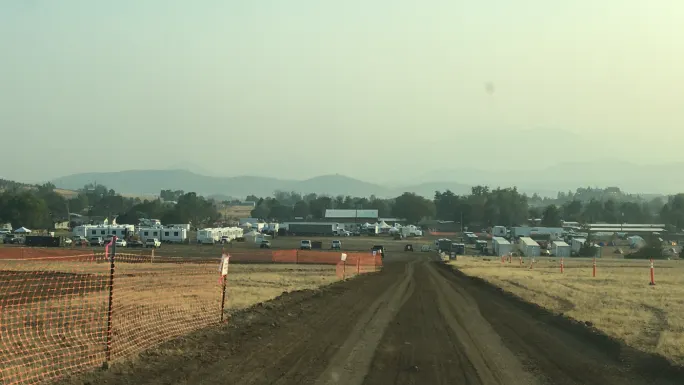
Large-scale response depends on visibility across people, assets, and operations in real time.
RTA Fleet
Where Disaster Response Starts to Break Down
Conlon’s contribution deepens the story by showing what happens once an incident is actually underway and multiple agencies, contractors, and support resources enter the picture.
His core observation is that coordination and communication most often break down “in the process of matching resources to the operational plan in real time.”
That is worth sitting with for a second, because it highlights a common misconception about coordination failure. People often think breakdowns stem from insufficient communication, effort, or urgency. Conlon’s point is more operational than that. The problem is that decision-makers are constantly trying to align resource allocation with a moving situation, and they are doing so without sufficient real-time clarity.
“The challenge isn’t just getting resources,” Conlon said. “It’s getting the right resources, in the right quantities, at the right time.”
That sounds obvious, but it gets complicated fast in wildfire and interagency response. Incident teams are trying to order and position both operational assets and logistical support. Engines. Water tenders. Fuel trucks. Tactical units. Supply vehicles. Contractors delivering hose, materials, and equipment. They are also trying to avoid two equally bad outcomes: under-ordering and over-ordering.
Conlon explained it this way: “Incident teams are continuously trying to balance having enough resources without over-ordering. Too few slows response. Too many increases cost and pulls assets away from other incidents.”
That tension becomes even harder to manage because wildfire conditions are so dynamic. “An incident that appears to require weeks of sustained resources can scale down rapidly due to a weather event,” Conlon noted, which creates “a constant lag between planning assumptions and real-world needs.”
A theme is emerging here, and it is the same one Saltzgiver raised at the planning stage. Assumptions age badly in fast-moving environments.
Conlon’s version of that challenge is the operating picture. One of the biggest gaps, he said, is the lack of clear real-time visibility into how resources are actually being used. Without that, leaders are making deployment, allocation, and release decisions based on estimates rather than on-the-ground operational reality.
The consequences show up in patterns fleet leaders will recognize immediately. Resources are deployed far from their home units while new local incidents emerge and require backfill. Assets are moving long distances unnecessarily. Units spending too much time deadheading between assignments rather than actively contributing to operations. Increased cost. More fatigue. More wear. More safety exposure. More circular inefficiency.
At the center of all of it, Conlon said, agencies are trying to coordinate “without a fully shared, real-time operating picture.”
That is one of the clearest descriptions of disaster friction in the whole set of responses.
Technology Is Not the Problem. Integration Is
One of the more nuanced points Conlon makes is that disaster response is not suffering from a total absence of technology. In many cases, the tools already exist. The problem is that they are not consistently integrated across the full response environment.
He pointed to real-time GPS and asset tracking as one of the most underutilized technologies in the field. Many agencies already have tracking capability on primary on-road equipment. Some are even expanding it to off-road resources like bulldozers and UTVs. The technology is there.
The gap emerges when multiple agencies and contracted resources come together.
Wildfire response does not occur within a single neat system. It involves federal agencies, state and local cooperators, and numerous contractors and vendors. Those contracted resources may be fully qualified operationally, but they often do not arrive with compatible tracking tools that integrate into the larger incident environment. As a result, not all resources are visible in real time, and the incident command is operating with partial information.
That is why Conlon’s point lands so well. “The issue isn’t access to technology,” he said. “It’s the inability to standardize and scale it across all participating resources.”
That is a much more mature way to talk about technology gaps. It is not a shiny-object argument. It is an interoperability argument.
Saltzgiver echoes that same mindset from the fleet operations side when he talks about communication protocol redundancy and digital tracking. Radios, satellite phones, mobile apps, text and email chains, designated emergency communications lead, FMIS tools for tracking asset status and response costs, and digital documentation that can later support reimbursement and recovery analysis. None of that is sexy. All of it matters.
What both perspectives suggest is that the future of fleet readiness is not simply more technology. It is better-connected technology, used in ways that improve real-time visibility, support decision-making, and reduce operational blind spots.
What Real Preparedness Looks Like Before the Event Starts
One thing that makes Saltzgiver’s contribution especially valuable is that he gives a full pre-incident framework, not just a diagnosis of what tends to go wrong.
He starts with risk assessment, then moves into the need for an emergency fleet response plan that actually defines procedures for activation, asset reallocation, fueling, communications, contact lists, chain of command, and alternate communications. Just as important, fleet-specific planning has to connect to the broader emergency operations plan. Otherwise, the fleet remains adjacent to the incident rather than integrated into it.
He also pushes hard on the things that make fleets more resilient before conditions deteriorate. Higher PM compliance. Diversified fueling strategies, including backup power, mobile fueling, or alternative fuel arrangements where appropriate. Critical spare parts for high-demand support units. Strategic staging based on likely threats or evacuation zones. Readiness kits in vehicles. Battery checks for idle backup units. Fuel rotation. Staff training. Tabletop exercises.
There is a nice thought-leadership thread running through all of that, which is this: good disaster preparedness in the fleet is rarely dramatic. It is cumulative.
It is not one grand move. It is a series of disciplined decisions that close the gap between assumed capability and verified capability.
That is why Conlon also emphasizes preseason, hands-on readiness validation. Engine academies are one example. Bring together the crews, vehicles, and fleet personnel. Inspect the apparatus. Perform PM. Test the pumps. Refresh operator knowledge. Validate both the equipment and the people before the season starts.
That approach does something important both psychologically and operationally. It stops the organization from treating readiness as a paperwork exercise and turns it into a field reality exercise.
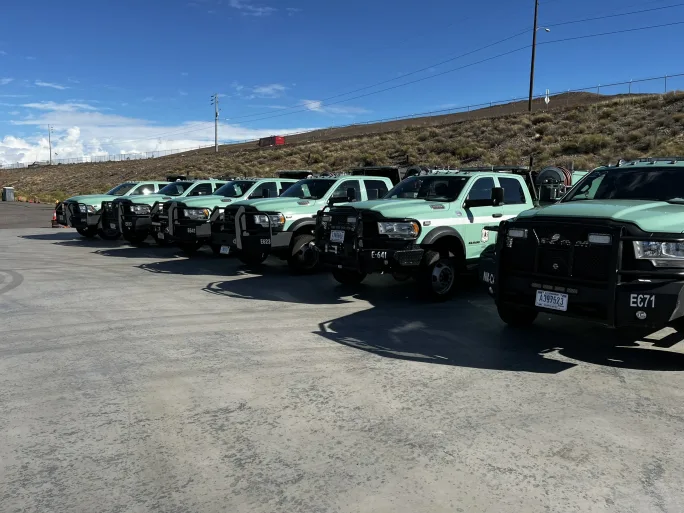
A full lineup means little if the system behind it can’t sustain output under stress.
RTA Fleet
You Cannot Pressure-Test Readiness from Behind a Desk
If there is one practical lesson that comes through loudest from both Saltzgiver and Yankovich, it is that readiness must be physically validated.
Yankovich was especially direct about this. If a fleet leader wants to pressure-test real availability this week, the answer is not to pull another FMIS report. It is to walk the line.
“Start with a hands-on validation of vehicle and equipment availability,” he said. “Not just running a report from your FMIS.”
That means physically verifying critical units. It means checking PM compliance, open work orders, deferred maintenance, technician coverage, parts inventory, fuel capacity, and infrastructure resilience. And if a known event is imminent, his recommendation is even blunter: someone should physically touch every likely response unit ahead of time.
There is a lot of wisdom in that phrase. Touching the units means you are not relying on a digital abstraction. You are confronting reality. You see whether the backup truck starts cleanly, whether the staged unit has the right safety gear, whether the battery issue someone was tracking last month is still unresolved, whether the fuel level is where it should be, and whether the defects logged in the system match the conditions on the ground.
Conlon’s incident-level point reinforces the same idea. When resources arrive at a fire, they should be inspected at check-in by qualified mechanics, because a single breakdown in the wrong place can disrupt far more than a single vehicle. A disabled unit on a narrow road can block ingress and egress for everyone behind it. That is not just a maintenance failure. It is an operational choke point.
In other words, physical validation is not old-school caution. It is a strategic necessity.
Why ICS Still Has So Much to Teach Fleet
Conlon’s final set of observations widens the lens in a helpful way. One of the most transferable lessons from wildfire operations, he said, is the value of the Incident Command System. ICS works because it provides a clearly defined chain of command, standardized roles, a regular operational cadence, and a centralized incident action plan that gives everyone a common structure.
That matters because major disaster response is not just about speed. It is about coordinated speed.
It is easy for fleet organizations to think of themselves as support functions adjacent to the response, but Conlon makes the point that fleet often plays a critical operational support role through fueling, maintenance, facilities, and staging. If fleet leaders and teams are not familiar with ICS and NIMS, it becomes easy to unintentionally work outside the system, even when the intent is good.
Conlon’s warning about freelancing is particularly relevant here. ICS is designed to prevent well-intentioned actions that bypass the plan, disrupt coordination, misallocate resources, or create safety risks. For fleet leaders, understanding that structure is not just a nice professional development add-on. It is part of readiness.
He also points to another lesson that emerged from COVID and still feels underappreciated: digitizing administrative processes. QR codes, digital forms, mobile timekeeping, and lower-contact documentation helped reduce friction and improve scalability in high-density environments like fire camps.
That is a useful reminder that readiness is not only about the rolling stock. It is also about how efficiently the support processes around the operation function when conditions become harder.
What Fleets Should Do Now, Before the Weather Makes the Decision for Them
The most compelling thing about these three perspectives is that, together, they move the conversation past vague preparedness talk and toward a sharper standard.
Stop asking whether the fleet looks ready.
Start by asking whether it has been verified, segmented, stress-tested, and integrated into a larger response system that can withstand strain.
That means conducting a real risk assessment and defining mission-critical operations. It means building a fleet response plan that is tied to the broader emergency plan, not floating beside it. It means actively managing a critical asset list rather than pretending that every unit has equal operational significance. It means improving PM discipline on the vehicles that matter most.
It means validating backup fuel, communication redundancy, technician availability, after-hours support, parts access, and infrastructure constraints. It means physically inspecting likely response units before events, not trusting the report to tell the whole story. It means using digital tools to track costs, status, and performance, while recognizing that interoperability still matters more than software alone.
It means training, tabletop exercises, and ICS familiarity for the people who depend on it. And it means planning for post-incident recovery and lessons learned before the incident has even started.
That is not overkill. That is preparation. And yes, some of this is hard. Some of them are resource dependent. Some of it will expose things leadership does not love hearing. But that is exactly why it needs to happen before the emergency and not during it.
Driving Thoughts
Fleet readiness is often discussed like a number, a percentage, or a dashboard status. But it is none of those things on its own.
It is a living system comprising asset conditions, labor capacity, fuel continuity, communication resilience, infrastructure support, decision-making visibility, and disciplined coordination. It is fragile where assumptions remain untested and strongest where conditions have been verified.
Yankovich’s framing is the one that sticks because it cuts through the noise. The question is not whether you have enough vehicles. The question is whether your system can sustain output under stress.
Saltzgiver reminds leaders why that answer is so often wrong. Plans fail when they are built on assumptions instead of verified conditions.
And Conlon shows what that looks like in the field, where coordination frays, visibility gaps widen, and resource decisions are made on the fly.
Put together, the message is not subtle: Readiness is not what the system says you have; it is what the system can prove when the pressure is on.
About the Experts from RTA Fleet:
- Tony Yankovich, Director of Fleet Consulting: Yankovich has over 35 years of experience in the fleet industry and municipal operations. Over the past two decades, he has helped more than 500 organizations improve fleet performance, working with fleets ranging from 25 vehicles to over 250,000 assets. He is widely recognized as one of the most experienced fleet consultants in North America and has been nominated for the 100 Best Fleets Tom Johnson Award and the Public Fleet Hall of Fame.
- Steve Saltzgiver, Fleet Consultant: Saltzgiver brings extensive experience leading large-scale fleet operations, including organizations with more than 50,000 assets and annual operating budgets exceeding $1 billion. He works with public, private, and non-profit clients to improve performance through process optimization, system implementation, and data-driven decision making. His leadership experience includes executive roles with Coca-Cola Refreshments and Republic Services, as well as directing state fleet operations in Utah and Georgia. Steve is a recognized industry leader, serving on NAFA’s Board of Directors and receiving multiple lifetime achievement honors, including Government Fleet Hall of Fame induction.
- Scott Conlon, Fleet Consultant: Conlon brings over two decades of public sector fleet experience, including leadership roles with the U.S. Forest Service, Montgomery County, Maryland, and Mercury Associates. He has led enterprise fleet initiatives, including right-sizing, electrification strategy, financial modeling, and FMIS development. A U.S. Marine Corps veteran and CAFM-certified professional, Scott helps organizations modernize operations and plan for the future with confidence.
Quick Answers
Fleet count is not sufficient because readiness depends more on the condition and capacity of vehicles and whether the system can perform under stress rather than just the number of vehicles available.
*Summarized by AI
Originally posted on Work Truck Online
More Disaster Response

From Storm Prep to Emergency Response: The Growing Role of Telematics in Disaster Management
Telematics is transforming disaster response by giving fleets real-time visibility, improving routing, readiness, and coordination when every second counts.
Read More →
How Fleets Keep Fuel Flowing During Disasters
U.S. Bank Voyager explains the most common fleet payment failures during emergencies and how proactive planning helps keep vehicles moving when conditions deteriorate.
Read More →
The Waffle House Effect: How They Impacted How Storms are Measured While Keeping Hot Meals Ready
Why one restaurant chain became a benchmark for disaster response and what fleets can learn about readiness, operations, and recovery.
Read More →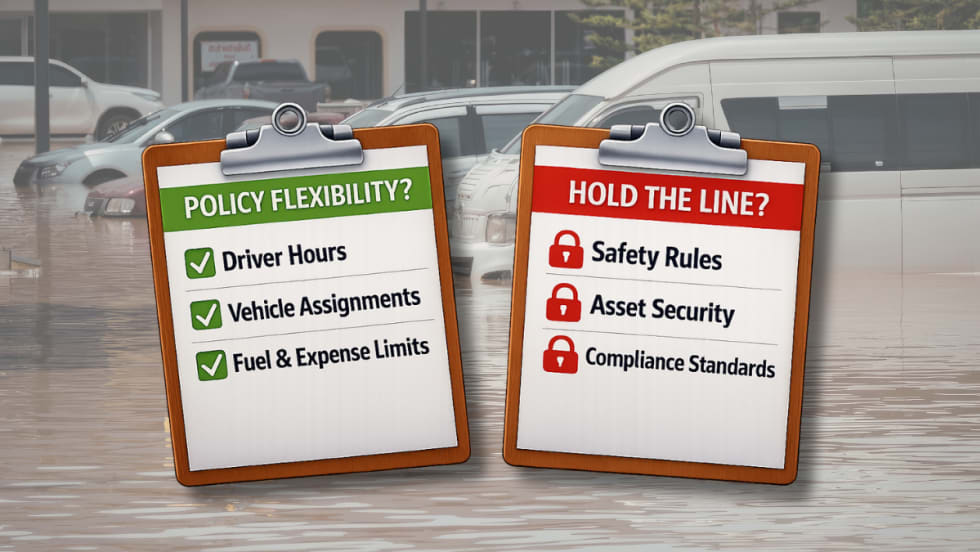
Adapting Fleet Policy When Disasters Strike
In the middle of natural disasters fleet managers must shift priorities to protect people and assets. What policy items should be loosened, and when should the line be held?
Read More →
When Fuel Runs Out, the Fleet Plan Falls Apart
When disaster hits, fleets fail on fuel, power, and idle planning. See the energy gaps fleet managers need to fix before the next storm.
Read More →
The Missing Data Point in Disaster Response
Human reports fill the gaps that telematics can’t during disasters. Here’s how fleets can use structured input (not social chaos) to respond faster and safer.
Read More →
Essential Strategies for Fleet Preparation and Protection During Hurricane Season
Prepare your fleet for hurricane season with proactive strategies to protect drivers, vehicles, and assets before, during, and after the storm.
Read More →
When Disaster Strikes: Equipping Your Fleet for Survival and Recovery
Discover how fleets can stay operational during hurricanes, wildfires, floods, and storms with strategic planning, technology, and data-driven maintenance.
Read More →
Mobilizing for Recovery When it Matters Most
When disaster strikes, reliable transportation becomes a lifeline for recovery, ensuring first responders and relief crews can reach those in need most.
Read More →
My GPS Position on Weather Apps
Discover how hyper-local weather alerts paired with GPS telematics can protect workers from sudden storms. Are your crews prepared for the unexpected?
Read More →