




My GPS Position on Weather Apps
Discover how hyper-local weather alerts paired with GPS telematics can protect workers from sudden storms. Are your crews prepared for the unexpected?
May 1, 2025

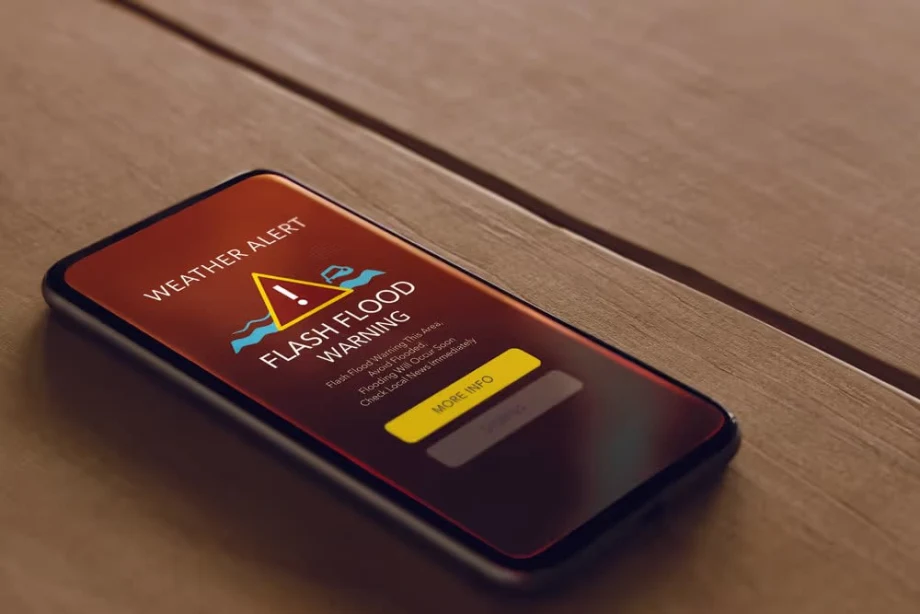
When storms shift by the mile, hyperlocal alerts help crews prep faster and respond smarter.
Credit:
Getty Images/BlackSalmon
5 min to read
Im about to share my thoughts and opinions on software solutions that combine weather data with telematics provider systems. I feel like there needs to be a legal disclaimer that my experience and opinions are mine and that I welcome yours. In no way am I saying employees should all be issued cell phones by their employers to receive alerts. Mobile devices can be a distraction. This article attempts to find solutions that match personal location with unexpected weather systems, and I hope it does some good.
I recently met a wonderful company in the Southeast that provides commercial and residential roofing services. Roofing has some uniquely safety-conscious aspects of the work, such as ascending and descending from a tall structure, often in intensely hot summers.
From a weather perspective, how do projects work around the weather when the work often involves stripping off some form of waterproofing membrane or shingles for at least a brief period? Depending on where and when, pop-up rainstorms happen as do straight-line windstorms, with very little notice.
The business owner asked if I knew of any weather warning apps that could alert their employees by giving them minutes to prepare for an unexpected storm. It was an excellent question, and I hope we can dig into it together.
ESSENTIAL REQUIREMENTS FOR HYPER-LOCAL WEATHER TRACKING
Here are my technical specifications.
- Precision: Unlike the weather app that came with my smartphone, which generalizes weather to a city, a proper interactive app needs to provide hyper-local precision. That is, I expect weather alerts within a few hundred yards of my phone’s location.
- Multiple Conditions: Options should include rain, hail, possible freezing roads, high winds, and extreme weather alerts such as tornadoes, floods, wildfires, and hurricanes.
- Notifications: It is essential that alerts and notifications specific to my location and the weather conditions are delivered in a notification on my screen or by text to my phone.
- Timing: Data should refresh on the application at least every five minutes, ideally minute by minute, to enable timely delivery of notifications.
- Cloud Processing (no pun intended): The solution should ideally be cloud-based and not tethered to a mobile phone for notification processing. Cloud-based processing should be capable of notifying both office staff and employees. Remember, the employee in our scenario is working on a roof. We would not assume they are permitted to have a mobile phone with them, as they would be expected to focus on safety and their work. Therefore, the weather app/cloud option would have some software integration capabilities.
What if we used the vehicle’s position, not the phone’s? Here’s my thinking: Many employers have some form of GPS installed in their vehicles. The GPS location where a vehicle is parked provides enough location accuracy, including where our employee working on the roof is, to meet our needs for hyper-local.
The data, when the vehicle ignition is switched off, is the latitude and longitude that we need to be accessible via API to be sent to the weather application for processing. To receive a notification, it will likely need to be generated by the GPS provider’s software, where email or text numbers are presumably stored for employee notifications for other purposes, such as safe driving coaching.
WHO’S ALREADY INNOVATING IN WEATHER AND FLEET MANAGEMENT?
Several good weather apps are available on the market, catering to the fleet industry. Two examples are tomorrow.io and weatheroptics, which seem to focus on the truck market only (I’d love to hear from them and if they could expand their scope to include all fleets where the driver is not in the vehicle but needs the weather alert).
My personal experience has been as a user of MyRadar. I have seen MyRadar exhibiting at fleet events and taking feedback from the fleet industry, which is a really good indication of their active interest in catering to general fleet needs. I asked them if they had examples of recent disasters and how their app was used, and they were able to provide the following quotes from users.
WILDFIRE PREPARATION
“With MyRadar our crews received real-time wildfire alerts while on the road. That extra warning helped us reroute teams and protect both employees and equipment. It’s now a core part of how we manage risk during fire season.” — Fleet Manager, Utility Company in California
HURRICANE PREPARATION
“As Hurricane Idalia approached, we used MyRadar to track the storm in real-time across our entire district. We were able to time bus closures and evacuations precisely, and the parents noticed. It gave us a level of confidence we didn’t have before.” — Director of Transportation, Southeastern School District
FLOOD AVOIDANCE FOR DELIVERY FLEET
“During heavy rains in Texas last year, MyRadar helped us avoid major road closures due to flash flooding. Dispatchers could make quick reroutes and keep drivers safe without guessing what was ahead.” — Logistics Manager, Regional Trucking Company
POST-STORM CLEANUP
“After the hurricane passed, MyRadar helped us coordinate cleanup efforts by showing where rain bands were still moving through. Crews didn’t waste time waiting out the weather — they moved efficiently from zone to zone.” — Anonymous Fleet
FINDING THE RIGHT WEATHER SOLUTION FOR YOUR BUSINESS
I’m not advocating for you to use MyRadar specifically, but I am encouraging you to investigate the potential to combine your existing investment in mobile devices and GPS in your vehicles to make the data connection between your people, their work location, and active weather.
As a follow-up to this article, you may be aware that I am continually field testing technologies and fleet solutions from our mobile lab. I have tested dozens of solutions, from telematics and dashcams to electric vehicle routing software, fuel cards, and yes, weather apps. The results will be published in our Fleet Fact Book & Buyers’ Guide 2025-2026.
If you have a weather application and would like us to test it or advocate on your behalf for data integration capabilities from your technology provider, please don’t hesitate to email roadtest@bobit.com. If you’re interested in receiving the Fleet Fact Book & Buyers’ Guide, complete the form on the Special Edition tab, and we’ll send you further details.
Subscribe to Our Newsletter
More Disaster Response
From Storm Prep to Emergency Response: The Growing Role of Telematics in Disaster Management
Telematics is transforming disaster response by giving fleets real-time visibility, improving routing, readiness, and coordination when every second counts.
Read More →
Disaster Readiness Is Not a Fleet Count, It’s a Stress Test of the Whole System
Fleet readiness isn’t about your vehicle count. It’s about condition, capacity, and whether your system can actually perform under stress.
Read More →
How Fleets Keep Fuel Flowing During Disasters
U.S. Bank Voyager explains the most common fleet payment failures during emergencies and how proactive planning helps keep vehicles moving when conditions deteriorate.
Read More →
The Waffle House Effect: How They Impacted How Storms are Measured While Keeping Hot Meals Ready
Why one restaurant chain became a benchmark for disaster response and what fleets can learn about readiness, operations, and recovery.
Read More →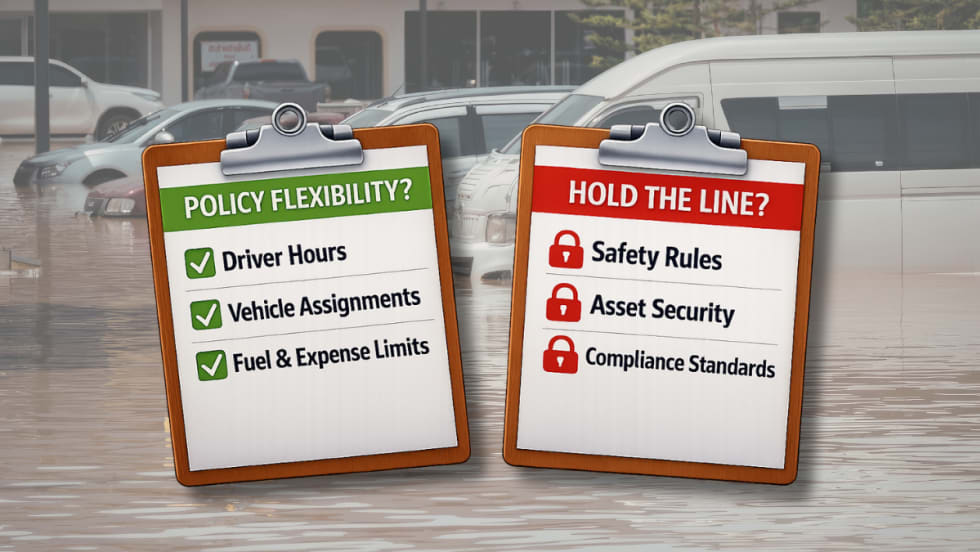
Adapting Fleet Policy When Disasters Strike
In the middle of natural disasters fleet managers must shift priorities to protect people and assets. What policy items should be loosened, and when should the line be held?
Read More →
When Fuel Runs Out, the Fleet Plan Falls Apart
When disaster hits, fleets fail on fuel, power, and idle planning. See the energy gaps fleet managers need to fix before the next storm.
Read More →
The Missing Data Point in Disaster Response
Human reports fill the gaps that telematics can’t during disasters. Here’s how fleets can use structured input (not social chaos) to respond faster and safer.
Read More →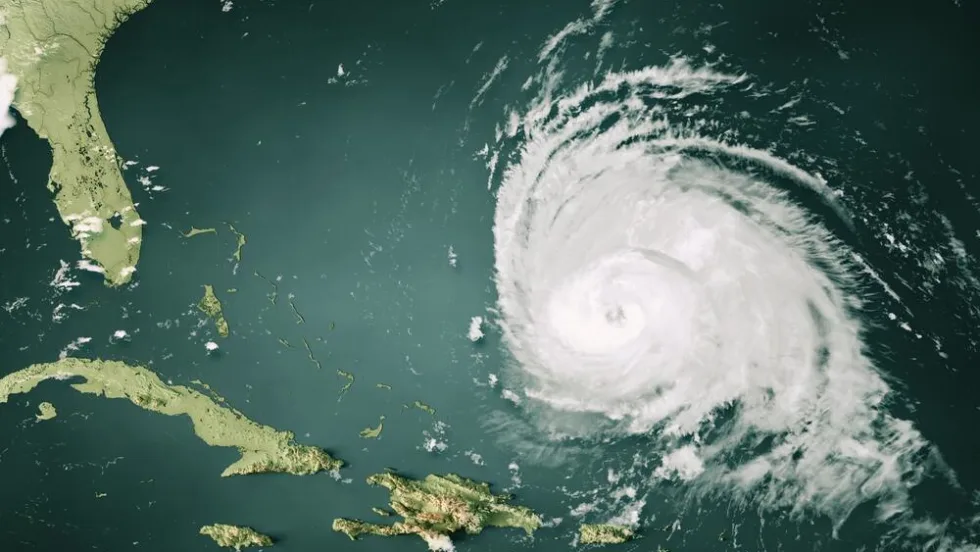
Essential Strategies for Fleet Preparation and Protection During Hurricane Season
Prepare your fleet for hurricane season with proactive strategies to protect drivers, vehicles, and assets before, during, and after the storm.
Read More →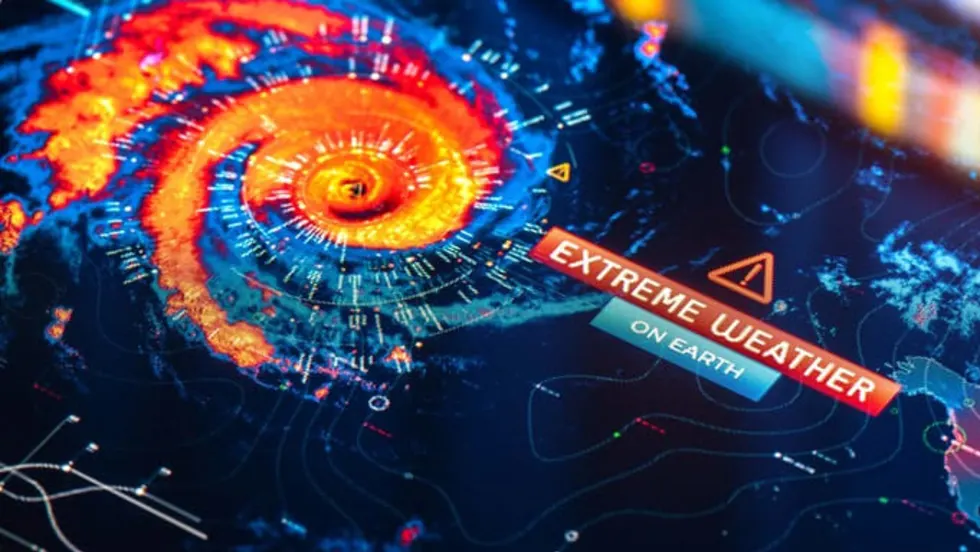
When Disaster Strikes: Equipping Your Fleet for Survival and Recovery
Discover how fleets can stay operational during hurricanes, wildfires, floods, and storms with strategic planning, technology, and data-driven maintenance.
Read More →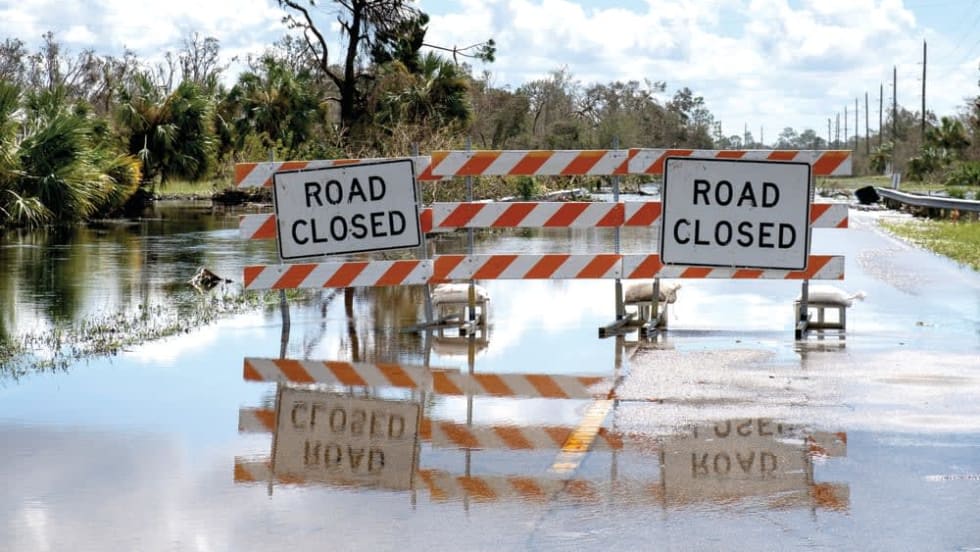
Mobilizing for Recovery When it Matters Most
When disaster strikes, reliable transportation becomes a lifeline for recovery, ensuring first responders and relief crews can reach those in need most.
Read More →