




Using Smart Video Strategies & AI to Build a Safer Fleet Culture
Fleets are adopting video, AI, and coaching strategies that reduce crashes and boost accountability without compromising driver privacy or operational flexibility.
June 24, 2025

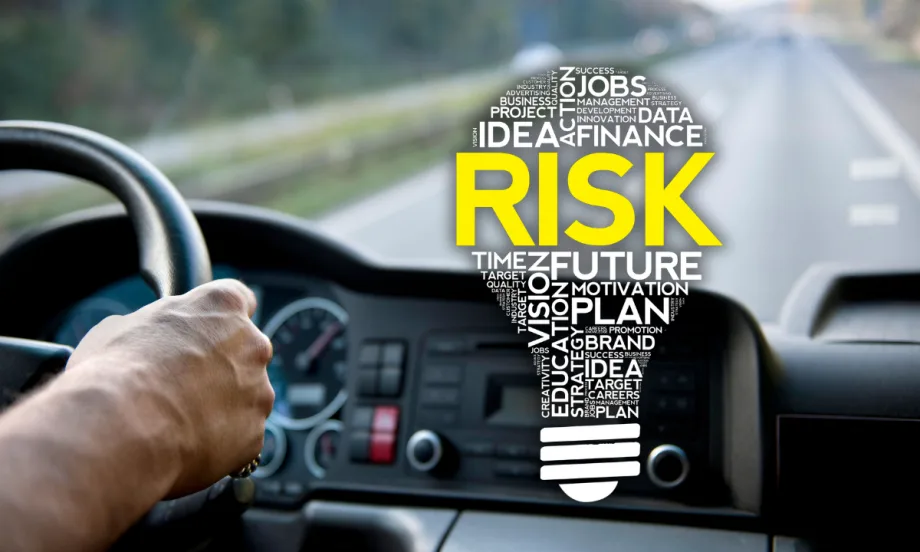
Modern safety tools give fleets a clearer picture of driving conditions and behaviors that increase collision risk.
Photo: Automotive Fleet
5 min to read
Fleet safety programs are evolving as operations become more complex and data-driven. In June, a two-part webinar series deployed by Geotab and Mike Albert Fleet Solutions examined current trends in fleet safety, focusing on how video technologies, artificial intelligence, and behavioral data are shaping new approaches to risk management.
The sessions covered tools and strategies for incident prevention, driver coaching, and performance benchmarking, as well as methods for applying predictive analytics and real-time feedback systems to support safety goals.
The Ever-Rising Cost of Risk
The first webinar opened by examining the scale of the problem: 87% of vehicle collisions are attributable to preventable driver behavior. The speakers then moved beyond topline statistics to actual costs.
“A single accident can cost a company up to $200,000 — not including nuclear verdicts, which will cost in the millions,” said Jamie Lox, senior marketing manager at Geotab. “And those verdicts are increasingly targeting not just companies, but the humans managing the tools.”
The data showed that unsafe behaviors — particularly speeding, harsh braking, tailgating, and lane weaving — are more predictive of future crashes than many fleets realize. Surprisingly, seatbelt use, while vital for injury prevention, isn’t a reliable leading indicator of crash risk. What matters more is how and where people drive.
Predictions Based on Real-Time Behavior
In the webinar, Geotab outlined how its AI model is measuring risk in new ways. Instead of relying on retroactive scorecards or monthly violation tallies, the platform now delivers collision risk predictions based on real-time driver behavior, environmental context (urban vs. rural, traffic patterns, weather), and vehicle type.
This shift has been particularly important for fleets tasked with coaching hundreds of drivers individually. “We’re benchmarking drivers not just internally, but across similar fleets — same vehicle classes, same driving environments — so you can coach based on fair, apples-to-apples comparisons,” said Lox.
That benchmarking feeds into Geotab’s Safety Center, a risk analytics dashboard that prioritizes which drivers pose the highest future crash risk. It’s designed not only to enable early intervention but also to remove ambiguity for frontline managers who may otherwise be unsure how to act on raw data.
Dashcams as Defense, Surveillance or Both
Cameras, especially when integrated into a broader telematics ecosystem, are now regarded as essential safety infrastructure. But not all camera strategies are created equal or are universally embraced.
The conversation underscored that fleets now have real choices in how they deploy video, depending on their organizational culture, privacy concerns, and risk profiles.
Geotab, for instance, offers a native road-facing-only camera (GoFocus) that’s ideal for fleets with privacy sensitivities or union constraints. This option helps capture incident context and supports coaching while avoiding in-cab video entirely.
Fleets that want more in-depth behavior modeling — such as in-cab alerts and driver-facing video — can integrate solutions like the Surfsight AI-12 camera through Geotab’s marketplace. Both setups feed into the same analytics platform, meaning fleets can maintain consistency in driver coaching while tailoring the level of video insight to what’s appropriate for their operations.
As Lox explained, the company’s philosophy is that high-fidelity telematics data — such as harsh braking, close following, cornering, and environmental variables — can often predict crash risk without needing to capture a driver’s face.
Christina Hartzler, a former fleet manager and now a client partnership manager at Mike Albert, noted that for fleets that do choose driver-facing cameras, transparency and staged implementation are key to overcoming resistance. She shared the example of a national HVAC and plumbing fleet that started with a pilot, layered in training and incentives, and saw both incident frequency and pushback decline.
A Two-Way Accountability Tool
Both webinars underscored the importance of internal champions, not just tech rollouts. “Start small,” Hartzler advised. “You don’t put cameras in 1,000 trucks overnight. Find 10 drivers, let them test it, and let them spread the word when it works.”
This approach was reflected in how many fleets now build safety programs. Instead of punishing risky behavior, companies are emphasizing coaching, peer comparisons, and even gamified apps.
Geotab’s new Vitality app, for example, gives drivers performance goals and rewards, like gift cards, for safe driving streaks. The approach taps into the same behavioral science behind fitness apps or step challenges.
The real shift comes in framing video not as surveillance but as a two-way accountability tool. In one example, a fleet exonerated a driver within minutes of being accused of a crash simply by pulling the camera footage and sharing it with police.
Managing Cameras & Legal Exposure
One concern raised during Q&A was whether video data could be used against the company in litigation. Geotab’s Joel Ko acknowledged that while storing sensitive footage creates a record, the benefits — particularly in resolving false claims, improving training, and protecting brand reputation — outweigh the risks.
Fleets can set their own retention periods and access controls to manage legal exposure. “What matters is transparency,” said Hartzler. “Drivers should know who sees what, and why. And they should see how the footage protects them, too.”
Bridging Safety, Tech, and the Bottom Line
In the second webinar, which included a live demo of the MyGeotab platform and Surfsight dashcam integration, the presenters stressed how safety connects to broader fleet goals of cost containment, retention, and operational uptime.
“Safety isn’t just a compliance checkbox,” Ko said. “It’s a profitability driver. Less downtime, fewer injuries, fewer false claims — all that goes back to your bottom line.”
And as predictive tools grow more precise, the burden on humans may shrink, but the need for oversight grows. “AI might tell you who’s risky,” Lox noted, “but it’s up to you to act on it.”
It's Always About Culture
Technology now gives fleet managers unprecedented tools to prevent, not just respond to, safety incidents. But none of it works in isolation. Fleets that succeed at building a culture of safety are those that commit to communication, phased implementation, fairness in coaching, and trust-building with drivers.
As Lox put it, “We’re not just trying to tell drivers what they did wrong. We’re trying to give them a mirror, so they can correct before it counts against them.”
Subscribe to Our Newsletter
More Safety
IIHS Crash Avoidance Tests Reveal Safety Gaps in Cargo Vans and Work Trucks
New crash-avoidance ratings from the Insurance Institute for Highway Safety reveal inconsistent performance among commercial vehicles, with several popular cargo vans and heavy-duty pickups struggling to avoid collisions with other vehicles and pedestrians.
Read More →
What’s Next for Fleet? Safety, AI & Industry Recognition | AF News Recap
Could your company's culture be encouraging distracted driving? This week, we're exploring how workplace expectations affect driver safety, what AI, EVs, and autonomous vehicles could mean for the future of fleet management, and how fleet professionals can strengthen their award nominations.
Read More →
Does Your Fleet's Culture Encourage Distracted Driving?
What happens when the people responsible for enforcing safety rules are the ones setting the wrong example? The answer may reveal why some of the biggest risks to fleet drivers have little to do with what's written in the employee handbook.
Read More →
Sponsored•October 1, 2026
Fleet Manager’s Ultimate Playbook: Navigating the New Standard in OEM Connectivity
Rising operating costs, driver safety concerns, and unplanned downtime are putting unprecedented pressure on modern fleets. Discover how fleet managers use embedded OEM connectivity and real-time vehicle data to cut TCO, prevent downtime, and protect drivers without aftermarket telematics hardware.
Read More →
From Driver Well-Being to EV Charging | AF News Recap
Mental health belongs in the fleet safety conversation. This week, we’re looking at five ways fleets can support employee well-being before a crisis, plus Holman’s expansion in Mexico, new one-day Fleet Forward passes, and why EV charging demand is outpacing infrastructure growth.
Read More →
Nexar-Nauto Merger Aims to Give Fleets Better Safety Intelligence Through Larger Driving Dataset
Stefan Heck tells Automotive Fleet that combining more than 10 billion miles of driving history with Nexar's AI models will give fleets deeper insights into driver risk and roadway conditions than either company could provide independently.
Read More →
Don't Wait for a Crisis: 5 Ways to Build Mental Health Into Your Fleet Safety Program
For Suicide Prevention Month, fleet and safety leaders have an opportunity to put mental health where it belongs: at the center of workplace safety.
Read More →
How Camera Data Can Strengthen a Fleet’s Insurance Renewal
Insights from a commercial insurance carrier and a broker show how fleets can turn video telematic data, driver coaching, and improved claims results into a stronger case at insurance renewal.
Read More →
The Safest Fleets Aren’t the Ones with the Most Technology
You’ve made the telematics investment. Here’s how to capture the other half of its value and build the safest fleet on the road.
Read More →
Sponsored•August 7, 2026
Hidden in Plain Sight: Fleet Compliance Risks
Fleet compliance isn't just about having policies — it's about consistently enforcing them. This practical guide reveals six hidden compliance risks common in public sector and shared fleet operations and outlines proven strategies to improve visibility, accountability, and audit readiness
Read More →