




Safety on Trial: Insights From a Crash Scenario & Mock Trial
Enhance fleet safety and reduce liability with insights on driver training, video tech, and robust policies shared in a recent Fleet Forward and Fleet Safety Conference session.


Carlos Pozo (center) addresses the crowd during the 2024 Fleet Safety Conference session "Post-Crash Evaluation & Mock Trial: What to Know, How to Prepare", alongside Adam Kahn (left) and moderator Judie Nuskey (right).
Photo: Ross Stewart Photography
At the recent Fleet Forward and Fleet Safety Conference in San Diego, industry leaders collaborated to address a critical concern for fleet managers: enhancing safety while mitigating liability risks. The Post Crash Evaluation session revealed crucial insights for fleet managers.
The session demonstrated how effective crash prevention rests on three key pillars: strategic driver training programs, sophisticated event recorder analytics, and robust operational policies. Through a detailed case analysis, participants explored how these elements enhance fleet safety and protect organizations from liability.
Driver Safety Training: A Foundation for Prevention
Driver safety training stands as the fundamental pillar of crash prevention. Panelist Carlos Pozo, a retired law enforcement officer with extensive crash reconstruction experience, highlighted the importance of regular and practical training. He emphasized that training should teach drivers to remain vigilant, avoid tunnel vision, and consistently scan their environment for potential hazards.
Recognizing that drivers learn in different ways is critical to the success of any training program. While some drivers may benefit from visual aids like videos and diagrams, others may excel with hands-on exercises or verbal instruction.
Incorporating a mix of learning methods ensures that all drivers — regardless of their preferred learning style — can fully grasp and apply key safety concepts. This inclusive approach strengthens engagement and retention, equipping drivers with the skills to navigate risks effectively.
How Event Recording Systems Protect Drivers and Fleets
Event recording systems have become crucial safety tools in modern fleet management. According to Netradyne’s Adam Kahn, these systems offer multiple benefits:
Provide objective incident documentation
Support driver defense in accident cases
Streamline claims processing
Offer clear evidence for liability determination
The event recorder footage reviewed by Pozo and Kahn demonstrated that the driver could not have avoided the crash caused by the other vehicle. This crucial evidence cleared the driver of fault, shifted liability away from the fleet operator, and streamlined the claims process. However, Kahn cautioned fleets to establish reasonable data retention policies to balance operational needs with legal risks.
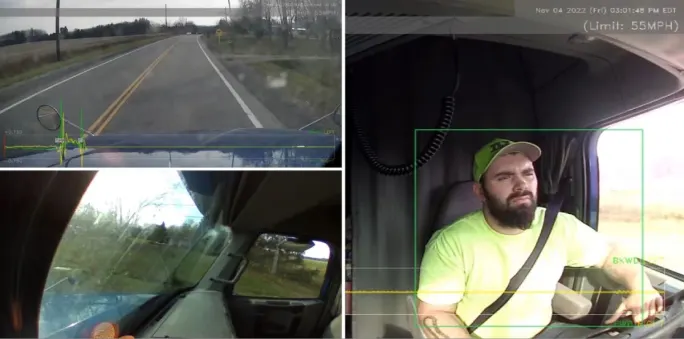
The event recorder footage reviewed by session speakers Carlos Pozo and Adam Kahn demonstrated that the driver could not have avoided the crash caused by the other vehicle.
Photo: J. Nuskey
Strengthening Policy Frameworks
Pozo emphasized the critical role of updated safety policies in fleet management. He highlighted that clear, practiced protocols are essential for guiding driver behavior, especially during incidents. His recommendations centered on three crucial areas:
Post-Incident Protocol
Drivers should remain in their vehicles following accidents
Minimize unnecessary movement at crash scenes
Follow structured procedures when interacting with law enforcement
Vehicle Record Management
Mandatory reporting of personal driving infractions
Regular review of driving records
Documentation of all safety-related incidents
Communication Guidelines
Clear policies on both company and personal phone usage
Recognition that all phone records may be subject to legal discovery
Structured protocols for incident reporting and documentation
This session was interactive and included audience participation with questions such as:
Has anyone in the audience dealt with a fleet crash still tied up in the court system?
This question led to a discussion about handling liability and the importance of clear policies for drivers at the scene of an accident.
Is it best practice to tell drivers not to admit fault at the crash scene?
The panelists emphasized the significance of drivers maintaining neutrality and providing only factual details to law enforcement.
How many fleets currently use forward-facing cameras, and who is considering implementation?
This sparked a conversation on the benefits of telematics and how they aid in training and exonerating drivers.
Can personal cell phone usage be subpoenaed during litigation?
This inquiry delved into the necessity of including company and personal phones in safety policies.
This year’s session successfully blended theory with practice, providing actionable takeaways for fleet managers. The session concluded with enthusiastic feedback from attendees, many of whom posed additional questions and shared their fleet safety challenges, as well as a powerful takeaway: preparation is key.
Fleet managers were encouraged to conduct mock trials simulating crash scenarios within their organizations. This exercise prepares teams for potential legal challenges and reinforces the importance of safety protocols and training.
By embracing these strategies, fleets can protect their drivers, reduce liability, and foster a safety culture that benefits their operations and the community.
More Safety

Fleet Manager’s Ultimate Playbook: Navigating the New Standard in OEM Connectivity
Rising operating costs, driver safety concerns, and unplanned downtime are putting unprecedented pressure on modern fleets. Discover how fleet managers use embedded OEM connectivity and real-time vehicle data to cut TCO, prevent downtime, and protect drivers without aftermarket telematics hardware.
Read More →
From Driver Well-Being to EV Charging | AF News Recap
Mental health belongs in the fleet safety conversation. This week, we’re looking at five ways fleets can support employee well-being before a crisis, plus Holman’s expansion in Mexico, new one-day Fleet Forward passes, and why EV charging demand is outpacing infrastructure growth.
Read More →
Nexar-Nauto Merger Aims to Give Fleets Better Safety Intelligence Through Larger Driving Dataset
Stefan Heck tells Automotive Fleet that combining more than 10 billion miles of driving history with Nexar's AI models will give fleets deeper insights into driver risk and roadway conditions than either company could provide independently.
Read More →
Don't Wait for a Crisis: 5 Ways to Build Mental Health Into Your Fleet Safety Program
For Suicide Prevention Month, fleet and safety leaders have an opportunity to put mental health where it belongs: at the center of workplace safety.
Read More →
How Camera Data Can Strengthen a Fleet’s Insurance Renewal
Insights from a commercial insurance carrier and a broker show how fleets can turn video telematic data, driver coaching, and improved claims results into a stronger case at insurance renewal.
Read More →
The Safest Fleets Aren’t the Ones with the Most Technology
You’ve made the telematics investment. Here’s how to capture the other half of its value and build the safest fleet on the road.
Read More →
Hidden in Plain Sight: Fleet Compliance Risks
Fleet compliance isn't just about having policies — it's about consistently enforcing them. This practical guide reveals six hidden compliance risks common in public sector and shared fleet operations and outlines proven strategies to improve visibility, accountability, and audit readiness
Read More →
NETS Sets 2026 Fleet Safety Benchmark Conference for Indianapolis
The Sept. 15–17 program will feature fleet benchmarking data, case studies, emerging technologies, and implementation strategies while running alongside the NSC Safety Congress & Expo.
Read More →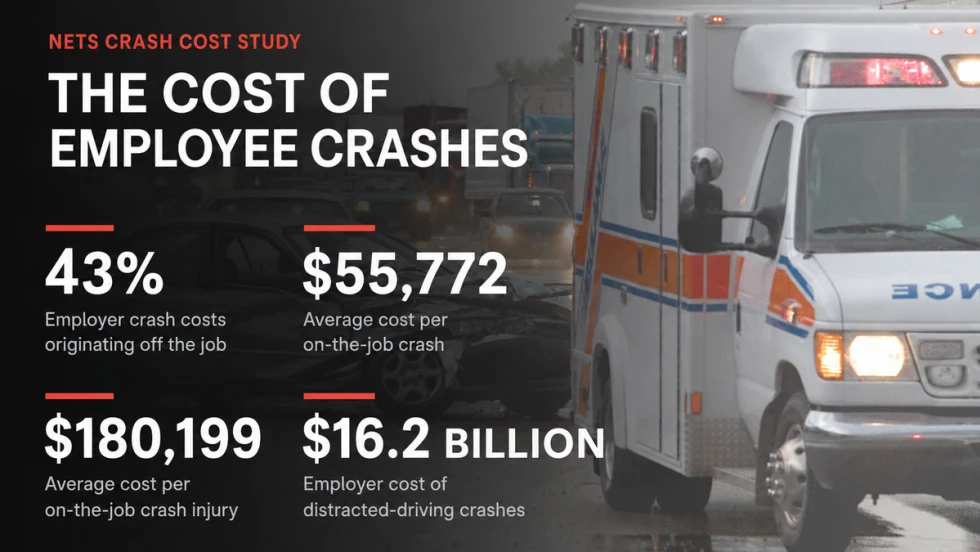
Off-the-Job Crashes Account for 43% of Employers’ $61.7 Billion Crash Burden
NETS quantifies costs dispersed across fleet, risk, HR, and other departments while providing new per-crash benchmarks for employers.
Read More →
Ram Recalls More Than 1.27 Million 1500 Pickups for Seat Belt Anchor Issue
The recall affects certain 2019-2026 Ram 1500 pickups that may have improperly attached second-row seat belt buckle anchors.
Read More →