




Operations
Fleet Personal-Use Charges Edge Higher in 2026
Nearly eight in 10 surveyed fleets allow personal use of company vehicles, while just over half of respondents report charging employees for the privilege.
 MENU
MENU SEARCH
Five fleet professionals — none with programming skills — discuss how they’re using AI to build fleet solutions in-house and in a fraction of the time.

Vibe coding can make your pet feel like a programmer. But lowering the technical barrier doesn’t eliminate the risks: AI-generated code can look convincing and still be wrong, and the operator still needs to know enough to recognize when something doesn’t pass the smell test.
Automotive Fleet
Not so long ago, in a not-too-distant land, we engaged in a familiar process for solving business and fleet problems. Take vehicle spec’ing, a cumbersome process, where fleet managers must bring together information stored in disparate forms and places to create a spec sheet to build fleet vehicles for specific jobs.
To alleviate some of the burden, a fleet manager could bring the problem to IT and ask for a custom application, go to a technology partner to reconfigure an existing application, or hire an outside developer to build it.
Of course, this takes time, money, and resources that demand a well-defined ROI.
That’s all changed. Ernie Garcia, director of fleet and business systems for Gothic Landscape, is building a spec’ing program that combines information from several spreadsheets and automakers’ order guides.
“It allows us to build specs and quickly update them, kind of like little Tetris pieces,” said Garcia. He can add pricing, customize the output, and produce a version fleet managers can print, while hiding pricing when necessary.
Garcia didn’t learn Python, JavaScript, or another programming language. Using vibe coding, he described the problem in plain English and worked with an AI model to create the solution.
Vibe coding — you’ve no doubt heard that phrase by now — is spectacularly disrupting traditional processes by using AI to build a solution in-house, at a desktop, with a negligible cost, and in a fraction of the time.
Vibe coding allows someone without a traditional software-development background to tell an AI system what he or she wants to accomplish. The AI generates the underlying code, spreadsheet, application, or workflow. The user tests it, explains what needs to change, and continues refining it.
This isn’t theory. As Garcia can attest, it’s happening right now.
The phrase, “Drinking from a firehose of data” isn’t new. For years, this firehose has been blasting from telematics platforms, fleet management information systems, OEM portals, CRM systems, maintenance records, fuel transactions, vehicle valuations, and other internal systems.
As the hose of information amplifies, fleet managers are expected to accomplish more with fewer people. Garcia manages his fleet in-house, without a fleet management company.
Vibe coding helps bring it all together at scale with the same personnel.
However, our operators recommend not to start vibe coding by drinking from the hose. In fact, it’s best to start with a manageable, manual application.
Garcia vibe-coded a small application to batch-print dozens of PDF files. He’s expanded into bigger problems, using multiple large language models (LLMs) to help.
Garcia needed a total cost of ownership calculator that his fleet managers could easily use. He described his users as "mechanics first and not really analysts." He used ChatGPT to help develop the prompt, then provided that prompt to Copilot, which produced a spreadsheet with multiple tabs and TCO calculations.
In other words, one AI helped him write better instructions for another AI.
Garcia also uses AI for policies, procedures, SOP reviews, and comparing agreements. He estimated that one type of task that previously took as much as 80 hours might now take him roughly 30 minutes.
Reed Jackson, fleet analyst for Dallas County, is exploring AI around vehicle replacement and electrification.
His fleet replacement analysis requires pulling together vehicle age, mileage, maintenance history, utilization, and other factors. Jackson is working on using those inputs to generate a priority-ranking system that can help identify which vehicles warrant attention.
"The LLM isn't going to make a decision for you," said James McKinley vice president of operations at City Rent a Truck, but it can make the decision-making process considerably faster by consolidating information that otherwise might come from five or six sources.
McKinley's operation is examining ways to combine total cost of ownership, replacement cycles, and residual values. In the past, gathering that information across thousands of assets could require analysts or data engineers. AI tools can dramatically reduce the barrier to bringing those inputs together.
McKinley knows the problem, but doesn’t have a software engineering background. Therefore, he doesn’t have to explain the problem to a programmer and hope the programmer translates correctly.
Kristin Leary, director of fleet services at Syneos Health, offers another example of the kind of fleet problem suited to this approach.
Syneos Health handles temporary projects and rotating employees, which creates an ongoing vehicle-assignment challenge.
When a new territory needs a vehicle, the fleet team must determine which available unit makes sense based on factors such as location, vehicle tier, drivetrain, and how long the vehicle has been sitting in storage.
Today, much of that process involves spreadsheets.
Leary's team is developing an application in which a user enters the location and type of vehicle needed. The system would then identify the closest appropriate vehicle while prioritizing units that have been sitting in storage longest.
A second app in development would address another familiar problem: vehicles being returned without keys, plates, or current registration, or with damage that wasn't previously reported.
The app would periodically guide drivers through photographing the vehicle's exterior, interior, license plates, and other items, creating visibility into vehicle condition before the unit eventually comes back for sale.
Leary sees AI's value in automating the tasks that prevent employees from spending time on higher-level work.
"If we can automate some of the tasks that we do on a day-to-day basis and enable our team members to do a lot more of the strategic work that can't be handed off," the organization can concentrate on the areas where its people have specialized knowledge, she said.
Building with AI requires a new kind of skill — prompt engineering — that is different from traditional programming. "What you put in is what you're going to get out," McKinley said.
One of his techniques is to ask the AI itself to act as a prompt engineer and revise his instructions for the best possible result. Then he continues the conversation, refining what he wants until the model has a clear set of instructions.
The workflow may look more like this: Describe the problem. Review the result. Explain what is wrong. Add a requirement. Change a calculation. Test again. Refine the output. Save the successful process and reuse it.
Don Schnell, a business consultant and former member of the Verizon fleet, compared that process to writing and revising a document. Once the instructions and output are correct, the routine can be saved and run again rather than rebuilt each time.
For fleet managers who haven't built anything with AI, the most useful first project should be intentionally easy to grasp.
Garcia suggests starting with basic fleet data. Using an approved AI environment, take information you already know well and ask it to calculate or organize familiar metrics: fleet age, maintenance, costs, and fuel economy.
Starting small keeps the project manageable, but it also allows the user to already know what the results should look like.
An important lesson in using this new generation of AI tools is that the people experimenting with vibe coding today learned their jobs before generative AI existed.
They spent years working in spreadsheets, manually reviewing maintenance data, building replacement analyses, and learning through experience when something didn't make sense.
But future employees, Schnell warned, may encounter the AI interface first. If those users haven't learned to examine the data themselves, they may accept an AI-generated answer because the system presents it confidently.
"We need those users to learn how to manually look at the data and understand what good data, what's bad data before they just solely rely on the results of AI," Schnell said. Failing to develop that foundation "would be a fatal mistake."
That raises a vital question: What happens when the next generation learns the AI tool before learning the fleet?
The answer shouldn't be to avoid AI. It should be to ensure that AI proficiency and fleet proficiency develop together.
Loading data...

Operations
Nearly eight in 10 surveyed fleets allow personal use of company vehicles, while just over half of respondents report charging employees for the privilege.



Safety
Insights from a commercial insurance carrier and a broker show how fleets can turn video telematic data, driver coaching, and improved claims results into a stronger case at insurance renewal.
Fleet Forward
Five fleet professionals — none with programming skills — discuss how they’re using AI to build fleet solutions in-house and in a fraction of the time.
Maintenance
Vincentric’s three-year, 60,000-mile projections reveal wide differences for both scheduled and unscheduled maintenance among selected vehicle categories. Projected maintenance visits also play a factor.
State of the Fleet Industry
Most organizations misunderstand fleet. The best managers make sure that doesn’t happen.
Remarketing
A vehicle health score could improve the value of fleet vehicles at remarketing. The path to a universal standard is forming, and fleets that understand the process early will be better positioned when it arrives.
Technology
AI is no longer a luxury but the baseline for profitability in 2026. Auto haulers that adopt these tools now will quickly outpace those that use manual workflows or take a wait-and-see approach.
Fleet Forward
The job hasn’t changed, but the expectations have. Do you have a plan on how to use AI to thrive?
Maintenance
The repair crisis gets blamed on technician shortages and parts delays. But a big part of the problem is what's happening before the vehicle even reaches the shop, and that's within your control.
Remarketing
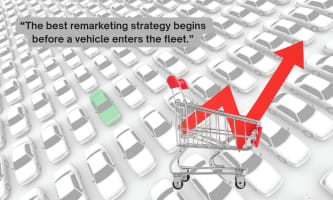
Smart remarketing begins before vehicles enter the fleet, and is built on strong data and stronger FMC partnerships.
State of the Fleet Industry
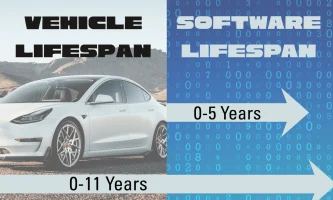
When the US’s largest EV manufacturer discontinues a model, it gives me pause to consider the software that drives it.
Operations
Here’s what is keeping fleet managers up at night this year, and what they're doing about it.
Leasing
As costs rise and scrutiny increases, fleets are refining criteria that govern eligibility for company-owned vehicles.