




Keep Reading! Coaching Is Not Training, Even When AI Is Doing It
Paying for a Fire Hose, Drinking from a Garden Hose: Getting the Full Value of Your Telematics
Why fleets struggle to turn telematics data into real-world results and how to fix it.
by Julie Sams
June 25, 2026
Telematics data is only as valuable as the actions fleets take from it, turning dashboards into safer, more efficient operations.
Credit:
Automotive Fleet
9 min to read
- Fleets often face challenges in effectively utilizing telematics data due to its overwhelming volume and complexity.
- Organizations can optimize the value derived from telematics by implementing targeted data analysis and focusing on actionable insights.
- Addressing integration and user adoption issues is crucial for converting telematics data into tangible operational improvements.
*Summarized by AI
Telematics is over the adoption hump. The technology is now commonplace in commercial fleets, and the data—huge amounts of it—is flowing in a fashion akin to a Class V rapid. For most fleets, the question is no longer whether to use it but how to get the most out of it, especially since many feel they aren’t extracting as much value as they had anticipated.
The numbers bear this out. A May 2026 report from Escalent's Fleet Advisory Hub found that fewer than half of fleet operators strongly agree that their telematics solution fully meets their business needs. So, while telematics adoption is widespread, satisfaction clearly isn’t.
In my daily work, I see this gap up close. I’ve come to believe that it has very little to do with the technology itself. The platforms are capable, and the data is there. What separates fleets that gain full value from telematics from those that don’t usually come down to everything that happens, or fails to happen, around the telematics solution, not the solution itself.
Why Does the Value Get Left on the Table?
Here’s the pattern my colleagues and I see often: A company adopts telematics because something forced the issue. Usually, it’s an insurer demanding that technology be deployed, or a major accident that has everyone scrambling to prevent another. So, the fleet invests in the technology, installs it, and “checks the box.” A clear plan for making the most of the technology is often nowhere to be found.
Without such a plan, the result is predictable. No one has decided what the program is supposed to accomplish. No one has been clearly assigned to monitor the data and act on it. So, the data simply accumulates, growing by the minute. But it mostly just sits there, while the fleet keeps paying for it.
When a fleet that has run telematics for a few years comes to us, the signs of underuse are usually easy to spot. They tell us they started the journey only because insurance required it, and now they sense they need to do more with it, but they don’t know how to get there from where they are. Some fleet owners acknowledge that some of their drivers need coaching. So, they’re broadly aware of the issues; they just have no strategy to address them. That sort of awareness, without a plan of action, is the clearest tell that a fleet is only scratching the surface of the telematics program it has invested in.
Start by Deciding What Success Looks Like
The fix begins before a single device gets switched on. A fleet has to decide, specifically, what success means for its operation. Are you trying to reduce accidents and insurance claims? Lower fuel consumption? Improve efficiency? Those are different goals, pointing to different data, reports, and routines. A fleet that has not explicitly identified its goals cannot recognize progress toward them. To put it another way: Successful programs treat telematics as a tool for improving safety, controlling costs, and increasing efficiency. Fleets that struggle to maximize the technology’s value often treat it as just a high-end GPS tracker. It’s like using a computer for only word processing.
Once a fleet’s goals are clear, the program needs buy-in beyond the fleet manager. It’s one thing for a fleet manager to decide that the company needs telematics; it’s another for shift managers and drivers to actually support the program day to day. Someone must own each piece. Someone must follow through on the data being collected. Cross-functional ownership is what keeps telematics from quietly becoming one more dashboard that looks cool, but no one uses much.
Turn It on in Phases, Not All at Once
One of the most common mistakes a new telematics user can make is switching everything on at once. A modern platform can monitor a long list of behaviors and conditions. Activate all of them on day one, and the result is a flood of alerts with no way to tell the signal from the noise.
With clients who are new to telematics, we take the opposite approach. We recommend starting with a baseline. For example, begin with the fundamentals, what I think of as the ABCs of driving. That’s harsh acceleration, braking, and cornering. Let the team get comfortable reading and acting on that focused data. Then, guided by the fleet’s already-defined goals, enable additional capabilities in staged, deliberate phases.
It’s far easier to switch on the pieces you need than to turn everything on and then try to filter your way back out of the chaos. Everything the platform offers stays available. The fleet simply activates what is relevant to its operation, learns the software in manageable chunks, and builds real fluency along the way.
It also helps to underscore from the get-go that the program will keep evolving. A telematics solution is not something you build once and leave alone. Using the data well means watching for when you need to shift focus and adjust. The fleets that get the most value expect that evolution and plan for it rather than being surprised or, worse, irritated by it. Like so much in our world these days, telematics is getting better by the day, thanks in no small measure to AI.
Build a Rhythm of Review
Data that no one looks at on a predetermined schedule is data going to waste. The strongest programs run on a steady cadence. For example, weekly safety metrics, monthly key performance indicators, and quarterly trend reviews. That rhythm lets a fleet evolve its program based on what its data actually shows, rather than reacting only when something goes wrong.
A real example makes the point. Not long ago, I sat down with a client who needed only minor support, and when I looked at their telematics setup, they were doing everything right. The reporting was broken out by group. Each group's report went automatically to its manager. Each manager was expected to review the data weekly and coach the drivers who needed it. Dashboard reporting gave leadership the overview. None of it was exotic or hard to do. It was simply the discipline to regularly and meaningfully engage with the solution, and it was working.
Contrast that with another fleet that I counseled. Though this fleet had 1,200 units, it had placed the responsibility for the entire telematics effort on a single person. The technology was in place, but the human structure to support and manage it was not, and so most of its value went uncaptured.
Recognize the Good, not Just the Bad
The biggest barrier to buy-in is the fear that telematics is a surveillance tool. Drivers instinctively brace for Big Brother. If the program only surfaces what drivers are doing wrong, drivers’ suspicions are confirmed, and the program becomes a morale drain rather than a safety asset and professional development tool.
The fleets with the strongest safety programs acknowledge both sides. They address what genuinely needs addressing and recognize the drivers who are doing the right things. That recognition can take many forms. Some fleets use gamification, monthly safety bonuses, or recognition leaderboards. Others keep it simple with a straightforward acknowledgment of good performance. The specific mechanism matters less than the commitment to having one.
Fleets sometimes hesitate at the cost of a rewards program. They’ve just invested in telematics, and now someone is suggesting they spend more on driver incentives. But weighed against the cost of a major insurance claim or a nuclear verdict, a modest investment in recognition more than pays for itself. It also drives genuine engagement. Plus, the rewards need not be, say, expensive, fancy trips. Think gift cards, free lunches, and the like.
Coaching belongs in the same frame. It should not be based on berating drivers for their mistakes. The better approach underscores progress by showing a driver the areas where they have improved week over week. Technology is increasingly designed to support this sort of positive reinforcement. Today's camera systems use AI to inject context into events. For example, in the past, a driver who was cut off and immediately backed off to reestablish a safe following distance would still be flagged for tailgating. Now the software can recognize that the driver was cut off but chose to create space and make the situation safer for everyone. That’s a moment worth recognizing. When drivers feel valued for doing the right things rather than simply being monitored and disciplined, the buy-in follows.
The Learning Curve Runs Both Ways
It’s worth being honest that telematics is a developing discipline for everyone. For a long time, the industry norm was to hand a new client access to the database, run a quick training session, and leave them to it. The previously mentioned Escalent research points to the consequence of that model: Most fleets are not data companies and lack teams dedicated to turning telematics data into smart decisions and strategies. Without real implementation support, even excellent tools fall flat.
That is a gap our industry is actively working to close, and it is one fleets should weigh when choosing a partner. The goal is to make sure a client is set up for success from the start, not simply handed a login. Getting full value from telematics is partly a learning curve for the fleet and partly for the people who support it.
Getting Started
If your fleet has telematics and you suspect you are not getting full value from it, a few honest questions will tell you most of what you need to know. Has anyone written down what success looks like for your program? Is there a named owner for each part of it, with the capacity to do the work? Do you have a real cadence of review, weekly, monthly, and quarterly, or does the data only get attention after an incident? And do your drivers experience the program as protection and recognition, or as a form of monitoring?
The technology has already done its part. The fleets pulling real value from telematics aren’t necessarily the ones with the most advanced platform. They’re the ones who’ve decided what they want from it, given it to owners, built a routine around it, and made sure their drivers have a reason to want it to work. That’s the difference between collecting data and using it.

Credit:
Julie Sams
About the Author: Julie Sams is Connected Vehicle Program Manager at Mike Albert Fleet Solutions, where she oversees the company's relationships with the telematics service providers behind its connected vehicle offerings and evaluates new partnerships as the telematics landscape evolves. She works closely with Mike Albert's client-facing teams, translating product updates and new capabilities into practical guidance for fleets. Julie joined Mike Albert more than five years ago, following earlier work as an automotive service advisor.
This article was authored and edited according to Automotive Fleet's editorial standards and style. Opinions expressed do not necessarily reflect that of AF or Bobit Business Media.
Subscribe to Our Newsletter
More Telematics
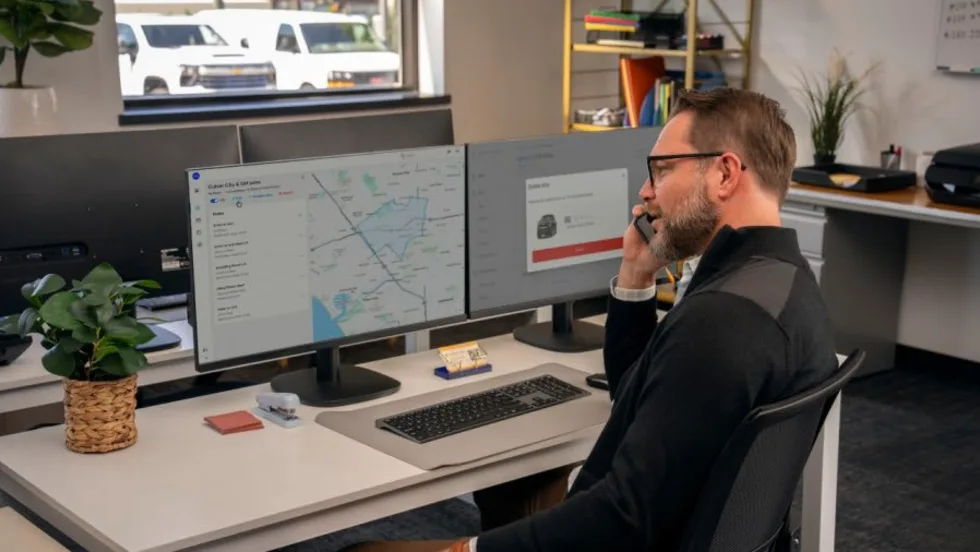
GM Launches OnStar Fleet Intelligence Platform With AI Assistant
The new platform brings vehicle data, order tracking, connected services and fleet analytics into one system, with an AI assistant that can answer fleet questions using natural-language prompts.
Read More →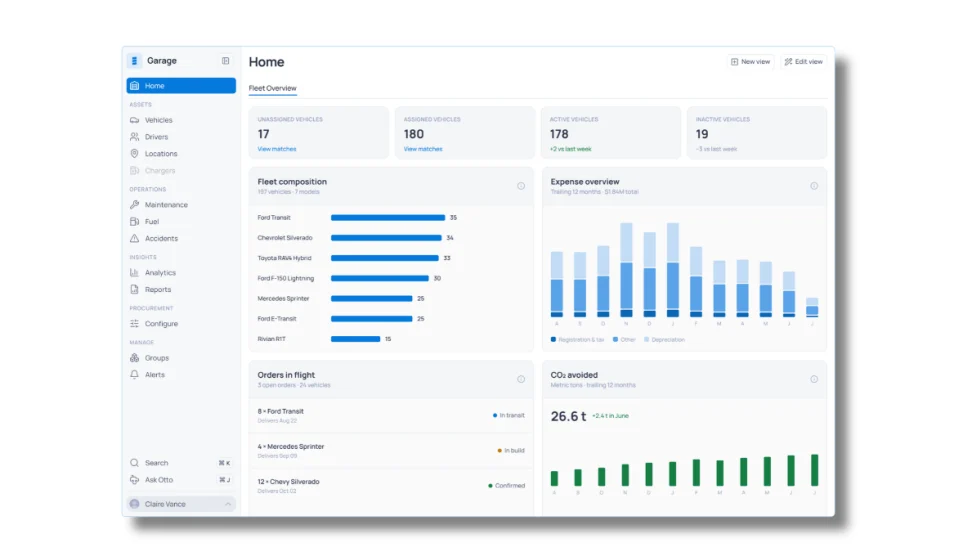
Inspiration Fleet Introduces Garage 2.0 Fleet Intelligence Platform
Fleet managers increasingly have access to data from vehicles, telematics, fuel, charging, and other systems, but those sources don't always communicate with one another. Inspiration Fleet's Garage 2.0 platform brings that information together while letting fleets keep working with different technology and service providers.
Read More →
Inside Inspiration Fleet’s New Platform for Connecting Fleet Data
Inspiration Fleet CTO Chris Getner explains how the new Garage 2.0 platform is designed to connect disparate fleet data and what that could mean for fleet managers in practice.
Read More →
Sponsored•October 1, 2026
Fleet Manager’s Ultimate Playbook: Navigating the New Standard in OEM Connectivity
Rising operating costs, driver safety concerns, and unplanned downtime are putting unprecedented pressure on modern fleets. Discover how fleet managers use embedded OEM connectivity and real-time vehicle data to cut TCO, prevent downtime, and protect drivers without aftermarket telematics hardware.
Read More →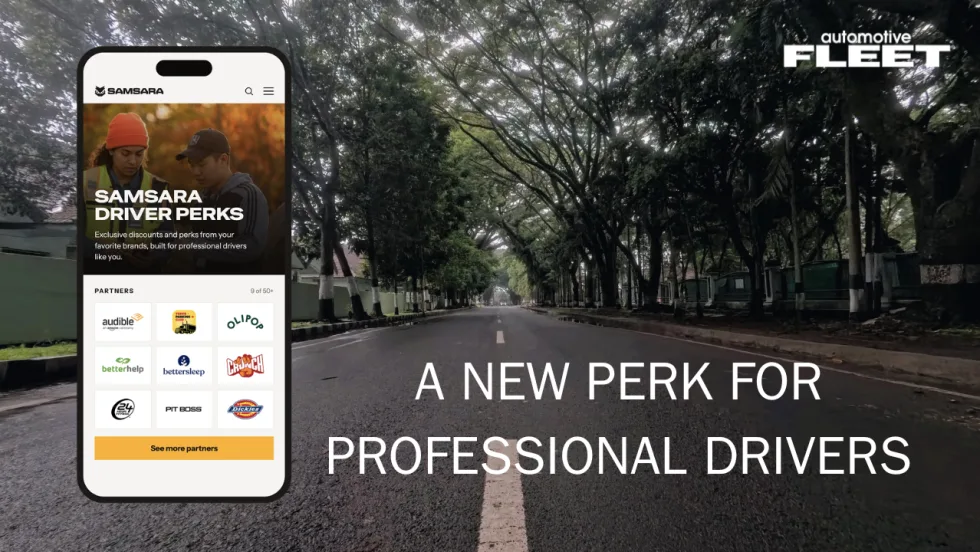
Samsara Driver Perks Adds New Benefit for Corporate Fleet Drivers
The rewards program gives eligible professional drivers access to discounts from more than 50 brands while giving fleets another way to support recruitment, retention, and the driver experience.
Read More →
Inside the Church of Jesus Christ of Latter-day Saints’ Two-Track Telematics Strategy
With 20,000 vehicles and two fundamentally different driver populations, the Church faced a fleet management problem that a single telematics program couldn't solve. How it responded offers a replicable framework for any fleet where one size doesn't fit every driver.
Read More →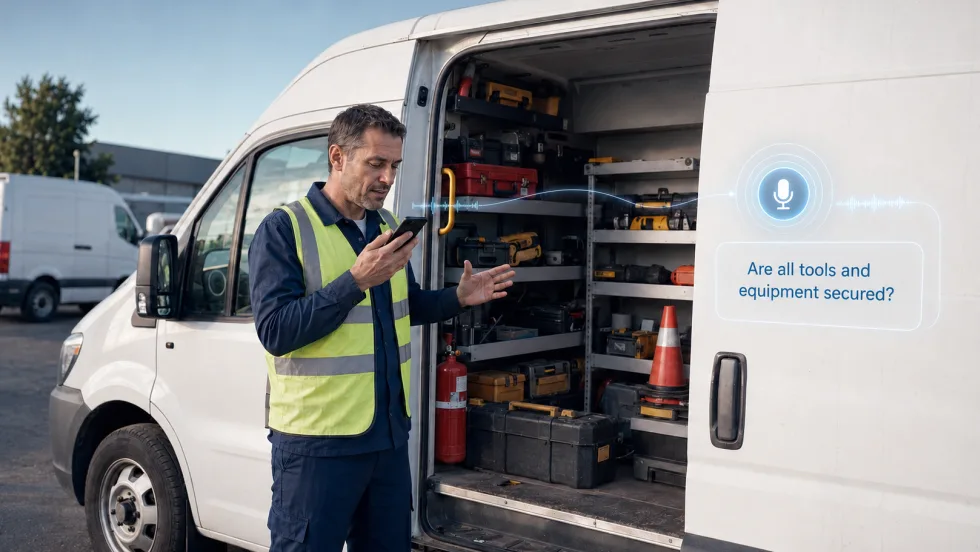
How Conversational AI Can Make Fleet Tasks Easier for Drivers
While most generative AI tools help fleet managers interpret data at their desks, Connex2X is applying voice interaction to tasks behind the wheel.
Read More →
Why Fleets Are Creating Dedicated Fleet Analyst Positions
Are fleet analyst positions the new norm? Listen here to find out.
Read More →
Teletrac Navman Begins Next Chapter as Standalone Private Company
What's new with Teletrac Navman and its new owner?
Read More →
Why Fleets Are Creating Dedicated Fleet Analyst Positions
Telematics, AI, EVs, and connected technologies are generating more fleet data than traditional teams can effectively manage. Reed Jackson explains why dedicated fleet analytics roles are emerging to turn that information into better operational decisions.
Read More →