




Cameras, Safety and Insurance: From Reactive Claims to Real-time Prevention
Commercial auto remains one of the most challenging and costly lines of coverage for fleet operators and insurers alike. Learn more about how to effectively address these issues from Onur Aksan, Enterprise Business Development Executive, Geotab.
AndreyPopov
- In-vehicle cameras, when integrated with telematics and predictive analytics, play a crucial role in transforming fleet safety strategies.
- The integration of these technologies shifts the focus from merely reacting to collisions to actively preventing them.
- This approach marks a significant advancement in how fleets manage safety and insurance concerns.
*Summarized by AI
Article Republished from AFLA Fleet Insight Newsletter
This is the first installment of a two-part series exploring how in-vehicle cameras—when connected with telematics and predictive analytics—shift fleets from reacting to collisions toward preventing them.
Commercial auto remains one of the most challenging and costly lines of coverage for fleet operators and insurers alike. Rising claim severity, nuclear verdicts and increasing repair costs have placed sustained pressure on loss ratios. In response, fleets are increasingly turning to in-vehicle camera technology hoping that video evidence alone will mitigate spiraling collision costs and liability exposure.
But hardware is only half the battle. While cameras are excellent for exonerating drivers after a collision, they often fail to prevent the incident in the first place if they operate in a silo. The real change in safety is a unified approach, connecting video, telematics and predictive data to detect risk and intervene before a claim is ever filed.
Recent industry data shows that fleets deploying event-based video programs report up to a 44% reduction in insurance costs and a 47% positive ROI in under a year—even as physical damage and auto liability premiums rose by double digits year-over-year. Several insurers now offer double-digit premium credits when fleets share structured dash cam and telematics data, sometimes applying discounts as high as 20% in the first year for fleets with strong safety results.
So what makes the difference between a camera that simply records and one that actively prevents losses? It starts with eliminating delay.
The High Cost of Delayed Feedback
Historically, safety programs have been built on "lag indicators", police reports, MVR checks or complaints that arrive days or weeks after an incident occurs. By the time a manager reviews a harsh braking alert or a collision report, the behavior that caused it has already become a habit.
A connected safety ecosystem eliminates this lag by automating the feedback loop. Instead of waiting for a monthly report, modern platforms unify telematics data with video AI to detect risk in real-time. The camera effectively becomes the coach. By identifying risks, such as cell phone use, fatigue or hard braking, and delivering real-time voice alerts, the system allows drivers to self-correct the moment a mistake happens. This prevents collisions before they occur and frees the safety manager from playing "forensic investigator," allowing them to focus on high-level trends rather than daily micromanagement.
Context Is the Key to Driver Trust
One of the biggest hurdles to technology adoption is driver pushback. Drivers often view scorecards as unfair "gotcha" mechanisms, especially if they are penalized for hard braking to avoid a deer or driving cautiously in a storm.
While many drivers initially rate in-cab cameras very poorly—one study put approval at just 2.2 out of 10—carriers that use footage primarily for proactive safety and recognition see driver approval jump by nearly 87%. When technology is framed as a tool for protection and coaching, adoption and safety outcomes improve dramatically.
To build a culture of safety rather than surveillance, fleets must move toward contextual intelligence. A unified system analyzes the weather, road type and traffic conditions to understand why it happened. When drivers know that their scorecard accounts for the reality of the road, distinguishing between aggressive driving and defensive maneuvers, trust increases. Drivers who view the data as fair are far more likely to accept feedback and engage with the coaching process.
Coming in Part 2: We'll explore how predictive modeling identifies high-risk drivers before collisions occur, how unified video evidence controls claims frequency and severity, and the deployment strategies that drive measurable, long-term business value. You won't want to miss the roadmap for turning safety technology into a strategic advantage.
Quick Answers
In-vehicle cameras, when integrated with telematics and predictive analytics, provide real-time data and insights that help prevent collisions by monitoring driver behavior and road conditions.
*Summarized by AI
More Telematics
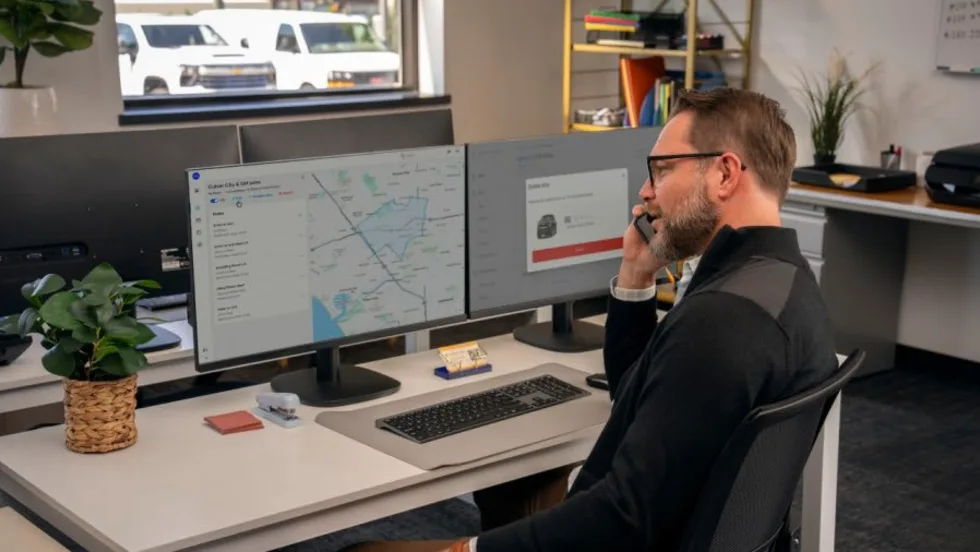
GM Launches OnStar Fleet Intelligence Platform With AI Assistant
The new platform brings vehicle data, order tracking, connected services and fleet analytics into one system, with an AI assistant that can answer fleet questions using natural-language prompts.
Read More →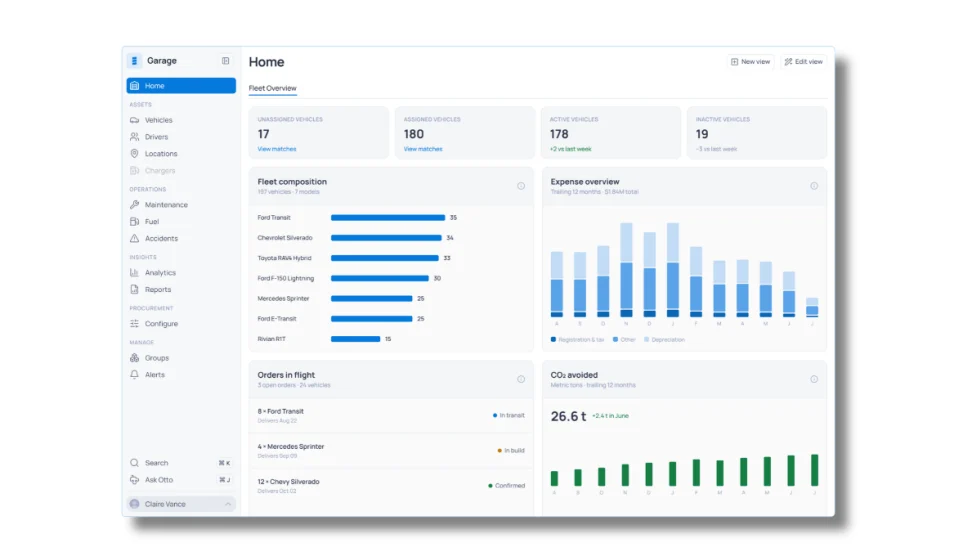
Inspiration Fleet Introduces Garage 2.0 Fleet Intelligence Platform
Fleet managers increasingly have access to data from vehicles, telematics, fuel, charging, and other systems, but those sources don't always communicate with one another. Inspiration Fleet's Garage 2.0 platform brings that information together while letting fleets keep working with different technology and service providers.
Read More →
Inside Inspiration Fleet’s New Platform for Connecting Fleet Data
Inspiration Fleet CTO Chris Getner explains how the new Garage 2.0 platform is designed to connect disparate fleet data and what that could mean for fleet managers in practice.
Read More →
Fleet Manager’s Ultimate Playbook: Navigating the New Standard in OEM Connectivity
Rising operating costs, driver safety concerns, and unplanned downtime are putting unprecedented pressure on modern fleets. Discover how fleet managers use embedded OEM connectivity and real-time vehicle data to cut TCO, prevent downtime, and protect drivers without aftermarket telematics hardware.
Read More →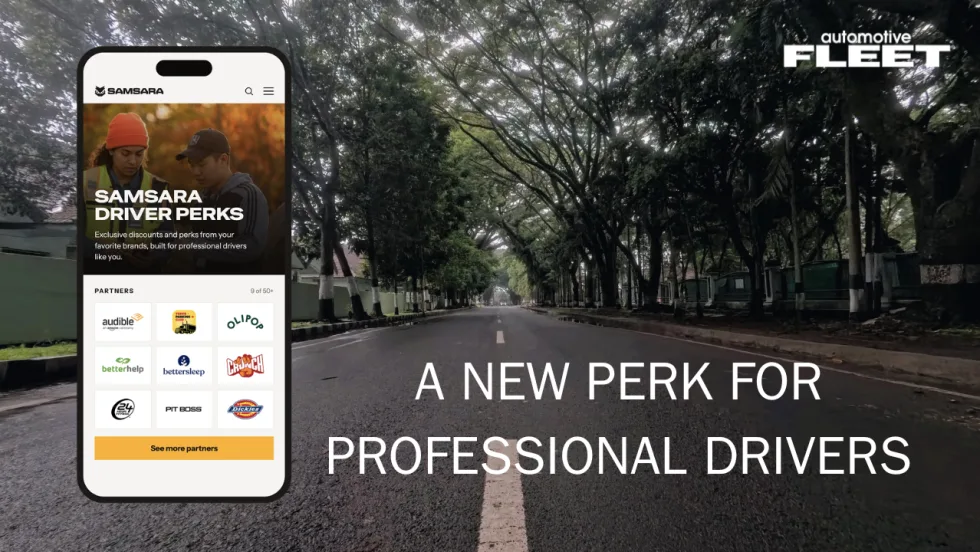
Samsara Driver Perks Adds New Benefit for Corporate Fleet Drivers
The rewards program gives eligible professional drivers access to discounts from more than 50 brands while giving fleets another way to support recruitment, retention, and the driver experience.
Read More →
Inside the Church of Jesus Christ of Latter-day Saints’ Two-Track Telematics Strategy
With 20,000 vehicles and two fundamentally different driver populations, the Church faced a fleet management problem that a single telematics program couldn't solve. How it responded offers a replicable framework for any fleet where one size doesn't fit every driver.
Read More →
How Conversational AI Can Make Fleet Tasks Easier for Drivers
While most generative AI tools help fleet managers interpret data at their desks, Connex2X is applying voice interaction to tasks behind the wheel.
Read More →
Why Fleets Are Creating Dedicated Fleet Analyst Positions
Are fleet analyst positions the new norm? Listen here to find out.
Read More →
Teletrac Navman Begins Next Chapter as Standalone Private Company
What's new with Teletrac Navman and its new owner?
Read More →
Why Fleets Are Creating Dedicated Fleet Analyst Positions
Telematics, AI, EVs, and connected technologies are generating more fleet data than traditional teams can effectively manage. Reed Jackson explains why dedicated fleet analytics roles are emerging to turn that information into better operational decisions.
Read More →