




Building Smarter Cybersecurity Policies for Fleet Operations
As fleet operations become increasingly connected, cybersecurity can no longer be treated as an IT issue alone. Building effective policies requires a proactive approach that protects vehicles, data, and operational systems while ensuring employees, vendors, and technology partners follow consistent security standards.

A proactive cybersecurity strategy can help fleet operators reduce risk, improve compliance, and safeguard business continuity in an increasingly connected environment.
Automotive Fleet
- Cybersecurity in fleet operations requires a proactive approach to protect vehicles, data, and systems effectively.
- Effective policies ensure that employees, vendors, and technology partners adhere to consistent security standards.
- Fleet cybersecurity should be integrated beyond IT to cover all aspects of connected operations.
*Summarized by AI
As fleets become more integrated with emerging technologies, they become vulnerable to hackers, making a solid cybersecurity policy essential for operational resilience.
To provide insight into how fleets can better navigate these challenges and strengthen their cybersecurity stance, we spoke with Amar Singh, CEO of Cyber Management Alliance Ltd.
In this Q&A, Singh explains why fleet cybersecurity requires a different approach than traditional corporate IT security and outlines practical steps organizations can take to build more effective, enforceable policies for fleets.
CM Alliance is a transportation safety and compliance consulting firm that works with fleets across North America. The company provides services including safety audits, collision investigations, training, and fleet risk management support.
This interview has been edited for length and clarity.
AF: Who should ultimately own cybersecurity policy within a fleet organization, and how should responsibilities be divided between fleet operations, IT, and leadership?
Singh: The person who owns cybersecurity should be senior and experienced enough to accept responsibility if a cybersecurity incident occurs.
Concerning policy specifically, the question I would ask is, what is the outcome? What is the risk of a violation of the policy? And consequently, what is the business impact of the risk?
There is NO hard-and-fast rule about who the owner is.
In fleet companies, many organizations assign the responsibility to the CIO, CTO, or VP of Operations.
The logic behind this is that fleet cyber risk straddles IT and operational technology (OT). I have seen one customer in this sector give that ownership to the General Counsel.
Key deciding factors should also include whether the person filling the role has the acumen to own the policy violation and their ability to understand the business impact of a policy breach.
AF: What are the key elements that make a cybersecurity policy truly effective for fleet operations, as opposed to a generic corporate IT policy?
Singh: An effective fleet policy must consider and cover things a corporate IT policy simply doesn't think about.
For example, your "endpoints" are moving down the highway, and often with a driver who isn't a technology user in the traditional sense. The policy must address that reality.
These are all attack surfaces that a standard IT policy typically would not cover:
- Driver behavior in the cab, connecting personal phones, USB charging, and using public Wi-Fi at truck stops; these are all small things, but each one is a potential entry point.
- Have it written in plain language. A driver is not going to read a 40-page policy document. If a driver can't understand it in five minutes, it won't be followed.
Every policy statement should pass the test: "Can we technically monitor a violation of this?" If the answer is no, the policy is merely decorative.
Policy must explicitly cover the vehicle itself, the telematics units, ELDs, dashcams, and any aftermarket devices plugged into the OBD-II port.
AF: Where do you see the biggest gaps between written cybersecurity policies and what happens in day-to-day fleet operations?
Singh: Often, the policy statement does not reflect the reality on the ground, hindering the monitoring of violations.
AF: What types of cybersecurity policies should fleets implement specifically for
drivers, and how can companies ensure those policies are followed in the field?
Singh: This could be a very long list, so I will outline a few I would say are most important.
- Drivers should not be allowed to disable any restrictions enforced by the company (speed, speed limiters, geofencing, etc.)
- There should be no installation of unauthorized tracking devices or aftermarket hardware in the vehicle.
- There should be no tampering with telematics units, ELDs, or dashcams — these are part of the vehicle, not optional accessories.
- No plugging unauthorized devices into the OBD-II port. A cheap dongle off the internet can open the entire vehicle network.
- Enforcement is where most fleets struggle. A policy in a binder is worthless.
In practice, it comes down to three things:
- Technical monitoring through the telematics platform to flag tampering or unauthorized connections.
- Periodic vehicle inspections to catch what telematics can't see.
- Tying policy compliance into driver performance reviews so there is a real consequence for ignoring it.
AF: What policies should fleets have in place to manage cybersecurity expectations and accountability with vendors, telematics providers, and service partners?
Singh: This is a very good question.
Vendors can introduce many risks (also termed Supply Chain Risk), and the actual impact of these risks can often be significantly disruptive.
Here is an example of what a vendor policy should include:
“Vendor must not knowingly or unknowingly introduce any process or digital weakness to the vehicle and or fleet management system.”
This is a great open-ended policy because it captures the many ways a vulnerability can be introduced.
AF: How often should fleet cybersecurity policies be updated and reinforced through
training to remain effective against evolving threats?
Singh: Threats are constantly evolving, and so should policies.
To that end, it is my professional opinion that the policies should be thoroughly reviewed and updated (if necessary) at least once a year.
Securing the Modern Fleet
As fleet technology continues to evolve, cybersecurity can no longer be treated as a secondary IT concern. From connected vehicles and telematics systems to driver behavior and vendor partnerships, fleets face a growing range of operational risks that require practical, enforceable policies.
Strong cybersecurity management starts with accountability, continuous oversight, and policies grounded in the realities of day-to-day fleet operations.
Quick Answers
Cybersecurity is crucial for fleet operations because it protects against data breaches, theft, and operational disruptions that can affect safety, compliance, and financial performance.
*Summarized by AI
More Telematics

GM Launches OnStar Fleet Intelligence Platform With AI Assistant
The new platform brings vehicle data, order tracking, connected services and fleet analytics into one system, with an AI assistant that can answer fleet questions using natural-language prompts.
Read More →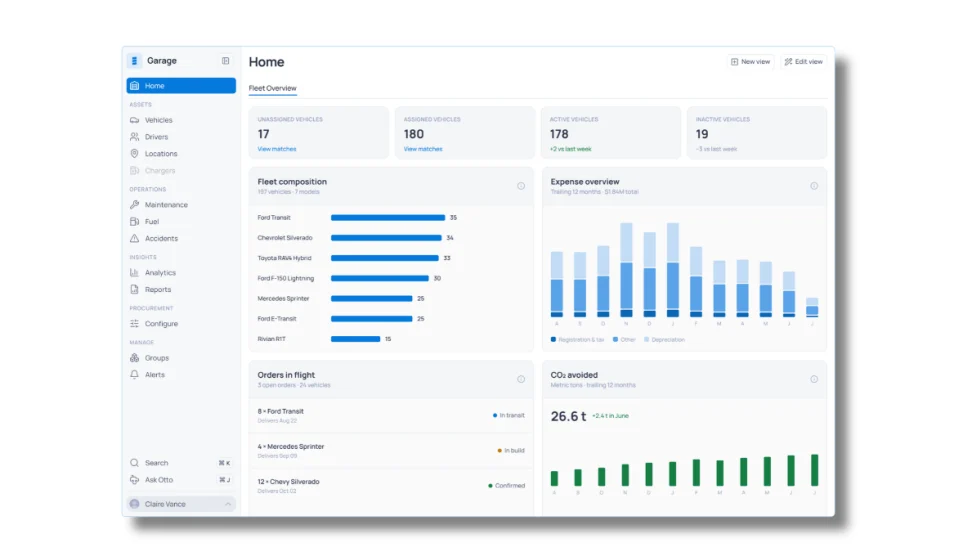
Inspiration Fleet Introduces Garage 2.0 Fleet Intelligence Platform
Fleet managers increasingly have access to data from vehicles, telematics, fuel, charging, and other systems, but those sources don't always communicate with one another. Inspiration Fleet's Garage 2.0 platform brings that information together while letting fleets keep working with different technology and service providers.
Read More →
Inside Inspiration Fleet’s New Platform for Connecting Fleet Data
Inspiration Fleet CTO Chris Getner explains how the new Garage 2.0 platform is designed to connect disparate fleet data and what that could mean for fleet managers in practice.
Read More →
Fleet Manager’s Ultimate Playbook: Navigating the New Standard in OEM Connectivity
Rising operating costs, driver safety concerns, and unplanned downtime are putting unprecedented pressure on modern fleets. Discover how fleet managers use embedded OEM connectivity and real-time vehicle data to cut TCO, prevent downtime, and protect drivers without aftermarket telematics hardware.
Read More →
Samsara Driver Perks Adds New Benefit for Corporate Fleet Drivers
The rewards program gives eligible professional drivers access to discounts from more than 50 brands while giving fleets another way to support recruitment, retention, and the driver experience.
Read More →
Inside the Church of Jesus Christ of Latter-day Saints’ Two-Track Telematics Strategy
With 20,000 vehicles and two fundamentally different driver populations, the Church faced a fleet management problem that a single telematics program couldn't solve. How it responded offers a replicable framework for any fleet where one size doesn't fit every driver.
Read More →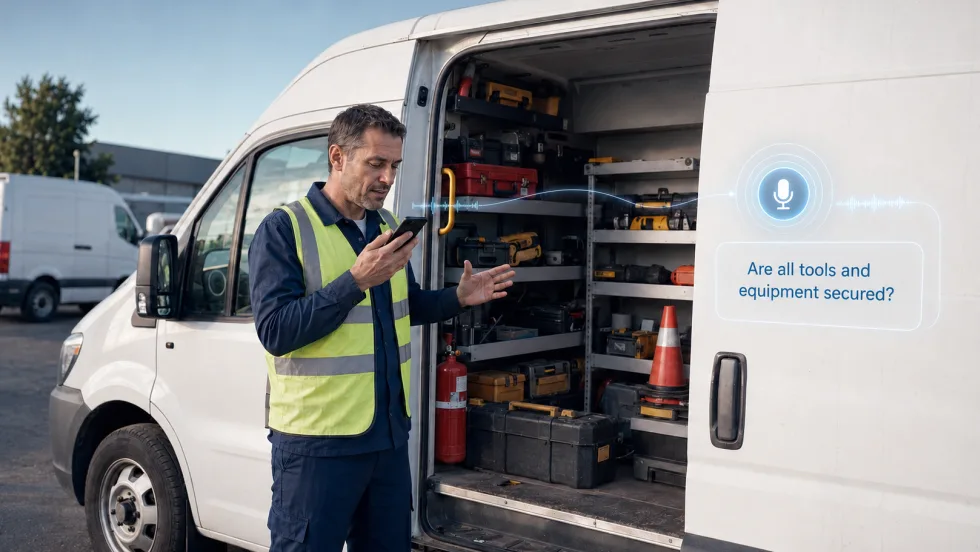
How Conversational AI Can Make Fleet Tasks Easier for Drivers
While most generative AI tools help fleet managers interpret data at their desks, Connex2X is applying voice interaction to tasks behind the wheel.
Read More →
Why Fleets Are Creating Dedicated Fleet Analyst Positions
Are fleet analyst positions the new norm? Listen here to find out.
Read More →
Teletrac Navman Begins Next Chapter as Standalone Private Company
What's new with Teletrac Navman and its new owner?
Read More →
Why Fleets Are Creating Dedicated Fleet Analyst Positions
Telematics, AI, EVs, and connected technologies are generating more fleet data than traditional teams can effectively manage. Reed Jackson explains why dedicated fleet analytics roles are emerging to turn that information into better operational decisions.
Read More →