





Want to share your story? Fill out this questionnaire for a chance to be featured in our Fleet in Focus series!
Fleet in Focus: Mikhaila Baldwin
Mikhaila Baldwin of CoolSys discusses the complexities of change management, the importance of data-driven decision-making, and cultivating diverse experiences outside of work.
March 12, 2025
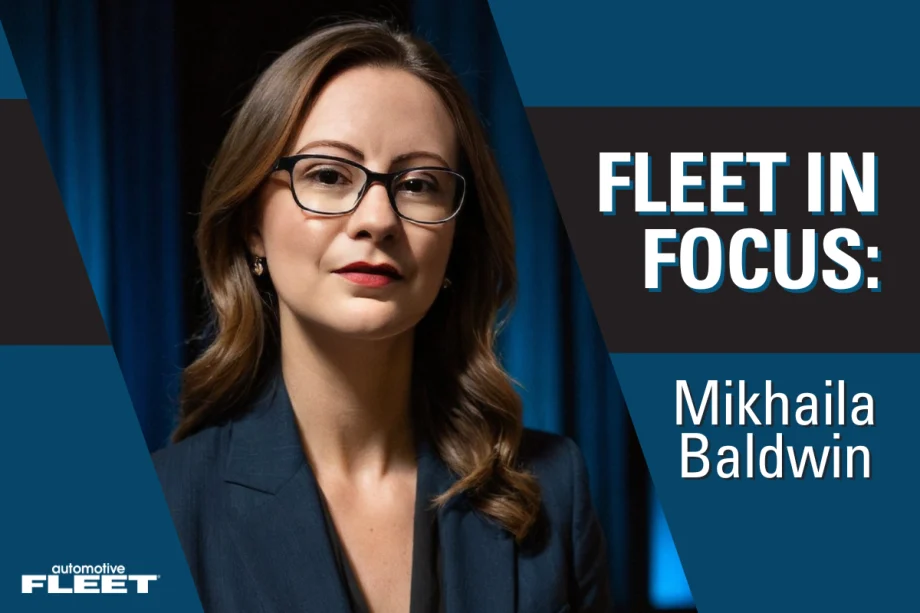
Mikhaila Baldwin's fleet consists of approximately 2,500 vehicles in the HVAC sector, mainly comprised of cargo vans and pick-up trucks.
Photo: Mikhaila Baldwin / Automotive Fleet
6 min to read
Welcome to Fleet in Focus, Automotive Fleet’s ongoing series highlighting fleet managers and bringing their perspectives, best practices, and personalities to the fleet community!
In the second installment of Fleet in Focus, Automotive Fleet connects with Mikhaila Baldwin, fleet manager at CoolSys, to discuss change management, sustainability, tech innovations, and personal growth.
Baldwin manages a fleet of approximately 2,500 vehicles in the HVAC sector, mainly comprised of cargo vans and pick-up trucks.
Addressing Fleet Challenges and Telematics Transitions
Although the primary challenge Baldwin says her fleet is currently facing operations-wise is change management, which reflects the significant transitions CoolSys is undergoing, other challenges lie in telematics and integrating systems post-acquisition.
“Change often brings uncertainty and apprehension, which can impact team dynamics. It’s been crucial for us to acknowledge these feelings and collaborate closely with operations teams to identify the most effective path forward,” Baldwin said.
The Environmental Health and Safety (EHS) and Fleet departments at CoolSys are working together on a shift to a new telematics provider, which, Baldwin noted, has had a larger-than-anticipated impact on the company’s processes. Other changes include installing in-cab and forward-facing dashcams in their fleet vehicles, which has met some resistance.
“To address [resistance], we focus on providing clear, data-driven insights to ensure our teams understand these changes are implemented with their best interests in mind,” Baldwin said.
Managing Fleet Integration After Rapid Growth
Another ongoing challenge is related to integrating systems following significant growth through acquisitions.
“As someone who transitioned from an acquired company, I understand firsthand the complexities involved. We are currently working to consolidate multiple operating systems into a single unified platform, which is no small undertaking and requires cross-departmental collaboration,” Baldwin said.
CoolSys recently announced a strategic partnership with Merchants Fleet as they transition to a new fleet management company (FMC). This change is expected to bring substantial improvements, but according to Baldwin, it requires careful coordination and communication across all levels of the organization.
How Baldwin Empowers Drivers to Cut Fuel Costs
While fleet challenges can provide an opportunity to maximize operational efficiency, other efforts focus on driving down costs. One of the key areas Baldwin is concentrating on is fuel consumption, which is a volatile area requiring active monitoring.
“To address [fuel consumption], we collaborate closely with our fuel card provider to secure rebates and negotiate discounts with various fuel vendors. While these measures are important, the most significant impact comes from empowering our drivers to make informed decisions about where and when to refuel,” Baldwin said.
Drivers are on the front lines, making those real-time decisions on where to fuel. Baldwin emphasizes that equipping drivers with the right tools and information is essential to making cost-effective choices. This information can take the form of up-to-date data on fueling locations, pricing trends, and potential savings opportunities,
“Although we continuously analyze data to identify cost-saving opportunities, it ultimately falls on the drivers to take action and capitalize on these insights,” Baldwin said. Future solutions for her fleet may include technology solutions that can provide real-time route optimization and integrated fueling suggestions.
The Three Pillars of Fleet Data Management
Baldwin’s approach to managing fleet data culminates in three objectives: integration, consolidation, and automation.
Sounds simple, right? Not quite.
In this process, all of CoolSys’s service providers and systems can seamlessly integrate, enabling them to consolidate data into a single, unified platform. All the work done to create this centralized approach has simplified the process of analyzing and evaluating data, allowing Baldwin and her team access to one system.
It doesn’t end there. Automation plays a significant role in streamlining the company’s data management, such as routine processes and data transfers, and reduces the risk of errors while improving efficiency. This integration ultimately saves the fleet team time.
“The combination of integration and automation allows us to focus on strategic decision-making rather than spending valuable resources on manual data entry or reconciliation,” Baldwin said.
Challenges and Opportunities of Fleet Electrification and Route Optimization
Fleet technologies might bring video telematics or artificial intelligence (AI) to mind, but for Baldwin, this means closely monitoring the electric vehicle (EV) segment and route optimization advancements.
“As the push for sustainability grows, EVs present an exciting opportunity to reduce our environmental footprint and lower operating costs, particularly in fuel and maintenance,” Baldwin said.
Like all new technology, there are still challenges to overcome, such as the upfront costs, limited charging infrastructure, and range limitations for specific fleet needs. Although the same concerns ring true for Baldwin and CoolSys, they continue assessing their viability to make the transition in a way that aligns with operational goals.
Additionally, Baldwin is keeping a close eye on advancements in route optimization technologies. “While we have basic routing systems in place, we are exploring more advanced solutions that use real-time data, machine learning, and predictive analytics to optimize routes for fuel efficiency and delivery timelines dynamically,” Baldwin said.
Both EVs and route optimization technologies represent areas where Baldwin sees significant potential, but careful consideration and planning are required to ensure they fit seamlessly with her fleet operations.
Baldwin’s Hopes for a More Sustainable Fleet Industry
The future of the fleet industry will affect all fleet types, regardless of vocation, size, or location. Baldwin’s hopes for the industry’s future emphasize sustainability, innovation, and efficiency.
Baldwin envisions a future where fleet management embraces sustainability, shifting toward EVs and alternative fuels to reduce environmental impact. She anticipates advancements in data integration, route optimization, and automation, enabling fleets to operate more efficiently while leveraging real-time insights for more intelligent decision-making and proactive maintenance.
“Ultimately, I hope that the fleet industry continues to adapt to the changing needs of the workforce and the environment, fostering a more sustainable, efficient, and technology-driven future,” Baldwin said.
A Fleet Manager with a Passion for Adventure
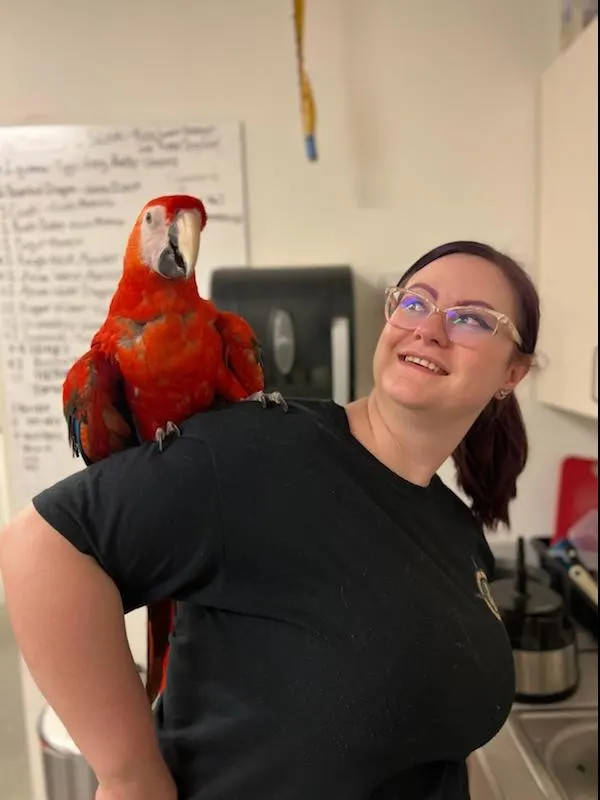
Baldwin previously worked as a part-time zookeeper at Little Ray’s Nature Center.
Photo: Mikhaila Baldwin
Being a fleet manager isn’t all business. Outside of work, Baldwin has unique interests, including a past role as a part-time zookeeper at Little Ray’s Nature Center, where she worked with sloths and a Brazilian three-banded armadillo named Wilson. She also overcame her fear of tarantulas — now owning nine.
Baldwin spends summer weekends working at a Renaissance fair, supporting a children’s adventure wear business founded by Michelle Brady and a leather company, where she finds inspiration from female entrepreneurs and leaders in her community.
Parallel to her work, Baldwin takes pride in earning her Bachelor’s degree in Business Management in 2019 while working full-time, alongside an undergraduate certification in Business & Environmental Sustainability. Balancing academics and professional responsibilities strengthened her commitment to continuous learning and growth.
Her mother has been a major influence both professionally and personally, excelling as a project manager with expertise in product knowledge, pricing strategies, and business operations.
“She is truly a powerhouse. I’ve always admired her for the many qualities that have shaped her success, particularly her ability to thrive in a male-dominated industry,” Baldwin said.
Beyond her professional success, Baldwin admires her mother’s resilience and determination. As a single mother for much of Baldwin’s childhood, she balanced raising a family while pursuing higher education and advancing in her career. She earned a Bachelor’s degree while working full-time and later achieved a Master’s in Project Management while continuing to support and inspire her children.
“Most recently, I’ve watched her prepare for an exciting new challenge as she transitions into a new leadership role. Her journey continues to inspire me every day and serves as a constant reminder of the power of perseverance, learning, and leadership,” Baldwin said.
Subscribe to Our Newsletter
More Operations

How Fleets Can Recruit and Train Veterans for Technician Roles
Here's how the technician shortage has affected uptime for fleets, and what to do about it.
Read More →
Avis Budget Group Deploys Neology Toll Management Technology Across Major Brands
Neology’s neoFleet platform will manage toll transactions and toll-authority operations for vehicles across Avis, Budget, Payless, Budget Truck and Zipcar.
Read More →
Fleet Personal-Use Charges Edge Higher in 2026
Nearly eight in 10 surveyed fleets allow personal use of company vehicles, while just over half of respondents report charging employees for the privilege.
Read More →
The Future of Fleet + What’s Changing Right Now | AF News Recap
Could developments overseas offer a preview of what’s coming for U.S. fleets? This week, we’re looking at the future of AI, autonomy, and electrification, plus Ford Pro’s new certified pre-owned program, smarter vehicle offboarding, and a new way for fleets to manage toll expenses.
Read More →
How to Handle Vehicle Offboarding
What do fleet managers need to do when a driver leaves?
Read More →
Sponsored•October 1, 2026
Fleet Manager’s Ultimate Playbook: Navigating the New Standard in OEM Connectivity
Rising operating costs, driver safety concerns, and unplanned downtime are putting unprecedented pressure on modern fleets. Discover how fleet managers use embedded OEM connectivity and real-time vehicle data to cut TCO, prevent downtime, and protect drivers without aftermarket telematics hardware.
Read More →
U.S. Bank Adds Verra Mobility Toll Management to Voyager Fleet Platform
The integration allows U.S. Bank Voyager fleet customers to manage toll payments and violations alongside fuel, EV charging and maintenance expenses.
Read More →
ADAS Prevents Crashes. But Repairs Cost More | AF News Recap
ADAS-equipped vehicles may crash less often, but they can cost more when they do. This week, we’re breaking down what that tradeoff means for fleets, plus Subaru’s first Forester Wilderness Hybrid, Nissan’s new e-POWER Rogue, and why Calstart has become Catalyst Mobility.
Read More →
Moventum Fleet Management Names Mark Iorillo Head of Sales
Iorillo brings nearly 20 years of fleet management and sales experience to the role, including previous positions at Element Fleet Management, CEI, Donlen and Ryder.
Read More →
Fleet Has a Talent Pipeline Problem. What Comes Next? | AF News Recap
Where will fleet’s next generation of leaders come from? This week, we’re looking at the industry’s talent pipeline, what certification can add to a fleet career, how to build an award-worthy track record, and the return of Automotive Fleet’s Personal Use Survey.
Read More →