




Workforce Trends Study Highlights How Younger Workers View Fleet Safety Technology
A new report by Samsara shows how technology is reshaping industries, attracting younger workers, improving safety, and driving efficiency as workforce demographics shift.

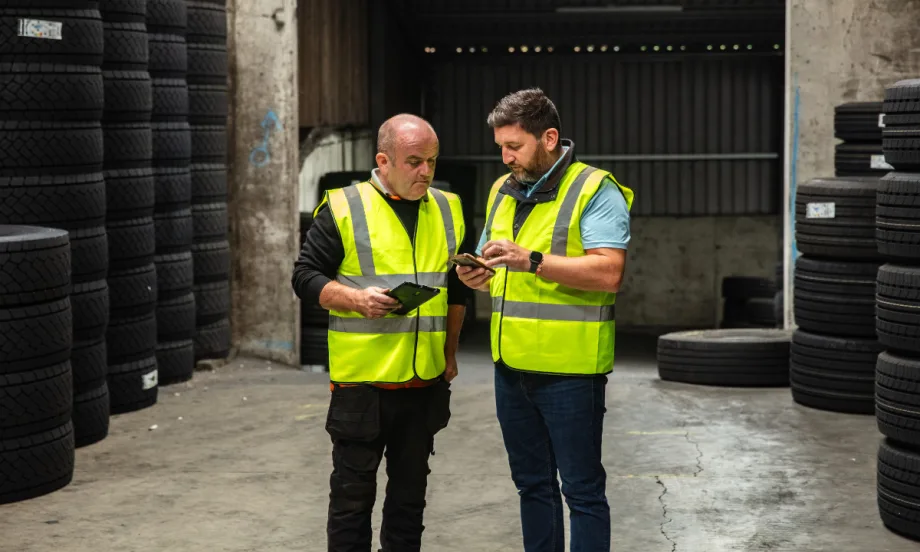
A new report by Samsara reveals how technology is attracting younger talent and transforming workplace safety, efficiency, and job satisfaction in key fleet sectors.
Photo: Samsara
At a time when nearly a quarter of transportation workers are over 55 and only 12% are under 25, industries must adapt — or risk falling behind.
A new report by Samsara reveals how technology is attracting younger talent and transforming workplace safety, efficiency, and job satisfaction in key fleet sectors.
These changes, driven by shifting workforce trends, bring challenges and opportunities for the industries that power over 40% of the global economy — including transportation and logistics, construction, manufacturing, utilities, state and local government, and more.
The report includes insights from 1,550 physical operations leaders across seven countries. It reveals how their workplaces are transforming to meet the demands of a new generation while creating safer and more efficient organizations.
The report’s main takeaways include:
Workers are eager for greater investment in safety and security.
Technologies that improve workforce safety, security, and efficiency deliver massive ROI.
Leaders are successfully using technology to attract and retain the next generation of workers.
The majority (85%) of leaders surveyed agree that modern technology tools have made their industries more desirable to younger workers. Many also report increased employee morale, improved productivity, and lower turnover.
“It’s no secret, the labor market can be tough in industries like transportation, construction, and field services, but we’re seeing technology make a real difference in how younger talent views their career opportunities,” Meagen Eisenberg, chief marketing officer at Samsara, said. “Our research shows that technology is not only making these industries more attractive but also helping retain workers for the long term. The ROI is impressive, and yet, there’s so much potential ahead as many are at the beginning of their digital transformation.”
Recognizing the value of technology in protecting workers from not-at-fault incidents and false claims, leaders ranked cameras as the top technology for improving recruitment and retention. Automation and robotics closely followed, reflecting younger workers’ emphasis on job safety and their comfort with technology that enhances safety.
A unique use of technology that ranked third in improving younger recruitment lends itself to gamification in the workplace, which involves implementing performance scorecards or personalized scores based on safety or efficiency data.
Despite investments, many workers aren’t yet satisfied, as 71% of leaders report they frequently hear feedback about the need for greater investments in safety and security.
To address this, nearly all (99%) plan to increase investments in workforce safety and security technologies over the next five years, with many prioritizing IoT-enabled safety devices, automation that reduces worker exposure to hazards, enhanced personal protective equipment (PPE), and predictive safety analytics.
A resounding 99% confirmed that technology has empowered the workforce to shift their focus toward higher-value tasks, including preventive maintenance, safety checks, and valuable upskilling opportunities.
The research also revealed widespread adoption of e-learning platforms, with 85% of organizations already using these tools. Leaders cite employee retention as the top benefit, which signals a better employee experience and reduced turnover costs.
Leaders are evenly split on what they foresee as the biggest challenge to recruiting and retaining talent over the next 5 years, indicating no silver bullet. Commercial fleet leaders should invest in various strategies, from offering competitive benefits and growth opportunities to investing in upskilling and reskilling.
More Safety

Fleet Manager’s Ultimate Playbook: Navigating the New Standard in OEM Connectivity
Rising operating costs, driver safety concerns, and unplanned downtime are putting unprecedented pressure on modern fleets. Discover how fleet managers use embedded OEM connectivity and real-time vehicle data to cut TCO, prevent downtime, and protect drivers without aftermarket telematics hardware.
Read More →
From Driver Well-Being to EV Charging | AF News Recap
Mental health belongs in the fleet safety conversation. This week, we’re looking at five ways fleets can support employee well-being before a crisis, plus Holman’s expansion in Mexico, new one-day Fleet Forward passes, and why EV charging demand is outpacing infrastructure growth.
Read More →
Nexar-Nauto Merger Aims to Give Fleets Better Safety Intelligence Through Larger Driving Dataset
Stefan Heck tells Automotive Fleet that combining more than 10 billion miles of driving history with Nexar's AI models will give fleets deeper insights into driver risk and roadway conditions than either company could provide independently.
Read More →
Don't Wait for a Crisis: 5 Ways to Build Mental Health Into Your Fleet Safety Program
For Suicide Prevention Month, fleet and safety leaders have an opportunity to put mental health where it belongs: at the center of workplace safety.
Read More →
How Camera Data Can Strengthen a Fleet’s Insurance Renewal
Insights from a commercial insurance carrier and a broker show how fleets can turn video telematic data, driver coaching, and improved claims results into a stronger case at insurance renewal.
Read More →
The Safest Fleets Aren’t the Ones with the Most Technology
You’ve made the telematics investment. Here’s how to capture the other half of its value and build the safest fleet on the road.
Read More →
Hidden in Plain Sight: Fleet Compliance Risks
Fleet compliance isn't just about having policies — it's about consistently enforcing them. This practical guide reveals six hidden compliance risks common in public sector and shared fleet operations and outlines proven strategies to improve visibility, accountability, and audit readiness
Read More →
NETS Sets 2026 Fleet Safety Benchmark Conference for Indianapolis
The Sept. 15–17 program will feature fleet benchmarking data, case studies, emerging technologies, and implementation strategies while running alongside the NSC Safety Congress & Expo.
Read More →
Off-the-Job Crashes Account for 43% of Employers’ $61.7 Billion Crash Burden
NETS quantifies costs dispersed across fleet, risk, HR, and other departments while providing new per-crash benchmarks for employers.
Read More →
Ram Recalls More Than 1.27 Million 1500 Pickups for Seat Belt Anchor Issue
The recall affects certain 2019-2026 Ram 1500 pickups that may have improperly attached second-row seat belt buckle anchors.
Read More →