




The Next Evolution of Telematics? Data2Everything (D2X)
When the development sandbox becomes open to everyone, telematics data can be used to create smarter cities, predict crashes, motivate positive behaviors, and promote drivers’ well-being beyond the vehicle. And a new acronym is formed.
March 3, 2025

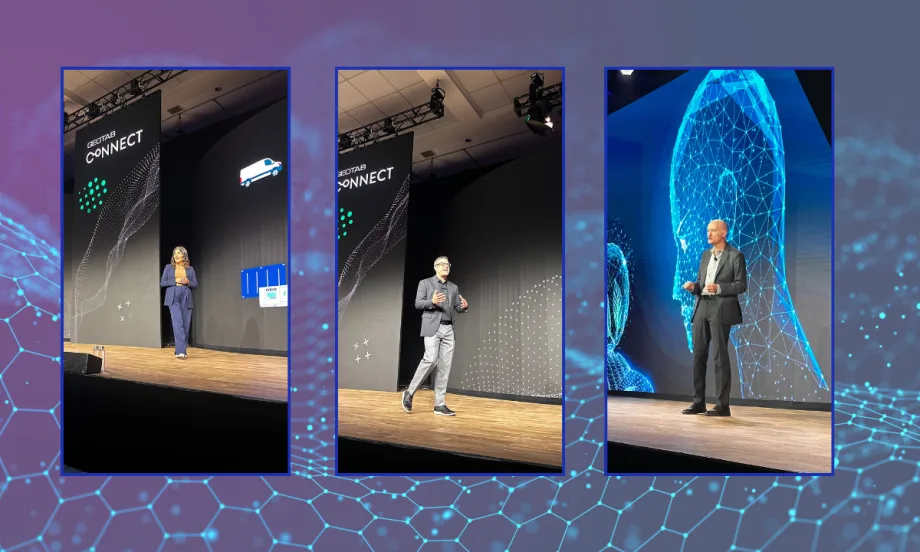
“There’s a revolution happening in this space. It’s starting in commercial, and I think it’s going to spread to consumers,” said Neil Cawse (right), founder and CEO of Geotab during a media scrum at the 2025 Geotab Connect conference. Cawse was joined by VP of Product Management Sabina Martin (left) and VP of Data & Analytics Mike Branch for the opening keynote.
Photos: Chris Brown
5 min to read
The fallout from the Gardiner Expressway construction in 2024 was a seminal moment for Geotab. The traffic congestion and productivity losses were significant but anecdotal — until Geotab was able to quantify that rush hour times had increased by more than 230%.
“The day we published that; all hell broke loose. Every media outlet came to the offices; there was a big political hoo-ha,” recounted Neil Cawse, Geotab’s founder and CEO. “We never had such a big marketing event in our lives.”
That data was a motivator to get CA$73 million more into construction to narrow the gap to completion, said Cawse during a media scrum at the 2025 Geotab Connect Conference.
As more vehicles become connected, the power of telematics data to solve big problems is being revealed in countless new ways that even extend beyond the vehicle. That was one of the themes of this year’s conference, which took place Feb. 24-27 in Orlando, Fla.
I think this necessitates a new acronym — Data2Everything (D2X).
There are plenty of “Vehicle to Something” acronyms: vehicle to vehicle (V2V), infrastructure (V2I), cloud (V2C), grid (V2G), pedestrian (V2P), network (V2N), and everything (V2X). But as far as I can tell, D2X isn’t yet a thing.
Consider D2X as an overarching term for how data is being leveraged beyond the vehicle in more ways than we could have imagined even five years ago.
Data for Urban Planning
Municipalities’ ability to use telematics data extends beyond solving traffic construction to freight corridor planning, greenhouse gas emissions reductions, and the strategic development of services in a geographic area.
Municipalities can also use the data on public websites to keep citizens informed of congestion.
This isn’t a new phenomenon, but it’s starting to accelerate as more vehicles become connected. This ability is not intrinsic to Geotab, but with 4.7 million vehicles on the platform across the globe, the data has greater power.
Data for Driver Wellness
Data use extends into a holistic view of driver wellness.
Geotab’s new joint venture with Vitality, a global behavioral science firm, uses telematics data and AI to promote safer driving based on drivers’ predictive collision risk scores.
The program uses a new predictive risk model that takes traditional safety scorecard factors like harsh braking, cornering, acceleration, and speeding.
It then brings additional context by analyzing driving behaviors, collision data, and past trends to benchmark drivers operating in similar conditions to scientifically understand the risk factors. Drivers are assigned a score to predict the likelihood of getting into a collision.
That new risk score is used to incentivize behavioral change, which includes other aspects of wellness such as measuring exercise and healthy habits. Drivers accumulate and redeem points to buy products and services from major brands in an online store.
The data can positively affect insurance premiums, vehicle damage costs, and driver retention. “Behavioral change is not just isolated to how safe you are on the road,” Cawse said. “We’re talking about other behaviors that can lead to better employee welfare.”
Data from OEM-Embedded Modems
Geotab (and other telematics providers) have been collaborating with automakers to use OEM-embedded modems instead of installed devices.
Though data quality varies by manufacturer, it has improved, Cawse said. According to Geotab, about 240,000 units out of 4.7 million use a factory-installed OEM device.
While the OEM modem reduces a major installation hassle, automaker partnerships involve deeper integrations with vehicle ADAS data, which supplements safety scoring.
This is demonstrated in Geotab’s new GO Focus video telematics system. The system purposely avoids the driver-facing camera for privacy’s sake. However, it can ascertain risk by other ADAS-based methods, including following distance, a leading indicator of risky driving.
Data is now extracted from OEM modems embedded in off-road and stationary equipment used in construction, agriculture, and mining.
Data for Sustainability & Compliance
Geotab’s CARB Clean Truck Check is a system that automates emissions verification in California to help fleets avoid penalties. A partnership with Bosch is allowing richer insights into EV battery health diagnostics to improve resale value and long-term cost management.
Geotab’s new Sustainability Center takes fleet emissions and fuel consumption data to identify opportunities to reduce a fleet’s carbon footprint.
Data Unification for Holistic Business Decisions
Telematics data is being integrated into data visualization tools like Power BI and Tableau. Fleets can merge Geotab telematics data with financial, HR, and operational data for cross-functional decisions.
For example, a company can overlay fuel consumption trends with driver shift schedules to find cost-saving opportunities. Or a delivery fleet can connect route data to sales reports to optimize delivery schedules based on demand.
Beyond Fleet, into Consumer Applications
New solutions multiply when a telematics system’s sandbox is opened up to third parties.
In Geotab’s case, that happens through open APIs and developer access, hardware expansion options via the IOX operating system, and an easier system for fleets to order products through the Marketplace. (Amazon, anyone?)
Data to Everything — D2X — will inevitably expand beyond fleet.
“There’s a revolution happening in this space. It’s starting in commercial, and I think it’s going to spread to consumers,” he said Cawse in the scrum.
“I think this is the new world order,” he said. “Now, you can scientifically prove that if (a driver) speeds more than five kilometers an hour above the speed limit or if (the driver’s) following distance is too close, this is how much risk is increased. And we can take real steps towards reducing risk, as opposed to hypothetical, because we can test it on all the data.”
Subscribe to Our Newsletter
More Blog Posts

How to Win a Fleet Manager Award: Make Your Nomination Count
Strong fleet accomplishments can go unrecognized when the nomination doesn’t make the case. Here’s what judges need to see.
Read More →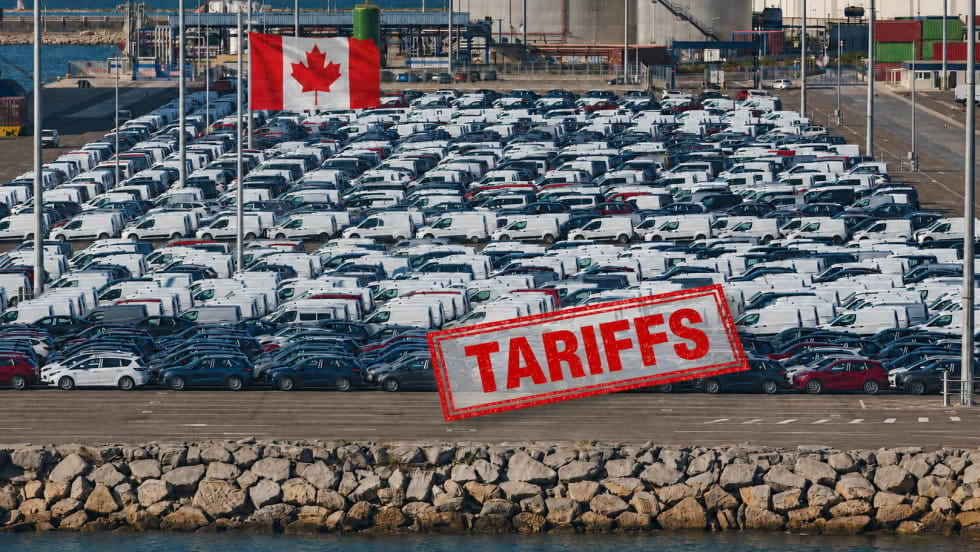
The Only Certainty with the New Tariff Threat Is Uncertainty
Trump’s Canadian tariff threat will not move production overnight, but the uncertainty could influence ordering and pricing now. Longer term, forces beyond tariffs may determine which North American plants survive.
Read More →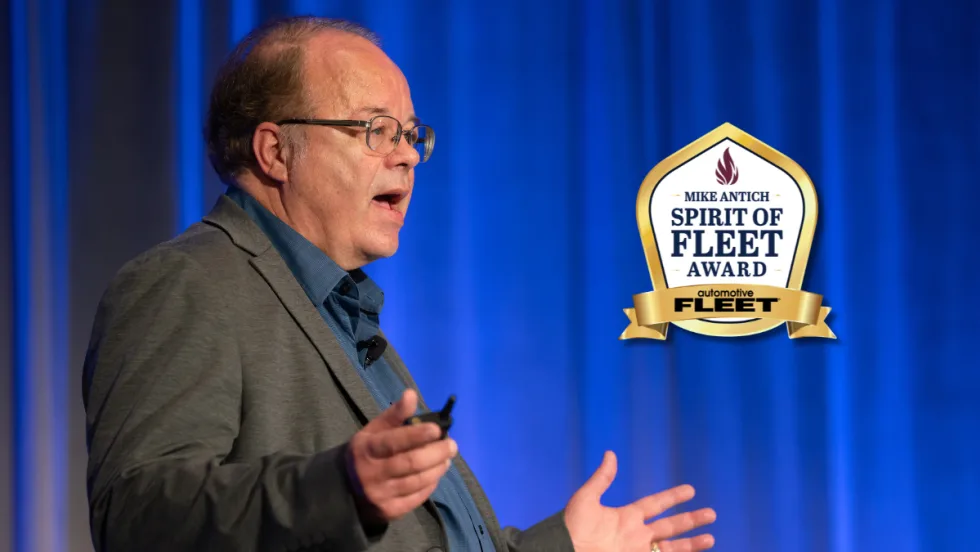
What Does It Mean to Embody the Spirit of Fleet?
Presented alongside Fleet Manager of the Year, Fleet Visionary, and Fleet Hall of Fame at AFLA, the new Mike Antich Spirit of Fleet Award is unique in that it recognizes service to the overall profession. Just like Mike.
Read More →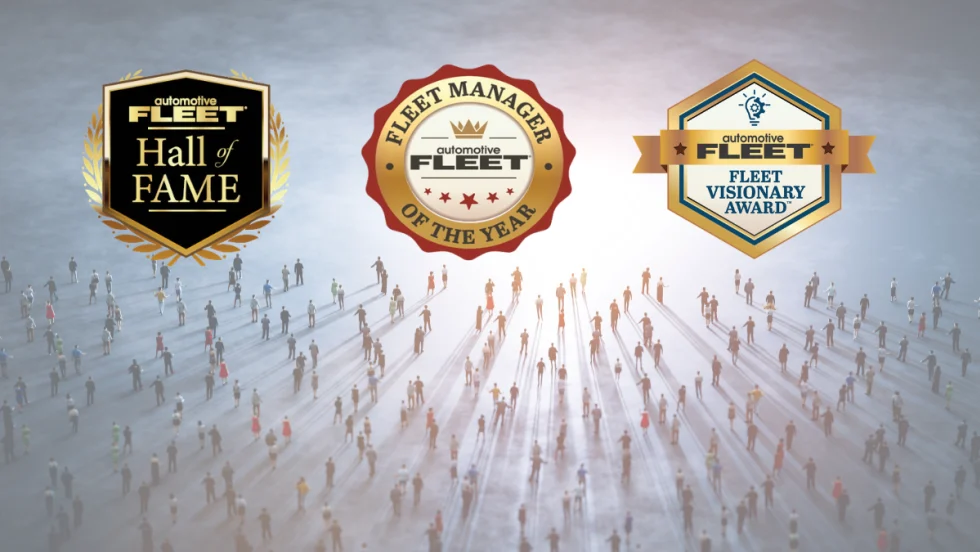
What Separates Great Fleet Managers From Everyone Else?
What do Visionary candidates with fewer than 10 years of experience have in common with Hall of Fame nominees with a lifetime under their belts?
Read More →
The Next Fleet War Won't Be Won on Specs Alone
The 2026 Stellantis Pro One Fleet Preview was less about vehicles and more about what happens after you buy them.
Read More →
Navigating Brundlefly and Fleet AI at 2026 NAFA I&E
AI is becoming the operating layer for fleets. In Cleveland, the buzz was about harnessing AI in an increasingly complex, permanently disrupted environment.
Read More →
8 Trends: Work Truck Week 2026 Reveals a Fleet Industry in Reset Mode
Walking the show floor this year, the new focus was around “practical innovation” and pragmatic solutions. And oh yeah, a new small van.
Read More →
The Moment AI Became Operational
“AI isn’t assisting us anymore. It’s doing the work,” said CEO Neil Cawse at Geotab Connect 2026. What does this mean for fleet managers?
Read More →
For Mike Antich, it Was Always About the People
He stood tall in the industry in so many ways, but he measured success by the people he served.
Read More →
Solving the Flexible-Lean Fleet Paradox
The lean fleets of yesterday are the fragile fleets of today. Where do we find the balance?
Read More →