




The Only Certainty with the New Tariff Threat Is Uncertainty
Trump’s Canadian tariff threat will not move production overnight, but the uncertainty could influence ordering and pricing now. Longer term, forces beyond tariffs may determine which North American plants survive.

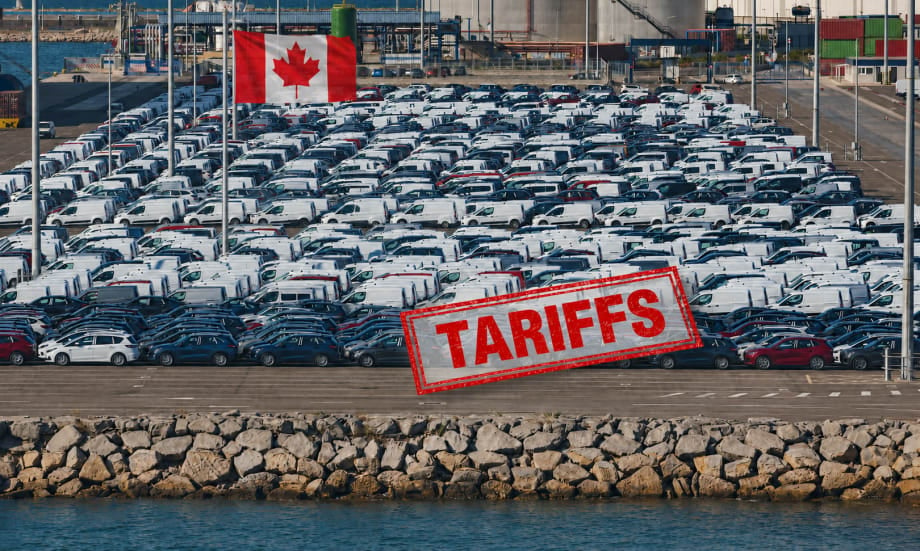
New tariff threats on Canadian-built vehicles would add another layer of cost and uncertainty to a North American auto industry whose production networks have been integrated for decades.
Automotive Fleet
Fall is coming. But if you live around the Great Lakes — on either side of the border — that bluster you felt this week was more likely the political rhetoric than the typical autumn gales.
President Trump’s threat to raise tariffs on Canadian vehicles and auto parts to 50% on Jan. 1, 2027, could eventually alter North American auto production.But we won’t know how all this will play out for months, or longer.
Right now, those gales are producing one thing — uncertainty. Here we go again, right?
The Ever-Present Specter of Uncertainty
Michael Parr, senior advisor at HillStaffer, identified the consequences of tariffs (if they come to pass) and the uncertainty they will drive a lot sooner:
"The effect will vary enormously by model, assembly location, parts content, OEM response, and whether negotiations change the policy before January," Parr wrote in an email exchange. "But uncertainty itself can affect ordering, pricing, and allocation decisions."
In volatile times, it’s even more important to monitor OEM order banks, model-year pricing, production locations, allocation changes, lead times, parts availability, maintenance costs, and residual values. Parr recommended that fleets with vehicles scheduled for replacement in 2027 should also understand which units have Canadian production or component exposure and identify alternatives, just in case.
In other words, fleets don't necessarily need to change their plans today, but they do need to understand what could happen.
Automakers Face Their Own Uncertainty
The uncertainty fleets face is playing out on a much larger scale for automakers. Trump was blunt about it: “Build vehicles in the U.S. and you’ll avoid the tariff.”
Yes, tariffs already in place have influenced manufacturing decisions in bringing more production stateside.
But assembly plants and supply chains can’t simply be picked up and moved across the border. Ford has committed $3 billion to prepare Oakville for Super Duty production — additional capacity the company needed because its Kentucky and Ohio truck plants were already heavily utilized.
And even if the 50% tariff takes effect, an automaker has to decide whether it will last long enough to justify another enormous capital investment to avoid it.
"Because of the cost of such supply chain changes and the mercurial nature of recent U.S. trade policy, I doubt we would see major investments unless and until it was clear that high tariffs were going to stick for years," Parr said.
He also noted that all this may change as soon as November, with Congress attempting to reclaim some authority over tariffs.
At what point do automakers make the tough decision to move a production line across the border? No easy or inexpensive answers exist.
"If OEMs respond to the tariffs and ongoing uncertainty by reallocating future models, changing sourcing, delaying investment, or shifting production, those decisions can reshape vehicle availability and fleet procurement well beyond the duration of the tariff dispute," he said.
The Imbalances Created by Uncertainty
This surely sounds familiar by now: On the one hand, you have trade policy, which changes quicker than the winds blowing the Edmund Fitzgerald.
Then you have automotive manufacturing, which moves much more slowly. Product programs and plant investments involve billions of dollars, with decisions intended to make economic sense for years.
Fleets are between the two. They have vehicles that need to be replaced, budgets that need to be set, and orders that need to be placed now.
If acquisition costs rise or availability tightens, Parr said fleets may respond by extending replacement cycles, which come with their own set of well-documented problems.
The problem, then, isn't merely whether tariffs make a Canadian-built vehicle more expensive; it's making long-term fleet decisions while the rules could change before the tariff arrives.
Automakers have been able to cushion the blow of supply disruptions and tariffs. But cushioning costs don’t eliminate them.
Rather than passing through a tariff dollar for dollar, automakers have maneuvered by adjusting incentives, prioritizing higher-margin vehicles, changing sourcing, limiting fleet allocation (especially to rental), or spreading increases across model years and option packages.
That may prevent fleets from seeing an obvious “tariff surcharge,” but the costs are just spread elsewhere.
There’s a Bigger Capacity Question
So, we simply don’t know if the tariff dispute will eventually push more production into the U.S. However, we’ll have to face this music sooner rather than later.
The world already has more automotive manufacturing capacity than current demand requires. In Ezra Klein’s podcast from Aug. 21, economist Brad Setser estimated that China alone has installed capacity to produce roughly 55 million vehicles annually, even though it produces far fewer. Europe and North America also have underutilized plants.
As Chinese automakers seek more customers outside China, the pressure on global factory utilization will only grow. Eventually, some plants will gain products, others will lose them, and some will be shuttered forever.
That overcapacity is why a 50% tariff may not force the plant moves it's designed to. In a world already awash in idle assembly lines, adding more capacity in one country creates other utilization problems somewhere else.
That is the longer-term story behind today's tariff bluster. For now, however, fleets face a much more immediate problem — making decisions before anyone knows what the rules will be. We can be certain of more uncertainty to come.
More Blog Posts

How to Win a Fleet Manager Award: Make Your Nomination Count
Strong fleet accomplishments can go unrecognized when the nomination doesn’t make the case. Here’s what judges need to see.
Read More →
What Does It Mean to Embody the Spirit of Fleet?
Presented alongside Fleet Manager of the Year, Fleet Visionary, and Fleet Hall of Fame at AFLA, the new Mike Antich Spirit of Fleet Award is unique in that it recognizes service to the overall profession. Just like Mike.
Read More →
What Separates Great Fleet Managers From Everyone Else?
What do Visionary candidates with fewer than 10 years of experience have in common with Hall of Fame nominees with a lifetime under their belts?
Read More →
The Next Fleet War Won't Be Won on Specs Alone
The 2026 Stellantis Pro One Fleet Preview was less about vehicles and more about what happens after you buy them.
Read More →
Navigating Brundlefly and Fleet AI at 2026 NAFA I&E
AI is becoming the operating layer for fleets. In Cleveland, the buzz was about harnessing AI in an increasingly complex, permanently disrupted environment.
Read More →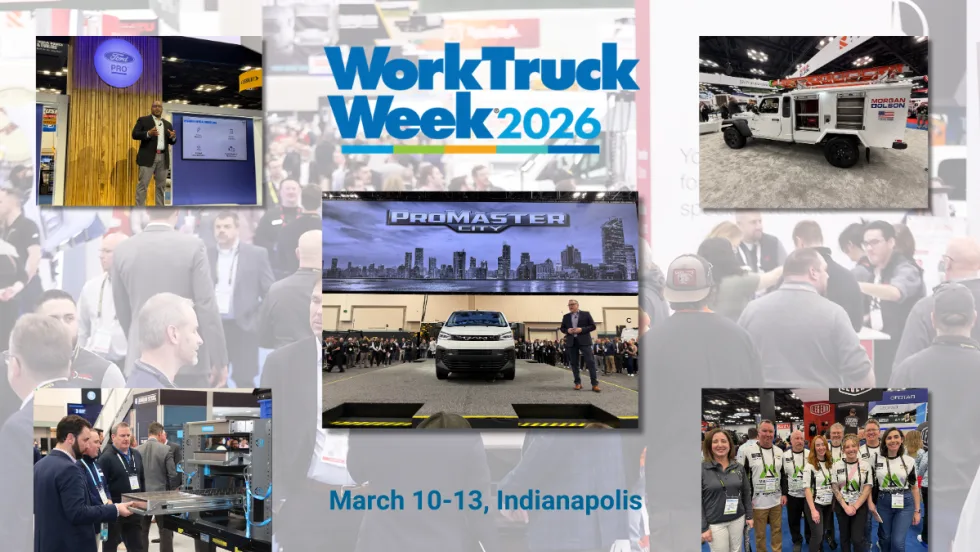
8 Trends: Work Truck Week 2026 Reveals a Fleet Industry in Reset Mode
Walking the show floor this year, the new focus was around “practical innovation” and pragmatic solutions. And oh yeah, a new small van.
Read More →
The Moment AI Became Operational
“AI isn’t assisting us anymore. It’s doing the work,” said CEO Neil Cawse at Geotab Connect 2026. What does this mean for fleet managers?
Read More →
For Mike Antich, it Was Always About the People
He stood tall in the industry in so many ways, but he measured success by the people he served.
Read More →
Solving the Flexible-Lean Fleet Paradox
The lean fleets of yesterday are the fragile fleets of today. Where do we find the balance?
Read More →
We’ve Been Here Before
If every generation of fleet managers thought they had the worst problems, what makes ours any different?
Read More →