




How Fleet Managers Are Finding New Ways to Control Maintenance Costs & Downtime
By standardizing repair workflows and building trusted vendor networks, fleets are cutting costs and keeping vehicles on the road.
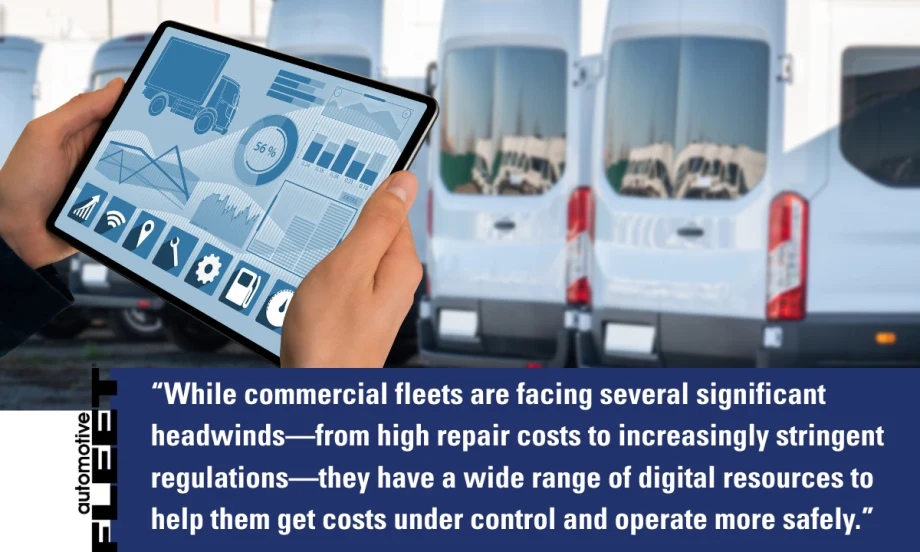
Proactive maintenance and digital fleet management tools are helping commercial fleets reduce repair costs, minimize downtime, and improve safety amid rising labor and parts expenses.
Image: Automotive Fleet
Repairs and maintenance are among the top financial burdens for commercial fleets. Beyond the direct costs of paying for parts and services, vehicle downtime reduces revenue and can lead to delivery delays and other service disruptions. However, the failure to schedule routine maintenance or complete repairs promptly can lead to even bigger problems—from safety risks to legal and regulatory issues.
Fleet managers are responsible for proactively planning repairs instead of waiting for a breakdown, which can lead to costly tow bills, emergency repairs at lower-tier shops, safety hazards, and frustrated drivers and customers. Fortunately, managers have never had more ways to avoid these consequences. Vehicle telematics provide up-to-the-minute data on the status of fleets. In contrast, digital fleet management platforms offer oversight across shops and locations, the centralization of vital information (such as repair documentation), and a centralized repository for data and communications.
To fully leverage these digital tools, fleet managers must make strategic planning a core priority. They should have a structured repair process with designated shops for specific types of jobs—from regularly scheduled maintenance to more substantial repairs—and a plan for evaluating vendor performance, regulatory compliance, and cost management. Proactive repair planning can improve efficiency, ensure compliance, and improve safety across the fleet.
Start With a Structured Repair Process
Begin by building a repair "playbook" so that every driver and vehicle follows the same path. Segment jobs by type—routine maintenance, collision, glass, and tires—so that issues are always routed to the right expertise and standardize workflows for intake, approvals, and communication to eliminate confusion and delays. Some fleets even use a triage system where quick-turn jobs go to fast-service vendors while complex jobs go to trusted specialty shops. This consistency saves time, reduces downtime, and helps managers avoid costly mistakes.
Getting Repair Costs Under Control
Repair and maintenance costs for commercial fleets have been on the rise due to labor shortages, supply chain disruptions, and sticky inflation. According to the American Transportation Research Institute (ATRI), repair and maintenance costs per mile have increased by nearly 34 percent since 2020, and the CPI for vehicle maintenance and repair spiked by 10 percent from 2023 to 2024 alone.
A critical component of slashing repair costs is building a trusted network of vendors. Fleet managers can negotiate rates for parts and labor beforehand, eliminating hidden costs and streamlining the repair process. They must also consistently monitor vendor performance to track the status of repairs and ensure vehicles aren't off the road longer than necessary. This is all the more important at a time when repair times have increased by 25 to 35 percent. Over three-quarters of managers say they consult with vendors for fleet
solutions, which is yet another reason why the right network has never been more valuable.
Evaluating and Expanding Your Vendor Network
Most fleets lack a structured plan, but they can start by focusing on key performance indicators such as comeback rates, average turnaround times, and cost variance from initial estimates. By building scorecards and conducting quarterly reviews of vendors, fleets can identify top performers and underperformers. Offering incentives like increased volume or quicker payment to the best shops, while reducing reliance on poor-performing vendors, ensures that decisions are based not just on price, but also on reliability and service quality.
Preparedness is key, even when current vendors seem adequate. Challenges like capacity issues, labor shortages, or part delays can disrupt operations. Fleets should proactively pre-qualify backup vendors in strategic markets, utilize digital repair networks to broaden their reach, and rely on vetted shops during surges. By negotiating terms with alternative vendors beforehand, fleets can avoid inflated prices during emergencies. Ensuring two or three options for each repair type prevents service disruptions if the primary provider is unavailable.
Data-driven Preventive Maintenance
Fleet managers have more access to critical data on the status of their vehicles than ever before. Vehicle telematics and diagnostics can catch mechanical issues before they become failures and track fuel efficiency, driver performance, and safety. It's no wonder that 58 percent of fleets are already using telematics or some other connected vehicle solution. The two top uses of telematics cited by fleet managers are "improved asset management and utilization" and "improved driver safety and security."
Telematics can be integrated with digital platforms to centralize vehicle data, repair status, and compliance tracking. These platforms can also be used for route planning, dispatch, and regular maintenance scheduling. It's imperative to have a clear digital record of maintenance and repairs, which is crucial in the event of an insurance claim, lawsuit, or regulatory scrutiny (such as an audit). Because fleets often work with multiple vendors, it's essential to have a centralized platform that gives managers visibility into repair status and vendor performance across the entire operation.
Improving Digital Record-keeping
To improve digital record-keeping for fleets, it's essential to centralize all documentation into one comprehensive, searchable system, encompassing estimates, invoices, photos, and approvals. By linking these records to VINs, managers can quickly access detailed vehicle histories, streamlining management and decision-making. Additionally, integrating inspection and DOT-related documents with repair files ensures that the system is always audit-ready, significantly reducing the time and stress associated with compliance checks or legal claims.
Despite the advantages of digital fleet management tools, Gartner reports that 30 percent of fleets still "use manual methods such as spreadsheets to track vehicle information or physical calendars for scheduling purposes." Transitioning from spreadsheets and paper trails to a digital record system not only minimizes risk but also provides managers with immediate and efficient oversight, enhancing operational efficiency and ensuring seamless access to critical information.
Focus on Strategic Repair Planning
Fleet managers must prioritize strategic repair planning to leverage digital tools and achieve optimal operational efficiency effectively. By focusing on a strategic approach, they can proactively manage preventive maintenance, significantly reducing the likelihood of breakdowns that result in accidents and costly downtime. A strategic plan enables managers to establish a reliable network of high-performing vendors by continuously evaluating their performance through metrics like downtime and cost overruns, thus fostering consistent, high-quality work. Utilizing telematics data for scheduled maintenance anticipates vehicle needs, such as tire or brake replacements, before failures occur, ensuring the fleet remains operationally ready.
Furthermore, aligning non-critical repairs with business slow periods prevents disruptions to service delivery. Compliance with regulations like DOT, FMCSA, and OSHA is a critical aspect of fleet management; strategic planning helps maintain compliance by generating robust records, easing audits, avoiding penalties, and minimizing legal liabilities. Beyond cost savings, this strategic focus is essential in enhancing driver safety and minimizing vehicle downtime, aligning with the fleet industry's primary objectives for the upcoming years.
The Bottom Line
While commercial fleets are facing several significant headwinds—from high repair costs to increasingly stringent regulations—they have a wide range of digital resources to help them get costs under control and operate more safely. Fleet managers who maximize the value of these resources through robust strategic planning will be in a strong position to improve efficiency, maintain compliance, and consistently deliver for customers.
More Maintenance

Fleet Manager’s Ultimate Playbook: Navigating the New Standard in OEM Connectivity
Rising operating costs, driver safety concerns, and unplanned downtime are putting unprecedented pressure on modern fleets. Discover how fleet managers use embedded OEM connectivity and real-time vehicle data to cut TCO, prevent downtime, and protect drivers without aftermarket telematics hardware.
Read More →
How Can Fleet Managers Tell Which Repairs Require Closer Review?
Fleetio’s Brianna Perry demonstrates how Service Advisor evaluates maintenance requests, identifies pricing anomalies, and provides the context fleet managers need to focus their attention on potential problems.
Read More →
Why Roadside Assistance Belongs in a Fleet Risk Strategy
Roadside assistance is more than a tow. See how the right partner can protect drivers, uncover fleet trends, and strengthen your risk strategy.
Read More →
Hidden in Plain Sight: Fleet Compliance Risks
Fleet compliance isn't just about having policies — it's about consistently enforcing them. This practical guide reveals six hidden compliance risks common in public sector and shared fleet operations and outlines proven strategies to improve visibility, accountability, and audit readiness
Read More →
How Maintenance Costs Compare Across 27 Fleet Vehicles
Vincentric’s three-year, 60,000-mile projections reveal wide differences for both scheduled and unscheduled maintenance among selected vehicle categories. Projected maintenance visits also play a factor.
Read More →
The EV Breakdown Nobody's Talking About: Why Most Electric Vehicle Roadside Calls Aren't Mechanical Failures
Here's why EV breakdowns are widely misunderstood.
Read More →
How Stellantis Plans to Get Ahead of Fleet Downtime
Keeping fleet vehicles on the road has become as important as buying them. Darren Bradshaw of Mopar North America explains how connected vehicle data, AI, and proactive service strategies are helping Stellantis reduce downtime and move closer to predictive maintenance.
Read More →
Merchants Fleet Expands Maintenance Network with Pep Boys
Merchants Fleet has expanded its relationship with Pep Boys, increasing the service provider's role within its national maintenance network. The move is intended to enhance maintenance coordination and support commercial fleets through Pep Boys' nationwide footprint.
Read More →
The Two Biggest Summer Downtime Threats for Fleets
A conversation with a maintenance expert reveals the two most common summer maintenance pains and how to prevent them.
Read More →
From Marine Corps Motor Pool to Managing 460 Fleet Vehicles
Cesar Ayala of O’Connell Landscape Maintenance shares how he transitioned from the Marine Corps to managing a 460-vehicle fleet—and the real-world challenges of maintenance, compliance, and driver management in California.
Read More →