




4 Trips, 10 Flights, and a Thousand Fleet Conversations
Reflections on a month I spent connecting dots across policy, procurement, technology, and the relationships that are moving fleet forward.

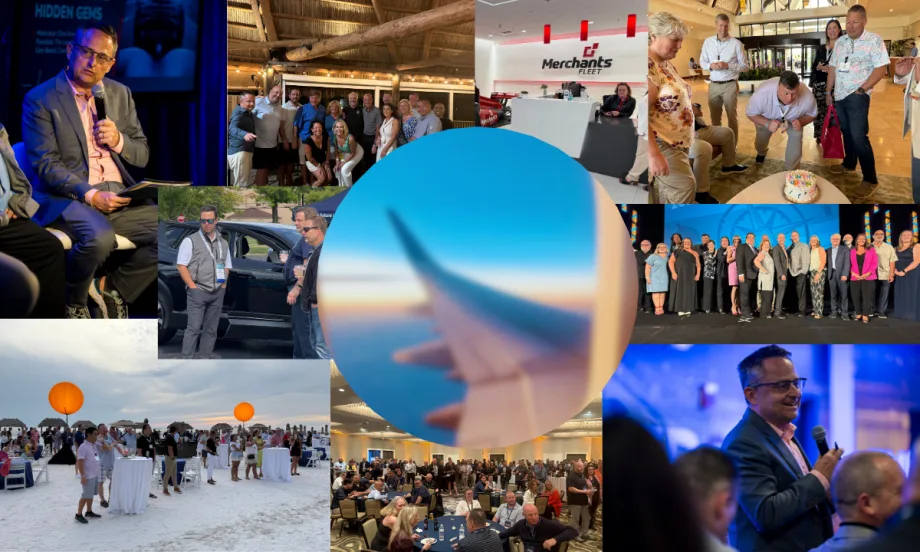
Four trips, 10 flights, 19,906 miles, and a lot of gratitude.
Photo: Automotive Fleet/Chris Brown
This is my take on what I learned about fleet during a month of — I’m not going to sugarcoat it — brutal travel. Ten flights in four weeks. A blur of airports, hotel lobbies, nametags, Uber rides, and lukewarm coffee. By the time I finally got home for good, I couldn’t tell you what time zone my body thought it was in.
But you know that feeling when exhaustion becomes exhilaration? That's mostly what I felt.
Most of this blog was written in an airline seat with the person in front of me reclining dangerously close to snapping my laptop. Here’s my snapshot of fleet today, from 30,000 feet.
Stop One: Somerset, N.J. – Fleet Forward Tour
We kicked off in New Jersey, the last leg of this year’s Fleet Forward Tour, our Bobit event. Familiar faces, great crowd, lots of Northeast energy.
The fleet manager’s panel that closed the day hit all the big themes: tariffs, hybrids, safety, and the constant juggle between budgets and sustainability.
Charlie Stevenson from Essential Utilities shared that tariffs had added 30% to some of his heavy equipment costs. Ted Chan from Schindler said they’re offsetting costs by reducing emissions through telematics. Wendy Kupper from Syneos talked about accident rates dropping 65% in five years because the C-suite got behind driver accountability.
In his policy session, Michael Taylor from HillStaffer said something that stuck with me: tariffs aren’t a passing headache — they’re “a permanent line item in your operating budget.” His message to fleet managers: don’t wait to react. Get ahead, get involved, and make your voice heard with policymakers before decisions get made for you.
In terms of how to manage it all, Bob Martinez of Corporate Claims Management delivered this: “After nearly 50 years in the business, relationships still work — they always have, and they always will.”
Stop Two: Marco Island, Fla. – AFLA
A few days later, I traded Jersey humidity for Florida humidity at AFLA. New view, same intensity, and a much better view of the ocean. AFLA always feels like the industry’s family reunion — you talk shop with people you’ve known for 15 years and still walk away with something new.
The sessions this year had an abundance of inspirational keynoters, and the theme seemed to be “self-awareness.” One phrase kept surfacing: “Be intentional.” Intentional careers, intentional leadership, intentional communication.
Fleet is full of people who “fell into it,” but the message was, “Stop falling and start designing.”
The keynoters and other panelists talked about owning your career path, finding mentors, and saying “yes” before you feel ready.
Safety was another throughline — not as compliance, but as culture. You can buy cameras and telematics, but they don’t work unless drivers trust what you’re trying to do. That came up in session after session.
And then there was the reality check: EVs in fleets are still growing, but ICE isn’t going away anytime soon. Fleets are living in two worlds — the one regulators want (or wanted), and the one their budgets can handle. But EVs are catching up (or just about there) in TCO.
Stop Three: Hooksett, N.H. – Merchants Fleet Summit
A week later I was in New Hampshire for the Merchants Fleet Summit, where partners, tech providers, and fleets all connected to trade ideas and see what’s new.
I moderated two panels: “Managing Fleet Costs and Risk in a Tight Market” and “Post-Supply Chain Fleet Correction — Planning for a Resilient Future.” Both hit home on how fleets are adapting after years of supply chain chaos.
In the first panel, I sat down with Charles Mathew from Merchants, Justin Langdon from Stellantis, and Shelby Simpson from Adrian Steel, each of whom brought a different perspective on how the supply chain crisis has permanently changed fleet planning.
Remember Martinez’s comment about relationships? This group stressed early and connected conversations. Don’t wait for the next crisis — map out orders earlier, pull upfitters and OEMs into the same meetings, and line up parts long before production starts.
Tim Lovett from Cameron Enterprises and Cory Beard from Crane Payment Innovations (CPI) brought the talk from the trenches. Lovett described his approach to diversifying OEMs. Beard’s was: “We’re kind of hoarding vehicles.” (He wasn’t kidding.) CPI keeps 50–60 upfitted units staged in Illinois so they can deploy replacements fast and avoid rentals.
And, back to the safety and culture theme: CPI reviews every lost-time incident at the C-suite level within 24 hours.
Stop Four: Washington, D.C. – AALA
Then came D.C. and the AALA Conference, where fleet meets policy and politics and everyone in suits. After three weeks of granular fleet convos, this event was pure macro.
Graves Amendment, tariffs, surface transportation, and electronic titling were all in play. And then the big one: autonomous vehicles.
Level 4 autonomy is no longer a theory; AVs are already on the roads, and fleet operators will be called upon to manage them — maintaining, insuring, dispatching, and integrating them into existing systems. Imagine adding “robot supervision” to your job description. That’s where we’re headed.
The tone from regulators differed from that of the previous administration, being more pro-innovation yet grounded in choice. NHTSA’s new leadership is trying to strike that balance between safety and flexibility.
And once again, the message lined up with what I’d been hearing all month: if you’re in fleet, you can’t afford to sit out the conversations. What happens in D.C. doesn’t stay in D.C.!
Four September Travel Takeaways
Stirring my notes from four events in this virtual cauldron, here are my four takeaways:
Bridging the Silos
Fleet managers are the ultimate translators. They speak finance, safety, HR, sustainability, and now IT and policy, all at once.
It’s about communication, but even more so about alignment. You’ve got to make sure the CFO, the driver, the sustainability officer, and the suppliers all understand the same story.
Fleet is a hub that connects an organization’s biggest priorities, and fleet managers are the ones connecting dots across the organization that no one else sees.
Culture Trumps Technology
Fleet software is essential. But the conversations in these four events were more about people. You can buy technology, but you have to build trust.
At AFLA, safety success stories came down to culture, not compliance. At Merchants, leadership made safety personal by sharing real stories in meetings. In Somerset, managers tied driver performance to accountability reviews and peer discussions.
The Expanding Definition of Fleet
Fleet has outgrown its traditional box. Electrification, AI, sustainability, and now autonomy have made the job bigger and more strategic than ever.
Today’s fleet managers influence everything from capital planning to workforce design. And with autonomous vehicles on the horizon, “driver management” is about to become system management, including uptime, calibration, and oversight. Who will own that? It’s going to be fleet!
The Human Connection
After nearly 20,000 miles of travel, I made a bunch of notes on the new products, systems, and policies I took in, and the tariff, safety, AI, and autonomy points I needed to remember.
But that’s not what I was mulling over in my mind, and not what put a smile on my face.
It was the thousand conversations I had over coffee, beer, and birthday cake. Every insight I brought back started with a discussion. People connecting with people. We can automate a lot in fleet, but not that.
More Blog Posts

How to Win a Fleet Manager Award: Make Your Nomination Count
Strong fleet accomplishments can go unrecognized when the nomination doesn’t make the case. Here’s what judges need to see.
Read More →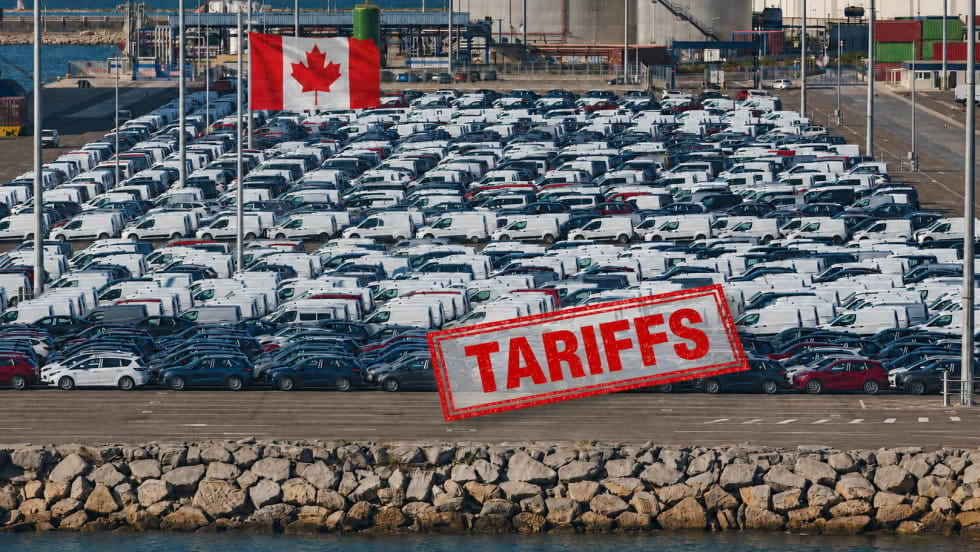
The Only Certainty with the New Tariff Threat Is Uncertainty
Trump’s Canadian tariff threat will not move production overnight, but the uncertainty could influence ordering and pricing now. Longer term, forces beyond tariffs may determine which North American plants survive.
Read More →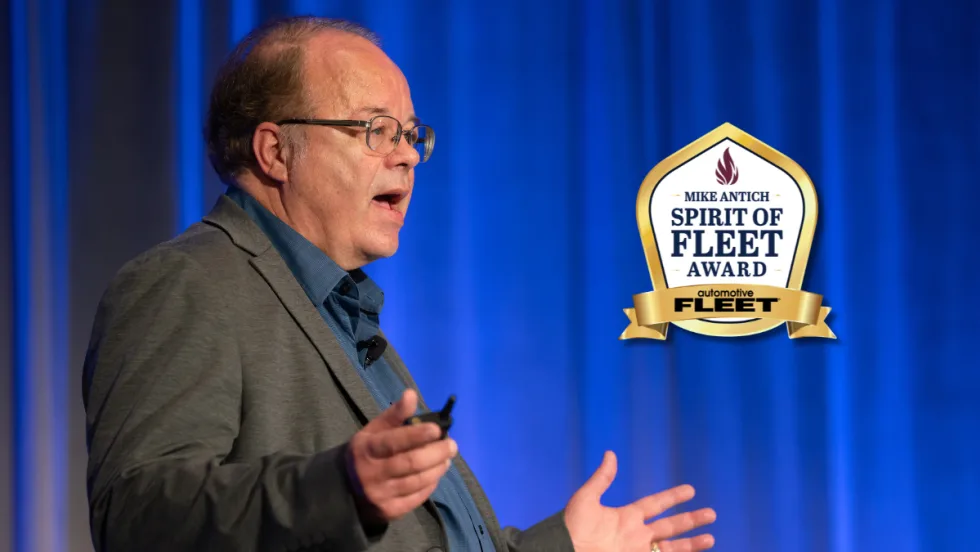
What Does It Mean to Embody the Spirit of Fleet?
Presented alongside Fleet Manager of the Year, Fleet Visionary, and Fleet Hall of Fame at AFLA, the new Mike Antich Spirit of Fleet Award is unique in that it recognizes service to the overall profession. Just like Mike.
Read More →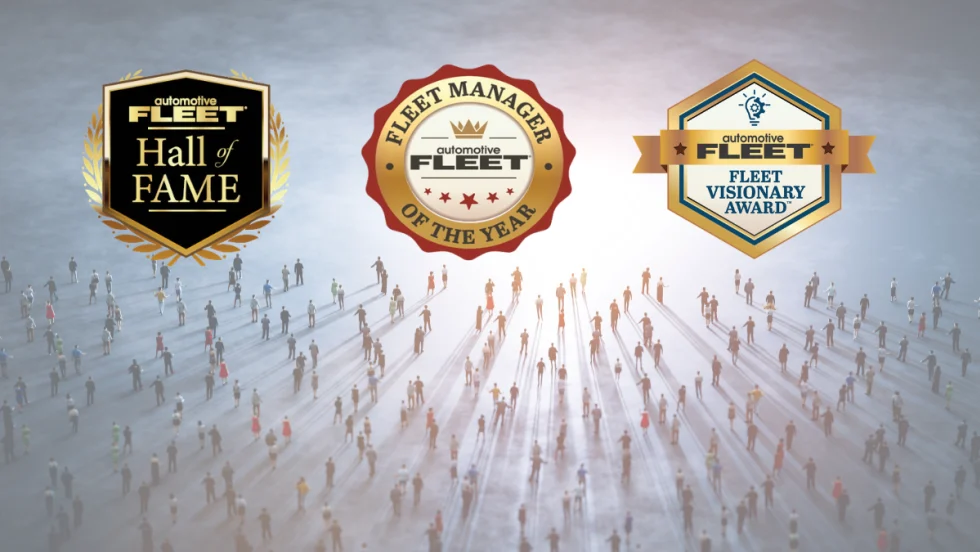
What Separates Great Fleet Managers From Everyone Else?
What do Visionary candidates with fewer than 10 years of experience have in common with Hall of Fame nominees with a lifetime under their belts?
Read More →
The Next Fleet War Won't Be Won on Specs Alone
The 2026 Stellantis Pro One Fleet Preview was less about vehicles and more about what happens after you buy them.
Read More →
Navigating Brundlefly and Fleet AI at 2026 NAFA I&E
AI is becoming the operating layer for fleets. In Cleveland, the buzz was about harnessing AI in an increasingly complex, permanently disrupted environment.
Read More →
8 Trends: Work Truck Week 2026 Reveals a Fleet Industry in Reset Mode
Walking the show floor this year, the new focus was around “practical innovation” and pragmatic solutions. And oh yeah, a new small van.
Read More →
The Moment AI Became Operational
“AI isn’t assisting us anymore. It’s doing the work,” said CEO Neil Cawse at Geotab Connect 2026. What does this mean for fleet managers?
Read More →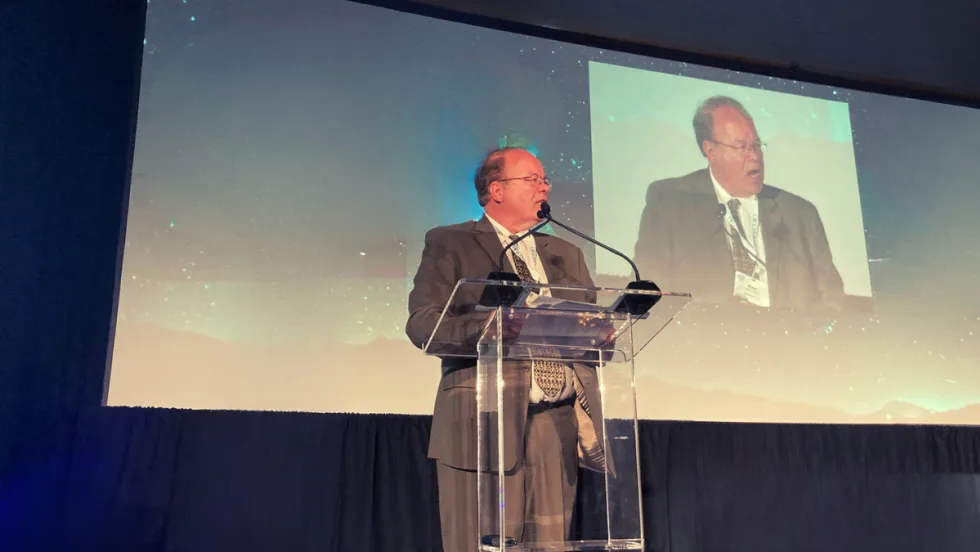
For Mike Antich, it Was Always About the People
He stood tall in the industry in so many ways, but he measured success by the people he served.
Read More →
Solving the Flexible-Lean Fleet Paradox
The lean fleets of yesterday are the fragile fleets of today. Where do we find the balance?
Read More →