





Miss This? Ford Releases Details on 2026 Super Duty
Ford Announces $30k Electric Pickup — Is A New Segment Forming?
A potential “small electric pickup” segment would pair utility with a lower price point and a more attainable total cost of ownership.
August 14, 2025
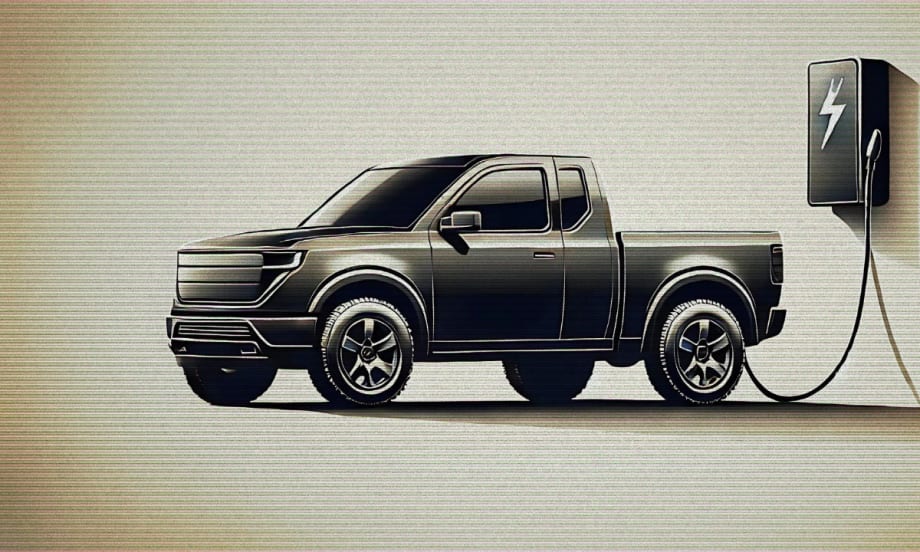
Ford's midsize electric pickup is set for 2027 production in Louisville with a $2B plant upgrade and a target price of $30,000.
Image: Automotive Fleet I This is an AI-generated image created in Canva with DALL-E. Refer to our Terms of Use at bobit.com.
3 min to read
On Aug. 11, Ford announced a new midsize electric pickup to be assembled at its Louisville plant, which will get a $2 billion upgrade in the process. The truck’s targeted initial price is $30,000, with a planned launch in 2027.
The pickup will carry U.S.-made LFP batteries and be the first to ride on Ford’s new Universal EV Platform. This platform is built around a novel manufacturing concept — a three-branch “tree” system in which the front, rear, and structural battery components are assembled separately and joined.
According to Ford, the new platform will reduce parts by 20%, allowing for a 15% faster assembly time. CEO Jim Farley called it a “Model T moment,” underscoring the company’s aim to deliver an affordable electric truck to the mainstream.
In terms of performance, Ford projects the e-truck will be “as quick as a Mustang EcoBoost” while delivering truck-bed utility and more passenger volume than a 2025 Toyota RAV4.
Specifications such as exact MSRP, EPA-estimated range, battery sizes, and charging times will be announced later.
Who Needs an Affordable, Practical EV Pickup?
On the surface, Ford’s announcement might seem like just another EV model launch. However, in a broader context, it hints at a potential “small electric pickup” segment that pairs functional utility with a lower price point and a more attainable total cost of ownership.
Today’s electric pickups — Rivian R1T, Ford F-150 Lightning, Chevrolet Silverado EV — often land in the $50k–$70k range once spec’d out. That pricing excludes many small businesses, municipalities, and individual buyers who simply need a reliable work truck without high-end tech packages but want a sustainable option.
Independent startup Slate spotted this opening earlier this year when it unveiled a minimalist, modular compact electric pickup with a starting price in the mid-$20k range and a 2026 launch target.
Ford has tapped into a similar formula with the Maverick compact pickup — combining affordability (under $30k base MSRP), fuel efficiency (up to 42 MPG), and a practical footprint (200 inches long, 5-foot bed). While the Maverick’s ICE powertrain avoids the EV range question, its success shows demand for smaller, capable, budget-friendly trucks.
Bottom Line for Fleets
If Ford’s new EV slots in around Ranger size, it could broaden that buyer base with a sustainable, low-operating-cost option that is just fine for many municipal routes, hotshot deliveries, urban utility work, and vocational applications where overnight charging is standard.
Okay, so maybe this isn’t quite a new segment.
Success as a segment or a small niche will depend on how well these trucks meet real-world needs, and how many OEMs follow Ford and Slate’s lead. But in a market saturated with high-spec, high-priced EVs, the prospect of a work-ready, affordable electric pickup is worth watching.
Subscribe to Our Newsletter
More Blog Posts

How to Win a Fleet Manager Award: Make Your Nomination Count
Strong fleet accomplishments can go unrecognized when the nomination doesn’t make the case. Here’s what judges need to see.
Read More →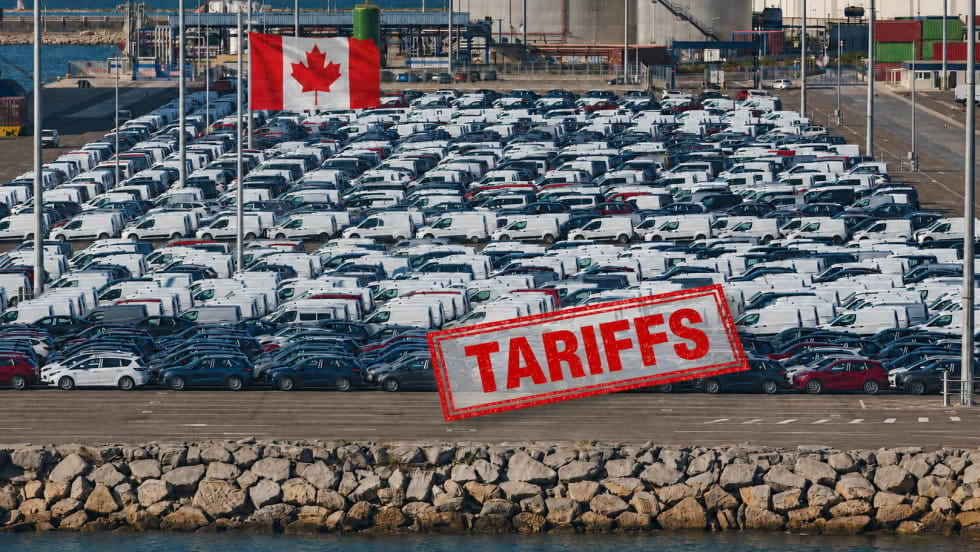
The Only Certainty with the New Tariff Threat Is Uncertainty
Trump’s Canadian tariff threat will not move production overnight, but the uncertainty could influence ordering and pricing now. Longer term, forces beyond tariffs may determine which North American plants survive.
Read More →
What Does It Mean to Embody the Spirit of Fleet?
Presented alongside Fleet Manager of the Year, Fleet Visionary, and Fleet Hall of Fame at AFLA, the new Mike Antich Spirit of Fleet Award is unique in that it recognizes service to the overall profession. Just like Mike.
Read More →
What Separates Great Fleet Managers From Everyone Else?
What do Visionary candidates with fewer than 10 years of experience have in common with Hall of Fame nominees with a lifetime under their belts?
Read More →
The Next Fleet War Won't Be Won on Specs Alone
The 2026 Stellantis Pro One Fleet Preview was less about vehicles and more about what happens after you buy them.
Read More →
Navigating Brundlefly and Fleet AI at 2026 NAFA I&E
AI is becoming the operating layer for fleets. In Cleveland, the buzz was about harnessing AI in an increasingly complex, permanently disrupted environment.
Read More →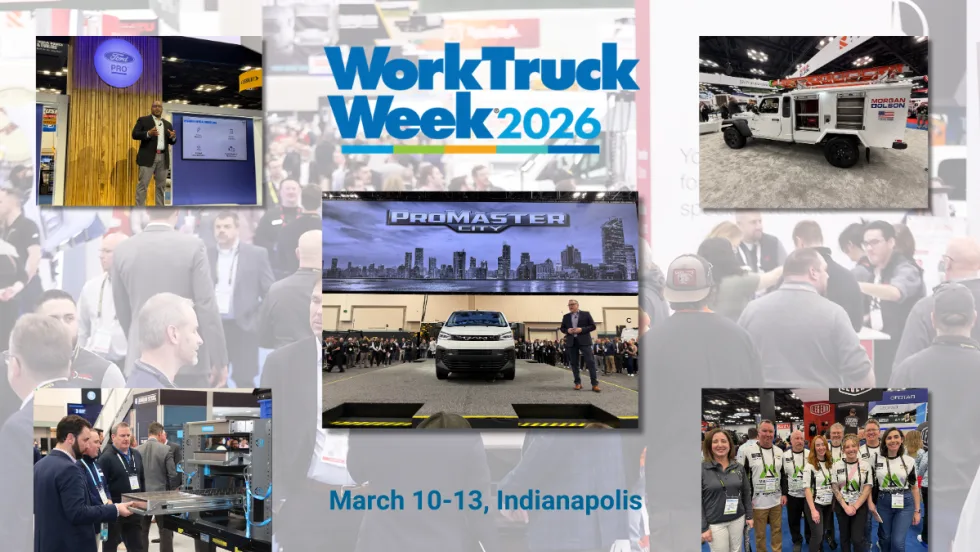
8 Trends: Work Truck Week 2026 Reveals a Fleet Industry in Reset Mode
Walking the show floor this year, the new focus was around “practical innovation” and pragmatic solutions. And oh yeah, a new small van.
Read More →
The Moment AI Became Operational
“AI isn’t assisting us anymore. It’s doing the work,” said CEO Neil Cawse at Geotab Connect 2026. What does this mean for fleet managers?
Read More →
For Mike Antich, it Was Always About the People
He stood tall in the industry in so many ways, but he measured success by the people he served.
Read More →
Solving the Flexible-Lean Fleet Paradox
The lean fleets of yesterday are the fragile fleets of today. Where do we find the balance?
Read More →