





Check Out:Fleet Managers Are Middle Managers — And They Defy the Stereotype
More Than a Transaction: Navigating the Fleet-Dealer Relationship in 2025
Higher courtesy delivery fees, shorter ordering windows, and changing vehicle allocation strategies have made it clear that a good fleet-dealer relationship isn’t just nice to have — it’s necessary.
February 10, 2025
Automotive Fleet spoke to fleet directors, dealership executives, and industry experts to see how a good dealer relationship helps fleets navigate various industry challenges.
Photo: Automotive Fleet
6 min to read
The connection between fleet managers, fleet management companies (FMCs), and dealerships has evolved over the decades, but what has that change entailed? What’s the relationship with your fleet dealer like?
For fleets that use FMCs to procure vehicles, direct dealer partnerships are still key to getting vehicles, upfitting, service, and maintenance.
Supply chain disruptions over the years following the pandemic have forced fleet operators to rethink how they source, maintain, and remarket their vehicles. Meanwhile, higher courtesy delivery fees, shorter ordering windows, and changing vehicle allocation strategies have made it clear that a good fleet-dealer relationship isn’t just nice to have — it’s necessary.
As the industry continues to move deeper into the post-pandemic market, fleet managers who build strategic dealer relationships will be better equipped to navigate the ongoing challenges, reduce costs, and improve operational efficiency.
Automotive Fleet spoke to fleet directors, dealership executives, and industry experts to see how a good dealer relationship helps fleets navigate procurement challenges, supply chain changes, and service needs in a post-pandemic market.
Avoiding Delays and Cutting Costs in Fleet Ordering
It’s no secret how much the pandemic stressed the supply chain.
“You had no idea when you were going to get something or if you were going to get it at all,” Rick Nicoletti, vice president and general manager at Napleton Fleet Group, said. The Ed Napleton Automotive Group owns 50 dealerships in eight states and has grown to sell almost every make.
Vehicle availability has eased substantially, an all-encompassing sentiment emphasized by Nicoletti. “If it’s pickup trucks, I would say across the board for GM, Ford, and Ram you can find what you need out of stock at a reasonable price,” he said.
With only about 4% of dealerships in the U.S. operating as true commercial fleet dealers, a very small group of dealerships handle a big volume of business, and that hasn’t changed.
What has changed is that fleets are procuring vehicles from farther away. Courtesy deliveries jumped dramatically during Covid and stayed relatively high, according to Nicoletti.
Navigating Supply Cycles
For overall order-to-delivery (OTD) times, Brian Rigby, director of operations of the commercial and fleet department at Richard Lucas Chevrolet, affirms that about 65-70% of GM’s vehicles can be ordered free flow now.
“It’s still an issue with vans, heavier-duty, medium-duty LCFs (low-cab forwards), 6500’s, and 7500’s, but everything else, for the most part, is free-flow ordering. Order times are down, too. I’m telling people two to three months instead of six to seven months, so big improvement there,” Rigby said.
However, while OTD times are down, fleets are experiencing narrower ordering windows. The pre-COVID August to March window is now more like August or September to December, with a window again in May and vehicle delivery by September, said Charlie Stevenson, vice president of fleet at Essential Utilities.
“We really have to look at this and play the field right,” Stevenson said.
Rigby and Stevenson urge fleets to plan ahead by working with dealers and OEMs to find the best time to place orders depending on the start and stop of vehicle builds. Ordering ahead can help shrink costs and order-to-delivery times.
A benefit of ordering ahead is the price lock. Last year, the Chevrolet Silverado increased by $2,400 over the year. “So, if they ordered it at the beginning of the year, they would have been locked into that cheaper price,” Rigby said.
Fostering relationships with dealers also benefits securing in-demand vehicles and alternative sourcing options.
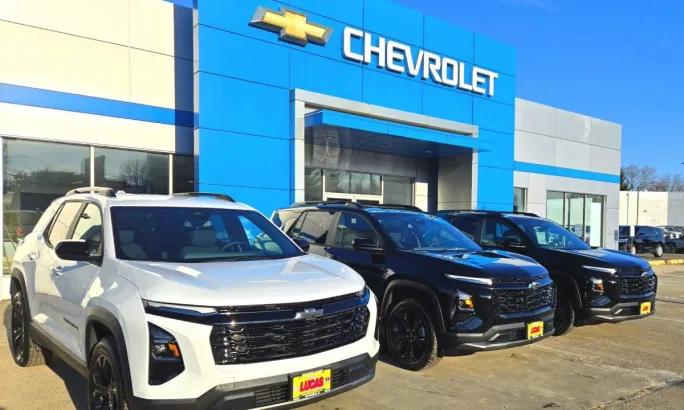
Rigby and Stevenson urge fleets to plan ahead by working with dealers and OEMs to find the best time to place orders depending on the start and stop of vehicle builds.
Photo: Brian Rigby / Richard Lucas Chevrolet
An Outsourced Fleet Consultant
Planning isn’t all about getting a stock vehicle in hand.
Sheldon Haynie, fleet director at Roseville Chevrolet, encourages fleets to seek out dealers with a dedicated commercial and fleet department that can act as an outsourced fleet consultant.
A dealer can streamline plans since they’re in direct communication on factory constraints and build times, “Giving [fleet managers] time to prepare for the new units to arrive. This allows for a much more controlled approach to custom upfitting, wrapping, or modifications that are needed in your fleet,” Haynie said.
Building those long-term relationships can lead to better procurement support, service, and logistical advantages.
With upfitting and supply, improvements are being made, according to Perry Ressler, director of business development at Pritchard Commercial, who also sits on the National Dealer Advisory Board for Ford and Stellantis.
“In the last six months, we’ve seen the Transit move from allocation-based for upfitters, end-user fleets, or body modifiers to more of a free demand or free-flow ordering,” Ressler said.
When supply chain issues or vehicle delays occur, a dealer will have access to bailment or upfitter pools. A dealer can locate vehicles on a franchise dealer lot and see what vehicles are in these pools, opening more possibilities for planning and emergency needs.
As vehicles can often be sent to four locations for upfitting, it’s prudent to have an experienced fleet dealer with upfitter relationships in your corner to track progress, Rigby said.
Overall, a strong dealer relationship can mitigate supply chain risks and reduce logistical headaches for fleet managers.
Service Matters: Building Stronger Dealer Ties
A strong fleet-dealer relationship can be beneficial past the procurement process in areas like service and maintenance.
While FMC reps are integral to vehicle servicing, Ressler said a fleet dealer is another valuable resource for quick information on pending recalls, technical services, repair times, when parts are available, what month and week vehicles are scheduled for production, and more.
Stevenson added that while independent service centers offer reduced rates on paper, the job may not be cheaper when factoring in the overall time to service the vehicle.
While smaller shops can provide excellent service, “they might not have the bandwidth that a larger dealer would, so working with them both is beneficial,” Stevenson said.
Nicoletti echoes this sentiment, especially if your fleet operates in multiple states. Building relationships with dealers in those locations can help with service situations and replacements.
Nicoletti and Stevenson recommend that you make a point of having your regional fleet team get to know them personally, as this will facilitate your business needs.
Tips for a Better Fleet Dealer Relationship
Personal relationships must be prioritized in the fleet industry’s digital age.
“We find a dealer to be a good partner. If you trust them and they trust you — you pay them fairly, you pay them honestly, and you get them their payment quickly, it can be a good relationship,” Stevenson said.
To make the fleet vehicle procurement process more efficient, Rigby says make it as easy as possible for the dealer. “Make sure all the paperwork is together, so the dealer doesn’t have to call and chase you or chase drivers. That’s a big headache for me,” Rigby said.
From the dealer side, Rigby concurs with Stevenson. Show your face once in a while. Take them out to lunch to discuss how they want the fleet-dealer relationship to function. Find out how you can support their business in ways that make your fleet operations more efficient.
In the end, it’s all a relationship business.
“We’re not just a Social Security number. We’re not just a piece of data input in the ADMS system, right? We’re individuals. You’re never going to replace the human factor and the personal relationship,” Ressler said.
Subscribe to Our Newsletter
More Operations

Here's When You Should Make an Exception to Fleet Policy
Fleet policies are designed to create consistency, but not every driver or situation fits neatly within standard rules.
Read More →
AI-Native or AI-Acquired: What Should Fleet Managers Look for in an AI Platform?
Six questions can help fleet managers look beyond AI marketing claims to evaluate integration, data access, and real-world operational performance.
Read More →
Sponsored•October 14, 2026
A buyer's guide to fleet management software in 2027
Buying fleet management software in 2027 means looking beyond features and price. As fleet operations, technology and expectations evolve, this guide explores what today’s fleet professionals should consider when choosing a system that can deliver value now and adapt to what comes next.
Read More →

What Will Shape the Next Era of Fleet Management?
EVs, AI, and autonomous vehicles are reshaping fleet management. Discover what’s ahead—and how fleet leaders can prepare for the next era.
Read More →
How Fleets Can Recruit and Train Veterans for Technician Roles
Here's how the technician shortage has affected uptime for fleets, and what to do about it.
Read More →
Avis Budget Group Deploys Neology Toll Management Technology Across Major Brands
Neology’s neoFleet platform will manage toll transactions and toll-authority operations for vehicles across Avis, Budget, Payless, Budget Truck and Zipcar.
Read More →
Fleet Personal-Use Charges Edge Higher in 2026
Nearly eight in 10 surveyed fleets allow personal use of company vehicles, while just over half of respondents report charging employees for the privilege.
Read More →
The Future of Fleet + What’s Changing Right Now | AF News Recap
Could developments overseas offer a preview of what’s coming for U.S. fleets? This week, we’re looking at the future of AI, autonomy, and electrification, plus Ford Pro’s new certified pre-owned program, smarter vehicle offboarding, and a new way for fleets to manage toll expenses.
Read More →
How to Handle Vehicle Offboarding
What do fleet managers need to do when a driver leaves?
Read More →
Sponsored•October 1, 2026
Fleet Manager’s Ultimate Playbook: Navigating the New Standard in OEM Connectivity
Rising operating costs, driver safety concerns, and unplanned downtime are putting unprecedented pressure on modern fleets. Discover how fleet managers use embedded OEM connectivity and real-time vehicle data to cut TCO, prevent downtime, and protect drivers without aftermarket telematics hardware.
Read More →