




Welcome to the New Fleet 500
Using vehicle registration data for the first time, the 2026 Fleet 500 offers a clear view of the evolving commercial fleet landscape.


This year, the lists are based on vehicle registrations supplied by Mobility Global, formerly S&P Global Mobility.
Automotive Fleet
Why are we calling this venerable list “new?” Since its inception, the Fleet 500 list has been assembled through manual data collection — an Excel spreadsheet compiled from phone calls, emails, and feedback from fleet and supplier partners.
This year, the lists are based on vehicle registrations supplied by Mobility Global, formerly S&P Global Mobility. As such, Automotive Fleet can provide a more precise accounting of the ever-evolving commercial fleet landscape.
We continue to present our four lists: Top 300 Fleets, Top 100 Truck Fleets, Top 50 Green Fleets, and Top 50 Executive Fleets.
The intent for Fleet 500 has not changed — to categorize AF’s traditional core audience of commercial and corporate fleets. However, under this umbrella and using S&P data, we are defining in greater detail which fleet types make the list.
Defining Fleet Types
As usual, all organizations/companies on this list are private fleets.
Breaking it down further, we exclude leasing and rental, school transportation, buses, ride-hailing, livery, van pool/commuter, and passenger transport fleets.
We include for-profit, investor-owned utility (IOUs) fleets but not municipal, co-op, or government-chartered agencies operating utility fleets.
This list is not intended to capture the over-the-road trucking industry. Therefore, it does not include 3PLs, for-hire carriers, freight-only operations, and fleets where tractors essentially are the business. We do include private fleets that transport their own goods and operate broader vocational or service fleet operations.
Fleets with substantial Class 7-8 operations may still qualify if those vehicles are part of broader fleets whose management practices, acquisition strategies, technology adoption, and operational structures align closely with AF’s core audience.
Changes in Rankings
You may notice that some organizations in prior Fleet 500 rankings have moved significantly, while some large fleets that did not make the list now rank prominently.
These shifts are primarily the result of the transition from manually collected data to S&P-supplied registration data. Organizations also structure vehicle registrations differently, which can materially affect reported fleet size.
Particularly, some large fleets are managed centrally but have vehicles registered under numerous individual brands. For the purposes of the list, we do not attempt to manually combine those into a single group.
In addition, many large fleets that historically may not have actively participated now make the rankings. As a result, the 2026 Fleet 500 reflects a registration-based view of commercial fleets rather than a self-reported one.
Also, we took pains to identify organizations with registered vehicles that do not operate in a fleet capacity, such as recycling companies holding titles to salvage vehicles or banks holding titles to leases. Those have been deleted.
Top 300 Fleets: Field-Service, Utilities, and Infrastructure-Related Fleets Dominate
In the 2026 Top 300 Fleets, operational, field-service, and infrastructure-related fleets dominate. Utilities, telecom, waste/recycling, construction support, environmental services, and field-service organizations are heavily represented throughout the rankings.
These fleets often operate highly decentralized service networks with large concentrations of pickups, vans, vocational trucks, and specialized equipment vehicles.
The list also highlights the enormous scale of private delivery and logistics operations, including Amazon Logistics, UPS, FedEx, Walmart, PepsiCo, and Sysco.
Another notable trend is the strength of utility and infrastructure fleets. Investor-owned utilities, telecom infrastructure contractors, pipeline operators, and construction-support organizations now appear far more prominently than in prior years.
The rankings also demonstrate the importance of vocational fleets. Tree-service companies, environmental services providers, construction firms, pest-control operators, propane distributors, and industrial suppliers represent a substantial portion of the commercial fleet landscape.
Top 100 Truck Fleets: A Varied Landscape
The Top 100 Truck Fleets ranking is based on commercial vehicle registrations in Classes 2-8 for the following body styles: cab chassis, cutaway, incomplete, chassis, incomplete pickup, pickup, step van, straight truck, tractor truck, cargo van, and passenger van.
In the Top 100 Truck Fleets ranking, we included columns for Classes 1-2, 3-6, and 7-8 for each company from the broader Top 300 list. As the truck fleet ranking includes only Classes 2-8 vehicles, some Class 1 commercial vehicles are excluded. Therefore, the column totals will exceed the total number of trucks.
The 2026 Top 100 Truck Fleets ranking illustrates the breadth of the commercial truck landscape. While parcel delivery and logistics giants remain at the top of the rankings, the list is heavily dominated by vocational, infrastructure, utility, and field-service operations.
Retail and food distribution fleets — including Walmart, PepsiCo, Sysco, Performance Food Group, Kroger Dedicated Logistics, and Coca-Cola — remain foundational to the truck fleet universe.
The rankings also highlight the importance of telecom and communications fleets, which maintain massive truck populations dedicated to installation, maintenance, and network infrastructure support.
Utilities and energy companies, along with construction-support and infrastructure-service fleets, are similarly well represented. Waste and environmental services companies, propane distributors, industrial gas suppliers, pest-control operators, landscaping firms, and equipment-service providers also collectively account for a major portion of the list.
Top 50 Executive Vehicles: Pharma’s World
This list ranks fleets with luxury/premium passenger vehicles from these brands: Cadillac, Lincoln, BMW, Mercedes, Acura, Volvo, Audi, Jaguar, Lucid, Porsche, Lexus, Infiniti, Land Rover, Polestar, Rivian, and Tesla.
Automakers have sizable passenger vehicle fleets that would make this list; however, they are excluded because their fleets consist solely of vehicles from their own brands.
The 2026 Top 50 Executive Fleets ranking reveals the overwhelming presence of pharmaceutical, biotech, diagnostics, and healthcare companies. These fleets frequently use premium/luxury vehicles as part of recruitment, retention, compensation, and customer-facing strategies for sales representatives and executives.
Insurance and financial-service organizations also maintain a strong presence, operating large vehicle programs spanning claims, field operations, and management functions.
Unlike the broader Fleet 500 rankings, the Executive Fleets category skews heavily toward white-collar, professional-service, and customer-facing industries.
As a result, this list differs substantially from prior years, when companies self-reported executive vehicle totals using varying internal definitions.
Top 50 Green Fleets: Sustainability Defined by Use Case
The Top 50 Green Fleets recognize these categories: electric vehicles, plug-in hybrid electric vehicles, hybrids, propane, and compressed natural gas (CNG).
For 2026, we retained the legacy Green Fleet categories to preserve continuity with prior rankings. However, the widespread adoption of hybrid vehicles across mainstream commercial fleets raises new questions about how “green fleet” leadership should be defined going forward.
Future editions may place greater emphasis on fully electric, alternative-fuel, and emerging low-emission technologies.
The 2026 Top 50 Green Fleets ranking reveals a more complicated reality about fleet sustainability than headlines suggest. Despite years of EV investments and commitments, fully electric vehicles still represent a small share of most privately owned commercial fleets.
Outside of Amazon Logistics — whose Rivian delivery van deployment has dramatically altered the rankings — very few fleets have electrified at scale. Even among fleets recognized as sustainability leaders, EV adoption remains constrained.
Instead, the rankings suggest that commercial fleet sustainability in 2026 is still overwhelmingly driven by use case.
One surprising finding is the near absence of plug-in hybrid electric vehicles (PHEVs). Once viewed as a transitional bridge between internal combustion and full electrification, plug-in hybrids barely register throughout the rankings.
At the same time, hybrids dominate in passenger vehicle fleets, with some companies now making them the default acquisition option. It makes sense: Hybrids provide 25-35% emissions reductions compared to ICE vehicles, require no charging infrastructure, and offer superior value retention.
The rankings also reinforce how specialized alternative-fuel strategies remain. Compressed natural gas (CNG) continues to thrive primarily in vocational fleets with centralized fueling and predictable routes, particularly waste-hauling operations. Propane, meanwhile, is nearly absent from the rankings despite its continued relevance in other fleet sectors such as school transportation.
Overall Observations of 2026 Fleet 500
The new Fleet 500 methodology ultimately reveals a more operationally complex fleet industry than prior rankings may have suggested.
Infrastructure, utilities, field service, logistics, and vocational operations dominate the modern commercial fleet landscape, while sustainability and vehicle strategies increasingly depend on operational requirements rather than broad industry trends alone.
Fleet structures, registrations, and operating entities are increasingly complex, and Automotive Fleet will continue refining the Fleet 500 methodology in future editions as additional data, feedback, and industry insights emerge.
More Vehicle Research
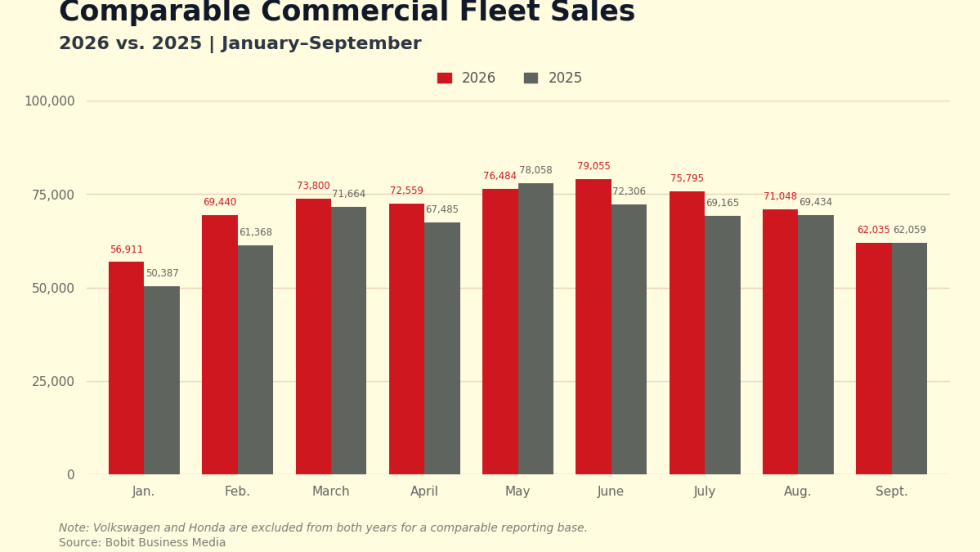
Commercial Fleet Sales Rise 5.8% Through September 2026
September commercial fleet sales were essentially unchanged from a year earlier, slowing year-to-date growth while keeping volume ahead of 2025.
Read More →
Hall of Fame Inductee: John Dmochowsky
The longtime Mondelēz International fleet executive joins the Automotive Fleet Hall of Fame.
Read More →
Hall of Fame Inductee: Lee Miller
After more than four decades at Boehringer Ingelheim, Lee Miller leaves a legacy built on fleet expertise.
Read More →
Hall of Fame Inductee: Mark F. Petersen
From managing fleets of thousands of vehicles to advancing safety and mentoring fellow professionals, Mark F. Petersen made his mark across both the corporate and supplier sides of fleet.
Read More →
When Charger Downtime Becomes a Fleet Availability Problem
As EV deployments move beyond pilot programs, charger reliability can directly affect vehicle readiness, driver productivity and route scheduling.
Read More →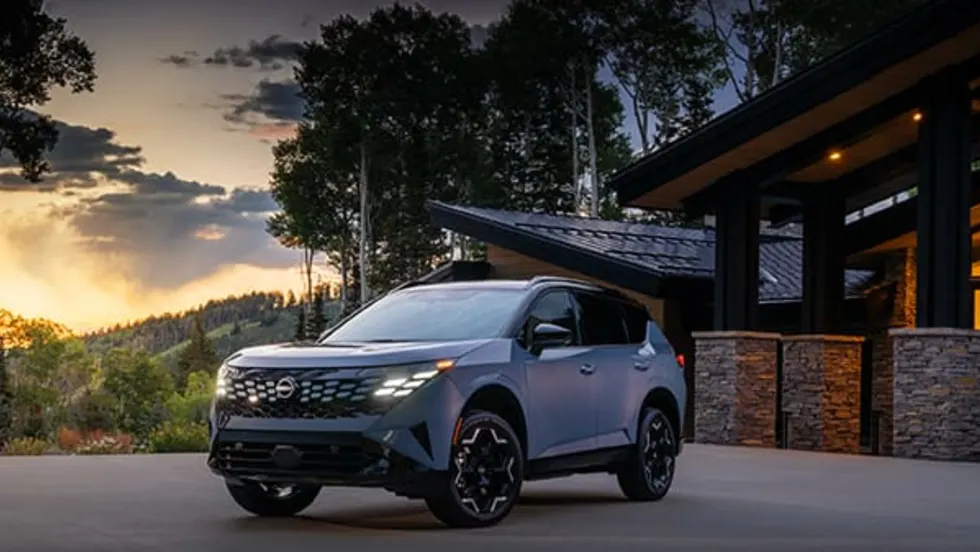
2027 Nissan Rogue Hybrid Adds e-POWER, Standard AWD
The new Rogue Hybrid uses Nissan’s e-POWER system with dual electric motors, offers an estimated 40 mpg and starts at $35,490.
Read More →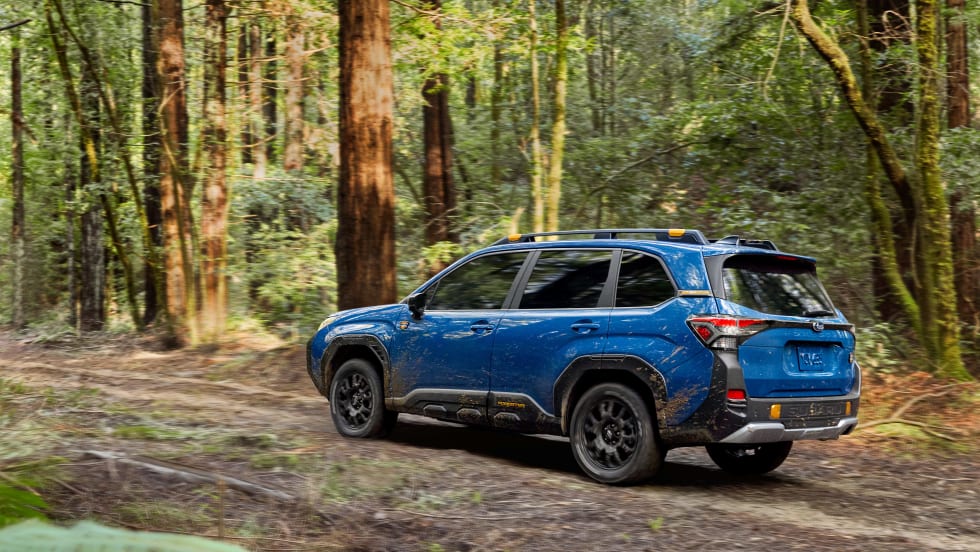
2027 Subaru Forester Adds First Wilderness Hybrid
The 2027 Forester lineup starts at $29,995 and adds a Wilderness Hybrid with 194 combined horsepower and 9.3 inches of ground clearance.
Read More →
EV Realty Names Henrik Holland President as Charging Platform Expands
The former Prologis Mobility and Shell executive will help expand EV Realty’s truck charging business and move its power-first infrastructure model into autonomous vehicle depots and other fleet sectors.
Read More →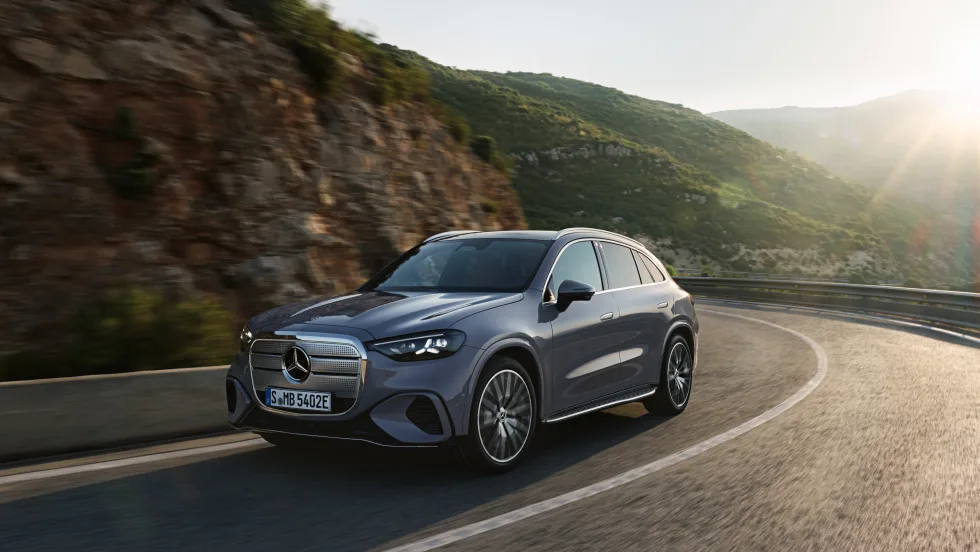
Mercedes-Benz Introduces Electric GLC With Up to 350 Miles of Range
The GLC 400 4MATIC Electric features an 800-volt architecture, 330-kW DC fast charging and a 94-kWh battery, along with Mercedes-Benz's new MB.OS operating system.
Read More →
Fleet Has a Talent Pipeline Problem, not a Talent Problem
Where will the next generation of fleet leaders come from, and what does the industry need to do differently to find them?
Read More →