




Tackling Rising Costs: Why Fleets are Turning to Embedded Telematics
Inside the Church of Jesus Christ of Latter-day Saints’ Two-Track Telematics Strategy
With 20,000 vehicles and two fundamentally different driver populations, the Church faced a fleet management problem that a single telematics program couldn't solve. How it responded offers a replicable framework for any fleet where one size doesn't fit every driver.
by Ian Dailey, VP of Marketing, Motorq
August 14, 2026
One fleet does not require one telematics strategy: Driver risk, operational needs, and program costs determine which technology fits each population.
Credit:
This image was created with AI. Refer to our Terms of Use.
7 min to read
Editor's note: The Church of Jesus Christ of Latter-day Saints uses Motorq to consolidate connected-vehicle data across multiple automakers.
Mechanics don’t use the same tool for every job. Mark Dibb doesn't use the same telematics program for every driver, either. As global fleet planning & acquisition manager at The Church of Jesus Christ of Latter-day Saints, he helps oversee roughly 20,000 vehicles across its global operations.
One side of the fleet consists of missionary vehicles, which are driven by 18- to 22-year-olds, many of whom are new drivers. The other is employee vehicles driven by facilities managers, education coordinators, and operational staff. These populations don't create the same fleet management problem, so the Church built two programs.
The Missionary Fleet: Where Safety Came First
For the missionary fleet in the United States, the Church uses windshield-mounted cameras with active in-cab coaching. The business case was straightforward.
"These are 18- to 22-year-olds, out on their own, many of them behind the wheel regularly for the first time in their lives,” said Dibb. “For a population with that little driving experience, we knew we needed to be proactive.”
The real-time feedback model produced substantial reductions in speeding and aggressive driving violations over time and, by the Church’s account, has helped to reduce accidents and save lives. For a young driver population with limited experience behind the wheel, the investment justified the additional hardware, installation, and ongoing program management requirements.
The Employee Fleet: Where Operational Visibility Mattered More
The United States Church’s employee-driven fleet presented a different challenge. The Church believed this population presented a relatively low safety risk since previous incidents were mostly low-speed turning or backing events — the kind that cameras and coaching programs weren’t likely to meaningfully reduce. Installing the same hardware and paying for the same program made neither operational nor financial sense.
But low risk didn't mean no need. The Church still needed visibility into the assets: odometer readings, utilization, location, maintenance indicators. These inputs drive lifecycle decisions, replacement timing, and day-to-day asset management. The question was how to get them at a lower cost and with a lower administrative burden than a full driver-coaching deployment required.
The Operational Challenges of Aftermarket Telematics
The Church's operating structure made the existing telematics solutions harder to justify for its employee fleet. Vehicles are distributed across many locations and cycled regularly. Devices would need to be installed, removed, transferred, and supported as vehicles move in and out of service, without the local support of a Church Vehicle Coordinator, as the missionary fleet has.
"Each new telematics device means another asset to manage," Dibb said.
That additional asset-management burden mattered to a fleet trying to limit administrative complexity. Device failures and reassignment would require troubleshooting and extra coordination.
Why OEM-Embedded Connectivity Fit Better
For the employee fleet, The Church instead focused on OEM-embedded connectivity already built into the vehicle. Since the connectivity ships with the vehicle, the fleet could access operational intelligence without managing additional physical devices.
Cost also factored into the decision. Without additional hardware procurement and installation, Dibb could reduce up-front costs by 100% and monthly service costs by 50% as compared to the existing in-cab coaching program. Across thousands of assets, the cost difference was material.
For mixed fleets, OEM data carries a practical complication: each manufacturer operates its own portal and data environment. Dibb wanted the fleet team to work from a single interface rather than managing multiple OEM systems.
"I don't want to subscribe to six different platforms," he said.
The fleet ultimately consolidated vehicle data across manufacturers into a centralized operational view that could scale across the organization.
What OEM Data Changed in Practice
Some of the first applications showed up in vehicle lifecycle management. When the Church cycles employee vehicles, drivers pick up replacements and are expected to notify the fleet team when the outgoing vehicle is ready for remarketing. That notification step wasn't always happening.
"Every week that goes by, we're losing residual values," Dibb said.
Dibb set up alerts for vehicles that had not recorded an ignition cycle in ten days. Each week, the system now surfaces one or two vehicles that were still sitting after drivers had already received their replacement vehicles.
Utilization data produced similar results. Dibb identified vehicles not being used at the rate their assignments assumed. After reviewing the data, some employees turned in vehicles they could no longer justify keeping. In one case, the Church reassigned a vehicle across states.
Maintenance visibility produced operationally meaningful issues. Dibb saw a tire pressure alert for a passenger SUV showing one tire at roughly 58 PSI, well above the 32 PSI spec. After reaching out, the driver explained that the tire had looked low, so he filled it without wearing his glasses and didn't realize how much air he had added. The alert surfaced a safety condition that would have gone unnoticed.
The program also supported a theft recovery. A stolen Church vehicle was located in the back corner of a storage unit facility through GPS data from built-in OEM connectivity. In partnership with local law enforcement, it was recovered within about 48 hours with only the tailgate missing.
Dibb noted a practical advantage embedded connectivity offers in these situations. With aftermarket hardware, there's no hiding the device. In incidents with the missionary fleet, thieves found the windshield-mounted units immediately.
“The first thing that those thieves do when they get in the car and all of a sudden it starts talking to them to slow down or put their seatbelt on, they rip it out and throw it out the window,” Dibb said.
With OEM connectivity, there's nothing for a thief to find. The tracking is in the vehicle, not obviously visible.
Safety as the Unexpected Output
The employee-fleet program was primarily built around fleet management rather than driver safety. Then the data came in.
Once the system was live, Dibb's team began seeing a significant volume of speeding events, aggressive driving alerts, and seat belt exceptions. The data showed some drivers traveling at excessive highway speeds for extended periods.
After the fleet team began sending weekly warning emails to drivers, behavior changed quickly. Early weekly reviews identified dozens of speeding warnings. Within a few months, those weekly totals had dropped into the low single digits, with some weeks recording just one or two warnings.
The employee fleet program showed that safety event visibility alone can meaningfully influence driver behavior in some fleet populations, even without deploying a more intensive camera-based program.
Where AI Fits Into Fleet Workflows
As connected vehicle programs mature, fleets are managing larger volumes of operational data across manufacturers, systems, and workflows.
For Dibb, part of the appeal of centralized vehicle data lies in its ability to reduce the manual effort required to answer operational questions.
“I just kind of treat it like an assistant sometimes,” Dibb said. “Hey, I need this created or I need this report pulled.”
Dibb described several situations where AI-assisted workflows could simplify day-to-day fleet operations. One example involved identifying Toyota Tacoma vehicles located near Salt Lake City that could potentially be reassigned earlier than planned. Historically, that process required manually reviewing vehicle reports, coordinates, and map locations individually.
He also pointed to scenarios in which fleet managers could ask direct operational questions, such as identifying vehicle behavior during a specific event, without manually sifting through multiple reports and underlying datasets.
For fleets consolidating connected vehicle data across OEMs, AI tools are increasingly being evaluated as a way to surface patterns faster, reduce repetitive analysis work, and help fleet teams respond earlier to operational issues. The combination of connected vehicle data, AI-assisted analysis, and fleet manager expertise may shape how many organizations approach fleet operations over the next several years.
The Framework for Other Fleets
The Church's two-track approach isn't complicated. Different driver populations have distinct risk profiles, operating models, and cost structures. The telematics program should reflect those differences.
A young, inexperienced driver population with high exposure to incidents justifies active coaching and real-time intervention. The ROI case is built on risk reduction.
An experienced, low-risk employee population may need something different — like operational visibility, lifecycle data, and utilization monitoring — at a lower cost and with a lower administrative burden. The ROI case is built on asset efficiency and process discipline.
Hardware costs extend beyond device price. Installation, removal, transfer, and replacement across a cycling fleet add up. For fleets evaluating OEM-embedded connectivity, the right comparison isn't hardware cost versus subscription cost. It's total program cost, including the administrative load that hardware creates, against the operational value the program produces.
For Dibb, the result is two programs matched to two populations, each with its own ROI framework. That's not a workaround. That's fleet management that fits the actual operating environment.
Subscribe to Our Newsletter
More Telematics
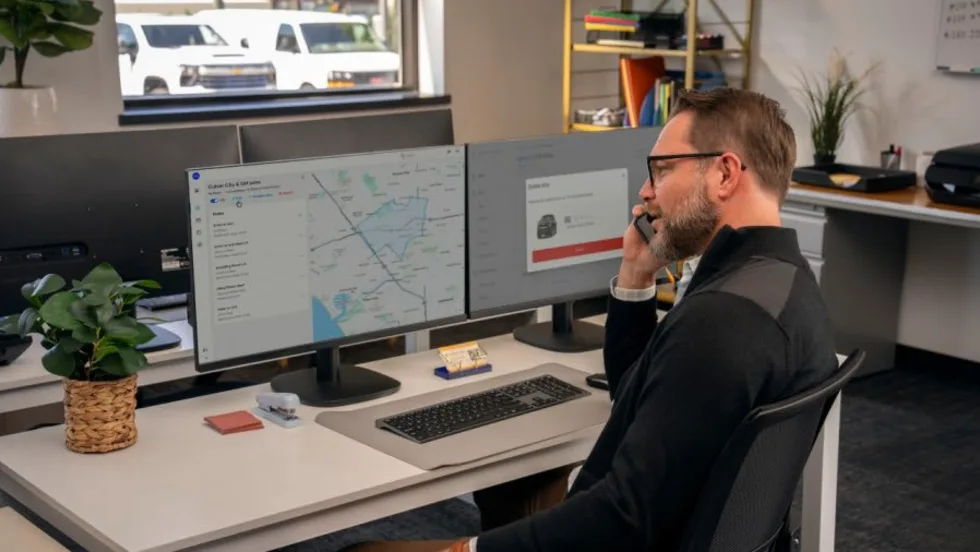
GM Launches OnStar Fleet Intelligence Platform With AI Assistant
The new platform brings vehicle data, order tracking, connected services and fleet analytics into one system, with an AI assistant that can answer fleet questions using natural-language prompts.
Read More →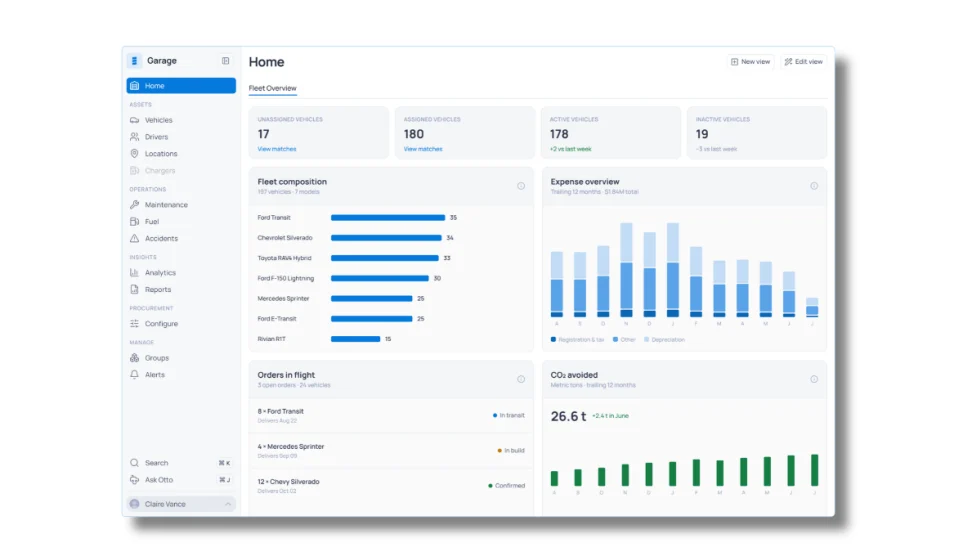
Inspiration Fleet Introduces Garage 2.0 Fleet Intelligence Platform
Fleet managers increasingly have access to data from vehicles, telematics, fuel, charging, and other systems, but those sources don't always communicate with one another. Inspiration Fleet's Garage 2.0 platform brings that information together while letting fleets keep working with different technology and service providers.
Read More →
Inside Inspiration Fleet’s New Platform for Connecting Fleet Data
Inspiration Fleet CTO Chris Getner explains how the new Garage 2.0 platform is designed to connect disparate fleet data and what that could mean for fleet managers in practice.
Read More →
Sponsored•October 1, 2026
Fleet Manager’s Ultimate Playbook: Navigating the New Standard in OEM Connectivity
Rising operating costs, driver safety concerns, and unplanned downtime are putting unprecedented pressure on modern fleets. Discover how fleet managers use embedded OEM connectivity and real-time vehicle data to cut TCO, prevent downtime, and protect drivers without aftermarket telematics hardware.
Read More →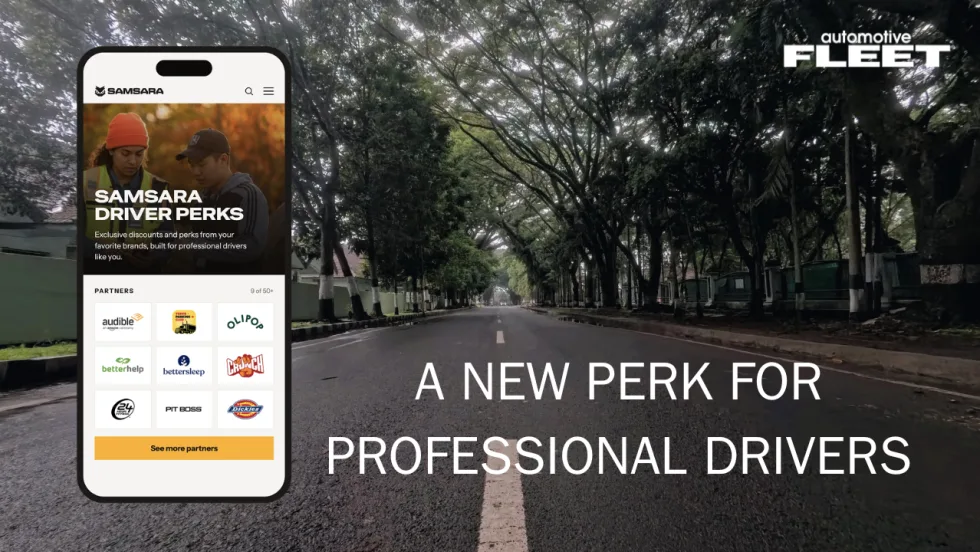
Samsara Driver Perks Adds New Benefit for Corporate Fleet Drivers
The rewards program gives eligible professional drivers access to discounts from more than 50 brands while giving fleets another way to support recruitment, retention, and the driver experience.
Read More →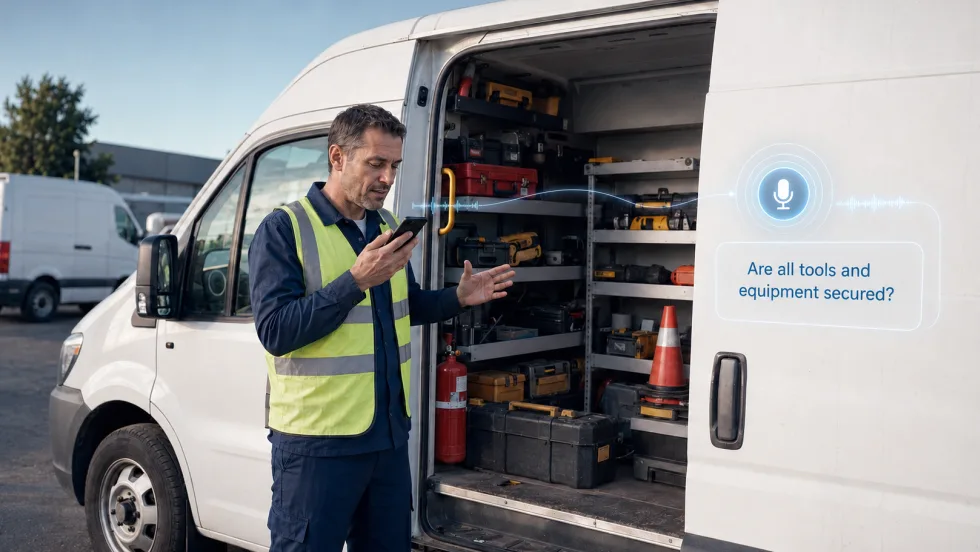
How Conversational AI Can Make Fleet Tasks Easier for Drivers
While most generative AI tools help fleet managers interpret data at their desks, Connex2X is applying voice interaction to tasks behind the wheel.
Read More →
Why Fleets Are Creating Dedicated Fleet Analyst Positions
Are fleet analyst positions the new norm? Listen here to find out.
Read More →
Teletrac Navman Begins Next Chapter as Standalone Private Company
What's new with Teletrac Navman and its new owner?
Read More →
Why Fleets Are Creating Dedicated Fleet Analyst Positions
Telematics, AI, EVs, and connected technologies are generating more fleet data than traditional teams can effectively manage. Reed Jackson explains why dedicated fleet analytics roles are emerging to turn that information into better operational decisions.
Read More →
Deleting Driver Data Is No Longer Enough in Connected Vehicles
A factory reset may erase what's stored inside a vehicle, but it doesn't always end a former driver's digital connection. Here's how fleets can make digital offboarding part of every vehicle transition to reduce privacy, security, and compliance risks.
Read More →