





Keep Reading! Why Did Calstart Rebrand as Catalyst Mobility?
Inside Inspiration Fleet’s New Platform for Connecting Fleet Data
Inspiration Fleet CTO Chris Getner explains how the new Garage 2.0 platform is designed to connect disparate fleet data and what that could mean for fleet managers in practice.
October 5, 2026
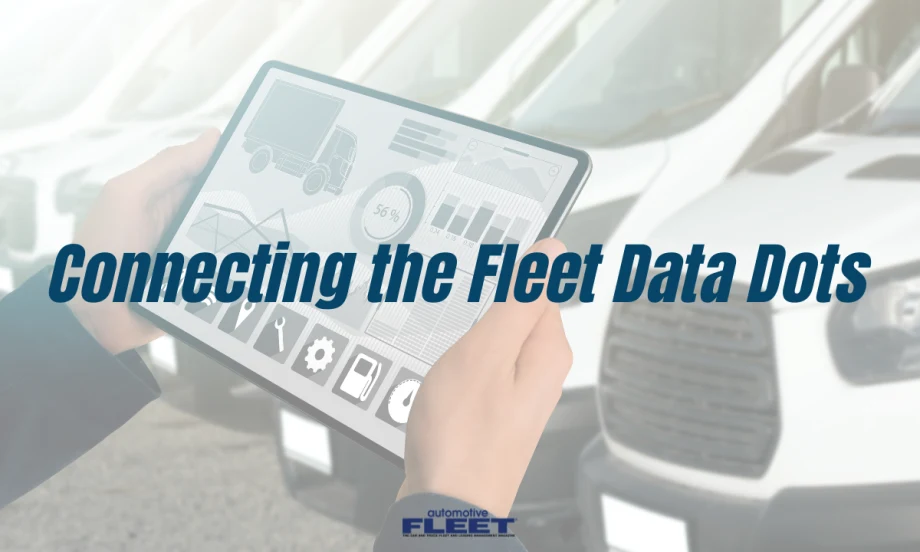
Inspiration Fleet’s Garage 2.0 is designed to connect and normalize data from across a fleet’s technology stack, allowing managers to analyze information from multiple systems in one environment.
Credit:
Automotive Fleet
4 min to read
- Inspiration Fleet's new Garage 2.0 platform aims to unify various fleet data sources for enhanced connectivity.
- Chris Getner, CTO, outlines how the platform can improve data management practices for fleet managers.
- The improved data integration could lead to more efficient and informed decision-making in fleet operations.
*Summarized by AI
Fleet managers have spent years adding systems to their technology stacks, involving telematics, fuel cards, maintenance, leasing, charging networks, driver safety, and ERP systems. Individually, they do their jobs well.
The problem comes when the fleet manager wants an answer that requires data from several of them.
That is the problem Inspiration Fleet says it is addressing with Garage 2.0, the fleet intelligence platform the company introduced Sept. 29.
The recent announcement describes an AI-native platform that can ingest and normalize vehicle, telematics, fuel, energy, and operational data. But a potentially more consequential element of the model is its architecture: Inspiration says customers aren't required to use a prescribed set of vendors to participate in the platform.
Instead, Garage is intended to serve as the layer connecting them.
“Most SaaS platforms just give fleet managers more tools to use to do their jobs. Garage actually helps them do their jobs,” said Chris Getner, chief technology officer at Inspiration Fleet.
According to Getner, a fleet could use multiple telematics providers, charging networks, a fuel-card provider, an FMC for leasing and maintenance, and its own enterprise systems while bringing those data streams into Garage.
That raises the question: What does the fleet gain that it couldn't get by logging into those systems individually?
Connecting Data Around the Vehicle
Consider a fleet trying to identify its 200 highest-cost vehicles and determine what to do with them.
Cost per mile may require fuel or electricity consumption, maintenance history, vehicle utilization, depreciation, and potentially driver or telematics data. Those records may reside in several systems and use different identifiers, formats, or definitions.
“Each system is a point solution optimized for its own piece,” Getner said. “Individually, these solutions give fleets more data, but not more clarity.”
Garage is designed to normalize those inputs so they can be analyzed together. Getner said that could allow a fleet to ask which vehicles should be retired based on total cost of ownership, calculate actual cost per mile, or evaluate an appropriate rate of EV adoption.
This is not another dashboard, Getner explained. The value lies in reconciling disparate data well enough to support decisions across systems.
That becomes increasingly relevant as the fleet technology stack grows. A mixed ICE, hybrid, and EV fleet, for example, can introduce charging and energy data alongside traditional fuel and maintenance information. Add multiple telematics systems or business units, and the integration challenge grows again.
What Happens When a Fleet Changes Vendors?
Inspiration says Garage is intended to preserve the fleet's historical information and reporting structure even as underlying vendors change.
“Garage is built on the fundamental idea that it is your data,” Getner said.
If a fleet changes telematics providers, for example, Inspiration says historical information can remain in Garage while data from the new provider is integrated into the same environment. It can also replicate existing KPIs and dashboards.
Getner said Inspiration often begins a new customer implementation by ingesting historical fleet information so performance can be viewed over time.
If that model works as intended, changing a point solution would no longer necessarily mean rebuilding the fleet's broader reporting environment around it.
That could also change the relationship between the fleet manager and technology vendors. A telematics, maintenance, or charging provider could be selected for what it does best rather than because it already resides within a particular technology ecosystem.
From Reporting to Decisions
The larger test will be what Garage does after the data are connected.
Combining data into a warehouse or business-intelligence environment isn't new. Inspiration's proposition is that an AI-native platform can make that information more actionable.
Getner offered the example of a company opening a new service territory or combining business units. The fleet might need to evaluate vehicle locations, age, utilization, current value, projected maintenance, vehicle mix, and its service-vendor network at the same time.
Traditionally, answering those questions could involve extracting information from several systems and assembling an analysis manually. Inspiration says Garage is designed to put those variables into a common environment where the fleet can evaluate alternatives.
Fleet managers aren't suffering from a dashboard shortage, as most already have plenty.
The harder problem is getting the systems behind those dashboards to speak the same language and turning what they say into a decision.
Subscribe to Our Newsletter
More Telematics
Element Expands Waymo Partnership to Support Toronto Robotaxi Fleet
As Waymo prepares to enter the Canadian market, Element Fleet Management will oversee the fleet operations supporting its planned Toronto launch. The partnership highlights the maintenance, charging, and infrastructure requirements behind operating autonomous vehicles at scale.
Read More →
GM Launches OnStar Fleet Intelligence Platform With AI Assistant
The new platform brings vehicle data, order tracking, connected services and fleet analytics into one system, with an AI assistant that can answer fleet questions using natural-language prompts.
Read More →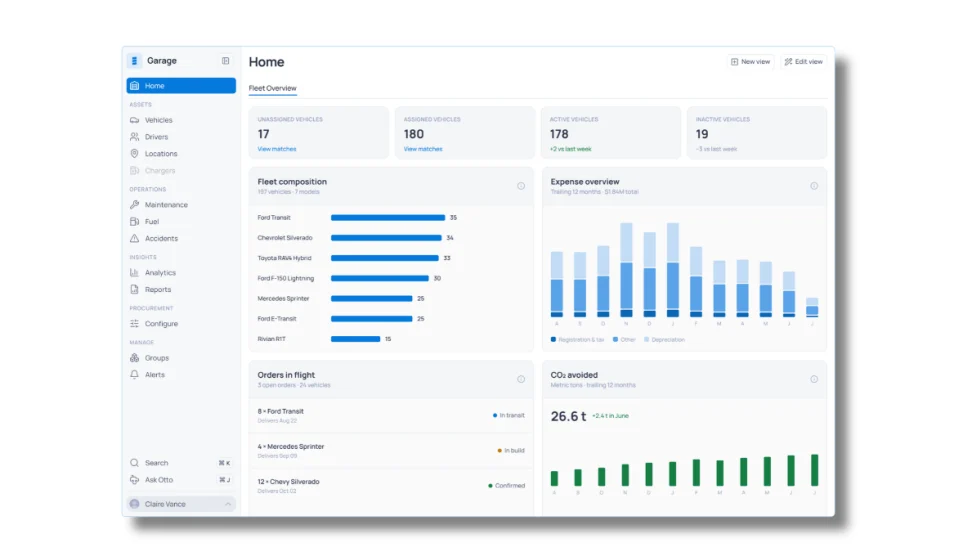
Inspiration Fleet Introduces Garage 2.0 Fleet Intelligence Platform
Fleet managers increasingly have access to data from vehicles, telematics, fuel, charging, and other systems, but those sources don't always communicate with one another. Inspiration Fleet's Garage 2.0 platform brings that information together while letting fleets keep working with different technology and service providers.
Read More →
Sponsored•October 1, 2026
Fleet Manager’s Ultimate Playbook: Navigating the New Standard in OEM Connectivity
Rising operating costs, driver safety concerns, and unplanned downtime are putting unprecedented pressure on modern fleets. Discover how fleet managers use embedded OEM connectivity and real-time vehicle data to cut TCO, prevent downtime, and protect drivers without aftermarket telematics hardware.
Read More →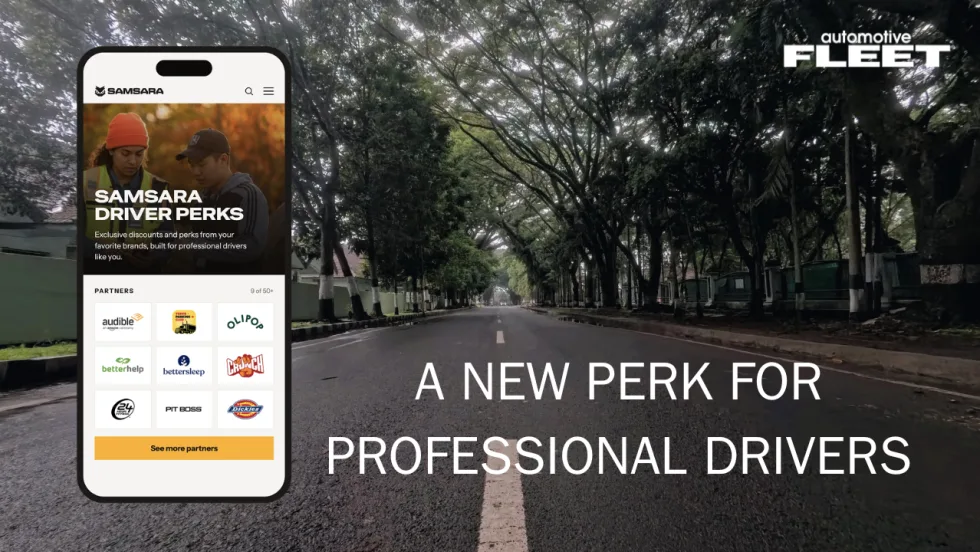
Samsara Driver Perks Adds New Benefit for Corporate Fleet Drivers
The rewards program gives eligible professional drivers access to discounts from more than 50 brands while giving fleets another way to support recruitment, retention, and the driver experience.
Read More →
Inside the Church of Jesus Christ of Latter-day Saints’ Two-Track Telematics Strategy
With 20,000 vehicles and two fundamentally different driver populations, the Church faced a fleet management problem that a single telematics program couldn't solve. How it responded offers a replicable framework for any fleet where one size doesn't fit every driver.
Read More →
How Conversational AI Can Make Fleet Tasks Easier for Drivers
While most generative AI tools help fleet managers interpret data at their desks, Connex2X is applying voice interaction to tasks behind the wheel.
Read More →
Why Fleets Are Creating Dedicated Fleet Analyst Positions
Are fleet analyst positions the new norm? Listen here to find out.
Read More →
Teletrac Navman Begins Next Chapter as Standalone Private Company
What's new with Teletrac Navman and its new owner?
Read More →
Why Fleets Are Creating Dedicated Fleet Analyst Positions
Telematics, AI, EVs, and connected technologies are generating more fleet data than traditional teams can effectively manage. Reed Jackson explains why dedicated fleet analytics roles are emerging to turn that information into better operational decisions.
Read More →