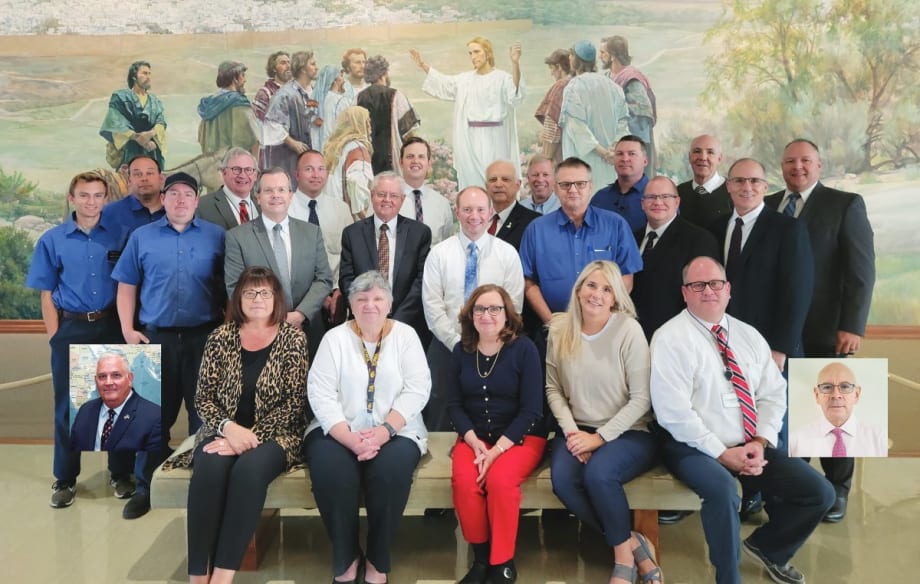
Their organization doesn’t produce a product nor sell a product or service. Yet this team— the fleet group at the Church of Jesus Christ of Latter-Day Saints—is a first-rate squad with best-practice policies and procedures and industry involvement.
Ad Loading...
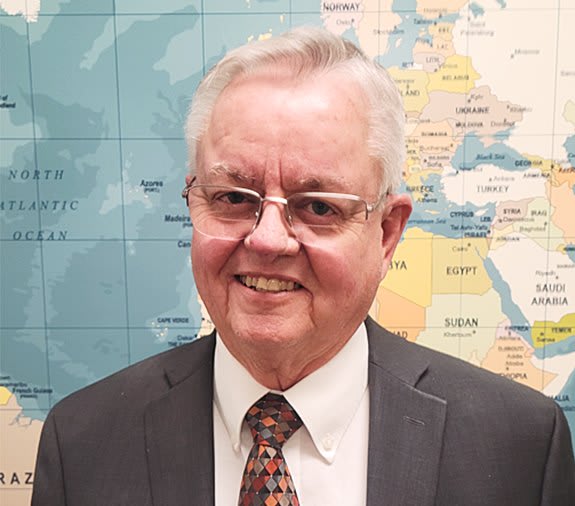
Mike Sims
Photo via LDS
Their cohesive efforts earned this fleet group the “Global Fleet Team of the Year Award,” presented to Mike Sims, global fleet manager, LDS Church, at the recent Global Fleet Conference in Miami, Florida.
Ad Loading...
“This global team award means more to me than any other award we have received. It recognizes our team for what I believe it really is. Our team is a group of individuals working together to achieve our common goal,” said Sims.
In a very real sense, that common goal is infused with a greater calling, Sims explained.
“To me and my co‐workers, it is much more than just a job,” said Sims, who has been with the LDS Church team since 1984.
As Sims described, he and his team believe in and support the purpose of the LDS Church: to preach the gospel of Jesus Christ, purify members’ lives; provide saving ordinances such as baptisms and eternal marriages; care for the world’s poor and needy, regardless of religious affiliation; and assist with natural disasters and calamities.
A Purpose-Directed, Unique Fleet
“It is a very special and unique place to work,” said Sims.
Ad Loading...
Team members are “interdependent with respect to information, resources, knowledge and skills and who seek to combine our efforts to achieve that common goal. We have complementary skills and generate synergy through a coordinated effort, allowing each of us to maximize our strengths and minimize our weaknesses,” Sims explained.
The team’s approach to budgets and expenses is also singular. “All of our funds come from dedicated funds. These are donations from members of our church. I think we treat those a little bit differently because they are what I would consider sacred funds,” said Sims.
The LDS Church fleet is also an industry standout is its nearly total in-house operation. “We don’t use a fleet management company for anything but selling vehicles,” Sims explained.
For example, where typically a fleet management partner provides lifecycle data, each LDS Church area office performs its own lifecycle cost analysis, submitting the information to the global fleet office for their approved vehicle list.
“We buy our own vehicles, world-wide purchasing them from ordinary dealers,” said Sims.
Ad Loading...
‘Bringing the World Together’
Located with Sims at LDS Church headquarters in Salt Lake City, are Jeff Sechler and Noel Diaz, global managers. The two provide training, customer service, consistency, processes improvement and relationship building, according to Sims. “They have been extremely effective in bringing the world together.”
The fleet team includes 15 on-site fleet managers, in LDS Church Area Offices. These full-time church employees are responsible for the fleet in the Church’s missions, scattered throughout 142 countries.
In addition, the team relies on hundreds of volunteer vehicle coordinators throughout the missions, who locate, maintain, process and remarket fleet vehicles.
With “roughly” 10,000 vehicles in the U.S. and Canada and 5,000 units globally, the fleet comprises “vans, minivans, trucks, sedans…you name it, we have it, said Sims.
General Motors (GM), Toyota and Nissan have been the fleet’s primary business partners. “These three partners that really got us involved in the global fleet. They were instrument in helping us consolidate,” Sims said.
Ad Loading...
“We try to buy vehicles indigenous to the [mission] area so that we don’t stand out; we want to blend in. And we don’t want vehicles that we’ll have a hard time selling when we’re done. If a Nissan or a Toyota will work for us, that’s where we’ll go,” Sims pointed out.
Most of the fleet—80%—are missionary vehicles driven by 18-21-year-olds, a population that presents particular concerns.
The young missionaries typically get driver’s licenses just before embarking on their missions. Then, Sims explained, “they’re in an unfamiliar area, in a vehicle they’ve never driven, without parental supervision. It doesn’t get any more difficult than that.”
In addition to “very good” safety programs and MVR checks, the fleet team depends on vehicle coordinators to provide necessary safety training locally.
A robust telematics system also tracks and measures drivers’ speed, seatbelt use, aggressive driving behavior, etc. Those with reports below the standard are not allowed to drive. According to Sims, 97% of the drivers score well on the reports.
Ad Loading...
Remaining fleet vehicles are used by various Church department employees, executives. Most trucks are deployed on Church farms. Located throughout the world, some farms support the Church’s welfare system, while others are for-profit enterprises, worked by church employees or leased to the local population.
Continuous Improvement Key
Sims believe in the philosophy of continuous improvement, setting goals each year to make the team better and following up on those goals.
For 2022, the team is focusing on two major initiatives:
Global fleet inventory. “Every area of the world will be involved in developing and implementing an entirely new inventory system.”
Telematics. The team is working on expanding globally the telematics system now in use in the U.S. and Canada. Next year’s initiative will move from 4G to 5G, requiring reinstalment of all aftermarket devices. The global fleet team will organize all the brainstorming, training and system enrollment, realizing the system must be multilingual. “It’s a huge initiative and a good example of what we do,” said Sims.
Ad Loading...
Still another area of continuous improvement is safety, where the team has made several changes. They have moved from small-to mid-size SUVs for the added weight and height.
“We put all the safety equipment we can on the vehicles. For example, we don’t even consider a vehicle that doesn’t have lane departure, blind spot monitoring, cross-traffic alert, adaptive cruise and brake assist,” said Sims.
“Safety is a huge factor for us,” said Sims. “Our number one goal is that every missionary is safe, and they return home after a successful mission.”
Assessing the Future
Looking to the industry’s near future, Sims sees electric vehicles (EV) an important trend to follow. “EVs is the big one,” he said. “But you can throw hybrids into the mix; they may be the interim until you get to the EV.”
Sims believes the far-reaching chip shortage will remain for some time and present singular consequences fleet.
Ad Loading...
“Because of this shortage, and because manufacturers can basically sell everything they have on the retail lot, I think there may be some pricing degradation with CAP agreements,” he cautions. “We may not see the discounts we’ve seen in the past because product is so much needed somewhere else. That’s a major challenge. If you’re on fixed budget and the prices go up, that’s going to be a big problem.”
Participate to Remain Current
Sims strongly advocates active industry participation to remain current with innovations, trends, challenges and opportunities. He and his team are members of the Automotive Fleet Leasing Association and the NAFA Fleet Management Association in the U.S.
They regularly attend global fleet conferences and serve on “as many boards as we possibly can.” Sims himself is a long-time member of the GM advisory board and chair of the GM domestic advisory board.
Another avenue to stay industry-current is through product previews. “I don’t think there’s a better way to know what’s going on the industry than the manufacturers’ product previews and industry conferences.
Interaction with the fleet’s global partners is also important. Sims and his co-workers stay in contact with colleagues around the world.
Ad Loading...
“We have lot of people who come to church to find out how we do certain things, so we help them, sharing our technology and whatever we have to make other fleets better,” said Sims. The fleet is a real brotherhood. When you’ve been in the industry for 34 years, you make a lot of friends. So we keep in touch.”
Advice to be Considered
Leader of the Global Fleet Team of the Year, Mike Sims, global fleet manager for the Church of Jesus Christ of Latter-Day Saints, shares the following advice for other global fleet leaders:
Centralize your fleet. With a centralized direction, everyone is on the same page, not doing their own thing.
Consolidate your fleet to increase buying power.
Take advantage of and rely on industry experts. Glean as much information from them as possible.
Make yourself available; participate in what’s going on in the rest of the fleet world.
Fleet is a moving target, every year the challenges are different. Be prepared for change. Be adaptable. If you’re not flexible, you’ll drown in this industry. For example, electric vehicles EVs coming, and while you may not want to be the first, you don’t want to be the last to manage that change.
Buying fleet management software in 2027 means looking beyond features and price. As fleet operations, technology and expectations evolve, this guide explores what today’s fleet professionals should consider when choosing a system that can deliver value now and adapt to what comes next.
Neology’s neoFleet platform will manage toll transactions and toll-authority operations for vehicles across Avis, Budget, Payless, Budget Truck and Zipcar.
Nearly eight in 10 surveyed fleets allow personal use of company vehicles, while just over half of respondents report charging employees for the privilege.
Could developments overseas offer a preview of what’s coming for U.S. fleets? This week, we’re looking at the future of AI, autonomy, and electrification, plus Ford Pro’s new certified pre-owned program, smarter vehicle offboarding, and a new way for fleets to manage toll expenses.
Rising operating costs, driver safety concerns, and unplanned downtime are putting unprecedented pressure on modern fleets. Discover how fleet managers use embedded OEM connectivity and real-time vehicle data to cut TCO, prevent downtime, and protect drivers without aftermarket telematics hardware.
ADAS-equipped vehicles may crash less often, but they can cost more when they do. This week, we’re breaking down what that tradeoff means for fleets, plus Subaru’s first Forester Wilderness Hybrid, Nissan’s new e-POWER Rogue, and why Calstart has become Catalyst Mobility.