





What's Best Handled by an FMC, and What's Better Done Directly?
How Rising Collision Costs Are Complicating Fleet Repair Decisions
When a single replacement part costs 60% more, repairing an aging fleet is a tougher calculation. Robert Martines of Corporate Claims Management explains what's changing.
November 10, 2026
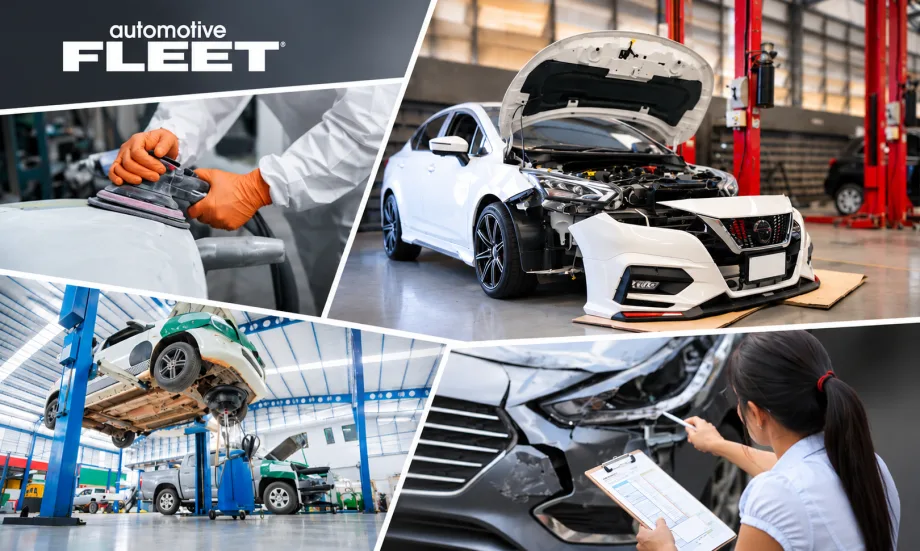
Collision repairs that once involved relatively straightforward parts replacement can now require additional diagnostic scans and ADAS recalibration that can add $500 to $1,500 to a repair.
Credit:
Automotive Fleet | Edited with OpenAI
4 min to read
- Rising costs of replacement parts are making repair decisions for aging fleets more complex, with some parts seeing a 60% increase in cost.
- Robert Martines of Corporate Claims Management highlights the challenges these cost increases pose for fleet management.
- Fleet operators must navigate tougher cost-benefit analyses to determine when it's viable to repair or replace older vehicles.
*Summarized by AI
Repairing a fleet vehicle — particularly a truck with a bunch of work stuff on it — is one of the most exasperating tasks for a fleet manager. The first question is, should you just replace it?
It’s complicated. Element Fleet Management's 2026 Market Pulse Report found that 36% of surveyed fleet managers were delaying vehicle replacements.
Robert Martines, CEO of Corporate Claims Management (CCM), is seeing it this way: Clients are investing more in repairs to older, specialized units that would be expensive to replace.
"We have had requests for quality used vehicles to keep in service, rather than purchasing new vehicles," Martines said.
It’s an economic balancing act. Replacing a damaged vehicle may mean paying substantially more for a new unit with higher financing or leasing expenses and expensive new equipment.
But repairing an older vehicle comes with its own downsides as collision repair costs keep rising.
Parts Cost Inflation Is Affecting Decisions
Martines said replacement parts prices have increased considerably, which could outpace the relatively moderate year-over-year increases in new-vehicle prices.
He cited a door skin that previously cost approximately $250 but now costs $400 or more.
A $150 increase for one component may not be significant, but a repair requiring multiple replacement parts can compound those increases. Martines estimates that higher parts prices alone can add $450 to $1,000 to some repairs, depending on the components involved.
Labor costs add another layer. Body, paint, and mechanical repair rates have increased, while newer vehicle materials and technologies can require additional procedures and specialized expertise.
A Simple Repair Isn’t So Simple
On newer vehicles, components such as mirrors, windshields, and headlamps are likely connected to cameras, radar sensors, or other electronic systems. Repairing or replacing those now requires diagnostic scans, additional inspections, and calibration procedures.
Martines estimates that associated procedures can add $500 to $1,500 to certain repairs.
These costs are not necessarily optional. When a collision affects advanced driver assistance systems (ADAS), proper repair procedures may be necessary to restore the vehicle's safety functions.
A vehicle’s construction also affects repair complexity. Martines pointed to aluminum, high-strength steels, and composite materials that require specialized repair techniques and materials.
As a result, two vehicles with similar visible collision damage may have substantially different repair costs depending on their construction and onboard technology.
For fleet managers, then, how expensive will the vehicle be to repair throughout its service life?
Downtime Adds Even More Costs
Parts availability has improved since the worst of the supply-chain disruptions, but delays remain a problem for certain collision repairs, with some replacement parts taking five to 10 days to arrive.
If the damaged vehicle remains safely drivable, the repair facility may be able to order the parts and schedule the work once they arrive. For a vehicle that cannot be operated, however, the delay creates additional expenses.
Martines cited replacement transportation costs of $45 to $60 per day, potentially more for trucks. A 10-day wait for parts could therefore add $450 to $600 or more before the repair itself begins.
Other considerations remain, of course. A vehicle out of service may interrupt employee schedules, delay customer work, or require the fleet to reassign another vehicle.
Martines also noted that recovering these expenses through subrogation can be difficult. Even when another party is responsible for the collision, an insurer may dispute reimbursement for replacement transportation during parts delays.
Changing Collision-Repair Economics
Changing collision-repair economics complicate decisions about aging vehicles.
A fleet may be reluctant to authorize an expensive repair on a vehicle approaching its scheduled replacement date. But that same vehicle may be much cheaper to keep than a new replacement, especially if it has already absorbed much of its depreciation.
Specialized vehicles present an even more difficult decision because replacing them may involve long lead times, upfit expenses, and operational disruption.
That doesn't mean you should repair every aging vehicle. The decision should account for the vehicle's condition before the collision, expected future maintenance costs, remaining useful life, replacement availability, and the total cost of returning it to service.
Managing Collision Costs in 2027
Martines said these parts prices and repair complexities won't get better in 2027.
He also sees changes in the collision repair industry that could affect fleet customers. Some independent repair shops are changing ownership, and Martines is concerned that consolidation under larger organizations could shift the focus to insurance work at the expense of commercial fleets.
At the same time, independent shops face a shortage of qualified technicians. Martines said some owners are retaining experienced workers longer, although doing so can create additional cost pressures.
He believes independent repair facilities that continue to prioritize fleet customers could benefit from these changes, particularly if they can provide quality repairs at competitive prices.
As Martines put it when discussing the shortage of qualified repair technicians and the cost of retaining experienced workers: "The tough balance is at what cost?"
Quick Answers
The cost of replacement parts has increased, with some parts costing 60% more. This makes fleet repairs more expensive and complex, especially for aging fleets.
*Summarized by AI
Subscribe to Our Newsletter
More Maintenance

Sponsored•October 1, 2026
Fleet Manager’s Ultimate Playbook: Navigating the New Standard in OEM Connectivity
Rising operating costs, driver safety concerns, and unplanned downtime are putting unprecedented pressure on modern fleets. Discover how fleet managers use embedded OEM connectivity and real-time vehicle data to cut TCO, prevent downtime, and protect drivers without aftermarket telematics hardware.
Read More →
How Can Fleet Managers Tell Which Repairs Require Closer Review?
Fleetio’s Brianna Perry demonstrates how Service Advisor evaluates maintenance requests, identifies pricing anomalies, and provides the context fleet managers need to focus their attention on potential problems.
Read More →
Why Roadside Assistance Belongs in a Fleet Risk Strategy
Roadside assistance is more than a tow. See how the right partner can protect drivers, uncover fleet trends, and strengthen your risk strategy.
Read More →
Sponsored•August 7, 2026
Hidden in Plain Sight: Fleet Compliance Risks
Fleet compliance isn't just about having policies — it's about consistently enforcing them. This practical guide reveals six hidden compliance risks common in public sector and shared fleet operations and outlines proven strategies to improve visibility, accountability, and audit readiness
Read More →
How Maintenance Costs Compare Across 27 Fleet Vehicles
Vincentric’s three-year, 60,000-mile projections reveal wide differences for both scheduled and unscheduled maintenance among selected vehicle categories. Projected maintenance visits also play a factor.
Read More →
The EV Breakdown Nobody's Talking About: Why Most Electric Vehicle Roadside Calls Aren't Mechanical Failures
Here's why EV breakdowns are widely misunderstood.
Read More →
How Stellantis Plans to Get Ahead of Fleet Downtime
Keeping fleet vehicles on the road has become as important as buying them. Darren Bradshaw of Mopar North America explains how connected vehicle data, AI, and proactive service strategies are helping Stellantis reduce downtime and move closer to predictive maintenance.
Read More →
Merchants Fleet Expands Maintenance Network with Pep Boys
Merchants Fleet has expanded its relationship with Pep Boys, increasing the service provider's role within its national maintenance network. The move is intended to enhance maintenance coordination and support commercial fleets through Pep Boys' nationwide footprint.
Read More →
The Two Biggest Summer Downtime Threats for Fleets
A conversation with a maintenance expert reveals the two most common summer maintenance pains and how to prevent them.
Read More →
From Marine Corps Motor Pool to Managing 460 Fleet Vehicles
Cesar Ayala of O’Connell Landscape Maintenance shares how he transitioned from the Marine Corps to managing a 460-vehicle fleet—and the real-world challenges of maintenance, compliance, and driver management in California.
Read More →