




USPS Awards $37.4M for Next-Gen Vehicle Prototypes
The U.S. Postal Service has awarded $37.4 million in contracts to six vendors to provide 50 prototypes of a next-generation delivery vehicle that will be tested in various climates and locales.

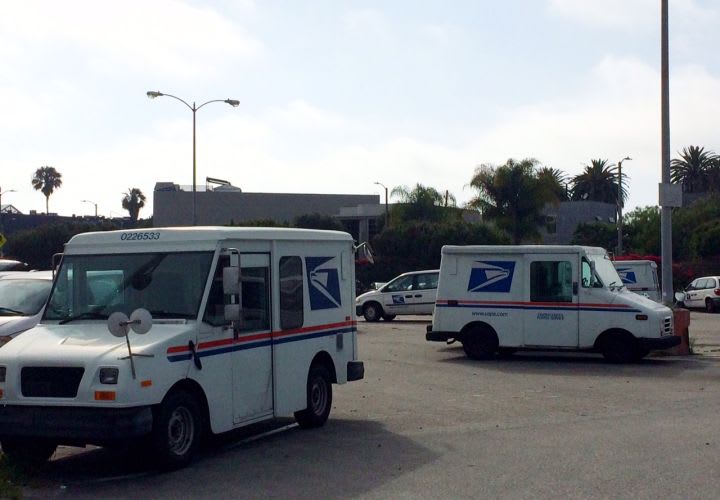
Photo of existing delivery vehicles by Paul Clinton.
Photo of existing delivery vehicles by Paul Clinton.
The U.S. Postal Service has awarded $37.4 million in contracts to six vendors to provide 50 prototypes of a next-generation delivery vehicle that will be tested in various climates and locales, the USPS has announced.
AM General, Karsan, Mahindra, Oshkosh, Utilimaster, and VT Hackney will have one year to develop and produce their prototypes.
While Fiat Chrysler Automobiles, Ford, Nissan, and Freightliner made the initial list of pre-qualified vendors, these larger vehicle manufacturers could partner with the final six as subcontractors to supply engines, transmissions, or other parts.
VT Hackney, a North Carolina body builder perhaps best known as a supplier to the beverage industry, will submit several prototypes in collaboration with Workhorse. The company will add a custom body to a modified E-Gen plug-in hybrid platform to build a truck with a GVW of about 6,500 pounds, which puts in on the lighter end of Class 2. The vehicle will include a back-up camera, said Richard Ball, VT Hackney's marketing and business development director.
Half of the prototypes will feature hybrid and new technologies, including alternative fuel capabilities. The prototypes will represent a variety of vehicle sizes and drive configurations, in addition to advanced powertrains and a range of hybrid technologies, according to a USPS statement.
Once the prototypes are delivered, the USPS plans to test the vehicles for about six months in different climates, topography, population centers and delivery environments. The tests will help demonstrate the ability of the proposed designs to meet operational needs, such as deliver to mailboxes.
The USPS has been reluctant to use an off-the-shelf cargo van because the seating is often too high and mail delivery personnel have to reach down toward the mailbox. Federal regulations require the bottom of the mailbox to be 42 inches from the ground. The vehicle must also be right-hand drive.
However, the USPS is planning to release a request for proposal for an off-the-shelf, right-hand drive vehicle to supplement its fleet as it "continues to assess the delivery fleet mix." The USPS has ordered 12,472 Ram ProMaster 2500 cargo vans in the past year.
The delivery of the prototypes represents the next step toward the deployment of the next-generation vehicle, which should begin rolling out in 2018. The USPS plans to replace as many as 180,000 carrier route vehicles for between $4.5 billion and $6.3 billion over as many as seven years.
More Operations
Company Vehicle or Reimbursement? How Fleets Are Rethinking Assignments
As fleet costs and insurance pressures rise, fleet managers are taking a closer look at which employees need company-provided vehicles and when a reimbursement program may make more sense.

Fleetio, ASE Launch Scholarship Program for Automotive Technicians
The second annual program will award 15 scholarships totaling $35,000 to support ASE certification, testing fees, and equipment costs.

Reading the Global Signals: What AI and the Energy Transition Mean for Fleets Now
In this opening keynote of the 2026 Fleet Forward Conference, John Rossant, founder of CoMotion, How can fleet managers navigate a never-ending, changing industry landscape?

90% Use Telematics. Are Fleets Getting Safer? | AF News Recap
This week, we're breaking down which industries have the highest rates, how Jamie McKay manages 2,400 vehicles, what's happening with the 2027 fleet awards, and why software-defined vehicles could introduce new costs.

What's Best Handled by an FMC, and What's Better Done Directly?
Fleet managers continue to rely on FMCs for essential services but are taking a closer look at where working directly with suppliers can improve efficiency and responsiveness.

Fleet Meets: Erin Gilchrist
Meet Erin Gilchrist, the inaugural Mike Antich Spirit of Fleet Award winner, as she shares insights on leadership, mentorship, the power of industry connections, and why people remain at the heart of fleet's future.

How 2026 Fleet Visionary Jamie McKay Manages 2,400 Vehicles Across 37 States
How do you keep 2,400 vehicles running across 37 states? Fleet Visionary Award winner Jamie McKay shares how collaboration, flexibility, and a few simple strategies help her tackle fleet management challenges at Aptive Pest Control.

Managing Fleet Costs in an Era of Permanent Volatility
Fleet operating costs have risen more than 20% since 2020, raising a key question: When does extending a vehicle's service life stop making financial sense?

The Next Evolution of Fleet Management: Autonomous Operations
This opening keynote session at the Fleet Forward Conference highlights the future of autonomous driving for fleets.

How to Reduce the Total Cost of Risk From Catalytic Converter Theft
A stolen catalytic converter can cost fleets far more in downtime and lost productivity than in repairs. A total-cost-of-risk approach can help fleet managers quantify their exposure and prioritize theft prevention.