





Related: Research and compare vehicles on Automotive Fleet’s Lifecycle Cost Tool, powered by Vincentric.
Vincentric Analysis: Which EVs Have Lower Ownership Costs Than Comparable Gas Vehicles?
Vincentric’s analysis of ownership data found that 14 of 27 EVs had lower total cost of ownership over five years than their gasoline counterparts.
March 15, 2023
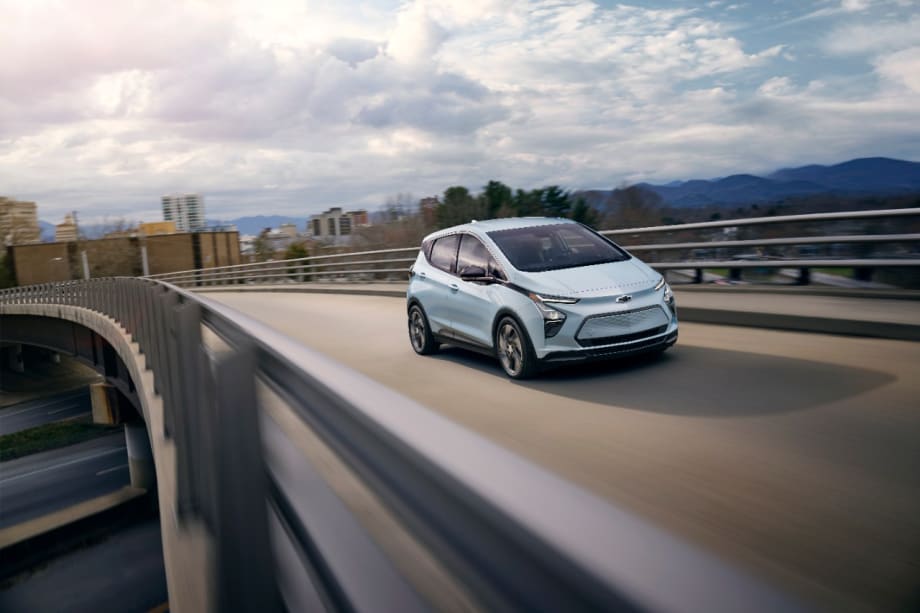
Vincentric identified the 2023 Chevrolet Bolt EV 1LT Hatchback as the lowest cost to own EV over five years. The Bolt was also identified as the third most cost-effective EV compared to an ICE alternative, in this case the 2023 Chevrolet Malibu 1LT sedan.
Photo: Chevrolet
3 min to read
Cost ownership data provider Vincentric released an Electric Vehicle (EV) Cost of Ownership Analysis on March 14 in which the company found that 14 of 27 EVs had lower total cost of ownership over five years than their gasoline counterparts. The 34-page analysis studied 27 EV models from the most recent available model year and compared them to similar gasoline-powered vehicles to provide insight into the cost effectiveness of EVs.
Vincentric analyzed eight cost factors that comprise a vehicle’s cost of ownership: depreciation, fees & taxes, financing, fuel, insurance, maintenance, opportunity cost, and repairs. The biggest strengths of EVs were their fuel and maintenance costs, with all 27 EVs having lower fuel costs than their internal combustion engine (ICE) alternatives, and 25 of 27 EVs having lower maintenance costs than their ICE alternatives. The biggest disadvantage of EVs was depreciation, largely due to the higher purchase price of most EVs studied.
As part of the analysis, Vincentric also measured the Payback Period, which is the length of time that it will take buyers to recoup the higher purchase price of an EV through ownership cost savings. The results showed that nine of 27 EVs recouped their price premium within five years, with four of those EVs having an immediate payback due to having a lower purchase price than their ICE alternative.
In addition to financial cost of ownership, the analysis also examined the Environmental Cost of Ownership of the vehicles studied to compare the greenhouse gases created by driving an ICE vehicle with the greenhouse gases created when producing the electricity needed to power an EV. Even though EVs create emissions due to electricity production, the study found that, on average over five years, EVs reduce CO2 emissions by more than 67%, NOX emissions by more than 58%, and VOC emissions by more than 87% compared to their ICE alternatives.
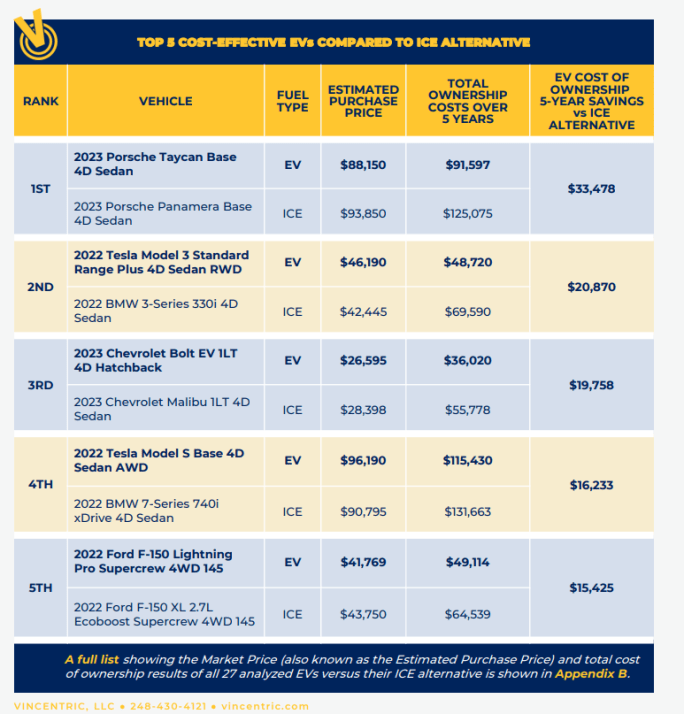
Source: Vincentric
“As today’s consumers consider buying an electric vehicle, understanding the financial consequences of this purchase is important given that EVs typically have a significantly higher purchase price,” said David Wurster, Vincentric president. “Our study found that just over half of the EVs analyzed will save buyers money over five years, even if we eliminate the advantage some EVs have due to federal tax credits. Of course, in some cases, the ICE vehicle was cheaper to own, so it is important to look at each vehicle on a case-by-case basis when making a vehicle purchase decision.”
This Vincentric analysis assumed that all vehicles were driven 15,000 miles per year over the next five years. Results were based on federal EV tax credit qualifications and vehicle pricing as of February 10, 2023.
The full results of the Vincentric EV Cost of Ownership Analysis as well as more information on the analysis process and methodology is available for download at the Vincentric EV Analysis page.
More Vehicle Research
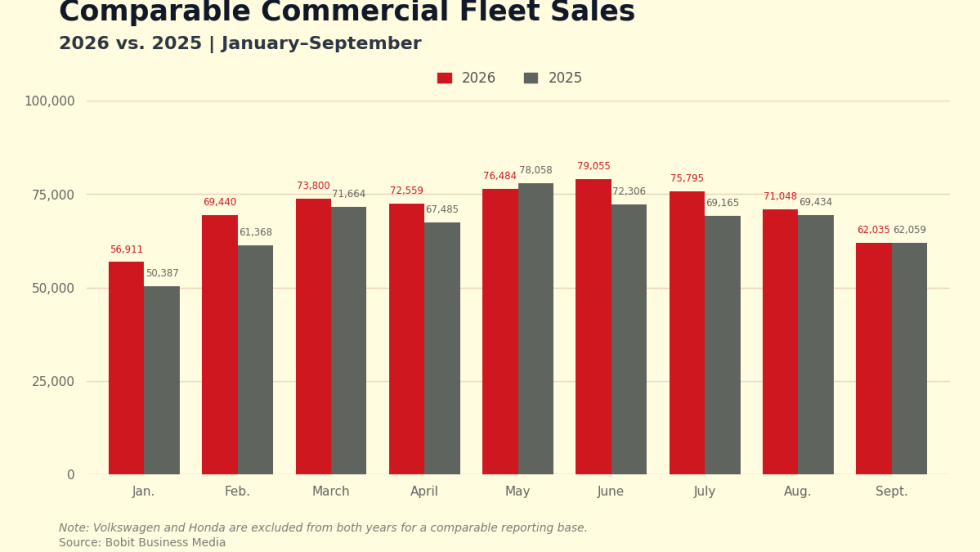
Commercial Fleet Sales Rise 5.8% Through September 2026
September commercial fleet sales were essentially unchanged from a year earlier, slowing year-to-date growth while keeping volume ahead of 2025.
Read More →
Hall of Fame Inductee: John Dmochowsky
The longtime Mondelēz International fleet executive joins the Automotive Fleet Hall of Fame.
Read More →
Hall of Fame Inductee: Lee Miller
After more than four decades at Boehringer Ingelheim, Lee Miller leaves a legacy built on fleet expertise.
Read More →
Hall of Fame Inductee: Mark F. Petersen
From managing fleets of thousands of vehicles to advancing safety and mentoring fellow professionals, Mark F. Petersen made his mark across both the corporate and supplier sides of fleet.
Read More →
When Charger Downtime Becomes a Fleet Availability Problem
As EV deployments move beyond pilot programs, charger reliability can directly affect vehicle readiness, driver productivity and route scheduling.
Read More →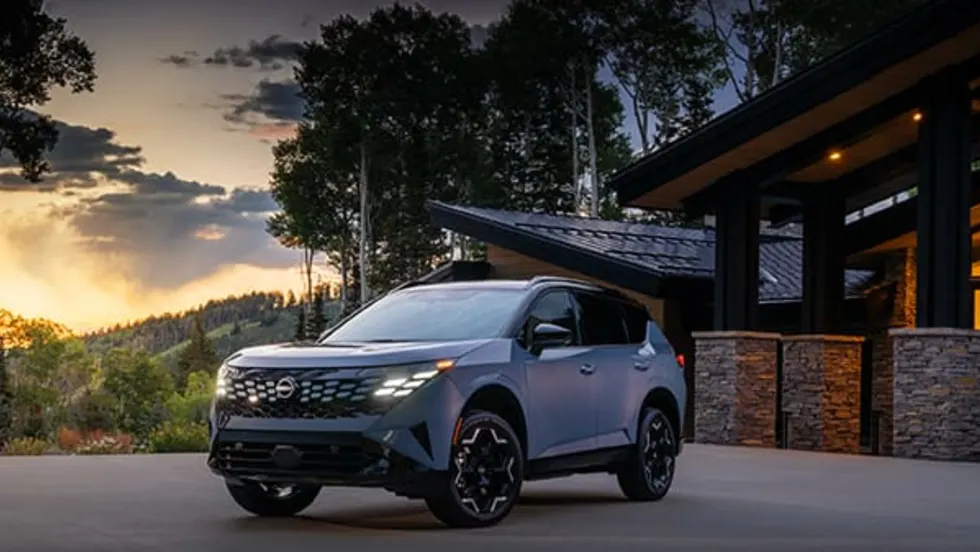
2027 Nissan Rogue Hybrid Adds e-POWER, Standard AWD
The new Rogue Hybrid uses Nissan’s e-POWER system with dual electric motors, offers an estimated 40 mpg and starts at $35,490.
Read More →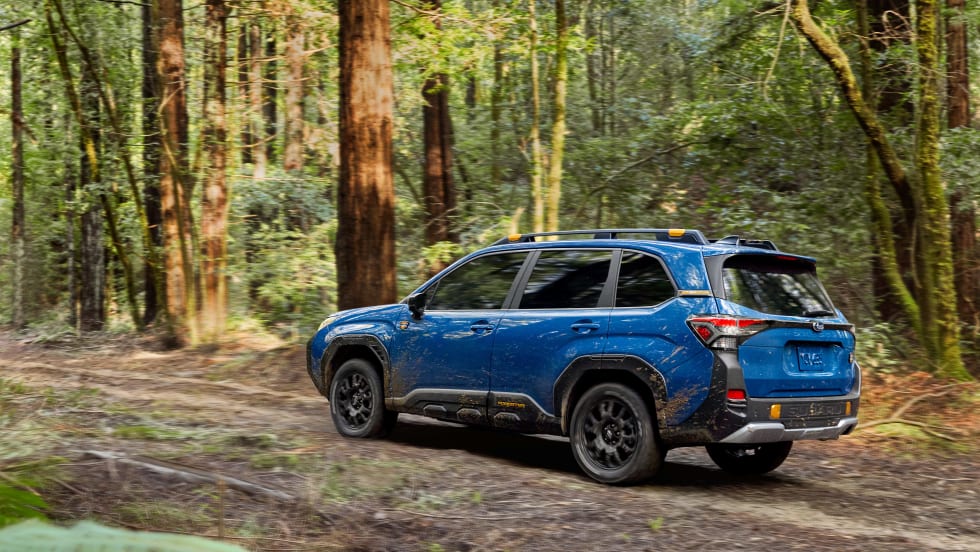
2027 Subaru Forester Adds First Wilderness Hybrid
The 2027 Forester lineup starts at $29,995 and adds a Wilderness Hybrid with 194 combined horsepower and 9.3 inches of ground clearance.
Read More →
EV Realty Names Henrik Holland President as Charging Platform Expands
The former Prologis Mobility and Shell executive will help expand EV Realty’s truck charging business and move its power-first infrastructure model into autonomous vehicle depots and other fleet sectors.
Read More →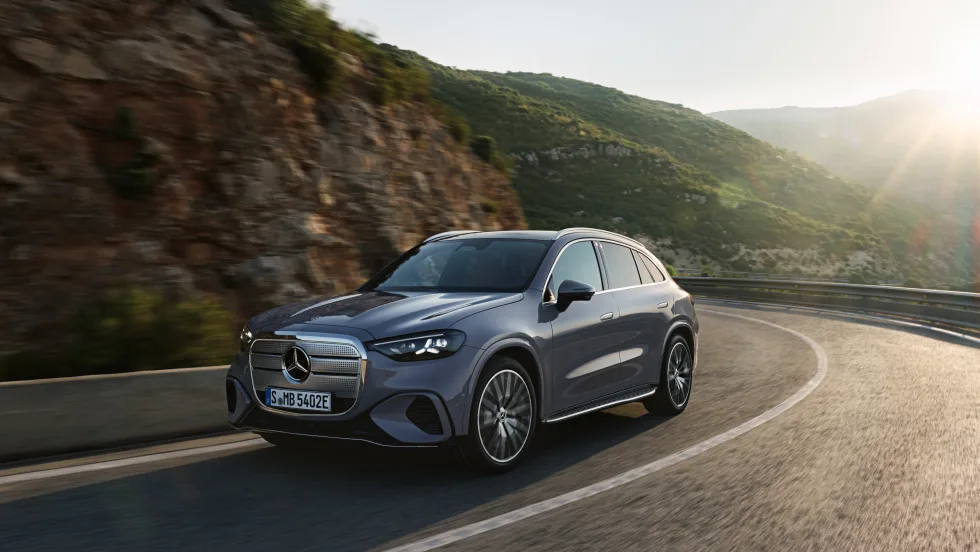
Mercedes-Benz Introduces Electric GLC With Up to 350 Miles of Range
The GLC 400 4MATIC Electric features an 800-volt architecture, 330-kW DC fast charging and a 94-kWh battery, along with Mercedes-Benz's new MB.OS operating system.
Read More →
Fleet Has a Talent Pipeline Problem, not a Talent Problem
Where will the next generation of fleet leaders come from, and what does the industry need to do differently to find them?
Read More →