




Be sure to sign up for our safety newsletter so you can stay up to date on the latest safety news and trends.
Top 10 Safety Stories From 2024
As we close out 2024, we're highlighting this year's most read safety news and features.

Christy Grimes・Former Senior Editor
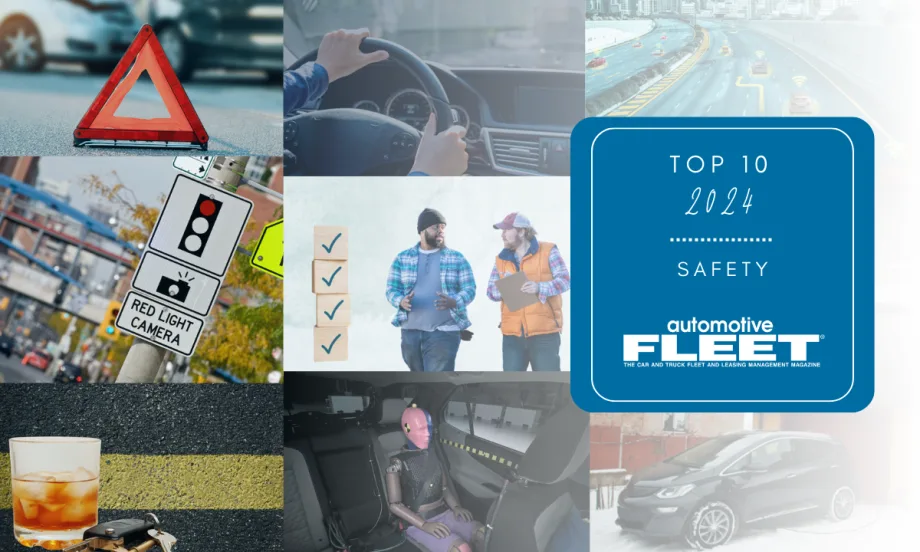
Automotive Fleet's top 10 safety stories included tips for getting buy-in on safety programs, details on an AEB requirement for OEMs, top driver safety policies, and more.
Photo: Automotive Fleet
3 min to read
Keeping safety at top of mind is paramount in commercial fleet operations.
As 2024 comes to a close, we're looking in the rearview at this year's most-read safety news and features.
From talking tech and its impact on driver awareness to driver buy-in for your safety policy, Automotive Fleet covered a vast array of timely topics in 2024. Check out our top safety stories, as of Dec. 10.
1. 4 Policies Every Fleet Safety Program Should Have
Take a look at the core elements of your fleet safety policy. Sure it touches on knowing the road laws where your drivers work, but does it address journey management? What even is journey management? Plus, a look at what a policy on drugs and alcohol might look like for your company.
2. How to Prepare Your EV for Winter
The use of electric vehicles in commercial fleets is still relatively new. And there is a stigma around using EVs in cold weather. With those two factors in mind, we addressed everything from basic safety tips to range concerns.
3. New Tech Is Revolutionizing Fleet Safety — But at the Price of Awareness?
You'd be hard pressed to find a new vehicle that doesn't include some sort of driver assistance safety technology in it these days. The technology is geared toward protecting drivers, but can it cause harm at the same time? We address concerns about advanced driver-assistance systems, plus look at other emerging safety technology.
4. How USIC Uses Telematics to Enhance Safety
Would you believe us if we told you one company was able to reduce its mobile phone usage behind the wheel by 92%? What if we said the company also curbed its no-seat-belt instances by 85%? Check out results from a pilot between underground utility damage prevention services provider USIC and Samsara.
5. Which States are the Worst for Drunk Driving?
Drunk driving is a concern for many commercial fleet managers, especially those with employees who attend after-hours work events in the company car. Take a look at the states with the highest rate of drunk driving-related road fatalities. Plus, we dive into ways technology can help stop the epidemic.
6. Crashes Add Up: Factors that Cost Fleets Money
If you've been in the industry for awhile, you likely have a place for accident-related costs as a line item in your budget. The average non-fatal work-related crash costs around $75,000, according to the Network of Employers for Traffic Safety. We look at both the direct and non-direct cost impacts that crashes can have on your operations.
7. IIHS Crash Test Rating Criteria Update Leads to Rating Changes on 13 Vehicles
The Insurance Institute for Highway Safety is the standard for vehicle safety testing. After IIHS rolled out new scoring criteria for one of its crash tests, scores on 13 vehicles changed. We look at the new criteria and which vehicle safety ratings changed — whether for the worse or for the better.
8. Red-Light Cameras: Enhancing Safety and Reducing Crashes on the Roads
Traffic law enforcement is evolving, finding sneakier ways to hold drivers accountable for bad behavior. We break down the impact red-light cameras have on the roads your fleet drivers use every day. Plus, check out some case studies of red-light camera use.
9. Why Won't My Drivers Do What I Need Them to Do?
Struggling to bring drivers onboard with your safety strategy? You're not alone. Check out common mistakes that could be preventing positive changes in driver behavior, and strategies that get results.
10. Automatic Emergency Braking Will be Required by 2029
Auto manufacturers have just four years to make automatic emergency braking standard in all new vehicles. That's after the National Highway Traffic Safety Administration (NHTSA) announced a new Federal Motor Vehicle Safety Standard earlier this year. See how AEB works, plus read reactions to the rule.
As we move into 2025, what safety-related content would you like to see? Let us know in the comments below!
More Safety

What’s Next for Fleet? Safety, AI & Industry Recognition | AF News Recap
Could your company's culture be encouraging distracted driving? This week, we're exploring how workplace expectations affect driver safety, what AI, EVs, and autonomous vehicles could mean for the future of fleet management, and how fleet professionals can strengthen their award nominations.
Read More →
Does Your Fleet's Culture Encourage Distracted Driving?
What happens when the people responsible for enforcing safety rules are the ones setting the wrong example? The answer may reveal why some of the biggest risks to fleet drivers have little to do with what's written in the employee handbook.
Read More →
Sponsored•October 1, 2026
Fleet Manager’s Ultimate Playbook: Navigating the New Standard in OEM Connectivity
Rising operating costs, driver safety concerns, and unplanned downtime are putting unprecedented pressure on modern fleets. Discover how fleet managers use embedded OEM connectivity and real-time vehicle data to cut TCO, prevent downtime, and protect drivers without aftermarket telematics hardware.
Read More →
From Driver Well-Being to EV Charging | AF News Recap
Mental health belongs in the fleet safety conversation. This week, we’re looking at five ways fleets can support employee well-being before a crisis, plus Holman’s expansion in Mexico, new one-day Fleet Forward passes, and why EV charging demand is outpacing infrastructure growth.
Read More →
Nexar-Nauto Merger Aims to Give Fleets Better Safety Intelligence Through Larger Driving Dataset
Stefan Heck tells Automotive Fleet that combining more than 10 billion miles of driving history with Nexar's AI models will give fleets deeper insights into driver risk and roadway conditions than either company could provide independently.
Read More →
Don't Wait for a Crisis: 5 Ways to Build Mental Health Into Your Fleet Safety Program
For Suicide Prevention Month, fleet and safety leaders have an opportunity to put mental health where it belongs: at the center of workplace safety.
Read More →
How Camera Data Can Strengthen a Fleet’s Insurance Renewal
Insights from a commercial insurance carrier and a broker show how fleets can turn video telematic data, driver coaching, and improved claims results into a stronger case at insurance renewal.
Read More →
The Safest Fleets Aren’t the Ones with the Most Technology
You’ve made the telematics investment. Here’s how to capture the other half of its value and build the safest fleet on the road.
Read More →
Sponsored•August 7, 2026
Hidden in Plain Sight: Fleet Compliance Risks
Fleet compliance isn't just about having policies — it's about consistently enforcing them. This practical guide reveals six hidden compliance risks common in public sector and shared fleet operations and outlines proven strategies to improve visibility, accountability, and audit readiness
Read More →
NETS Sets 2026 Fleet Safety Benchmark Conference for Indianapolis
The Sept. 15–17 program will feature fleet benchmarking data, case studies, emerging technologies, and implementation strategies while running alongside the NSC Safety Congress & Expo.
Read More →