





Related: Few Small SUVs Performed Well in Crash Prevention Test
Automatic Emergency Braking Will be Required by 2029
Manufacturers must make automatic emergency braking standard in all new cars and light trucks sold by September 2029.
April 30, 2024
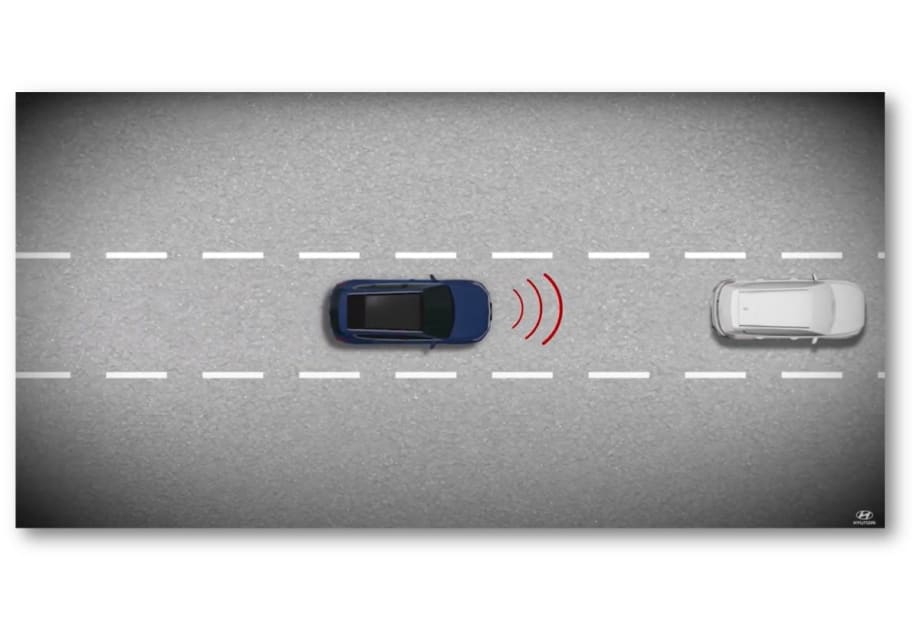
The new standard requires all cars to be able to stop and avoid contact with a vehicle in front of them at up to 62 miles per hour. The systems must detect pedestrians in both daylight and darkness.
Photo: Hyundai
3 min to read
By September 2029, vehicle manufacturers must make automatic emergency braking (AEB) standard in all new vehicles. The National Highway Traffic Safety Administration (NHTSA) announced the new Federal Motor Vehicle Safety Standard on April 28.
NHTSA projects that this new standard, FMVSS No. 127, will save at least 360 lives a year and prevent at least 24,000 injuries annually, and significantly reduce injury or property damage and associated costs from these crashes.
How Automatic Emergency Braking Works
AEB systems use sensors to detect when a vehicle is close to crashing into a vehicle or pedestrian in front and automatically apply the brakes if the driver has not. Pedestrian AEB technology will detect a pedestrian in both daylight and in darker conditions at night.
The new standard requires all cars to be able to stop and avoid contact with a vehicle in front of them up to 62 miles per hour and that the systems must detect pedestrians in both daylight and darkness.
The standard also requires that the system apply the brakes automatically up to 90 mph when a collision with a lead vehicle is imminent and up to 45 mph when a pedestrian is detected.
This final rule applies to nearly all U.S. light vehicles with gross vehicle weight rating (GVWR) of 10,000 lbs. or fewer.
NHTSA shows how the technology works in this video.
In June 2023, NHTSA and the Federal Motor Carrier Safety Administration announced a separate notice of proposed rulemaking that would require heavy vehicles, including tractor trailers, to have AEB, which the agencies are in the process of finalizing.
Reactions to FMVSS No. 127 Rule
“The new vehicle safety standards we finalized today will save hundreds of lives and prevent tens of thousands of injuries every year,” said U.S. Transportation Secretary Pete Buttigieg.
“Automatic emergency braking is proven to save lives and reduce serious injuries from frontal crashes, and this technology is now mature enough to require it in all new cars and light trucks. In fact, this technology is now so advanced that we’re requiring these systems to be even more effective at higher speeds and to detect pedestrians,” said NHTSA Deputy Administrator Sophie Shulman. “Most new vehicles already come with AEB, and we expect that many cars and light trucks will be able to meet this standard ahead of the deadline, meaning even more lives will be saved thanks to this technology.”
National Roadway Safety Strategy
This standard is also part of the Department of Transportation’s National Roadway Safety Strategy, which was launched in January 2022 to address the national crisis in traffic fatalities and serious injuries.
The National Roadway Safety Strategy adopts the safe system approach and builds multiple layers of protection with safer roads, safer people, safer vehicles, safer speeds, and better post-crash care.
AEB Standardization Needed
The Insurance Institute for Highway Safety (IIHS) sees the proposal as an important step for road safety. The IIHS began evaluating vehicle-to-vehicle AEB systems in 2013. A pedestrian AEB test was added in 2019, followed by a nighttime test in 2022.
Today, nearly every new vehicle sold includes AEB as standard equipment. However, the goal of the proposed rule is to ensure better technology and spread it throughout the vehicle fleet as quickly as possible.
However, there is no standardization of the technology across brands. NHTSA reported 400,000 instances of phantom braking, involving at least nine auto brands.
More Safety

What’s Next for Fleet? Safety, AI & Industry Recognition | AF News Recap
Could your company's culture be encouraging distracted driving? This week, we're exploring how workplace expectations affect driver safety, what AI, EVs, and autonomous vehicles could mean for the future of fleet management, and how fleet professionals can strengthen their award nominations.
Read More →
Does Your Fleet's Culture Encourage Distracted Driving?
What happens when the people responsible for enforcing safety rules are the ones setting the wrong example? The answer may reveal why some of the biggest risks to fleet drivers have little to do with what's written in the employee handbook.
Read More →
Sponsored•October 1, 2026
Fleet Manager’s Ultimate Playbook: Navigating the New Standard in OEM Connectivity
Rising operating costs, driver safety concerns, and unplanned downtime are putting unprecedented pressure on modern fleets. Discover how fleet managers use embedded OEM connectivity and real-time vehicle data to cut TCO, prevent downtime, and protect drivers without aftermarket telematics hardware.
Read More →
From Driver Well-Being to EV Charging | AF News Recap
Mental health belongs in the fleet safety conversation. This week, we’re looking at five ways fleets can support employee well-being before a crisis, plus Holman’s expansion in Mexico, new one-day Fleet Forward passes, and why EV charging demand is outpacing infrastructure growth.
Read More →
Nexar-Nauto Merger Aims to Give Fleets Better Safety Intelligence Through Larger Driving Dataset
Stefan Heck tells Automotive Fleet that combining more than 10 billion miles of driving history with Nexar's AI models will give fleets deeper insights into driver risk and roadway conditions than either company could provide independently.
Read More →
Don't Wait for a Crisis: 5 Ways to Build Mental Health Into Your Fleet Safety Program
For Suicide Prevention Month, fleet and safety leaders have an opportunity to put mental health where it belongs: at the center of workplace safety.
Read More →
How Camera Data Can Strengthen a Fleet’s Insurance Renewal
Insights from a commercial insurance carrier and a broker show how fleets can turn video telematic data, driver coaching, and improved claims results into a stronger case at insurance renewal.
Read More →
The Safest Fleets Aren’t the Ones with the Most Technology
You’ve made the telematics investment. Here’s how to capture the other half of its value and build the safest fleet on the road.
Read More →
Sponsored•August 7, 2026
Hidden in Plain Sight: Fleet Compliance Risks
Fleet compliance isn't just about having policies — it's about consistently enforcing them. This practical guide reveals six hidden compliance risks common in public sector and shared fleet operations and outlines proven strategies to improve visibility, accountability, and audit readiness
Read More →
NETS Sets 2026 Fleet Safety Benchmark Conference for Indianapolis
The Sept. 15–17 program will feature fleet benchmarking data, case studies, emerging technologies, and implementation strategies while running alongside the NSC Safety Congress & Expo.
Read More →