





Keep Reading! From Silos to Solutions: Relationship Management for Safer Fleets
Operation Safe Driver Week: Why the Industry's Oldest Safety Campaign Still Matters to Fleets
A look at how a 2007 enforcement initiative became one of the most consequential weeks on the fleet safety calendar, and what it means for your drivers in 2026.
July 16, 2026
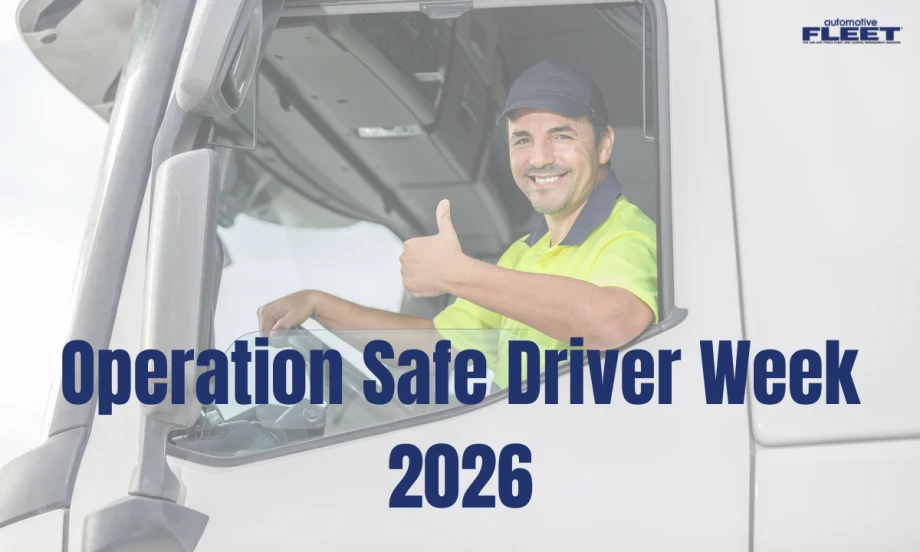
Operation Safe Driver Week returns July 12–18, 2026, giving fleets an opportunity to reinforce safe driving habits as law enforcement across the U.S., Canada and Mexico increases enforcement efforts focused on reckless, careless and dangerous driving behaviors.
Credit:
Automotive Fleet
4 min to read
- Operation Safe Driver Week, initiated in 2007, is recognized as a significant enforcement initiative focused on improving fleet safety.
- The campaign emphasizes the importance of enhancing driver safety practices and awareness within the transportation industry.
- By 2026, this initiative continues to be a crucial component of fleet safety planning and driver education.
*Summarized by AI
Every July, thousands of fleet drivers across the United States, Canada and Mexico find themselves under a slightly brighter spotlight. It's not a new regulation. It's not a DOT audit. It's Operation Safe Driver Week, a campaign that's been quietly shaping driver behavior, and fleet safety culture along with it, for nearly two decades.
For 2026, the week runs July 12–18, and this year's focus area is reckless, careless or dangerous driving, a deliberately broad category that gives officers latitude to cite everything from aggressive lane changes to inattentive driving, in addition to the usual suspects of speeding, distraction and following distance.
For fleet managers, understanding where this campaign came from, and why it still matters, is as important as knowing the dates.
How It Started
Operation Safe Driver Week traces back to 2007, when the Commercial Vehicle Safety Alliance (CVSA) launched the broader Operation Safe Driver Program in partnership with the Federal Motor Carrier Safety Administration (FMCSA). The reasoning behind it was vehicles don't cause most crashes. People do.
CVSA data attributes roughly 94% of crashes to driver behavior, not mechanical failure or road conditions. That number is the entire premise of the program. While CVSA's other flagship initiatives, International Roadcheck and Brake Safety Week, are built around inspecting the vehicle, Operation Safe Driver was built around watching the human behind the wheel.
The annual "Week" component became the visible, public-facing centerpiece of that year-round program: a concentrated stretch where law enforcement agencies across three countries coordinate enforcement and outreach around a shared theme, then report the results back to CVSA for analysis.
Why the Numbers Keep the Campaign Relevant
The case for taking this week seriously isn't abstract. In 2025, officers issued more than 5,000 warnings and nearly 2,500 tickets across commercial and passenger vehicles during the campaign, and speeding was, once again, the single most cited violation.
That tracks with the broader national picture. Speeding has been a factor in roughly 29% of all U.S. traffic fatalities in recent years, and CVSA points to it as the most frequent driver-related crash factor for both commercial and passenger vehicle operators. Distracted driving isn't far behind: NHTSA attributed over 3,200 U.S. deaths to distraction in a recent year alone.
For a fleet, those aren't just safety statistics, they're the exact violations that show up on a driver's CSA score and a carrier's Safety Measurement System data. A citation issued during Operation Safe Driver Week doesn't disappear when the campaign ends; it follows the driver, and the fleet, well past July.
What This Means for Fleet Drivers — Not Just Truckers
One detail fleet managers sometimes miss: this campaign was never built exclusively for commercial drivers. Unlike Roadcheck or Brake Safety Week, Operation Safe Driver Week targets all drivers on the road, company cars, service vans, pickup trucks and passenger fleet vehicles included. If your fleet includes anything beyond Class 8 trucks, this week applies to every one of those drivers too.
That's a useful message for drivers who might assume enforcement campaigns are "a trucking thing." It isn't. It's a roadway thing.
Four Habits Worth Reinforcing This Week — and Every Week
1. Obey posted speed limits. Speeding remains the most frequently cited violation during safety blitzes, and it's also the most preventable. A few minutes saved rarely justifies the risk, or the citation.
2. Eliminate distractions before you start driving. Set the GPS, adjust the climate controls and put the phone on Do Not Disturb before the vehicle is in motion. For CMV drivers, FMCSA regulations already prohibit texting and require hands-free phone use, Operation Safe Driver Week just increases the odds that violation gets caught.
3. Buckle up, every time. Seat belt compliance is one of the most heavily tracked metrics during the campaign, for both commercial and passenger vehicle drivers. It's also one of the simplest habits to get right.
4. Give yourself room. Following distance recommendations scale with vehicle size and conditions, commercial vehicles need significantly more stopping distance, especially in wet weather or around construction zones. A few extra car-lengths of space is a small price for a much larger margin of safety.
The Bigger Picture
CVSA has been clear that the goal of Operation Safe Driver Week isn't to catch drivers off guard, it's to create enough visible enforcement, in a concentrated window, that safer habits start to stick year-round. Research cited by the Alliance suggests that direct interactions with law enforcement measurably shift driver behavior, which is the entire logic behind running this as an annual event rather than a one-time push.
For fleets, that's the real opportunity in Operation Safe Driver Week: not just avoiding a citation during one particular week, but using the campaign as a natural, recurring checkpoint to reinforce the habits, speed discipline, distraction management, seat belt use, safe following distance, that protect drivers, the public and the company's safety record all year long.
Telematics, ADAS and enforcement campaigns all play a role in reducing crashes, but they work best alongside sound judgment behind the wheel, not in place of it. The most important safety feature in the vehicle is the driver.
Sources: Commercial Vehicle Safety Alliance (CVSA), Federal Motor Carrier Safety Administration (FMCSA), National Highway Traffic Safety Administration (NHTSA)
Subscribe to Our Newsletter
More Safety

Sponsored•October 1, 2026
Fleet Manager’s Ultimate Playbook: Navigating the New Standard in OEM Connectivity
Rising operating costs, driver safety concerns, and unplanned downtime are putting unprecedented pressure on modern fleets. Discover how fleet managers use embedded OEM connectivity and real-time vehicle data to cut TCO, prevent downtime, and protect drivers without aftermarket telematics hardware.
Read More →
From Driver Well-Being to EV Charging | AF News Recap
Mental health belongs in the fleet safety conversation. This week, we’re looking at five ways fleets can support employee well-being before a crisis, plus Holman’s expansion in Mexico, new one-day Fleet Forward passes, and why EV charging demand is outpacing infrastructure growth.
Read More →
Nexar-Nauto Merger Aims to Give Fleets Better Safety Intelligence Through Larger Driving Dataset
Stefan Heck tells Automotive Fleet that combining more than 10 billion miles of driving history with Nexar's AI models will give fleets deeper insights into driver risk and roadway conditions than either company could provide independently.
Read More →
Don't Wait for a Crisis: 5 Ways to Build Mental Health Into Your Fleet Safety Program
For Suicide Prevention Month, fleet and safety leaders have an opportunity to put mental health where it belongs: at the center of workplace safety.
Read More →
How Camera Data Can Strengthen a Fleet’s Insurance Renewal
Insights from a commercial insurance carrier and a broker show how fleets can turn video telematic data, driver coaching, and improved claims results into a stronger case at insurance renewal.
Read More →
The Safest Fleets Aren’t the Ones with the Most Technology
You’ve made the telematics investment. Here’s how to capture the other half of its value and build the safest fleet on the road.
Read More →
Sponsored•August 7, 2026
Hidden in Plain Sight: Fleet Compliance Risks
Fleet compliance isn't just about having policies — it's about consistently enforcing them. This practical guide reveals six hidden compliance risks common in public sector and shared fleet operations and outlines proven strategies to improve visibility, accountability, and audit readiness
Read More →
NETS Sets 2026 Fleet Safety Benchmark Conference for Indianapolis
The Sept. 15–17 program will feature fleet benchmarking data, case studies, emerging technologies, and implementation strategies while running alongside the NSC Safety Congress & Expo.
Read More →
Off-the-Job Crashes Account for 43% of Employers’ $61.7 Billion Crash Burden
NETS quantifies costs dispersed across fleet, risk, HR, and other departments while providing new per-crash benchmarks for employers.
Read More →
Ram Recalls More Than 1.27 Million 1500 Pickups for Seat Belt Anchor Issue
The recall affects certain 2019-2026 Ram 1500 pickups that may have improperly attached second-row seat belt buckle anchors.
Read More →