





Related: GM Launches GM Envolve for Fleet & Commercial Customers
Understanding the Importance of GM Envolve
Beyond the vehicle sale, it’s incumbent on automakers to own the growing and increasingly crowded space of aftermarket services for their fleet clients.
May 11, 2023

Marketplaces are evolving to help fleets to track their vehicles, analyze fuel consumption, triage maintenance alerts, manage in-vehicle safety coaching, and now deploy EVs. Delivering those through a single point of contact and an established relationship is crucial.
Photo: Canva
5 min to read
A generation ago, getting fleet vehicles on the road involved a signed order, choosing from a selector list, spec’ing a truck, and figuring out the right upfit or shelf configurations. Ok, it wasn’t quite that simple, but it’s a whole lot more complicated now.
Traditionally, automakers and their dealer partners, along with fleet management companies, have been the fulcrum in this paradigm. They still are, but there is an expanding universe of new service providers to help fleets take on added management duties and solve their needs.
Today, fleet managers need to be data scientists, procurement specialists, energy managers, and property supervisors. Telematics and connected vehicle services are now table stakes for fleets but require additional expertise and brainpower. Add electric vehicles to the mix, and fleet managers’ duties extend to installing and managing new types of equipment, testing systems, and dealing with driver concerns — often outside of business hours.
Telematics providers have grown past geolocation to offer marketplaces of add-on services that help fleets manage everything from dashcams and trailer temperatures to fuel management and keyless vehicle sharing. On the EV side, a burgeoning industry of suppliers and consultants is ready and waiting to help get EV pilots off the ground.
Automakers’ profits have traditionally come from the sale and financing of the vehicle and sales of parts, but the dynamics are changing. With fewer parts, EVs won’t generate the same service revenue and they are likely to last longer, therefore not generating the same sales pace.
Automakers are also integral to the data and connectivity play: Those robust telematics systems used to pull data from modems installed in the aftermarket. Now, the systems are pulling data from automakers’ own factory-installed modems. With their deep client connections, why shouldn’t the automakers take part in this data revenue too?
Owning the Marketplace of Fleet Services
In this environment, Ford consolidated its fleet and commercial services into Ford Pro two years ago. And on May 10, General Motors followed suit with a similar initiative, GM Envolve. The programs are designed to be the “easy button” for their fleet clients, offering multiple solutions through a single digital pane of glass.
Through Ford Pro and now GM Envolve, fleet customers can access a marketplace of integrated services to track their vehicles, finance them, analyze fuel consumption, triage maintenance alerts, and manage in-vehicle safety coaching. On the EV side, there are tools to set up charging infrastructure and procure equipment, understand electricity as a “fuel,” educate drivers on EV operation, spec commercial EVs, and manage charging at the depot, homes, or public stations.
Ford had a two-year head start in creating this unified structure when it integrated Electriphi into Ford Pro Charging. But GM had already been creating this universe of partnerships too, it just needed a unified structure to bring these services to its fleet customers.
A Crowded and Maturing Space
In this new structure, Ford and GM can grow their own marketplaces like the large telematics players have. But it is not an open green pasture — telematics providers have been refining their offerings and user experience for many years.
Larger, enterprise fleets have already incorporated robust telematics with systems that are agnostic to make and model. OEM telematics penetration is more realistic for small- and medium-sized fleets, as there are more penetration opportunities with SMBs.
However, SMB fleets are still multi-manufacturer. Ford Pro offers interoperability to other makes and models (for an extra fee), but fleet buyers today have a multitude of systems and price points to choose from.
On the nascent fleet electrification front, Ford and GM have a head start against new and worthy service providers. Through their sales reps and fleet dealers, Ford and GM are poised to deliver services to their customers through already established relationships.
There is a question as to what percentage of a fleet’s budget can be allocated toward these new aftermarket services. Of course, those that gain traction are dependent on how well they solve a problem, make fleets more efficient, and return a measurable ROI.
It’s not necessarily winner takes all — there will be services in these menu offerings that provide real value to fleets and meaningful recurring revenue to the OEM. The first step is to get the services into the marketplace.
Revenues to Realize, Market Consolidation to Come
Just as the telematics market has consolidated, the EV market has already started to consolidate too. There are many startups with big ideas, worthy products, and great IP but not enough funding to survive. They’ll be targets for takeover, and Ford Pro and GM Envolve could be that open umbrella.
In its first quarter earnings call, Ford said it is already realizing a 30% “attach rate” of aftermarket products and services for Ford Pro vehicles. Ford divides its aftermarket services opportunity into three stacks: safety and security, productivity for Pro customers, and partial autonomy in the form of BlueCruise.
Ford Super Duty, iconic in the pantheon of fleet vehicles, is now more than just a one-time sale. “Super Duty is a platform for software and services that help commercial customers maximize uptime and productivity,” as Ford CEO Jim Farley said in his prepared remarks on the call.
On the call, Farley also made a prescient comment regarding Ford Pro’s services: “All those are really great hedges against the inevitable overcapacity in certain segments.”
There is much disruption to come, as automakers balance their rollout of new EV models with uncertain demand. The hope is that aftermarket services help to balance out potential sales valleys.
Both Ford and GM have laid out aggressive sales targets for their EV portfolios. Ford is targeting sales of 2 million EVs per year by the end of 2026, or about a third of global production. GM has a 1 million EV sales goal for 2025, which ramps up to 50% by 2030 and then all electric vehicle production by 2035.
To reach these targets, it is imperative to educate retail and commercial customers on this new propulsion type and to provide them with the necessary tools for their operation.
The need is urgent, and it begins now.
Subscribe to Our Newsletter
More Blog Posts

How to Win a Fleet Manager Award: Make Your Nomination Count
Strong fleet accomplishments can go unrecognized when the nomination doesn’t make the case. Here’s what judges need to see.
Read More →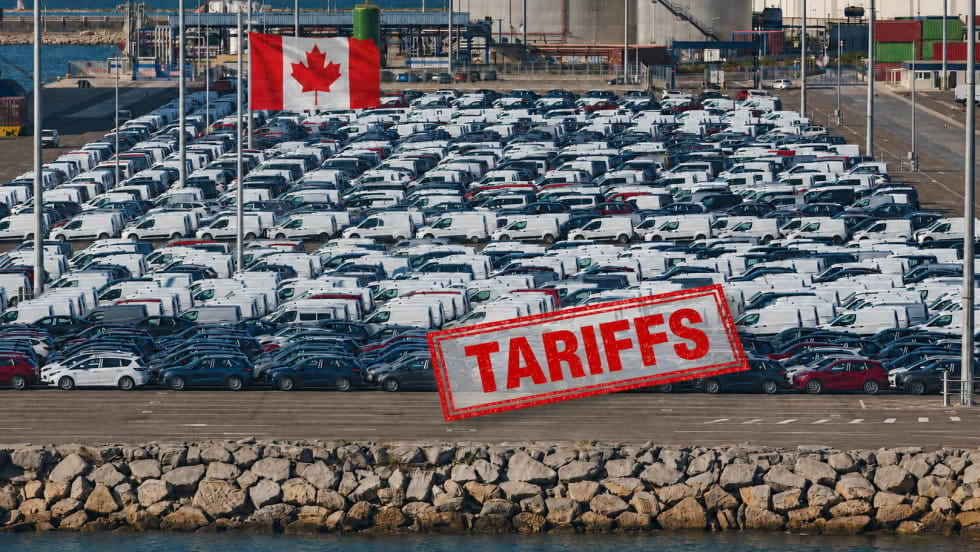
The Only Certainty with the New Tariff Threat Is Uncertainty
Trump’s Canadian tariff threat will not move production overnight, but the uncertainty could influence ordering and pricing now. Longer term, forces beyond tariffs may determine which North American plants survive.
Read More →
What Does It Mean to Embody the Spirit of Fleet?
Presented alongside Fleet Manager of the Year, Fleet Visionary, and Fleet Hall of Fame at AFLA, the new Mike Antich Spirit of Fleet Award is unique in that it recognizes service to the overall profession. Just like Mike.
Read More →
What Separates Great Fleet Managers From Everyone Else?
What do Visionary candidates with fewer than 10 years of experience have in common with Hall of Fame nominees with a lifetime under their belts?
Read More →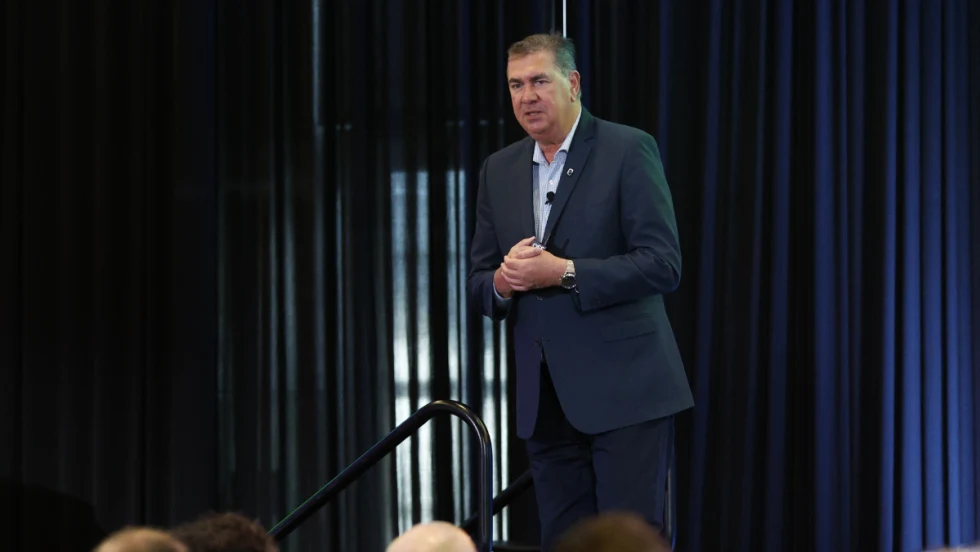
The Next Fleet War Won't Be Won on Specs Alone
The 2026 Stellantis Pro One Fleet Preview was less about vehicles and more about what happens after you buy them.
Read More →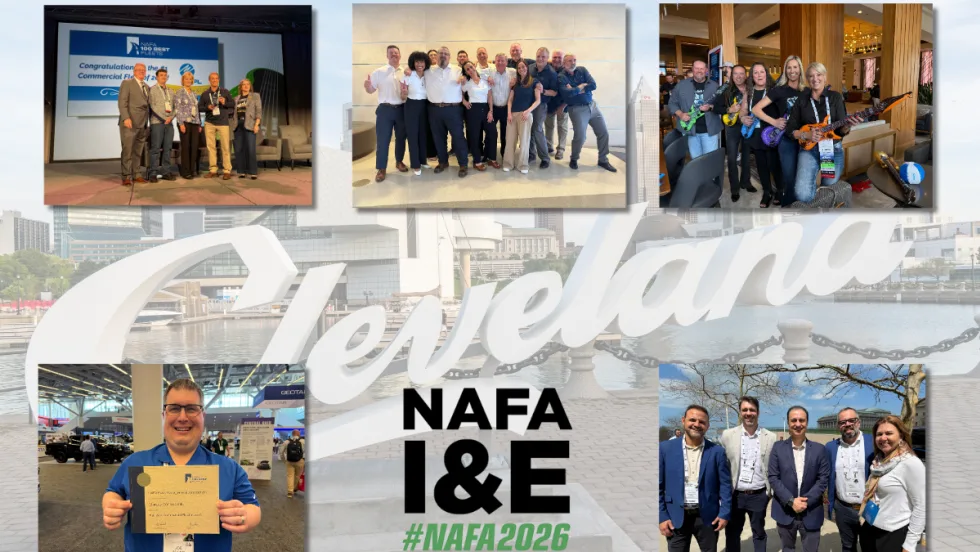
Navigating Brundlefly and Fleet AI at 2026 NAFA I&E
AI is becoming the operating layer for fleets. In Cleveland, the buzz was about harnessing AI in an increasingly complex, permanently disrupted environment.
Read More →
8 Trends: Work Truck Week 2026 Reveals a Fleet Industry in Reset Mode
Walking the show floor this year, the new focus was around “practical innovation” and pragmatic solutions. And oh yeah, a new small van.
Read More →
The Moment AI Became Operational
“AI isn’t assisting us anymore. It’s doing the work,” said CEO Neil Cawse at Geotab Connect 2026. What does this mean for fleet managers?
Read More →
For Mike Antich, it Was Always About the People
He stood tall in the industry in so many ways, but he measured success by the people he served.
Read More →
Solving the Flexible-Lean Fleet Paradox
The lean fleets of yesterday are the fragile fleets of today. Where do we find the balance?
Read More →