




How Tariffs Could Affect Fleet Vehicle Pricing
Pricing is unlikely to jump in relation to affected models. Instead, the pain will likely be spread across OEM portfolios — and the entire industry.
March 28, 2025


Tariffs will affect new and used pricing, and not just for foreign-made vehicles. But a recession could upend the entire equation.
Photo: Automotive Fleet
5 min to read
They’re finally happening. After two months of test balloons, 25% tariffs on all imported light-duty vehicles will take effect beginning April 3. At least, that's the plan as of 2:15 pm EDT on March 28.
Tariffs on imported automotive parts are coming too, but not until May. (That’s because determining non-U.S. content of auto parts is pretty hard, so we’ll need a new government system to make the determination. And that’ll take time.)
With so many variables in play — exact scope, duration, inventory levels, OEM exposures, dealer behavior — there is no single model to forecast actual price increases on the ground.
I gathered perspective on how this could play out from the great seminars and conversations at the Conference of Automotive Remarketing two weeks ago and collating public statements from Cox Automotive and S&P Global Mobility.
A Vehicle Pricing Dilemma
Analysts are broadly predicting price increases of $3,000 to $6,000 on new, tariff-affected vehicles. But translating that into Munroney sticker markups won’t be clean, with vehicle-by-vehicle adjustments.
Take small cars, which are mostly built abroad while SUVs and pickups are built in the U.S.: It doesn’t make sense for an automaker’s tariff-subjected, foreign-made compact car to be priced higher than the same automaker’s domestic mid-sized sedan.
Applying the 25% tariff to that imported compact sedan adds $5,000 to a $20,000 car, a massive jump in relative terms. But on a $50,000 SUV, that same 25% adds $12,500 — still a lot, but that buyer pool has more elasticity.
As a reaction, OEMs are more likely to spread price increases across their entire portfolio, including domestically built models, to maintain product hierarchy and sales momentum.
This could have a spill-off effect industrywide — as demand shifts, prices could rise on non-tariffed, domestically built vehicles from other OEMs.
So fleet and retail pricing could climb across the board, even if you’re buying vehicles built in North America.
Spreading the Costs
How do automakers balance these forces? They absorb some of the cost on lower-margin vehicles, raise prices on higher-end models where buyers have more wiggle room, shift production to lower-tariff countries (if they can), and trim features quietly to reduce manufacturing costs.
They could actually cut models entirely if the economics don’t work, as Jonathan Smoke, Cox Automotive’s chief economist, said in Cox’s Q1 market recap this week.
Used Market: The Ripple Effect Will Hit Fast
Used prices have come down from pandemic highs, but they remain well above historical norms. Cox Automotive reported that used retail prices declined in late 2024, but they’re still roughly 27% higher than 2019 levels.
Tariffs on new vehicles almost certainly mean upward pressure on used vehicle prices. Cox now predicts that wholesale values could rise 2.2% to 2.8% this year. This will help fleets balance ownership costs but will drive continued market uncertainty.
According to Black Book, the supply of used compact cars was already down to just 39 days in March, the lowest since April 2021. Supply remains the core issue. Lease returns are down, and commercial fleet cycling has slowed.
Both Cox and S&P project that in this present tariff scenario vehicle production in North America will decrease by 20,000 vehicles per day. A prolonged decrease would affect the used market in the same way that the 2022 supply chain crunch is constricting lease returns today.
Tariffs on Parts Will Drive Up Repair Costs
Oh yeah, parts. Tariffs on foreign-made components in new vehicles (engines, transmissions, batteries, sensors, etc.) will be factored into new vehicle costs in ways we’ll never see.
However, fleets will see higher repair and replacement bills on foreign-made aftermarket parts like replacement fenders, bumpers, sensors, lights, batteries, brakes, windshields, and mirrors.
Many are built from global inputs involving plastics, electronics, and subassemblies from dozens of countries. Establishing origin data at scale will be complicated. Until then, pricing uncertainty is guaranteed.
A basic bumper tap can trigger a $2,000 repair due to sensor damage. Add a parts tariff, and that could double.
Compounding the problem for fleets? Avoiding a fleet refresh will mean higher maintenance bills on aging vehicles.
And Now, Recession Enters the Chat
Here’s where it gets complicated. If a recession hits (unthinkable in December, very thinkable now), everything we just talked about will be thrown into flux.
Demand for new and used vehicles will drop, buyers will pull back, credit will tighten, and repossessions and lease returns will increase. So, if tariffs push prices up and a recession pushes demand down, what happens?
It depends. A mild recession plus a trade war could produce flat or slightly elevated prices. With a deep recession, downward pressure wins, and prices fall — even with trade disruption. It’s a tug-of-war.
So, What Should Fleet Managers Do Now?
Here’s the shortlist:
Audit your exposure: How much of your fleet (and your parts supply chain) is reliant on imports?
Talk to your OEM reps: Are your present orders that haven’t yet been delivered price protected?
Lock in any unplanned orders now: When tariffs take effect, pricing could shift overnight.
Model your TCO under different scenarios: Best-case, mid-range, or worst-case.
Watch used supply closely: 1–3-year-old vehicles are holding their values. Is this the time to sell into a buoyant wholesale market? If buying used makes sense for your fleet, consider pulling the trigger now before the market heats up further.
But Is Clarity Even the Goal?
Everyone thrives on predictability. As painful as tariffs’ effects might be, understanding their scope and duration will allow smart fleet operators to strategize accordingly.
But is this the “for certain” time? In his briefing this week announcing the tariffs, Trump said they are “permanent” and will remain in place throughout his presidency. Oh, if only we could count on that certainty.
The most concerning thought isn’t just the volatility or the pricing pressure. If the market can be moved with a headline alone, clarity might not be the goal. Uncertainty may be the point.
Subscribe to Our Newsletter
More Blog Posts

How to Win a Fleet Manager Award: Make Your Nomination Count
Strong fleet accomplishments can go unrecognized when the nomination doesn’t make the case. Here’s what judges need to see.
Read More →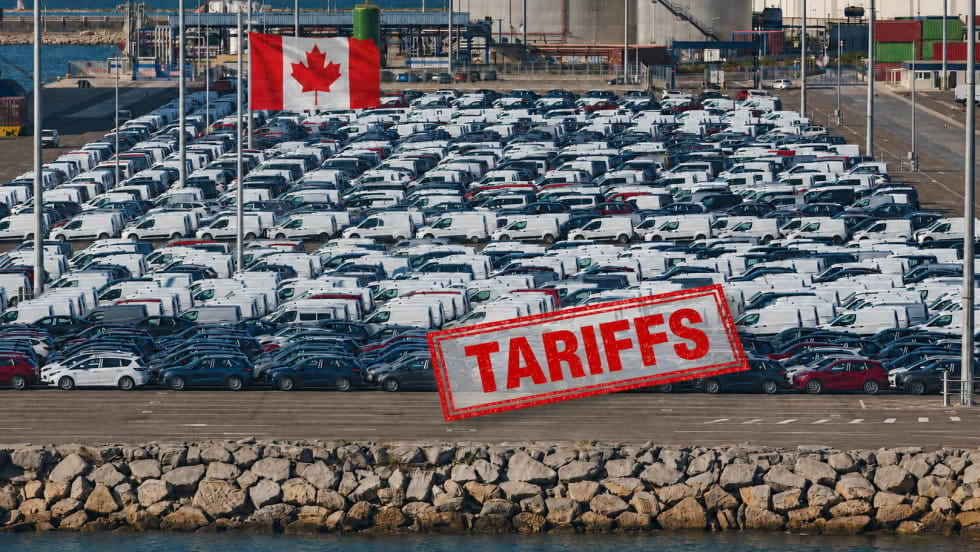
The Only Certainty with the New Tariff Threat Is Uncertainty
Trump’s Canadian tariff threat will not move production overnight, but the uncertainty could influence ordering and pricing now. Longer term, forces beyond tariffs may determine which North American plants survive.
Read More →
What Does It Mean to Embody the Spirit of Fleet?
Presented alongside Fleet Manager of the Year, Fleet Visionary, and Fleet Hall of Fame at AFLA, the new Mike Antich Spirit of Fleet Award is unique in that it recognizes service to the overall profession. Just like Mike.
Read More →
What Separates Great Fleet Managers From Everyone Else?
What do Visionary candidates with fewer than 10 years of experience have in common with Hall of Fame nominees with a lifetime under their belts?
Read More →
The Next Fleet War Won't Be Won on Specs Alone
The 2026 Stellantis Pro One Fleet Preview was less about vehicles and more about what happens after you buy them.
Read More →
Navigating Brundlefly and Fleet AI at 2026 NAFA I&E
AI is becoming the operating layer for fleets. In Cleveland, the buzz was about harnessing AI in an increasingly complex, permanently disrupted environment.
Read More →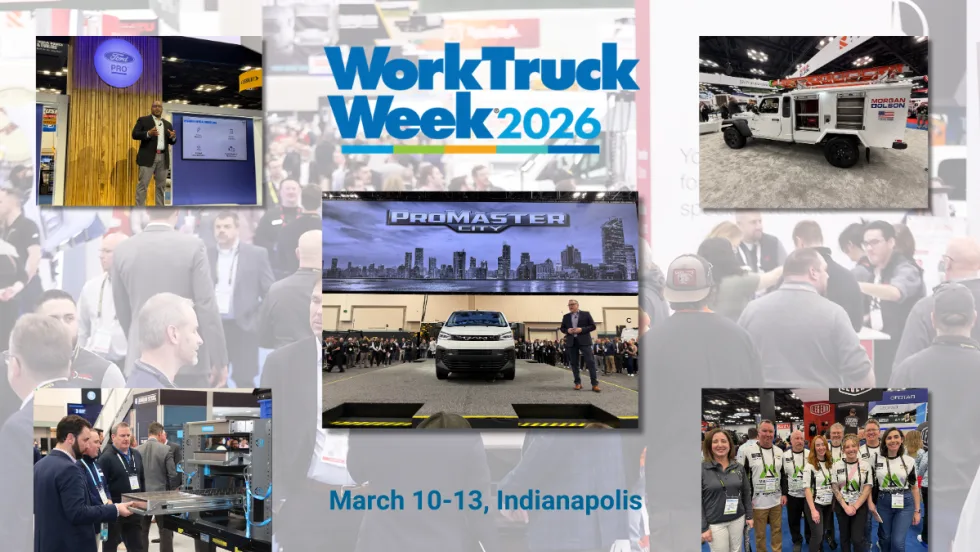
8 Trends: Work Truck Week 2026 Reveals a Fleet Industry in Reset Mode
Walking the show floor this year, the new focus was around “practical innovation” and pragmatic solutions. And oh yeah, a new small van.
Read More →
The Moment AI Became Operational
“AI isn’t assisting us anymore. It’s doing the work,” said CEO Neil Cawse at Geotab Connect 2026. What does this mean for fleet managers?
Read More →
For Mike Antich, it Was Always About the People
He stood tall in the industry in so many ways, but he measured success by the people he served.
Read More →
Solving the Flexible-Lean Fleet Paradox
The lean fleets of yesterday are the fragile fleets of today. Where do we find the balance?
Read More →