




Telematics in Vocational Truck Fleets: Construction
Construction fleets differ from other vocational fleets due to the types of equipment utilized, the heavier wear-and-tear put on assets, and vehicle/personnel use and planning based on site needs.

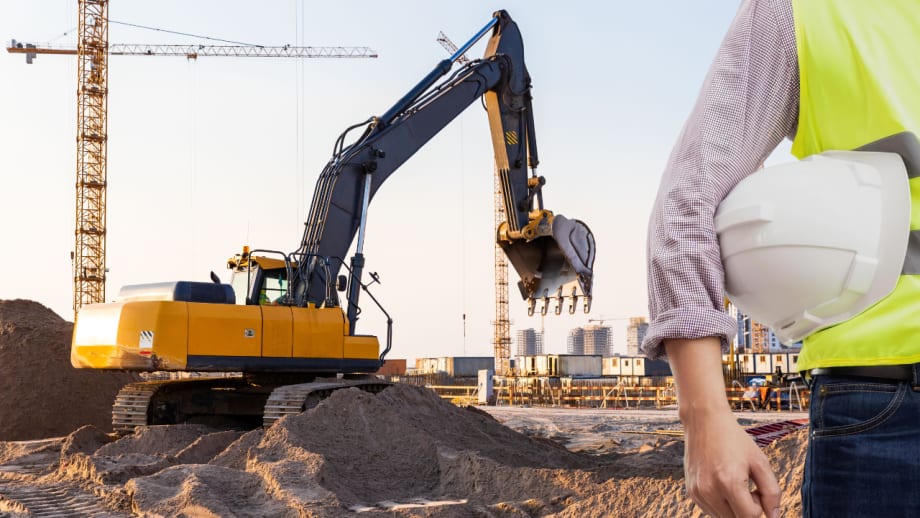
Fuel use can be reduced through equipment monitoring on such factors as idle time, fuel burn, and hours used. In addition, emissions can be reduced through such monitoring systems as well.
Work Truck
- Construction fleets are distinct from other vocational fleets due to the specialized equipment they utilize.
- These fleets experience heavier wear-and-tear on their assets because of the demanding nature of construction work.
- Vehicle and personnel planning for construction fleets is influenced by the specific needs of each site.
*Summarized by AI
Construction fleets differ from other vocational fleets due to the types of equipment utilized, the heavier wear-and-tear put on assets, and vehicle/personnel use and planning based on site needs.
One of the top ways telematics can be utilized in the construction segment is through increasing productivity.
“Maximizing labor productivity and asset utilization is the name of the game in the construction industry because it is a very capital and labor intensive industry with very long cash flow cycles, and high costs of non-performance and delays,” according to Kelly Frey, VP of product marketing for Telogis.
These systems can also help busy construction fleets with their billing based on time personnel and/or equipment has spent at specific job sites. An added benefit is the ability to see if equipment, or personnel, are being utilized their maximum capabilities.
“For aggregate hauling construction trucks, they improve customer service by providing accurate ETAs to customers. At any given time they know where trucks are located. This affords them the ability to let customers know when trucks will arrive to deliver or pick up material, all while not making a call to the driver,” said Ryan Driscoll, marketing director for GPS Insight.
In addition to assets, personnel can be better tracked for use and billing purposes.
“Construction firms are always moving vehicles from one job site to the next, but find it difficult to keep a handle on how long personnel is on site to bill the job accordingly. By using geofencing and mobile apps construction companies can create reporting to indicate the amount of time the vehicle and personnel were allocated to each job, which improves billing accuracy and an understanding of how equipment is distributed. Analytics can lead to efficiency improvements to ensure assets remain utilized and do not sit idle on site,” said Bob Clark, manager of commercial motor vehicle compliance and telematics for Wheels.
Tracking Utilization and Controlling Costs
Telematics can also provide construction fleets with a competitive price advantage.
“Many construction and engineering firms working on contract and job-based work have leveraged a telematics solution to measure vehicle utilization associated with a given job, allowing companies with this type of pricing model to bill back their customers for actual vehicle usage driving a competitive pricing advantage over a flat rate or per vehicle charge,” said Brad Jacobs, director of strategic consulting for Merchants Fleet Management.
Asset utilization can also be improved. Telematics can provide fleet managers with data as to how often specific trucks or pieces of equipment are being used. This can reduce the overuse of some equipment and eliminate underused and unnecessary equipment from a fleet.
“Telematics allows companies to accurately track maintenance and repair needs, and avoid pulling a vehicle in for repair too early or – worse – too late. Telematics also helps to reduce idle time, which can be a huge cost in the construction industry. Reduced idle time means reduced fuel expense,” said Dain Giesie, assistant vice president for Enterprise Fleet Management.
Also, the ever-present concern of idling can be addressed.
“Construction fleets can implement rules around idling times to cut down on emissions and reduce fuel usage and associated costs,” said Scott Sutarik, associate VP, commercial vehicle services for Geotab.
Fuel use can be reduced through equipment monitoring on such factors as idle time, fuel burn, and hours used. In addition, emissions can be reduced through such monitoring systems as well.
“Telematics use is becoming more common in construction because it helps construction fleets react to problems faster and gain visibility into their operations and vehicles/equipment. Fuel consumption is a major pain point in the construction industry and is the second largest cost for a construction fleet. While these vehicles don’t travel far, they do make frequent trips back and forth, and fuel is burned inefficiently with all the stop and go and the sheer amount of mass they must carry back and forth. Telematics solutions enable construction fleets to reduce fuel consumption by providing insights into every gallon/liter used," said Nathan Todd, director of product management at Teletrac Navman.
Using Telematics to Reduce Downtime
Proactive maintenance alerts can reduce downtime on equipment and ensure assets don’t break down as frequently.
"Enable proactive maintenance alerting and automated scheduling to drive up equipment utilization and uptime (Verizon Telematics has a solution called Maintenance Connect for this). A vehicle or piece of equipment that is down for unscheduled maintenance is very costly, interim labor costs and costs associated with delaying a job can result in severe delay or SLA penalties, or delayed cash flow/payments," said Frey of Verizon Telematics.
Safety is also very important in construction fleets. Using telematics to alert fleet managers to unsafe driving practices or equipment use can save lives.
"Safety is critical in the construction industry because you have tight interactions between people and assets in sometimes dangerous conditions. Using proactive safety alerting for unsafe driving behavior or leveraging vehicle and equipment mounted cameras and sensors for better operator visibility and alarms are becoming table stakes and an area of investment for providers," said Frey of Verizon.
Theft is also a big problem for construction fleets. Some trucks can store a lot of expensive tools and equipment, and while heavier pieces of equipment such as bucket trucks and excavators are harder to steal, it’s not impossible. Tracking and geofencing systems can help notify fleets of stolen equipment and help authorities attempt to retrieve it with more success.
"These solutions are also used in construction when preventing theft with the use of geofencing and tracking, from heavy equipment all the way down to buckets and hammers,” said Todd of Teletrac Navman.
Connecting all of a construction fleet’s assets, from trucks to heavy equipment can help provide a clear picture of just how efficiently the fleet is operating.
“Connect both your vehicles and yellow iron assets to be able to get a complete picture of asset utilization at a construction site monitoring usage, security of equipment after hours and to quickly find a piece of equipment on a large scale construction site,” said Kimberly Clark, telematics leader for Element Fleet Management
Originally posted on Work Truck Online
More Vehicle Research

Which Vehicles Earn Your Fleet’s Vote? Voting Opens for 2027 Fleet Vehicle of the Year
Which vehicles earn your fleet’s vote? Cast your ballot to unlock early access to our analysis of ownership costs across 55 vehicle nameplates.
Read More →
Crash Tests, Catalytic Converter Theft & Fleet Safety | AF News Recap
A stolen catalytic converter can cost a fleet far more than the replacement part. This week, we're exploring how to reduce theft-related risk, what fleet managers learned from live IIHS crash testing, the 2027 Jeep Compass's new safety features, and why supporting original industry reporting matters.
Read More →
2027 Jeep Compass Adds Standard Driver-Assistance Features, Starts at $31,985
The 2027 Jeep Compass adds standard adaptive cruise control across the lineup, along with additional technology and equipment options on select trims.
Read More →
2027 Subaru Outback Adds Base Trim, Lowers Pricing Across Lineup
The 2027 Outback starts at $32,995, with price reductions on several trims and expanded availability of hands-free driver-assistance technology.
Read More →
2027 Toyota Camry Offers Hybrid Powertrain Across Five Grades
The 2027 Toyota Camry is a carryover with new pricing.
Read More →
Chevrolet Updates 2027 Trax and Trailblazer with More Standard Safety Features
Chevrolet is updating two of its smallest SUVs with added driver-assistance technology, redesigned interiors, and revised trim options. The changes could add more safety equipment as standard for commercial fleets, while a new Trailblazer configuration adds another all-wheel-drive option.
Read More →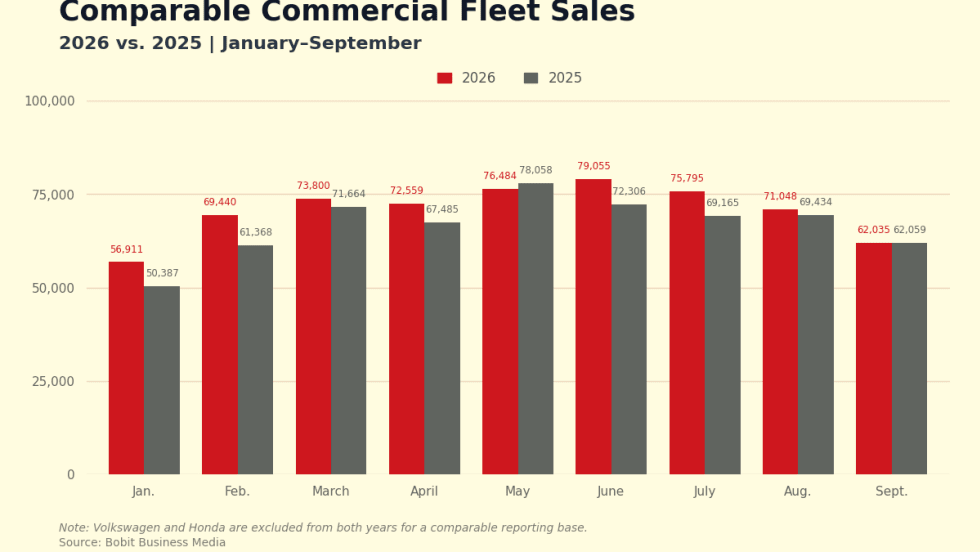
Commercial Fleet Sales Rise 5.8% Through September 2026
September commercial fleet sales were essentially unchanged from a year earlier, slowing year-to-date growth while keeping volume ahead of 2025.
Read More →
Hall of Fame Inductee: John Dmochowsky
The longtime Mondelēz International fleet executive joins the Automotive Fleet Hall of Fame.
Read More →
Hall of Fame Inductee: Lee Miller
After more than four decades at Boehringer Ingelheim, Lee Miller leaves a legacy built on fleet expertise.
Read More →
Hall of Fame Inductee: Mark F. Petersen
From managing fleets of thousands of vehicles to advancing safety and mentoring fellow professionals, Mark F. Petersen made his mark across both the corporate and supplier sides of fleet.
Read More →