




Fleet Hacks: Rethink the Job, Save the Template, Check the Data
Your next Fleet Hack might be hiding in something you've been doing the same way for years.

What do these three Fleet Hacks tackle with everyday inefficiencies?
Automotive Fleet
- Encourages revisiting and rethinking established practices to uncover innovative solutions.
- Suggests preserving successful strategies and templates for future reference and consistency.
- Emphasizes the importance of analyzing data to identify areas for improvement and efficiency increases.
*Summarized by AI
A good Fleet Hack doesn't have to reinvent an operation. Sometimes, it starts with questioning a process that's been done the same way for years.
For this edition of Fleet Hacks, three fleet professionals share approaches they've put into practice: understanding the job before replacing the vehicle, turning repetitive emails into reusable templates, and using AI to check fleet data.
Audit the Job, Not the Vehicle
When Siemens began electrifying its fleet, Adam Orth and the fleet team didn't start by simply asking which electric vehicle could replace an existing vehicle.
They took a closer look at the work those vehicles needed to support.
“One of the most valuable exercises we've done at Siemens wasn't selecting electric vehicles,” Orth said. “It was asking a simple question: What does the job actually require?”
The exercise took the fleet team into the field. They visited multiple sites, lined up vehicles, weighed them fully loaded and removed items from installed racks to determine what technicians actually needed.
They also interviewed drivers about their days and weeks, the customer sites they visited and what worked — or didn't — in the field.
“When we began electrifying our fleet, we spent time in the field studying what technicians were carrying, how far they were driving, and what tools they actually used every day,” Orth said.
That process challenged some assumptions about what the fleet needed.
“Many vehicles were carrying equipment that was rarely used, some routes required far less range than people assumed, and many of our long-standing fleet specifications reflected how work was done years ago, not how it happens today,” he said.
The experience led to a straightforward Fleet Hack: Before replacing a vehicle, audit the work.
“Spend a day with your drivers. Empty a van. Weigh what's inside. Ask what they use every day versus once a year,” Orth said.
For the Siemens team, the hands-on exercise also provided a deeper understanding of what employees were actually doing in the field, creating a foundation for decisions that followed.
As Orth put it: “The fastest way to save money and reduce headaches is often not finding a better vehicle. It's better understanding the job.”
Save the Emails You Send Again and Again
For Meghan Murray, one of her favorite Fleet Hacks addresses a much smaller part of the workday: email.
Murray has 19 saved email signatures that she uses as templates for messages she sends regularly. Instead of recreating a recurring message, she can insert the appropriate signature, fill in the information that changes and send it.
“I have several email signatures saved that allow me to quickly insert pre-written messages, add only the minimal information needed, and send them right away,” Murray said.
She especially relies on the templates when requesting information from managers about new hires or communicating with drivers who are leaving the company.
Those processes often require the same information each time. A saved template allows Murray to provide the same checklist without having to rewrite or search for a previous email.
The benefit isn't only the time saved.
“Most importantly, the message never changes,” Murray said. “It's always clear, which greatly reduces the risk of miscommunication.”
After using the system for more than 10 years, Murray has also seen those consistent messages create habits among the people receiving them.
Some managers now joke that they've “beaten me to the punch” by providing new-hire information before Murray has a chance to request it.
“To me, that's a sign this hack has helped create positive habits and expectations,” she said.
The idea can be applied to any recurring fleet communication. Think about the messages you send repeatedly: new-hire vehicle assignments, driver departures, mileage reporting, maintenance reminders or requests for documentation.
“If you're wondering how to get started, it's easy,” Murray said. “Think about the emails you send regularly and create email signatures or templates for those messages.”
One template may save only a few minutes. Across 19 templates and years of use, those small savings can add up.
Ask: Can AI Help with This?
For Brent Baron, incorporating AI into his daily work started with a lesson from his son.
“I have a 26-year-old son that schooled me on the benefits of AI,” Baron said. “It is now part of my daily work process.”
Now, before beginning a project or task, Baron asks himself whether AI could help.
One recent example involved checking VIN information for 70 vehicles listed on a certificate of insurance against information stored in the fleet's database.
Instead of comparing each record manually, Baron put the database information into an Excel spreadsheet and provided the spreadsheet and PDF to an AI tool with instructions to compare the VIN information.
The comparison found discrepancies.
“Of the 70 vehicles, we found one vehicle in our database had incorrect year, make and model and another had an incorrect year,” Baron said.
That discovery prompted a larger experiment.
Baron provided a spreadsheet containing the year, make, model and VIN for the fleet's roughly 1,000 vehicles and asked AI to check the VINs against the vehicle descriptions.
It found another three errors.
“This took all of about five minutes,” Baron said.
The VIN check is only one way Baron has incorporated AI into his workflow. He also uses it to check emails and letters and identified potential applications such as comparing vehicle trim levels, writing collection letters, preparing RFP responses and researching state registration costs.
His hack ultimately comes down to adding one question before starting a task: Can I utilize AI?
For data-heavy applications, human review remains an important final step. AI can help identify records that warrant attention, but fleet managers should verify discrepancies before making changes and follow their organizations' policies for handling company or driver data.
Question the Routine
These three Fleet Hacks address very different pieces of fleet management, but each started by questioning an everyday process.
Does the replacement vehicle really need everything the previous vehicle carried? Does the same email need to be written for the 20th time? Does every line of a spreadsheet need to be compared manually?
Sometimes the answer may be yes. Other times, a small change can eliminate unnecessary work.
Audit the job. Save the message. Ask whether technology can handle the first pass.
More Articles
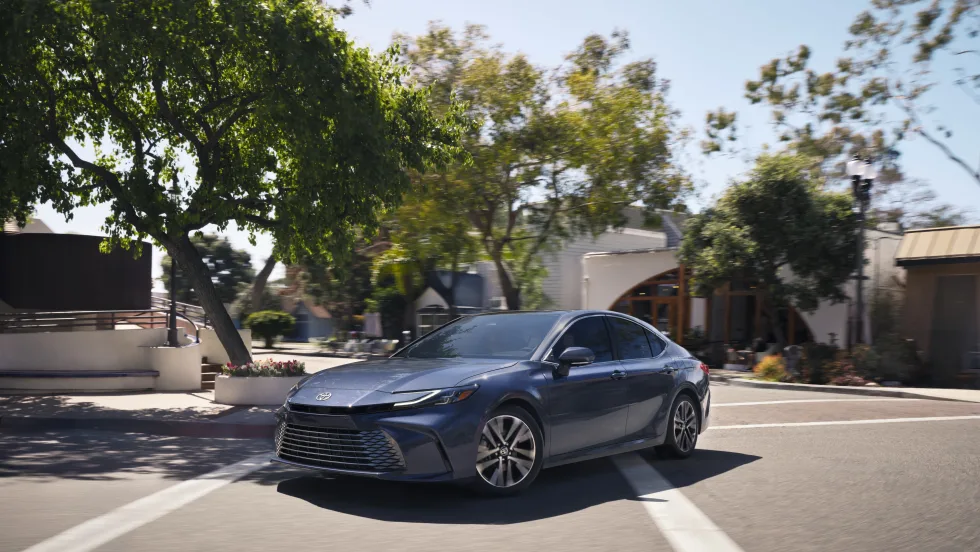
2027 Toyota Camry Offers Hybrid Powertrain Across Five Grades
The 2027 Toyota Camry is a carryover with new pricing.
Read More →
Chevrolet Updates 2027 Trax and Trailblazer with More Standard Safety Features
Chevrolet is updating two of its smallest SUVs with added driver-assistance technology, redesigned interiors, and revised trim options. The changes could add more safety equipment as standard for commercial fleets, while a new Trailblazer configuration adds another all-wheel-drive option.
Read More →
What’s Next for Fleet? Safety, AI & Industry Recognition | AF News Recap
Could your company's culture be encouraging distracted driving? This week, we're exploring how workplace expectations affect driver safety, what AI, EVs, and autonomous vehicles could mean for the future of fleet management, and how fleet professionals can strengthen their award nominations.
Read More →


A buyer's guide to fleet management software in 2027
Buying fleet management software in 2027 means looking beyond features and price. As fleet operations, technology and expectations evolve, this guide explores what today’s fleet professionals should consider when choosing a system that can deliver value now and adapt to what comes next.
Read More →
Does Your Fleet's Culture Encourage Distracted Driving?
What happens when the people responsible for enforcing safety rules are the ones setting the wrong example? The answer may reveal why some of the biggest risks to fleet drivers have little to do with what's written in the employee handbook.
Read More →
What Will Shape the Next Era of Fleet Management?
EVs, AI, and autonomous vehicles are reshaping fleet management. Discover what’s ahead—and how fleet leaders can prepare for the next era.
Read More →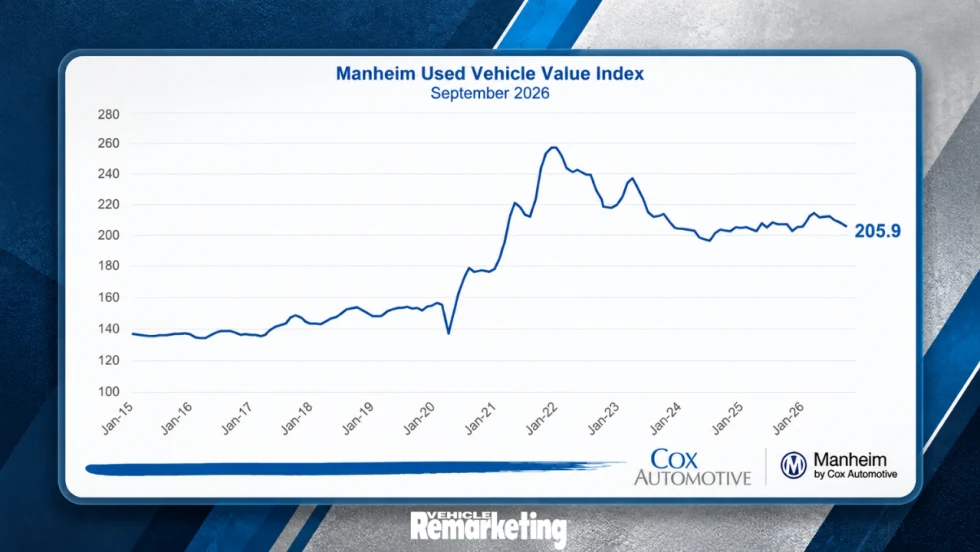
Wholesale Used-Vehicle Values Fall as Cox Automotive Cuts 2026 Forecast
Wholesale used-vehicle prices declined in September as depreciation accelerated, prompting Cox Automotive to lower its year-end forecast.
Read More →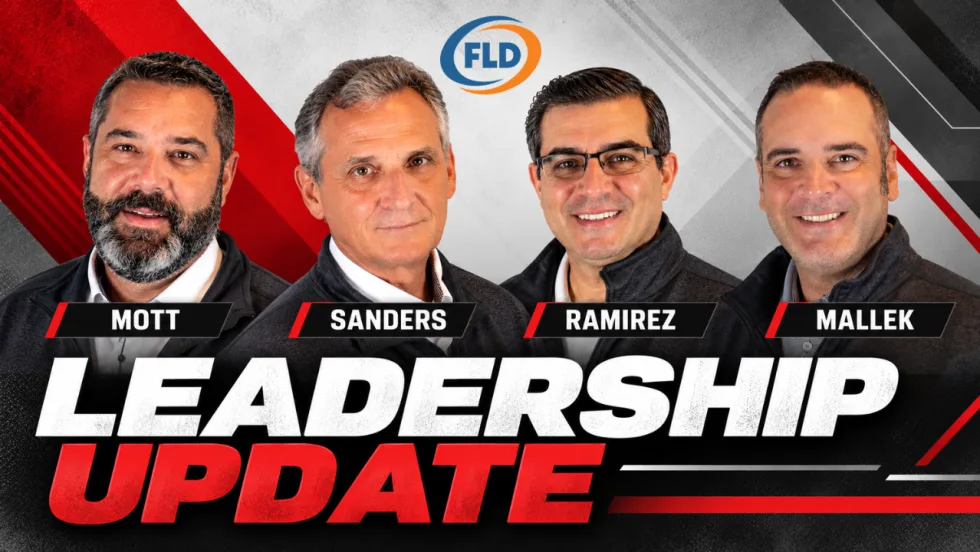
FLD Promotes Three Executives in Leadership Changes
FLD has promoted three longtime executives, naming Gary Mott CEO, Richard Mallek president, and Ron Sanders managing partner.
Read More →
How Fleets Can Recruit and Train Veterans for Technician Roles
Here's how the technician shortage has affected uptime for fleets, and what to do about it.
Read More →
Commercial Fleet Sales Rise 5.8% Through September 2026
September commercial fleet sales were essentially unchanged from a year earlier, slowing year-to-date growth while keeping volume ahead of 2025.
Read More →