





Safety First: 3 Car Troubles That Can Be Brought On By Heat
Challenges Fleet Drivers Should Expect During the Summer
Highlighting the risks associated with heightened traffic and unpredictable weather during the summer months, and ways to stay vigilant on the road.
June 10, 2024
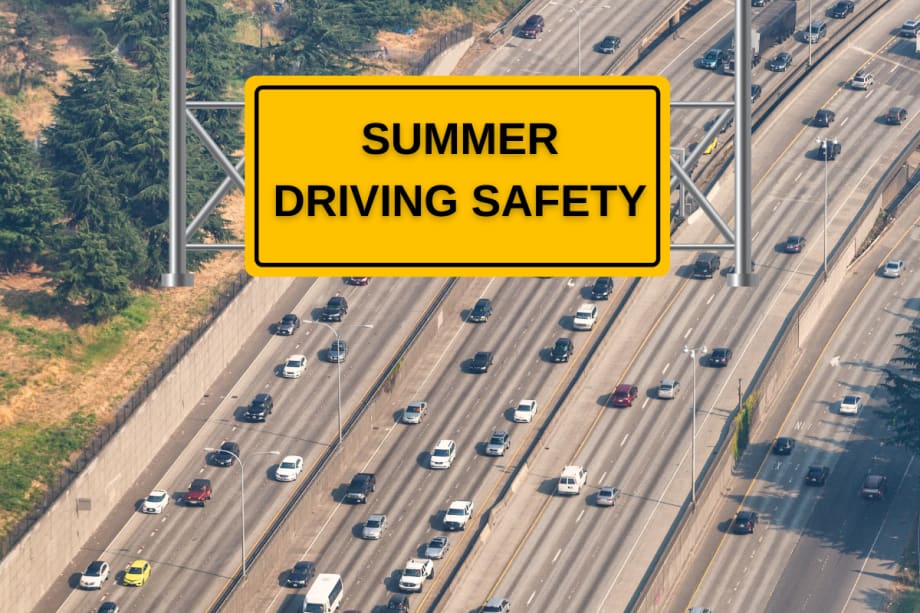
When traffic volume increases, it becomes even more important to follow safe driving principles such as maintaining a safe distance from the vehicle in front of you, scanning your entire driving environment on a continual basis, and ensuring you have an escape route in the event another motorist nearby creates an unsafe situation.
Photo: Automotive Fleet
6 min to read
Driving during June, July, and August can be more challenging than expected. There are some common issues to make your commercial fleet drivers aware of so they avoid making mistakes behind the wheel during the warmer months.
Navigating Greater Traffic Congestion
Nice weather brings more people outdoors and often onto the roads. The more congested the roads, the greater your odds of a crash for several reasons:
Traffic tends to make drivers stressed, impatient, and rushed, all of which can lead to unsafe driving behaviors like tailgating, changing lanes impulsively, and driving while distracted.
A high volume of vehicles in close proximity to each other naturally increases the odds of a collision.
Stop-and-go traffic can lead drivers to multitask behind the wheel, raising the risk of crashes in general and rear-end collisions in particular.
When traffic volume increases, it becomes even more important to follow safe driving principles such as maintaining a safe distance from the vehicle in front of you, scanning your entire driving environment on a continual basis, and ensuring you have an escape route in the event another motorist nearby creates an unsafe situation.
It’s especially critical to avoid tailgating since that eliminates the time and space you need to avoid striking another vehicle from behind.
Staying Safe Around Increased Road Work
Warmer temperatures are ideal for road work, and that’s not ideal for drivers. Besides the inevitable traffic delays, construction zones create an increased risk of crashes. When your travels take you through work zones, driving principles like the following can keep you safer:
Reduce your speed. Pay attention to reduced speed limit signs posted before and within the work zone. In many areas fines are significantly higher for speeding in work zones.
Maintain a safe distance. Rear-end collisions are all-too common in work zones, as drivers often pay attention to the work along the roadside and not the road itself. Keeping a safe following distance greatly reduces your odds of a rear-end crash.
Steer clear of road work. Never drive too close to construction vehicles or workers, both for their safety and yours. Follow directions. If a flagger indicates you need to slow down or stop, and you fail to, you’ll jeopardize your safety and could receive a traffic citation.
Avoid distraction. Road work zones demand more attention due to possible changes in lane markings, vehicles merging into fewer lanes, construction vehicles entering the road, or traffic coming to a halt. You might also be distracted by looking at the road work. But your focus should be on the driving task only.
The Impact of Weather
It’s less challenging to drive on dry roads than in snow or sleet. But spring and summer present a whole other set of weather-related issues that can affect your driving and your safety. To avoid warm weather issues on the road:
Use quality sunglasses and your vehicle’s visor to avoid sun glare, which can keep you from seeing traffic lights, vehicles, and pedestrians. Keep a spare pair of sunglasses in your vehicle or workbag.
Clean your windshield (inside and outside) and your headlights on a regular basis to reduce the effects of sun glare.
Check the weather before you depart (and periodically throughout the day) so you’re prepared for thunderstorms or other weather problems. If heavy rain is expected, plan to depart earlier and adjust your schedule to compensate for slower speeds.
Reduce your speed in the rain to compensate for reduced traction and longer stopping distances.
Find a safe place to pull over in heavy storms if you’re having trouble seeing. But don’t stop on the shoulder, since that places you at risk of a collision caused by other motorists who can’t see well either.
Turn on your flashers while getting to a safe place to pull over. If you’re having a hard time seeing other vehicles on the road, those vehicles are likely having trouble seeing you as well.
Never drive through a road that is flooded. You can’t tell how deep floodwaters are, and it doesn’t take much water to cause you to be stranded and in danger.
Make sure your vehicle is ready for the added strain of higher temperatures.
What About EVs?
Driving electric vehicles (EVs) during the summer can also present unique challenges. Here are some tips to ensure safe and efficient driving:
High temperatures can affect your EV's battery life. Park in the shade or use a car cover to keep your vehicle cooler.
Use the air conditioning system wisely. Set it to a comfortable but not excessively cold temperature. Consider using eco mode if your vehicle has one.
High speeds and rapid acceleration can deplete your battery faster. Drive at a steady pace and accelerate gradually.
If possible, choose routes with charging stations and avoid routes with heavy traffic to minimize energy consumption due to frequent stops and starts.
When possible, charge your EV during off-peak hours when temperatures are cooler. This can help manage battery temperature and efficiency.
In very hot weather, try not to charge your battery to 100%. Keeping the charge between 20% and 80% can help preserve battery health.
Managing Weather Detours/Road Closures
Fleet drivers should plan their routes to avoid bad weather, work zones, and road closures. According to the U.S. Department of Transportation Federal Highway Administration (FHWA), there were 891 work zone fatalities. While that number decreased by 7% compared to the following year, it’s crucial to continue to take steps to contribute to the continuing decline.
Data collected by FHWA that breaks down fatal traffic crashes by type revealed rear-end collision deaths decreased from 23% to 21% between 2021 and 2022. Additionally, Crashes fatal work zone crashes involving a commercial motor vehicle also decreased, from 33% to 30%. However, fatal work zone crashes where speed was a factor increased from 32% to 34%.
Reduce your speed in work zones, maintain a safe distance between yourself and the vehicle in front of you, and look out for commercial motor vehicles, which can take a longer amount of time to stop in the event of a roadway incident.
To keep up with the latest road conditions and plan ahead, visit the National Weather Service website for a list of phone numbers and websites for each state.
The time between Memorial Day and Labor Day are referred to as the ‘100 Deadliest Days’ because that time period results in an uptick in roadway deaths — particularly among teens, with school not in session.
Review the risks of driving at this time of year with your drivers, and how they can stay safer on their work travels.
This article was authored and edited according to Automotive Fleet's editorial standards and style. Opinions expressed may not reflect that of Automotive Fleet.
Subscribe to Our Newsletter
More Safety

Sponsored•October 1, 2026
Fleet Manager’s Ultimate Playbook: Navigating the New Standard in OEM Connectivity
Rising operating costs, driver safety concerns, and unplanned downtime are putting unprecedented pressure on modern fleets. Discover how fleet managers use embedded OEM connectivity and real-time vehicle data to cut TCO, prevent downtime, and protect drivers without aftermarket telematics hardware.
Read More →
From Driver Well-Being to EV Charging | AF News Recap
Mental health belongs in the fleet safety conversation. This week, we’re looking at five ways fleets can support employee well-being before a crisis, plus Holman’s expansion in Mexico, new one-day Fleet Forward passes, and why EV charging demand is outpacing infrastructure growth.
Read More →
Nexar-Nauto Merger Aims to Give Fleets Better Safety Intelligence Through Larger Driving Dataset
Stefan Heck tells Automotive Fleet that combining more than 10 billion miles of driving history with Nexar's AI models will give fleets deeper insights into driver risk and roadway conditions than either company could provide independently.
Read More →
Don't Wait for a Crisis: 5 Ways to Build Mental Health Into Your Fleet Safety Program
For Suicide Prevention Month, fleet and safety leaders have an opportunity to put mental health where it belongs: at the center of workplace safety.
Read More →
How Camera Data Can Strengthen a Fleet’s Insurance Renewal
Insights from a commercial insurance carrier and a broker show how fleets can turn video telematic data, driver coaching, and improved claims results into a stronger case at insurance renewal.
Read More →
The Safest Fleets Aren’t the Ones with the Most Technology
You’ve made the telematics investment. Here’s how to capture the other half of its value and build the safest fleet on the road.
Read More →
Sponsored•August 7, 2026
Hidden in Plain Sight: Fleet Compliance Risks
Fleet compliance isn't just about having policies — it's about consistently enforcing them. This practical guide reveals six hidden compliance risks common in public sector and shared fleet operations and outlines proven strategies to improve visibility, accountability, and audit readiness
Read More →
NETS Sets 2026 Fleet Safety Benchmark Conference for Indianapolis
The Sept. 15–17 program will feature fleet benchmarking data, case studies, emerging technologies, and implementation strategies while running alongside the NSC Safety Congress & Expo.
Read More →
Off-the-Job Crashes Account for 43% of Employers’ $61.7 Billion Crash Burden
NETS quantifies costs dispersed across fleet, risk, HR, and other departments while providing new per-crash benchmarks for employers.
Read More →
Ram Recalls More Than 1.27 Million 1500 Pickups for Seat Belt Anchor Issue
The recall affects certain 2019-2026 Ram 1500 pickups that may have improperly attached second-row seat belt buckle anchors.
Read More →