





Read More: How to Avoid Parking, Backing, and Sideswipe Crashes
Top Winter Driving Safety Tips
Here's what to know before hitting the road during winter.
December 19, 2023
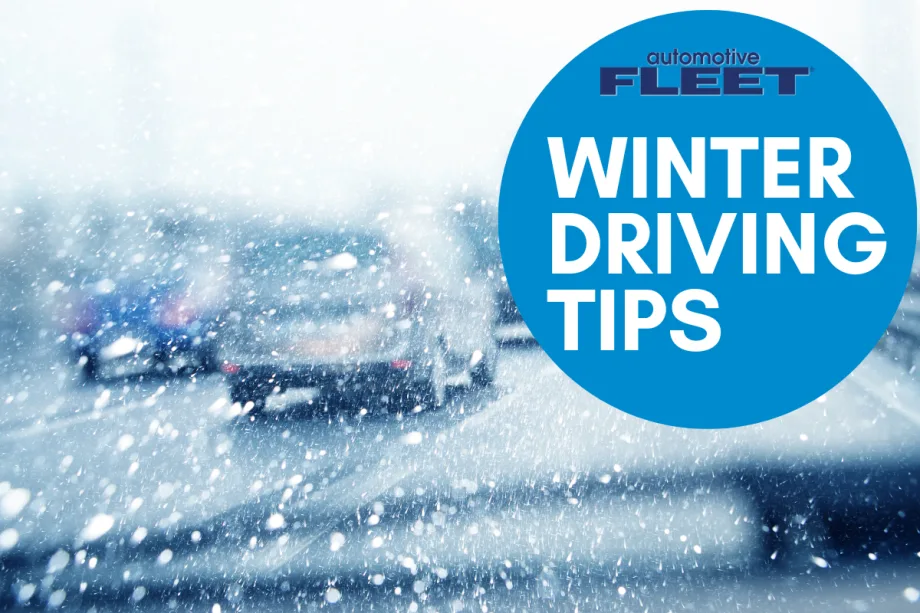
Reducing speed and using smooth, gentle steering and braking will help minimize the odds of skidding.
Photo: Automotive Fleet
5 min to read
Arriving at your destination safely always requires thought and preparation — especially in the winter. Making sure that you and your vehicle are ready for winter travel is vital to your safety.
Before You Depart
Make sure your battery has enough life left. Cold temperatures are harsh on batteries, so an older one may need to be replaced before winter sets in.
Check your vehicle tread. It takes sufficient tread to give you the traction you need to maneuver safely on sleet or snow-covered roads. To gauge tire tread if you don’t have a tire gauge, insert a penny head-first into the tread. If you can see the top of Lincoln’s head, you don’t have enough tire tread.
Top off all fluids, including windshield washer fluid. When roads are salted and sanded after a storm, you’ll go through a lot of washer fluid keeping your windshield clear.
Replace wiper blades that are torn, frayed, or cracked. You’ll need blades that are in good condition to keep your windshield free of winter precipitation.
Have key components checked, including brakes, belts, hoses, ignition system, fuel system, heater, and defroster.
Always keep your gas tank half-full. In extreme cold, a tank with little gas in it can freeze up. And if you’re stuck in traffic in a storm, you don’t want to risk running out of gas.
If foul weather is anticipated, make sure someone knows your itinerary and intended route.
Stock a winter emergency kit in your vehicle. Key items to have on hand: cell phone and charger, flashlight with extra batteries, snow scraper and brush, small shovel, spare tire and jack, jumper cables, flares, extra clothing or blanket, sand, or kitty litter (helpful for giving you traction when stuck in the snow), extra washer fluid, drinking water, non-perishable food, and any necessary medications.
While on the Road
Keep tabs on changing weather conditions. It’s not enough to check the forecast before you head out for the day or evening; weather can change rapidly in the winter, so stay current. Check weather apps or websites on your phone during stops (not while driving).
Always stay focused. Distraction behind the wheel is always dangerous, but even more so in foul weather. Keep your cell phone out of sight and out of reach (ideally in a work bag in the trunk, cargo area, or rear seat floor). Take time to eat meals while safely parked and take time for personal grooming before you get behind the wheel.
Avoid using cruise control in foul weather. If you encounter slippery conditions, you want the ability to ease up on the gas but avoid hitting the brake to keep from skidding.
Don’t rely on electronic stability control (ESC) solely. ESC is designed to improve control in situations such as when you must swerve or brake abruptly. The system automatically brakes one or more wheels briefly and/or reduces engine power in response. Drivers have a false sense of safety in vehicles with ESC since driving too fast in road or weather conditions will still result in a loss of vehicle control.
Know when to turn off ESC. The system prevents your wheels from spinning, but if you’re stuck in the snow then spinning your wheels can help you. If the snow isn’t too deep, turn off your ESC just until your vehicle is no longer stuck in the snow. Then turn it back on once you’re moving freely. If the snow is very deep, turning off ESC is not likely to help and could make matters worse.
Be cautious on bridges and overpasses. Just like the signs say, these surfaces really do freeze before the road. As you approach a bridge or overpass, slow down preemptively so you can avoid hitting your brake on a surface that may be slippery. This also gives you greater following distance, which helps in the event you begin to slide.
Give snowplows room to work. Stay further back behind a snowplow and don’t drive directly next to it if you can avoid doing so. They need more room to maneuver than a passenger vehicle, so give them a wide berth.
If You Get Stuck
Call for help right away, since it may take emergency vehicles or a tow truck a while to reach you in a storm.
Use a flare (a key emergency kit item) to note your location, both for emergency vehicles to find you and to avoid being hit by passing traffic. If you have a colored cloth in the vehicle, attach it to a door handle so others can spot you.
Make sure your exhaust pipe is entirely clear of snow and ice. Never run your engine with the vehicle stopped unless you are certain the exhaust is not being trapped inside, to avoid the risk of carbon monoxide poisoning.
Don’t leave your vehicle if it’s snowing heavily. White-out conditions can make you confused about where you are and unable to find your way back to the vehicle or other form of shelter.
If you follow foul weather best practices, reducing your speed and using smooth, gentle steering and braking you’ll greatly minimize the odds of skidding. But if you end up skidding despite your best efforts, the right response can make a big difference:
Keep calm and don’t panic
Stay off the brake
Steer in the direction you want your vehicle to go.o If you’re attempting to turn or follow a curve and your wheels continue to move you in a straight line, steer away from the turn or curve very briefly, just until your tires have gripped the road again. Then steer into the turn or curve.
Don’t use the brake or gas pedal until you can feel the tires have regained traction
Subscribe to Our Newsletter
More Safety

Sponsored•October 1, 2026
Fleet Manager’s Ultimate Playbook: Navigating the New Standard in OEM Connectivity
Rising operating costs, driver safety concerns, and unplanned downtime are putting unprecedented pressure on modern fleets. Discover how fleet managers use embedded OEM connectivity and real-time vehicle data to cut TCO, prevent downtime, and protect drivers without aftermarket telematics hardware.
Read More →
From Driver Well-Being to EV Charging | AF News Recap
Mental health belongs in the fleet safety conversation. This week, we’re looking at five ways fleets can support employee well-being before a crisis, plus Holman’s expansion in Mexico, new one-day Fleet Forward passes, and why EV charging demand is outpacing infrastructure growth.
Read More →
Nexar-Nauto Merger Aims to Give Fleets Better Safety Intelligence Through Larger Driving Dataset
Stefan Heck tells Automotive Fleet that combining more than 10 billion miles of driving history with Nexar's AI models will give fleets deeper insights into driver risk and roadway conditions than either company could provide independently.
Read More →
Don't Wait for a Crisis: 5 Ways to Build Mental Health Into Your Fleet Safety Program
For Suicide Prevention Month, fleet and safety leaders have an opportunity to put mental health where it belongs: at the center of workplace safety.
Read More →
How Camera Data Can Strengthen a Fleet’s Insurance Renewal
Insights from a commercial insurance carrier and a broker show how fleets can turn video telematic data, driver coaching, and improved claims results into a stronger case at insurance renewal.
Read More →
The Safest Fleets Aren’t the Ones with the Most Technology
You’ve made the telematics investment. Here’s how to capture the other half of its value and build the safest fleet on the road.
Read More →
Sponsored•August 7, 2026
Hidden in Plain Sight: Fleet Compliance Risks
Fleet compliance isn't just about having policies — it's about consistently enforcing them. This practical guide reveals six hidden compliance risks common in public sector and shared fleet operations and outlines proven strategies to improve visibility, accountability, and audit readiness
Read More →
NETS Sets 2026 Fleet Safety Benchmark Conference for Indianapolis
The Sept. 15–17 program will feature fleet benchmarking data, case studies, emerging technologies, and implementation strategies while running alongside the NSC Safety Congress & Expo.
Read More →
Off-the-Job Crashes Account for 43% of Employers’ $61.7 Billion Crash Burden
NETS quantifies costs dispersed across fleet, risk, HR, and other departments while providing new per-crash benchmarks for employers.
Read More →
Ram Recalls More Than 1.27 Million 1500 Pickups for Seat Belt Anchor Issue
The recall affects certain 2019-2026 Ram 1500 pickups that may have improperly attached second-row seat belt buckle anchors.
Read More →