





Related: NTSB Explains How Video Recorders Could Have a Major Impact on Safety
NTSB Releases Highway Safety Wish List
The National Transportation Safety Board (NTSB) recently unveiled its 2019-2020 Most Wanted List of Transportation Safety Improvements, with seven of the 10 recommendations including initiatives for roadway safety.
February 4, 2019
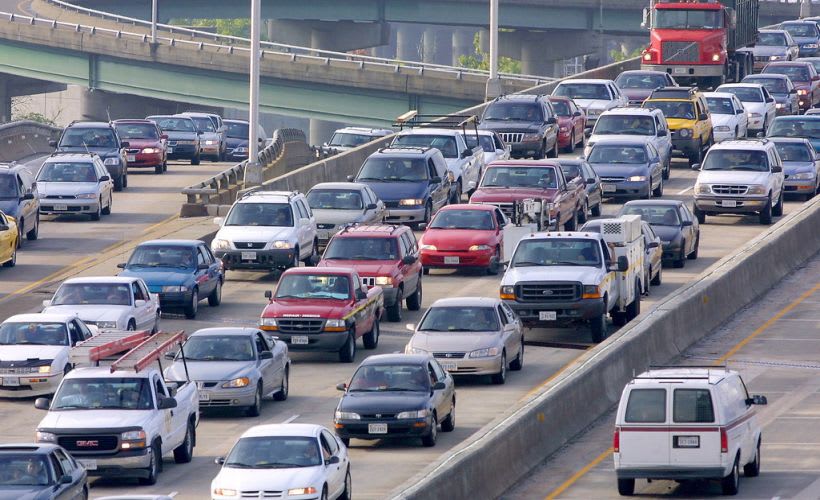
The NTSB's annual Most Wanted List includes recommendations to achieve greater road safety in seven areas.
Photo via Virginia Department of Transportation/Flickr.
3 min to read
The National Transportation Safety Board (NTSB) recently unveiled its 2019-2020 Most Wanted List of Transportation Safety Improvements, with seven of the 10 recommendations including initiatives for roadway safety.
The Most Wanted List identifies the top safety improvements that can be made across all modes of transportation to prevent accidents, minimize injuries, and save lives in the future.
According to NTSB, the Most Wanted List serves as a road map for lawmakers, industry stakeholders, and the public to learn what they can do to help implement and champion critical safety improvements.
The board ranked following seven recommendations for highway safety among its Most Wanted List:
Eliminate Distractions
In 2016, more than 3,100 fatal crashes involving distraction occurred on roadways — 9% of all fatal crashes that year. These crashes involved 3,210 distracted drivers, according to the National Highway Traffic Safety Administration, because some of them involved more than one distracted driver. The NTSB believes distraction should be addressed through education, legislation, and enforcement.
Reduce Fatigue-Related Accidents
Drowsy driving is not always obvious and, as a result, it is widely believed to be underreported on police crash forms. A 2014 study by the AAA Foundation for Traffic Safety used a set of more detailed crash investigations and a statistical technique known as multiple imputations to estimate that about 21% of fatal crashes involved a drowsy driver. NTSB is calling for a comprehensive approach to combatting fatigue that focuses on research, education, and training; technology; sleep disorder treatment; hours-of-service regulations; and on and off-duty scheduling policies and practices.
End Alcohol and Other Drug Impairment
The NTSB wants to continue to see states adopt per se BAC limits of 0.05% or below, as well as broaden their use of other effective countermeasures, like ignition interlock devices and high-visibility enforcement. The group is also advocating for a national drug testing standard for passenger vehicles and stronger screening and toxicology testing in commercial transportation.
Increase Implementation of Collision Avoidance Systems
Vehicle manufacturers should make this technology standard equipment on all vehicles, according to NTSB. And consumers, informed about the technology's capabilities and limitations, should buy vehicles equipped with it.
Implement a Strategy to Reduce Speeding-Related Crashes
After reaching a low of 9,283 fatalities in 2014, speeding-related traffic fatalities increased to 9,723 in 2015 and 10,111 in 2016. NTSB proposes that proven countermeasures — including automated enforcement technology, vehicle technology, infrastructure design, and education campaigns — be used more broadly to reduce speeding-related crashes.
Require Medical Fitness for and Treat Obstructive Sleep Apnea
According to the Most Wanted report,too many commercial drivers with inadequately treated OSA operate on our roadways due to a lack of strong federal regulations addressing screening, diagnosing, and ensuring adequate OSA treatment; inadequate Federal Motor Carrier Safety Administration (FMCSA) guidance for certified medical examiners; and weak company policies and procedures regarding driver health. The NTSB wants to see mandatory screening and treatment for obstructive sleep apnea for drivers and all highway personnel in safety-sensitive positions.
Strengthen Occupant Protection
Seatbelts in motor vehicles saved 14,668 lives in 2016 alone. The NTSB wants all states to enact laws and regulations requiring all motor vehicle occupants to use seatbelts, and allowing primary enforcement of seat belt laws for all vehicle occupants. They also want to see requirements for enhanced vehicle design to provide better occupant protection.
Find the complete Most Wanted List here.
More Safety

Nexar-Nauto Merger Aims to Give Fleets Better Safety Intelligence Through Larger Driving Dataset
Stefan Heck tells Automotive Fleet that combining more than 10 billion miles of driving history with Nexar's AI models will give fleets deeper insights into driver risk and roadway conditions than either company could provide independently.
Read More →
Don't Wait for a Crisis: 5 Ways to Build Mental Health Into Your Fleet Safety Program
For Suicide Prevention Month, fleet and safety leaders have an opportunity to put mental health where it belongs: at the center of workplace safety.
Read More →
How Camera Data Can Strengthen a Fleet’s Insurance Renewal
Insights from a commercial insurance carrier and a broker show how fleets can turn video telematic data, driver coaching, and improved claims results into a stronger case at insurance renewal.
Read More →
The Safest Fleets Aren’t the Ones with the Most Technology
You’ve made the telematics investment. Here’s how to capture the other half of its value and build the safest fleet on the road.
Read More →
Sponsored•August 7, 2026
Hidden in Plain Sight: Fleet Compliance Risks
Fleet compliance isn't just about having policies — it's about consistently enforcing them. This practical guide reveals six hidden compliance risks common in public sector and shared fleet operations and outlines proven strategies to improve visibility, accountability, and audit readiness
Read More →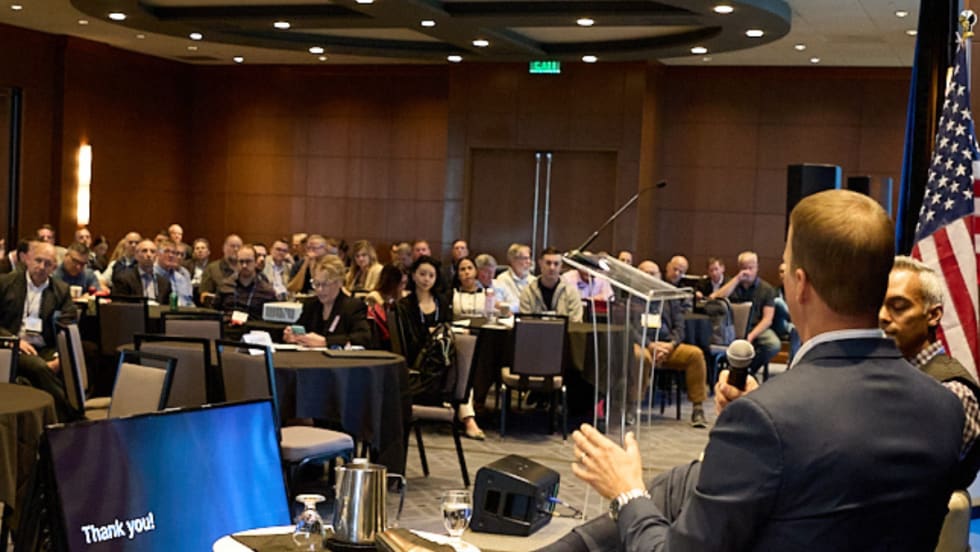
NETS Sets 2026 Fleet Safety Benchmark Conference for Indianapolis
The Sept. 15–17 program will feature fleet benchmarking data, case studies, emerging technologies, and implementation strategies while running alongside the NSC Safety Congress & Expo.
Read More →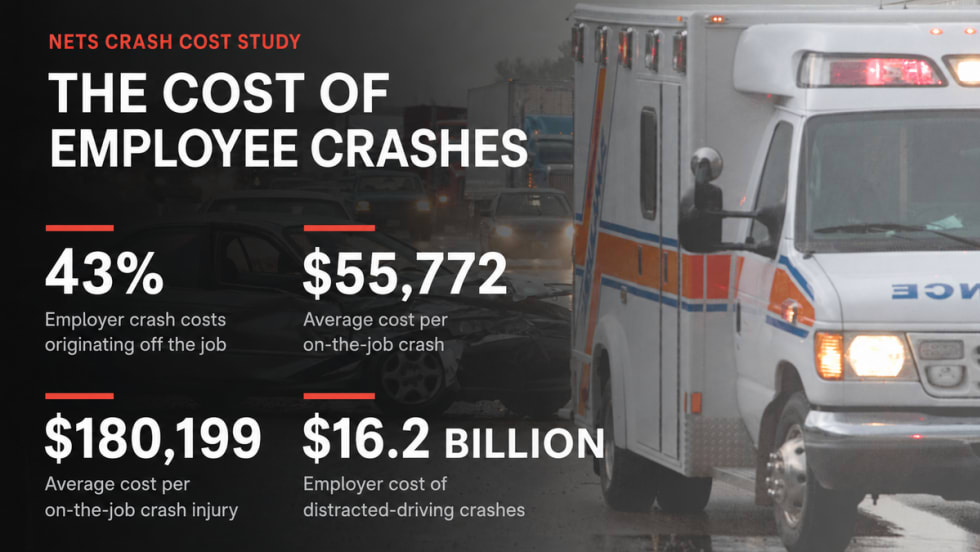
Off-the-Job Crashes Account for 43% of Employers’ $61.7 Billion Crash Burden
NETS quantifies costs dispersed across fleet, risk, HR, and other departments while providing new per-crash benchmarks for employers.
Read More →
Ram Recalls More Than 1.27 Million 1500 Pickups for Seat Belt Anchor Issue
The recall affects certain 2019-2026 Ram 1500 pickups that may have improperly attached second-row seat belt buckle anchors.
Read More →
Sponsored•July 17, 2026
How Better Visibility Cut Speeding Violations by 48%
Fleet leaders don't need more data, they need clearer visibility into what the data is saying. This case study explores how one utility replaced speeding-event counts with a single metric — miles driven in violation — to strengthen safety and significantly reduce speeding violations.
Read More →
Operation Safe Driver Week: Why the Industry's Oldest Safety Campaign Still Matters to Fleets
A look at how a 2007 enforcement initiative became one of the most consequential weeks on the fleet safety calendar, and what it means for your drivers in 2026.
Read More →