




10 Rules to a Successful Upfit
Upfitting is a complicated process with many opportunities to make mistakes, sometimes very expensive ones. The first key step to a successful upfit is "Plan, Plan, Plan."

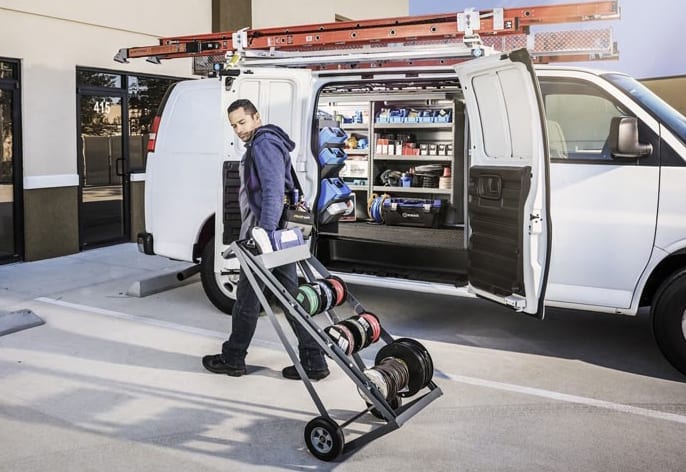
The cornerstone of spec’ing a productive upfit is to fully understand the application.
Photo: Adrian Steel
Upfitting is complicated and there are many opportunities to make mistakes, sometimes very expensive ones. Here are 10 keys to a successful upfit.
1. Plan, Plan, Plan. The cornerstone of spec’ing a productive upfit is to fully understand the application. Fleet managers need to develop an in-depth knowledge of the requirements of field personnel to properly fulfill the intended fleet application. Involve field personnel in the planning process. Start the planning cycle early to leave adequate time for production, upfitting, and transportation.
2. Don’t repeat past mistakes. Ask a lot of questions to determine vehicle or upfit deficiencies. Is the powertrain right for their application? Is the gross vehicle weight adequate for the payload carried? Is gross combination weight rating high enough if the vehicle will tow a trailer? What are common maintenance problems? Is there sufficient tool storage? Are drivers having trouble with ingress and egress? Are there problems with loading height? Is there limited visibility when backing?
3. Don’t Make Your Operation Conform to the Truck. Vehicle and upfit specifications should be defined by the fleet application and mission requirements. It is important to design a truck that will accommodate operational requirements rather than trying to make your operation conform to the truck. Common mistakes when upfitting a truck is that key information is not included in the specs, such as turning radius requirements. It’s crucial to be familiar with the location where a truck will be used.
4. Be Specific with Specs. The best place to avoid spec’ing mistakes is with the original specifications you develop. It is important to be specific to eliminate guesswork. For example, asking for a standard racks/bins package leaves too many unanswered questions for a vendor. Provide an exact description of what is required to eliminate guesswork. Missed details can add up and cost fleet managers money, time, and work inefficiencies.
5. Standardize When Possible. Minimize the complexity of the upfit. Strive to standardize your upfit packages as much as possible. Avoid the temptation to build a “mobile Swiss army knife” by over-engineering or over-upfitting a chassis and auxiliary equipment. Invariably, over-engineering will result in upfit complexity and premature wear-and-tear of a vehicle’s transmission, suspension, and tires, because you are over-working the vehicle.
6. Don’t Rush the Spec Approval Process. It is crucial to carefully review specification quotes. We are all swamped with work, but giving a quick, casual approval of quote specifications for either the chassis or upfit is a recipe to make an expensive mistake. Do not rush through the quote approval process assuming it is completely accurate. It is important to take the time to thoroughly (and in detail) review the quote specification to avoid modifications after the upfit process has started. OEMs and upfit vendors provide detailed quotes with very specific information on the chassis and body/equipment to be installed. Invariably, once these quotes are approved by the fleet manager, the upfit progresses directly to manufacturing.
7. Avoid Inadvertent Specification Omissions. It is important to remember that what is on the quote is what gets built. Conversely, if a specification is not on the quote, it won’t be on the actual vehicle. If the spec is crucial, it will require manufacturing changes, which, needless to say, will be costly in dollars and negatively impact lead time. When approving upfit specifications, follow this three-step rule – review, review, and review again.
8. Get Sign-Off from All Parties. Make sure the completed upfit specs have been reviewed and approved prior to order placement. It is critical to have a documented sign-off between all par[1]ties to avoid after-the-fact upfitting modifications.
9. Order early. A fleet manager should place orders as early as possible to avoid potential risks of delayed production due to high demand of certain models, unanticipated quality holds, and transportation delays.
10. Plan for Tomorrow. Proper planning will substantially increase the likelihood that a vehicle will be properly engineered to successfully perform the intended operation. However, to create a truly successful upfit, you should not only plan for today’s needs, but also take into consideration tomorrow’s needs. As another proverb says, “It wasn’t raining when Noah built the ark.” When you spec truck assets today, many of these vehicles will be in service for 10 to 15 years or longer. While an asset is adequate for today’s business, will this still be true 10 to 15 years from now?
More Global Fleet

GeoFencing Adds to Your Truck Security Arsenal
Geofencing is a familiar fleet tool today, but its early adoption marked a major shift in vehicle tracking, route monitoring, and the debate over employee privacy.
Read More →
Holman Takes Full Ownership of ARIZA in Mexico
Holman is bringing its Mexican fleet management operation fully under its own brand after more than 30 years as a joint venture. The change gives multinational fleet customers a single Holman operation across the U.S., Canada, and Mexico.
Read More →
5 Tire Maintenance Tips to Help Prevent Work Truck Downtime
Regular tire checks can do more than extend tread life. These five maintenance practices can help work truck fleets catch problems early, reduce costs, and prevent downtime.
Read More →

Proven Ways to Reduce Work Truck Downtime
The age-old problem of downtime will always be a reality, but with new strategies at hand, fleets have more ways to keep trucks on the road longer.
Read More →


Cameras, Safety and Insurance: From Reactive Claims to Real-Time Prevention (Part 2 of 2)
Part Two: Commercial auto remains one of the most challenging and costly lines of coverage for fleet operators and insurers alike. Continue learning more about how to effectively address these issues from Onur Aksan, Enterprise Business Development Executive, Geotab
Read More →
Cameras, Safety and Insurance: From Reactive Claims to Real-time Prevention
Commercial auto remains one of the most challenging and costly lines of coverage for fleet operators and insurers alike. Learn more about how to effectively address these issues from Onur Aksan, Enterprise Business Development Executive, Geotab.
Read More →
Fleet Costs Are Rising: Here’s How Leaders Are Responding
Fleet leaders are under pressure to reduce costs, adapt to economic uncertainty, and make smarter decisions. See how peers across North America are responding with real data, proven strategies, and forward-looking insights. Download the 2026 Market Pulse Report to benchmark your strategy and uncover where you can gain an edge.
Read More →
Enterprise Fleet Management Surpasses 900,000 Vehicles in U.S. & Canada
Enterprise Mobility connects with mobility solutions around the globe
Read More →