





Want More? Q&A: Isuzu Commercial Truck of America's President
Q&A: What's New with Isuzu Commercial Truck of America
Growth, pent-up demand, and a focus on today and tomorrow’s fleets are just part of what’s top of mind at Isuzu today.
May 3, 2022
"With the growth that we will continue to see in medium-duty — I feel terrific about where the industry is going and our role," said Shaun Skinner of Isuzu Commercial Truck of America.
Photo: Isuzu Commercial Truck of America
10 min to read
Shaun Skinner is a name many of us in the truck fleet industry know quite well. Skinner joined American Isuzu Motors in June 1987 and moved to Isuzu Commercial Truck of America (ICTA) in 2002. He was named ICTA’s executive vice president and general manager in 2008. He added the title of Isuzu Commercial Truck of Canada in 2009, and in April 2016, he was named the very first American president of ICTA.
Now, he’s adding to his growing list of titles with the appointment as an executive officer of Isuzu Motors Limited. This appointment marks the first time a local executive of an overseas Isuzu distributor has been named to an executive officer position in the parent company.
Work Truck sat down with Skinner to learn more about his new role, what’s been going on since the last time we chatted, and hear a few thoughts on the future. Here is an excerpt from our interview (watch the whole interview here!):
WT: You were recently named an executive officer of Isuzu Motors Limited. Can you share some thoughts on the new role?
SKINNER: I think this is the first time anyone outside of Japan has held this type of position. I’m still finding my way and getting familiar with it.
My main priority will be working with the executive management team and IML. In plotting our strategic course for the future, I think what they’re looking for from me, and the North American market is our focus on the area of advanced technologies, such as electric vehicles. Autonomous vehicles are also gaining traction and momentum in U.S. and Canadian markets.
We also have regulations, like you’re going to see in California in 2024, that will force the issue of green and autonomous vehicles, along with customers that some of the larger well-capitalized customers, which have very strong and aggressive carbon neutrality goals. I think IML sees the North American market as one that may lead in these trends.
So, how are we going to handle the challenges of this evolution (or, some may say, revolution)? I believe ICTA will be the first to share some of that information, as we are ahead of many of the other global markets we do business in.
Our area of experience, and I would I’d like to say expertise, will be able to help look at what is going on with this change in our industry and help provide input to the other companies and countries that will have to deal with that in the future.
I also feel the appointment has a lot to do with the importance that IML sees in the North American market.
WT: What changes do you foresee with your day-to-day work with Isuzu?
SKINNER: Fortunately, I don’t know that there will be much change to my day-to-day activities. I do think there may be a few more trips to Japan, probably a few more meetings, and some special projects.
But, the wonderful part of this position is that it relies heavily on the experience you’re gaining in your current role and taking that information and helping provide help and learn more. It isn’t just what you’re doing now, but using your knowledge to help set the course and see what the future looks like for the company globally.
All the executive officers within the company have different areas of expertise. It allows for a broader view of the issues. And, I think it will enable everybody to address the various challenges that we’re going to face and set ourselves up for future success.
This is not a role people stay in forever. Isuzu tries to get different views, opinions, and areas of expertise and ensure efforts don’t become stale. I’m happy to say that I will be able to keep most of my current duties because that was important to me.
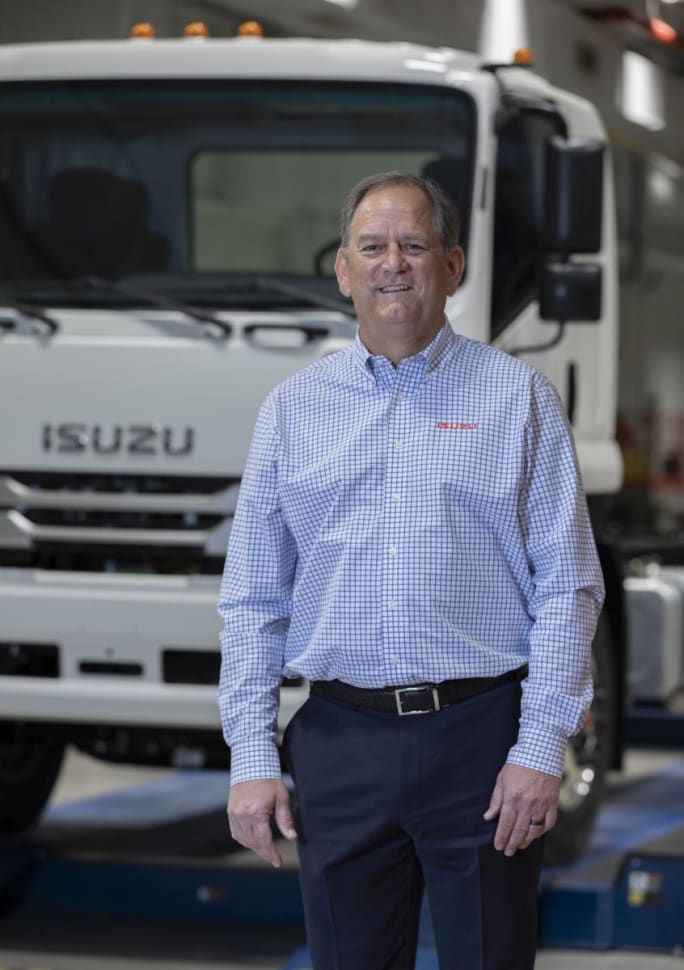
Shaun Skinner joined American Isuzu Motors in June 1987 and moved to Isuzu Commercial Truck of America (ICTA) in 2002. He was named ICTA’s executive vice president and general manager in 2008. He added the title of Isuzu Commercial Truck of Canada in 2009, and in April 2016, he was named the very first American president of ICTA.
Photo: Isuzu Commercial Truck of America
WT: What are some of your goals with your new position?
SKINNER: Much of what I will do will stay similar or the same. But, I do believe there will need to be a shift in my goals and responsibilities. I think this shift will revolve around how we, as a distributor and how our dealers work toward the future. As what lies ahead with the ownership experience changes, we will see a transition to more of an electric vehicle base.
I don’t think it’s going to happen overnight. The support that we, as an organization, will have to provide is going to be different, and what the dealers are going to have to do is going to be different.
But, we better be prepared because electric vehicles are a very different ownership experience.
So, how we adapt to all of that will be important. I think there’s going to be more focus on this longer-term strategy. How do we ensure we’re set to go today because we still have to stay in the here and now.
Most of the trucks sold for the short- and mid-term will still be diesel and gasoline trucks. So, for 2024 and 2027, how are we going to make sure we meet those regulatory issues? And how are we going to be sure we have the products customers need? And at the same time, how are we going to be prepared as we transition to electric vehicles, whether through regulatory issues or customers trying to meet aggressive carbon neutrality goals?
How will we make sure we can stack all of that and do well at all? I think the goals versus the responsibilities with this new position will stay the same to be sure that we’re very well set for changes in the U.S. and Canada.
But, how do we do those things that we find that are challenging? And how do we deal with them? How do I convey that back?
I love a movie by Michael Lewis called Moneyball, and I quote it to the team a lot. In the end, Billy Beane sits down with the owner of the Boston Red Sox, who tries to hire him away, and says, “You know, you’ve tried to do all these new and different things. The first guy through the wall is always the bloodiest.” I always remember that quote because I feel to Isuzu that we will be a little bit of that.
How do we succeed with those shorter-term pieces and balance those long-term goals? How do you balance what you have with the current portfolio and what will happen with this transition to electric vehicles (EVs)? We will get an excellent chance to learn from all of this. But, I believe my roles and responsibilities will mainly focus on how we suitably handle this.
WT: Can you share about Isuzu’s growth since our last interview three years ago?
SKINNER: We’ve seen tremendous growth in demand. The growth we’ve since over the past year-and-a-half is considerable. The biggest challenge is keeping up with demand.
If you look at last year, and all the challenges that we like to complain about, and how difficult of a year it was, there was no denying we had unique and different challenges than ever before. But, if you look objectively at the numbers, 2021 was the second-best year for our Class 3-7 product that we’ve ever had. Our second-best year had all of these pitfalls we had to work around.
Our part sales, which is a strong indicator of our dealer service and parts business, was the best year ever, by a longshot.
When you look at what transpired in 2021, while I think many of us like to look back and say there is this issue of what we’re able to supply and market demand, there is a huge, missed opportunity that I call the “land of disappointment.” I think everyone is focused on that. But it was pretty darn good when you look at what we did.
However, we know we need to do better because there’s more demand out there. If all goes as planned, 2022 will be the year we build more product than we ever have before, trying to catch up with that pent-up demand.
There continue to be supply chain challenges. We’ve sold everything that we can build. But that’s good and bad -- a double-edged sword. You don’t want to miss an opportunity. And we feel like we’ve missed that. So, we’re working on making this year one we build more trucks than we ever have before. It seems like there’s an insatiable appetite right now.
WT: Looking toward the future, what do you see as market shifts and further changes down the road?
SKINNER: That’s a serious question! Let’s start with the higher altitude stuff first: supply chain challenges.
I think we’re going to continue to face supply chain issues well past this year for many reasons. Number one, I don’t believe we are close to being out of the supply chain issue. We’ve seen what’s happening in China right now with shutdowns. We’re all going to have to get used to dealing with that.
Longer-term, I don’t think there will be an immediate fix to those challenges. I think it will cause OEMs to look at how we build protections into processes. Are there things we can do to make the flow of this supply needs more consistent? That’s a high-level question that isn’t easily fixed immediately. I think you will see that challenge more specific to our medium-duty industry.
I’ve beat this drum hard when you and I have talked over the past several years: I continue to believe that the growth in eCommerce final and mid-mile will continue to impact the medium-duty industry, which is our playground. That growth is not going to stop.
If you look at the trends with the average distance of goods hauled, the percent that eCommerce accounts for overall retail, the distance goods are hauled continues to decline. This decline indicates shorter, final-mile transfers of goods. You also see the percentage of eCommerce continues to grow.
You’re going to see areas of business that are predictable with growth, but also some that are a bit of a surprise we may not have seen coming. We’ve had a few of those, like delivering vehicles to people’s homes during COVID. Before, you didn’t have a lot of people shopping for vehicles online and not going in and inspecting them. This trend is becoming more common, and those areas help our business and will continue to.
Some changes will be what I would call more traditional; some will be a bit unexpected. You will continue to see change for us as the COVID-19 pandemic acted almost as an accelerant or a catalyst for this growth in eCommerce. That’s a trend that’s going to continue.
You also can’t ignore the shift to EV. Anyone at the Work Truck Week this year heard the electric call. There were many options, and more OEMs are getting involved in electric. That is going to impact us as OEMs. And it’s also going to affect how our dealers must operate.
Because I’ve talked about this for a long time, I think the differences in hardware in vehicles will diminish. You’re going to have more like-kind-quality products because of the expense of these technologies. And, you’re going to find more people utilizing supplier-driven content because you can’t have it all on your own.
We will have to focus more on the brand and work together as an OEM with our dealers and customers to create the best customer experience possible. What’s going to happen will become more about the brand and their experience versus the hardware, in my opinion.
WT: Any last thoughts to share with Work Truck readers?
SKINNER: All that know me will say I’m an eternal optimist. I always try to look at the bright side. I genuinely believe that, while we face several challenges right now, if you look at the medium-duty segment and our industry, I think the long-term trajectory is good.
I also feel that Isuzu can take advantage of that trajectory. We’re working on solutions with gas and diesel engines that will allow us to enhance flexibility based on upcoming emissions regulations.
We’ll have one of the broadest product offerings we’ve ever had, even though we will face some pretty stringent regulations.
We announced an EV prototype for our Class 6 & 7 product that we’re doing with Cummins. Additionally, we’ll have our first N-Series EV truck that will be out in late 2023/early 2024. We’re not only going to be there for the gas and diesel market, we know those are important. We must be there to provide for the vast majority of fleet customers.
But, we also know there’s a customer base looking toward the future, and we’ve got to be there to be sure that we are playing ball.
We’re in a great position. With the growth that we will continue to see in medium-duty — I feel terrific about where the industry is going and our role.
Originally posted on Work Truck Online
Subscribe to Our Newsletter
More Vehicle Research
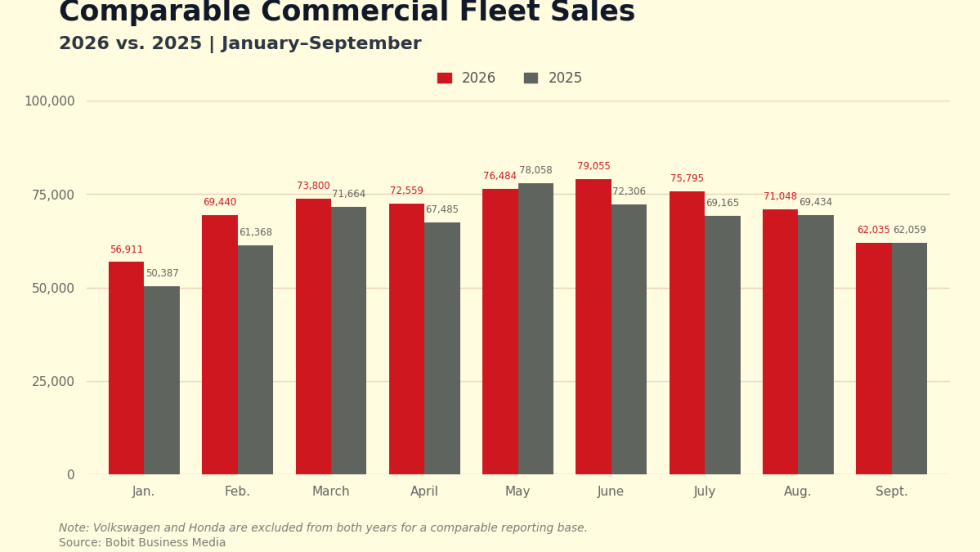
Commercial Fleet Sales Rise 5.8% Through September 2026
September commercial fleet sales were essentially unchanged from a year earlier, slowing year-to-date growth while keeping volume ahead of 2025.
Read More →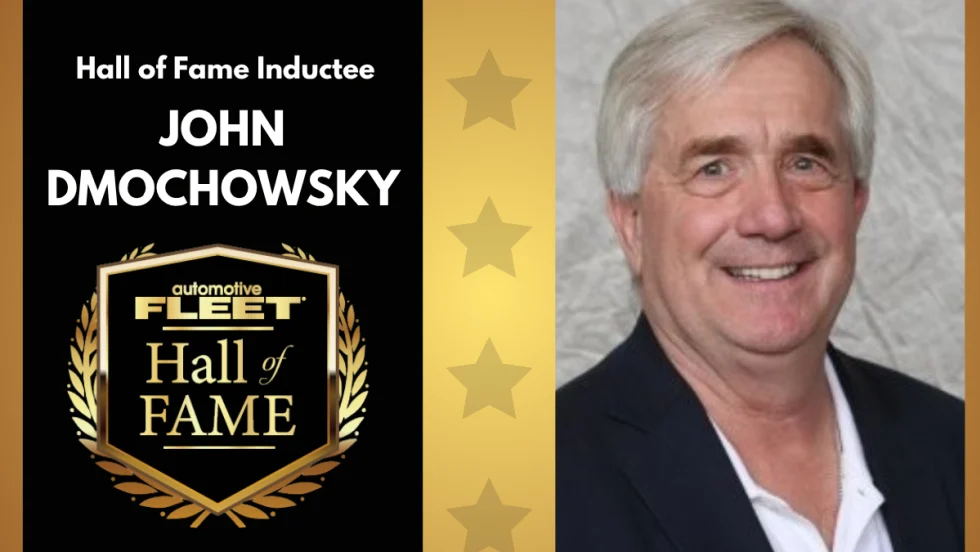
Hall of Fame Inductee: John Dmochowsky
The longtime Mondelēz International fleet executive joins the Automotive Fleet Hall of Fame.
Read More →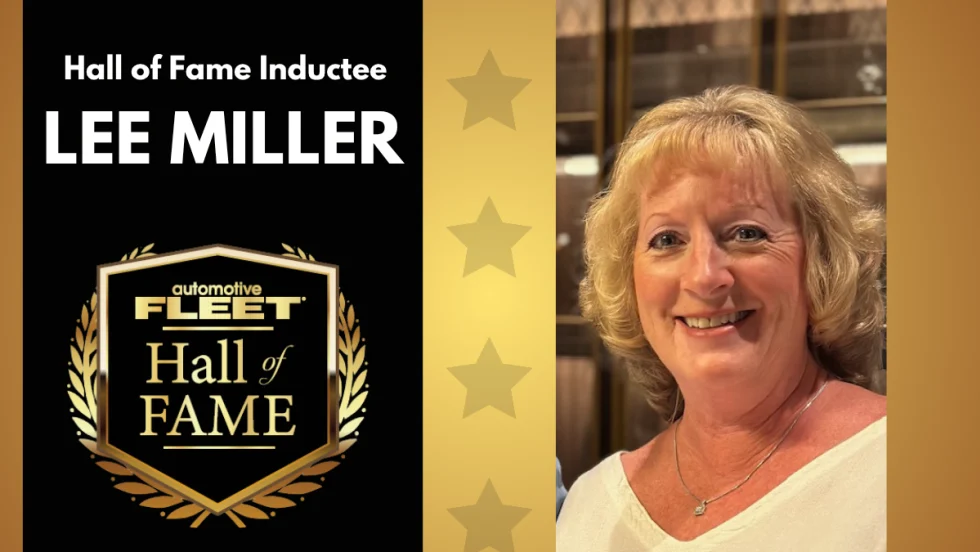
Hall of Fame Inductee: Lee Miller
After more than four decades at Boehringer Ingelheim, Lee Miller leaves a legacy built on fleet expertise.
Read More →
Hall of Fame Inductee: Mark F. Petersen
From managing fleets of thousands of vehicles to advancing safety and mentoring fellow professionals, Mark F. Petersen made his mark across both the corporate and supplier sides of fleet.
Read More →
When Charger Downtime Becomes a Fleet Availability Problem
As EV deployments move beyond pilot programs, charger reliability can directly affect vehicle readiness, driver productivity and route scheduling.
Read More →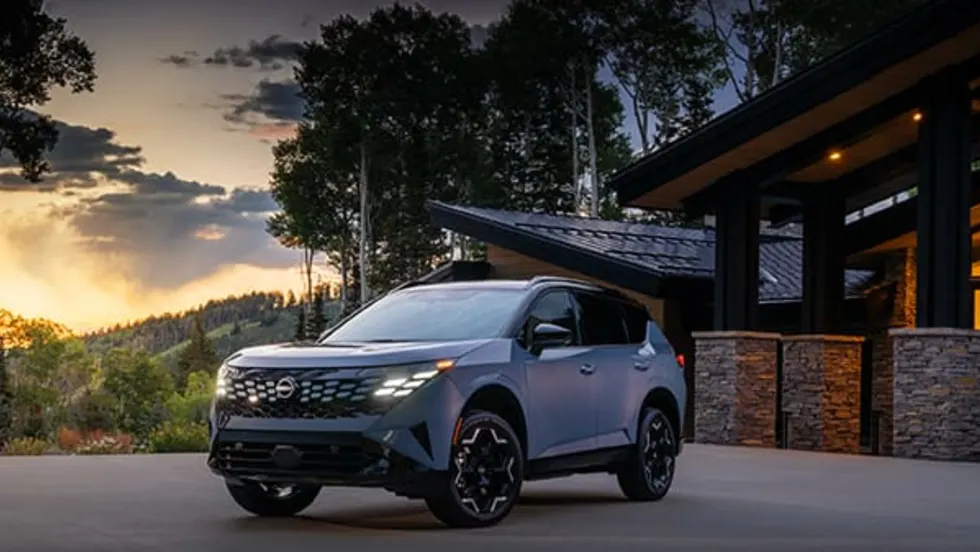
2027 Nissan Rogue Hybrid Adds e-POWER, Standard AWD
The new Rogue Hybrid uses Nissan’s e-POWER system with dual electric motors, offers an estimated 40 mpg and starts at $35,490.
Read More →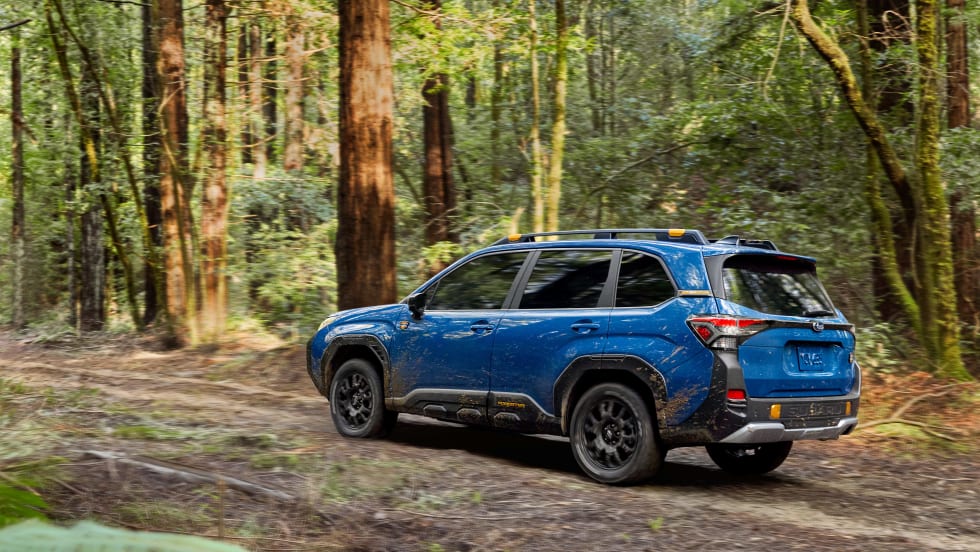
2027 Subaru Forester Adds First Wilderness Hybrid
The 2027 Forester lineup starts at $29,995 and adds a Wilderness Hybrid with 194 combined horsepower and 9.3 inches of ground clearance.
Read More →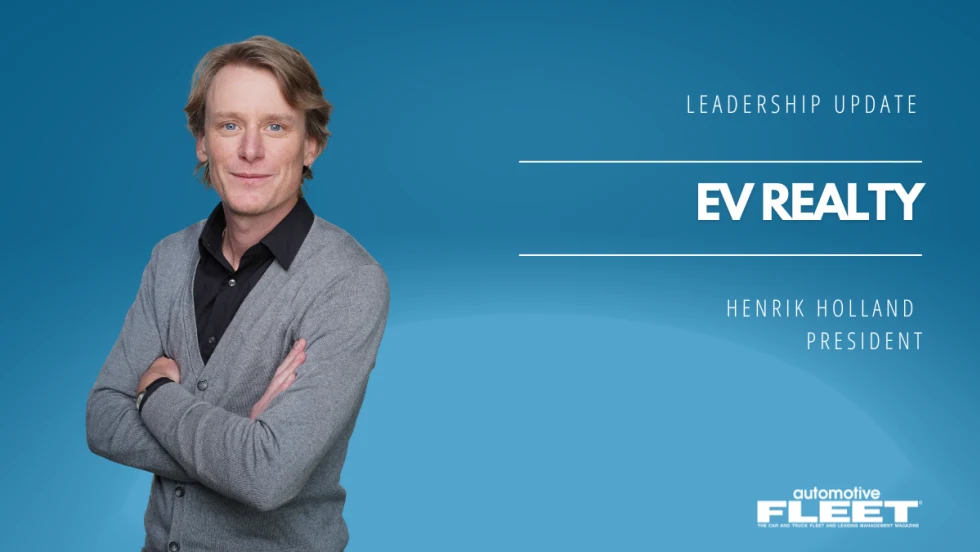
EV Realty Names Henrik Holland President as Charging Platform Expands
The former Prologis Mobility and Shell executive will help expand EV Realty’s truck charging business and move its power-first infrastructure model into autonomous vehicle depots and other fleet sectors.
Read More →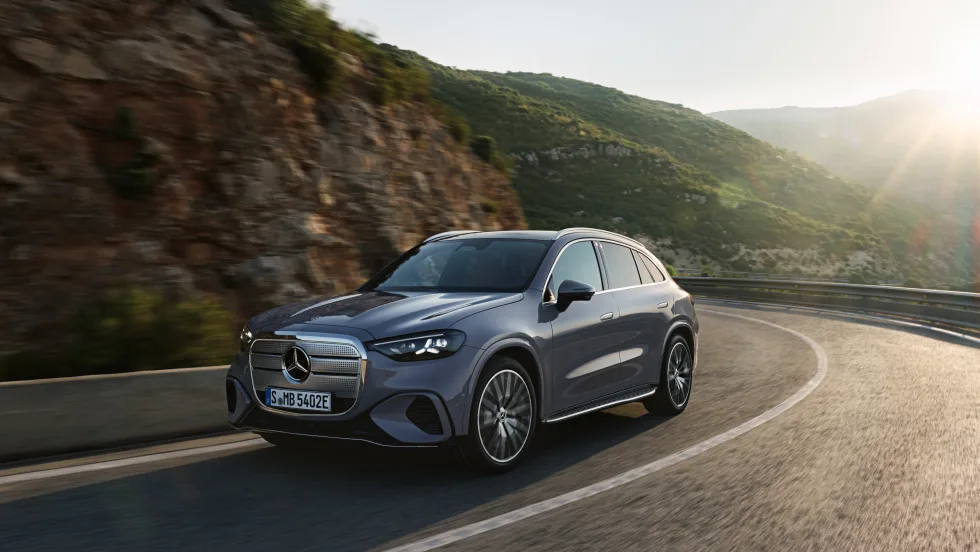
Mercedes-Benz Introduces Electric GLC With Up to 350 Miles of Range
The GLC 400 4MATIC Electric features an 800-volt architecture, 330-kW DC fast charging and a 94-kWh battery, along with Mercedes-Benz's new MB.OS operating system.
Read More →
Fleet Has a Talent Pipeline Problem, not a Talent Problem
Where will the next generation of fleet leaders come from, and what does the industry need to do differently to find them?
Read More →