





Fun Fact: In 2017, Ford noted it had sold 26 million F-Series trucks since January 1977. That many trucks could circle the globe more than three times — or, lined up bumper to bumper, would span 90,000-plus miles. Think about adding 14-million more trucks to that number!
The 40-Millionth Ford F-Series
Hitting a milestone of 26-million F-Series sold in 2017, the automaker took only five years to sell 14-million more trucks, continuing to dominate the commercial fleet truck market.
March 15, 2022
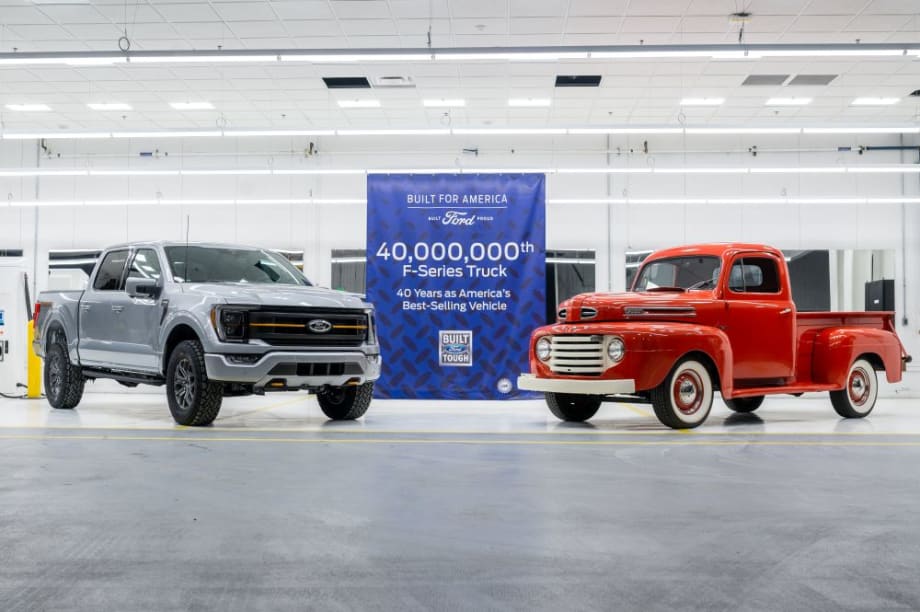
Ford began production of first-generation F-Series Trucks 75 years ago, in 1947. And, the first new F-Series truck in a generation debuted in 2020 when Ford introduced F-600,
Photo: Ford
3 min to read
It wasn’t that long ago that Ford Motor Company celebrated 100 years of truck history, starting with its 1917 model T.
The forties have been good to Ford F-Series. F-Series has 45 years as America’s best-selling truck and 40 years as the best-selling vehicle. And now, Ford is celebrating the production of its 40-millionth F-Series for U.S. customers.
“We are so grateful for the commercial customers who continue to put their faith in F-Series trucks to get the hard work done day after day,” says Nathan Oscarson, Ford Pro commercial truck brand manager. “From small businesses to large fleets, commercial customers are crucial to our success, and we’re proud to build the truck they count on more than any other.”
The 2022 F-150 Tremor in Iconic Silver paint rolled off the line at the Dearborn Truck Plant in Michigan on January 27, 2022, headed to a customer in Texas.
The History of the F-Series
Ford began production of first-generation F-Series Trucks 75 years ago, in 1947. The Ford F-1 through F-8 went on sale in 1948. First-generation F-Series (known as F-Series Bonus Built Trucks) were produced from 1948 to 1950.
According to Ford, this first-generation F-Series covered Class 2-7 capacities – from the 1/2-ton F-1 to the much larger F-8 cab-over truck. With the arrival of the second-generation F-Series for 1953, Ford increased engine power and capacity and rebranded the series.
The F-1 became the F-100, while F-2 and F-3 trucks were integrated into the new F-250 line. F-4 became F-350.
Ford’s trucks started looking a little less “utilitarian” over the next few generations, coming in two-tone paint jobs featuring automatic transmissions, and updated radio offerings. By 1953, the F-100 came with standard armrests, dome lights, and sun visors.
The 1960s brought the fourth-generation F-Series. In 1965, twin I-beam front suspension was launched. Comfort was something more truck drivers were looking for, and power steering and brakes were added to the truck.
The mid-70s brought the sixth-generation F-Series. This marked the drop of the F-100 and the launch of the F-150 nameplate. In 1977, “Built Ford Tough” was uttered by a Ford truck magazine copywriter for the first time.
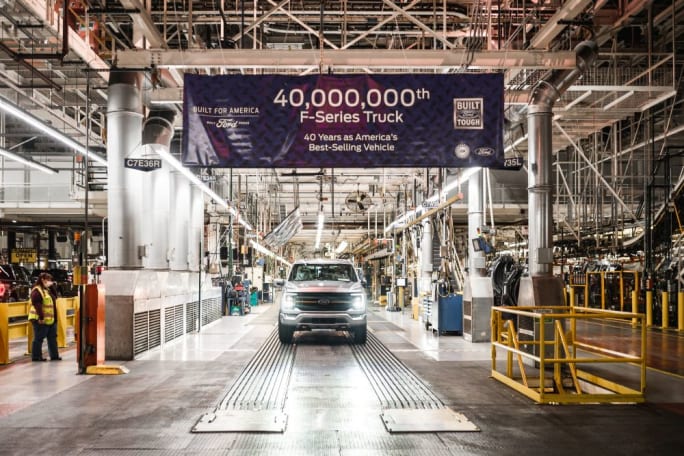
F-Series has 45 years as America’s best-selling truck and 40 years as the best-selling vehicle.
Photo: Ford
Today’s Ford F-Series
The late 1990s introduced the F-Series Super Duty to the marketplace. With a real fleet focus, the Super Duty is offered from F-250 to F-750.
The early 2000s added more technology to the trucks than ever before, with the launch of Ford’s SYNC communications and entertainment system in 2007 and introduction of the EcoBoost V-6 engine in 2011. To deliver greater efficiency and more capability, F-150 got the industry’s first high-strength, military-grade, aluminum alloy body in 2015, with Super Duty trucks following suit in 2017.
The first new F-Series truck in a generation debuted in 2020 when Ford introduced F-600, a Class 6 truck in a familiar Class 5 Super Duty package.
Ford has also grown its truck lineup beyond the F-Series, with the midsize Ranger pickup and all-new Maverick, but the F-Series continues to be front and center. In fact, Ford is even taking the F-Series electric this year with the new F-150 Lightning and F-150 Lightning Pro all-electric pickups coming this spring.
Originally posted on Work Truck Online
Subscribe to Our Newsletter
More Vehicle Research
2027 Toyota Camry Offers Hybrid Powertrain Across Five Grades
The 2027 Toyota Camry is a carryover with new pricing.
Read More →
Chevrolet Updates 2027 Trax and Trailblazer with More Standard Safety Features
Chevrolet is updating two of its smallest SUVs with added driver-assistance technology, redesigned interiors, and revised trim options. The changes could add more safety equipment as standard for commercial fleets, while a new Trailblazer configuration adds another all-wheel-drive option.
Read More →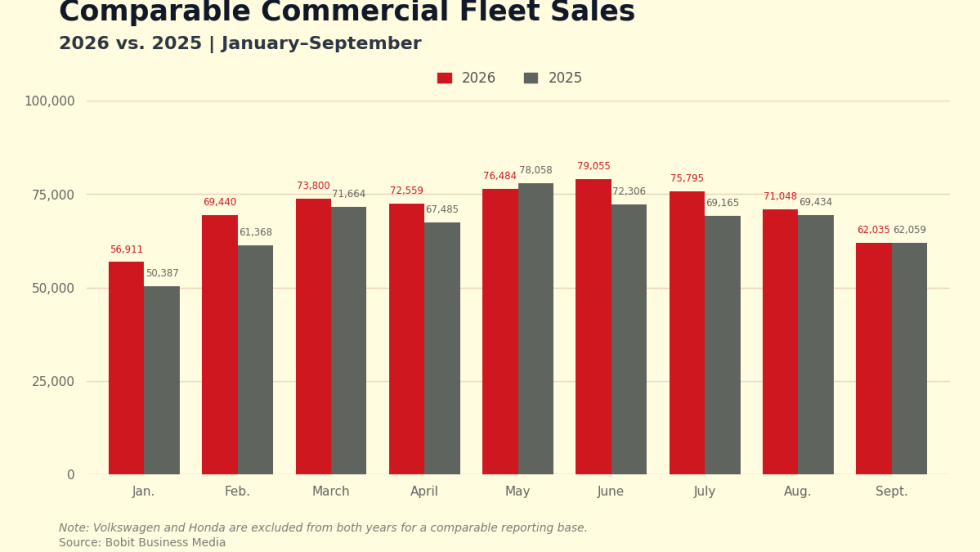
Commercial Fleet Sales Rise 5.8% Through September 2026
September commercial fleet sales were essentially unchanged from a year earlier, slowing year-to-date growth while keeping volume ahead of 2025.
Read More →
Hall of Fame Inductee: John Dmochowsky
The longtime Mondelēz International fleet executive joins the Automotive Fleet Hall of Fame.
Read More →
Hall of Fame Inductee: Lee Miller
After more than four decades at Boehringer Ingelheim, Lee Miller leaves a legacy built on fleet expertise.
Read More →
Hall of Fame Inductee: Mark F. Petersen
From managing fleets of thousands of vehicles to advancing safety and mentoring fellow professionals, Mark F. Petersen made his mark across both the corporate and supplier sides of fleet.
Read More →
When Charger Downtime Becomes a Fleet Availability Problem
As EV deployments move beyond pilot programs, charger reliability can directly affect vehicle readiness, driver productivity and route scheduling.
Read More →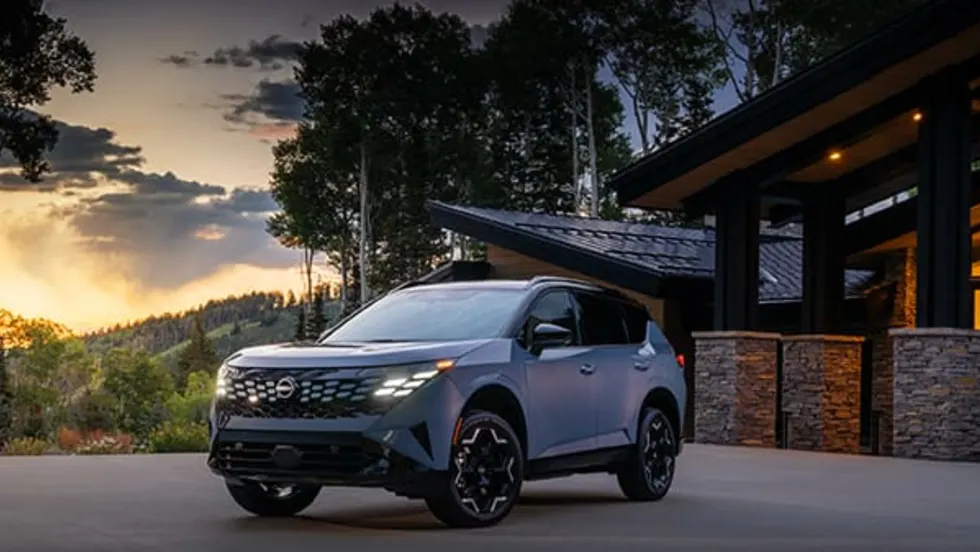
2027 Nissan Rogue Hybrid Adds e-POWER, Standard AWD
The new Rogue Hybrid uses Nissan’s e-POWER system with dual electric motors, offers an estimated 40 mpg and starts at $35,490.
Read More →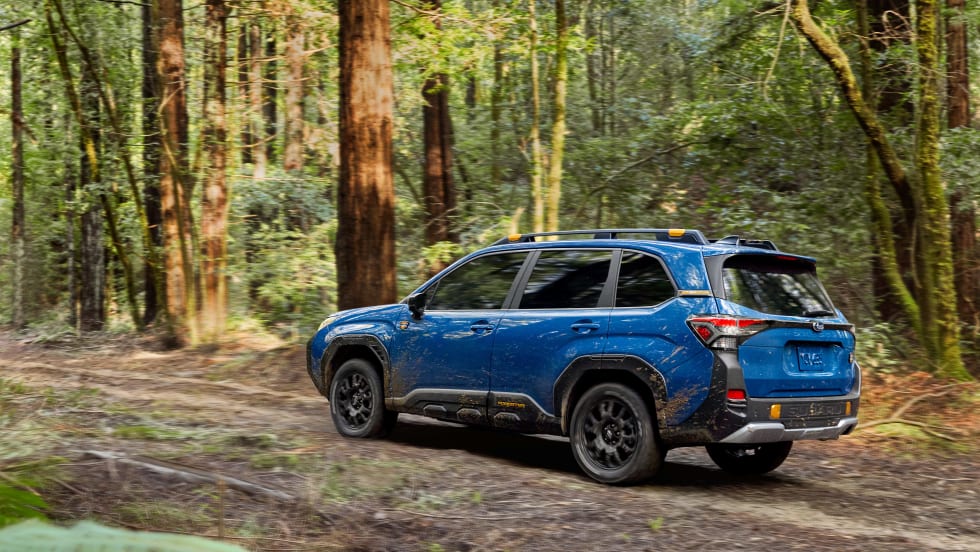
2027 Subaru Forester Adds First Wilderness Hybrid
The 2027 Forester lineup starts at $29,995 and adds a Wilderness Hybrid with 194 combined horsepower and 9.3 inches of ground clearance.
Read More →
EV Realty Names Henrik Holland President as Charging Platform Expands
The former Prologis Mobility and Shell executive will help expand EV Realty’s truck charging business and move its power-first infrastructure model into autonomous vehicle depots and other fleet sectors.
Read More →