




Usage-Based Insurance Growing in Popularity with Fleets
Commercial vehicles with usage-based insurance market is projected to grow by more than 18% by 2024, according to new research from Global Market Insights, Inc.

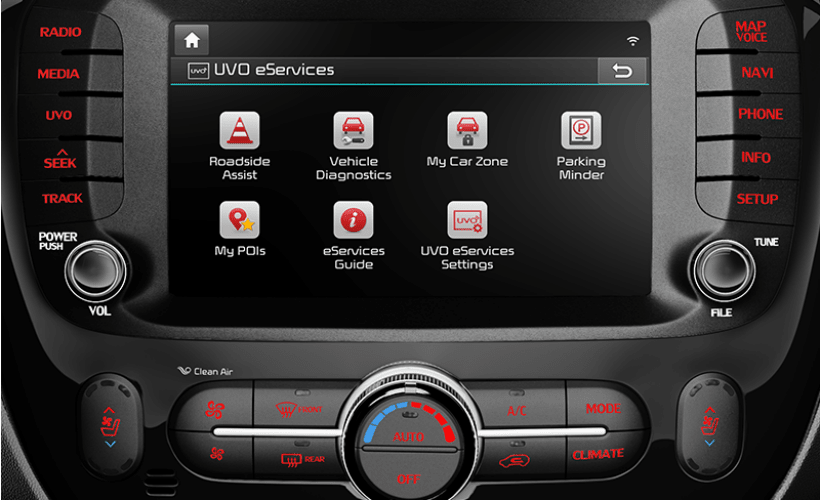
Commercial fleets are increasingly considering usage-based insurance over a traditional policy, according to new research.
Photo courtesy of Kia.
Commercial vehicles with usage-based insurance market is projected to grow by more than 18% by 2024, according to new research from Global Market Insights, Inc.
This growth rate indicates that usage-based insurance is gaining popularity among fleets as compared with traditional automotive insurance. The firm expects the market to grow from its current value of $34 billion to over $107 billion in the next five years.
The use of telematics systems by commercial fleets to track vehicle health and driver behavior is a key accelerator of this growth. For fleets with strong safety programs and track records — and the telematics data to back it up — usage-based insurance can be a smart option for lowering rates and saving the enterprise money.
Telematics technology gives fleet owners and managers the ability to track and measure a full range of safe driving metrics such as hard braking, speeding, harsh acceleration and seat belt utilization across the fleet. The data, in turn, allows fleet managers to identify high-risk drivers and address their individual issues with the goal of building a safer group of drivers.
Telematics data can then be shared with usage-based insurance providers as evidence of a strong safety record, which can work in favor of the fleet and result in reduced premiums.
According to the report, traditional usage-based insurance uses on-board diagnostic systems (OBD-II), which allows owners to manage and remove engine malfunctions and improve vehicle reliability while reducing the fleet operations cost. By implementing OBD-II fleet management telematics systems, which track driver performance and allow vehicle utilization, organizations can reduce their fleet insurance premiums.
More Safety

The Safest Fleets Aren’t the Ones with the Most Technology
You’ve made the telematics investment. Here’s how to capture the other half of its value and build the safest fleet on the road.
Read More →
Hidden in Plain Sight: Fleet Compliance Risks
Fleet compliance isn't just about having policies — it's about consistently enforcing them. This practical guide reveals six hidden compliance risks common in public sector and shared fleet operations and outlines proven strategies to improve visibility, accountability, and audit readiness
Read More →
NETS Sets 2026 Fleet Safety Benchmark Conference for Indianapolis
The Sept. 15–17 program will feature fleet benchmarking data, case studies, emerging technologies, and implementation strategies while running alongside the NSC Safety Congress & Expo.
Read More →
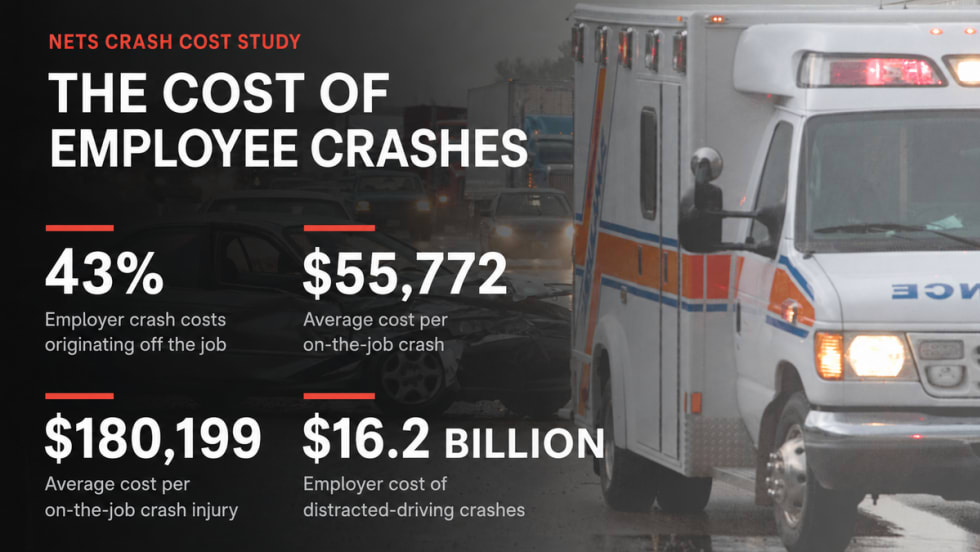
Off-the-Job Crashes Account for 43% of Employers’ $61.7 Billion Crash Burden
NETS quantifies costs dispersed across fleet, risk, HR, and other departments while providing new per-crash benchmarks for employers.
Read More →
Ram Recalls More Than 1.27 Million 1500 Pickups for Seat Belt Anchor Issue
The recall affects certain 2019-2026 Ram 1500 pickups that may have improperly attached second-row seat belt buckle anchors.
Read More →
How Better Visibility Cut Speeding Violations by 48%
Fleet leaders don't need more data, they need clearer visibility into what the data is saying. This case study explores how one utility replaced speeding-event counts with a single metric — miles driven in violation — to strengthen safety and significantly reduce speeding violations.
Read More →
Operation Safe Driver Week: Why the Industry's Oldest Safety Campaign Still Matters to Fleets
A look at how a 2007 enforcement initiative became one of the most consequential weeks on the fleet safety calendar, and what it means for your drivers in 2026.
Read More →
Nexar-Nauto Merger Aims to Give Fleets Better Safety Intelligence Through Larger Driving Dataset
Stefan Heck tells Automotive Fleet that combining more than 10 billion miles of driving history with Nexar's AI models will give fleets deeper insights into driver risk and roadway conditions than either company could provide independently.
Read More →
From Silos to Solutions: Relationship Management for Safer Fleets
From telematics adoption and driver accountability to policy consistency and risk mitigation, this episode breaks down what it really takes to build a safer fleet culture without slowing business down.
Read More →
IIHS Launches First Commercial Vehicle Safety Evaluations
The Insurance Institute for Highway Safety has begun evaluating heavy-duty pickups and cargo vans for driver protection. Which models earned top marks?
Read More →