




Q&A: Nationwide's Commercial Telematics Director
Pete Frey joined Nationwide in March as its commercial telematics director. He has been tasked with developing a usage-based insurance program for commercial fleets.

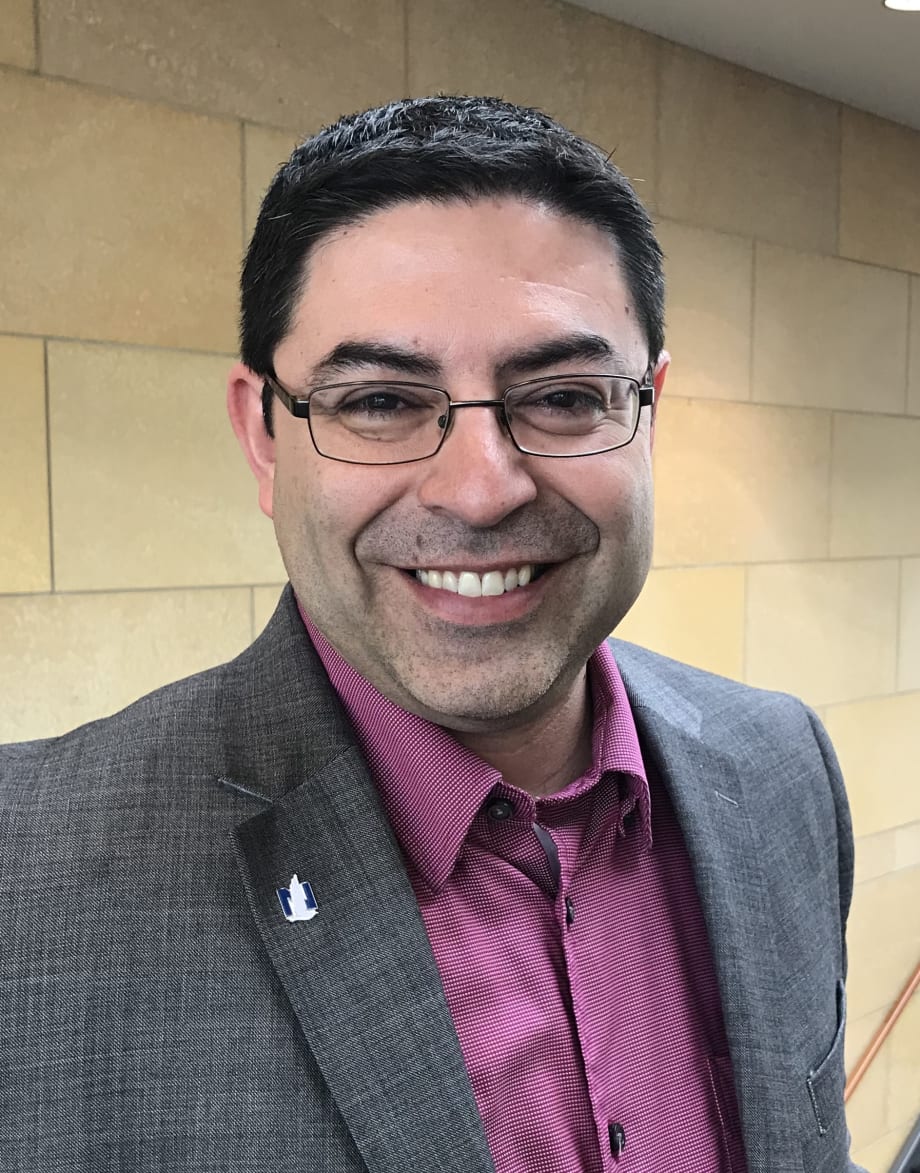
Pete Frey, Nationwide's commercial telematics director

Pete Frey, Nationwide's commercial telematics director
Nationwide Mutual Insurance Company, a large insurer based in Columbus, Ohio, created a new position for Pete Frey in March as its commercial telematics director. Frey has been tasked with developing a usage-based insurance program for commercial fleets.
Frey, 48, brings experience from telematics and insurance industries to his role, where he will also develop a connected business fleet platform. He's based at a regional headquarters in Des Moines, Iowa.
Following his appointment, he discussed fleet insurance and telematics trends with Automotive Fleet.
Automotive Fleet: Congratulations on your opportunity. You're starting a new role as well as a pair of new initiatives to develop usage-based insurance (UBI) policies and a telematics platform for commercial fleet policies. How does it feel to break some ground?
Frey: It's a privilege to be a part of such a great company and extremely exciting to be a part of Nationwide's vision for telematics and UBI. I think the new ground, along with the path that we'll build upon it, will bring some new benefits to our commercial lines members and their businesses.
AF: Managers of larger fleets have tended to lean toward self-insurance for their vehicles. Do you see a shift away from this practice?
Frey: For commercial UBI to have success, I think we must consider that businesses and business fleets vary. How we service those business fleets will be important. Yes, insurance is at the foundation of what our solution will become. However, the services we offer will be integral to the solution we offer. Fleet managers have to worry about many things on top of just insurance — fleet tracking and efficiency, vehicle health and maintenance, and driver safety — to name a few.
As we craft our solution, we will need to consider all of that and be creative in how we interweave the insurance proposition. I think there will be some new ways and new looks to commercial insurance as a result.
AF: Tell us a bit more about usage-based insurance and how that would work with a corporate fleet.
Frey: UBI programs for personal auto policies today, including Nationwide's SmartRide program, take driving behavior data and use that to inform assessment of risk. We can take things like speeding, acceleration, and hard braking and form that into driving measures that help pinpoint a driver's penchant for risky behavior. In turn, this helps us price risk more accurately, and even reward the many good drivers that are out there.
By applying these same principals to commercial fleet vehicles and drivers, we can help business owners achieve better rates for their commercial auto policies. And with value-added services that are aimed at vehicle efficiency and safety, we can help with loss control and cost management.
AF: You'll also be developing a connected business fleet platform? Are you partnering with a telematics vendor? What would that look like?
Frey: Yes, our vision is to take advantage of today's technology to build a connected business platform. With telematics and IoT (Internet of Things) advancing at such a rapid pace, our business customers should benefit from the efficiencies, savings, and safety that can be garnered from a connected world. In fact, in many cases, our customers expect us to integrate all of the available tools into a single solution for their benefit.
Connected fleets are just part of the equation. There are some extremely innovative and thought-provoking companies that can help us achieve our vision. It is safe to say that we will be partnering with some of them to help us get there.
AF: This approach seems to marry insurance and telematics in a new way. What do you see as the chief benefit of doing this?
Frey: Insurance is a promise — a promise that you will be taken care of when the unexpected happens. Telematics enables us to deliver on this promise in different ways now. We can make our customers smarter about their driving habits and the state of their vehicles. We can even give them information that could help prevent the unexpected things from happening.
And if the unexpected does happen, we can provide data and a service that makes the claims process easier and more satisfying. The chief benefit is that we will be able to take even better care of our customers, their vehicles, and their businesses.
AF: Could you see insurance companies providing corrective feedback for individual fleet drivers at some point?
Frey: Yes, we could get to a point where we offer coaching and suggestions based on the driving behavior we collect. I would love to get to a point where we could even offer input into safer driving routes and driving tactics based on time of day, road conditions, traffic conditions and weather.
AF: Have insurance companies been utilizing telematics data enough in recent years as a part of their risk management analysis?
Frey: In personal auto, I think insurance companies have made significant progress in utilizing and learning from telematics data. For the commercial space, it's still new. However, the telematics space has come a long way in the past few years and commercial insurance can leverage much of what has been learned from the personal auto efforts. Also, there are a few data companies, fleet tracking companies, and auto OEM's who have made great strides in studying and learning from telematics data as well. This is also a benefit for commercial UBI efforts.
AF: How might a system like this impact a fleet's premiums?
Frey: A fleet telematics/UBI solution will allow us to measure risk more accurately and ideally achieve better pricing for our members. In the personal auto space, UBI policies appear to be improving claim frequency. Assuming that trend translates to commercial fleets, it can only help reduce fleet premiums.
AF: When could you see Nationwide offering new insurance products that have grown out of these initiatives?
Frey: Our goal is to have new offerings as early as 2019. As a company, we are committed to being a leader in this space and delivering on our promise to our members. We plan to move rather quickly, yet practically. Our offerings will also evolve, so our members can expect products and services that make sense for them as the technology and processes mature and advance.
More Safety

The Safest Fleets Aren’t the Ones with the Most Technology
You’ve made the telematics investment. Here’s how to capture the other half of its value and build the safest fleet on the road.
Read More →
Hidden in Plain Sight: Fleet Compliance Risks
Fleet compliance isn't just about having policies — it's about consistently enforcing them. This practical guide reveals six hidden compliance risks common in public sector and shared fleet operations and outlines proven strategies to improve visibility, accountability, and audit readiness
Read More →
NETS Sets 2026 Fleet Safety Benchmark Conference for Indianapolis
The Sept. 15–17 program will feature fleet benchmarking data, case studies, emerging technologies, and implementation strategies while running alongside the NSC Safety Congress & Expo.
Read More →
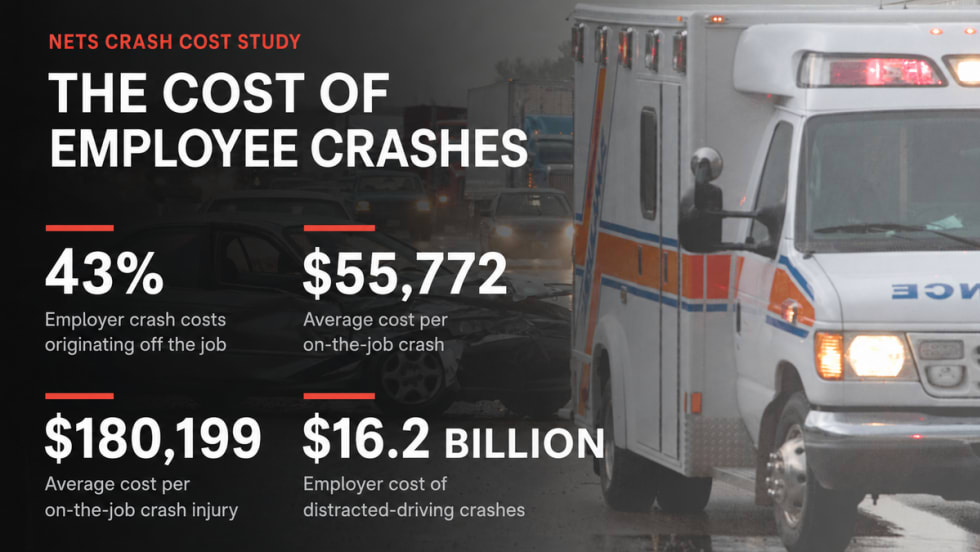
Off-the-Job Crashes Account for 43% of Employers’ $61.7 Billion Crash Burden
NETS quantifies costs dispersed across fleet, risk, HR, and other departments while providing new per-crash benchmarks for employers.
Read More →
Ram Recalls More Than 1.27 Million 1500 Pickups for Seat Belt Anchor Issue
The recall affects certain 2019-2026 Ram 1500 pickups that may have improperly attached second-row seat belt buckle anchors.
Read More →
How Better Visibility Cut Speeding Violations by 48%
Fleet leaders don't need more data, they need clearer visibility into what the data is saying. This case study explores how one utility replaced speeding-event counts with a single metric — miles driven in violation — to strengthen safety and significantly reduce speeding violations.
Read More →
Operation Safe Driver Week: Why the Industry's Oldest Safety Campaign Still Matters to Fleets
A look at how a 2007 enforcement initiative became one of the most consequential weeks on the fleet safety calendar, and what it means for your drivers in 2026.
Read More →
Nexar-Nauto Merger Aims to Give Fleets Better Safety Intelligence Through Larger Driving Dataset
Stefan Heck tells Automotive Fleet that combining more than 10 billion miles of driving history with Nexar's AI models will give fleets deeper insights into driver risk and roadway conditions than either company could provide independently.
Read More →
From Silos to Solutions: Relationship Management for Safer Fleets
From telematics adoption and driver accountability to policy consistency and risk mitigation, this episode breaks down what it really takes to build a safer fleet culture without slowing business down.
Read More →
IIHS Launches First Commercial Vehicle Safety Evaluations
The Insurance Institute for Highway Safety has begun evaluating heavy-duty pickups and cargo vans for driver protection. Which models earned top marks?
Read More →