




New Vehicle Prices Hit All-Time Record
Average transaction prices broke the $50,000 barrier, driven by wealthier buyers and higher-end vehicles.

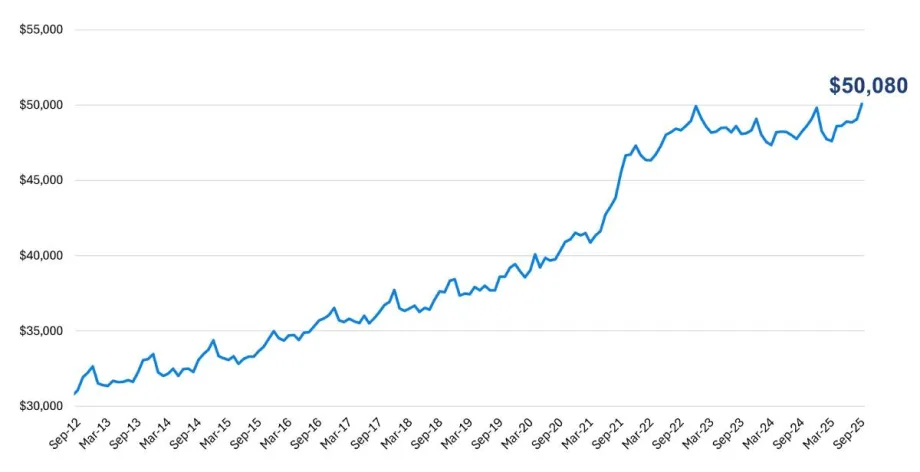
The ATP last month was up 2.1% from August and was higher year over year by 3.6%. The annual gain was the largest since the spring of 2023.
Graphic: Cox Automotive
The average transaction price (ATP) of a new vehicle in the U.S. was above $50,000 for the first time, according to new estimates released Oct. 13 by Kelley Blue Book.
New-vehicle prices have risen steadily for more than a year, with the pace of the increases accelerating in recent months. Despite higher prices, retail sales continue to maintain a healthy pace.
“It is important to remember that the new-vehicle market is inflationary," said Erin Keating, executive analyst at Cox Automotive, in a news release. "Prices go up over time, and today’s market is certainly reminding us of that. The pricing story in September was mostly driven by the healthy mix of EVs and higher-end vehicles, which pushed the new-vehicle ATP into uncharted territory. We’ve been expecting to break through the $50,000 barrier."
The new-vehicle ATP was $50,080 in September, marking the first time it ever exceeded the $50,000 mark. The ATP last month was up 2.1% from August and was higher year over year by 3.6%. It was the largest annual gain since the spring of 2023 but aligned with the long-term average of ATP inflation.
Incentive spending increased in September to 7.4% of ATP, or about $3,700. Incentive levels in September were at the highest point in 2025, up from 7.2% of ATP in August. A year ago, in September 2024, incentive levels were equal to 7.3% of ATP.
As 2026 model year product arrives on dealer lots, the average new-vehicle manufacturer’s suggested retail price (MSRP) – commonly called “the asking price” – also reached a new record-high in September of $52,183. The MSRP last month was higher by 4.2% year over year, an increase above the long-term average.
A rich mix of luxury vehicles and expensive EV models likely helped push the ATP into record territory last month. Kelley Blue Book is initially estimating the electric vehicle share of the U.S. market in September at 11.6%, a record high. The electric vehicle ATP last month was $58,124, up 3.5% from the revised lower EV ATP in August.
Last month, there were more than 60 models with ATPs above $75,000 with total sales near 94,000 units – 7.4% of total industry sales, up from 6.0% in September 2024. In the rare air of six-figure vehicles, the Cadillac Escalade is still king. Two versions are available, with total sales in September reaching 4,320 units.
"While there are many affordable options out there, many price-conscious buyers are choosing to stay on the sidelines or cruising in the used-vehicle market," Keating said. "Today’s auto market is being driven by wealthier households who have access to capital, good loan rates, and are propping up the higher end of the market. Tariffs have introduced new cost pressure to the business."
Keating added, "It was only a matter of time, especially when you consider the best-selling vehicle in America is a pickup truck from Ford that routinely costs north of $65,000. That’s today’s market, and it is ripe for disruption.”
Electric Vehicle Sales Soar Despite Higher Prices
A record 437,487 electric vehicles were sold in Q3 2025, with EV share reaching 10.5% of the market. With government-supported EV sales incentives set to expire at the end of September, buyers rushed to finalize deals, pushing total volume higher year over year by nearly 30%. (Cox Automotive’s Q3 2025 Kelley Blue Book EV Sales Report can be found here.)
The initial estimate of the EV average transaction price in September was $58,124, up 3.5% from the revised-lower ATP in August. Year over year, EV prices remained mostly unchanged, lower by 0.4%.
At 15.3% of ATP (nearly $8,900), EV incentives in September were lower compared to August. A year ago, EV incentives averaged 13.0% of ATP.
The ATP for a new Tesla last month was $54,138, down slightly from August and lower year over year by 6.8%. With new, lower-priced versions of the best-selling Model 3 and Model Y announced recently, Tesla and segment-wide ATPs will likely decline in the coming months.
More Vehicle Research
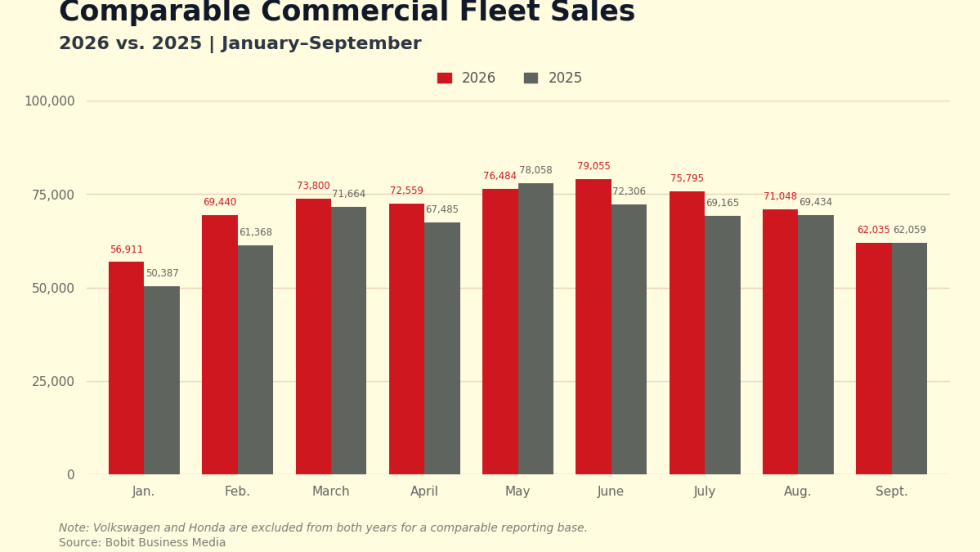
Commercial Fleet Sales Rise 5.8% Through September 2026
September commercial fleet sales were essentially unchanged from a year earlier, slowing year-to-date growth while keeping volume ahead of 2025.
Read More →
Hall of Fame Inductee: John Dmochowsky
The longtime Mondelēz International fleet executive joins the Automotive Fleet Hall of Fame.
Read More →
Hall of Fame Inductee: Lee Miller
After more than four decades at Boehringer Ingelheim, Lee Miller leaves a legacy built on fleet expertise.
Read More →
Hall of Fame Inductee: Mark F. Petersen
From managing fleets of thousands of vehicles to advancing safety and mentoring fellow professionals, Mark F. Petersen made his mark across both the corporate and supplier sides of fleet.
Read More →
When Charger Downtime Becomes a Fleet Availability Problem
As EV deployments move beyond pilot programs, charger reliability can directly affect vehicle readiness, driver productivity and route scheduling.
Read More →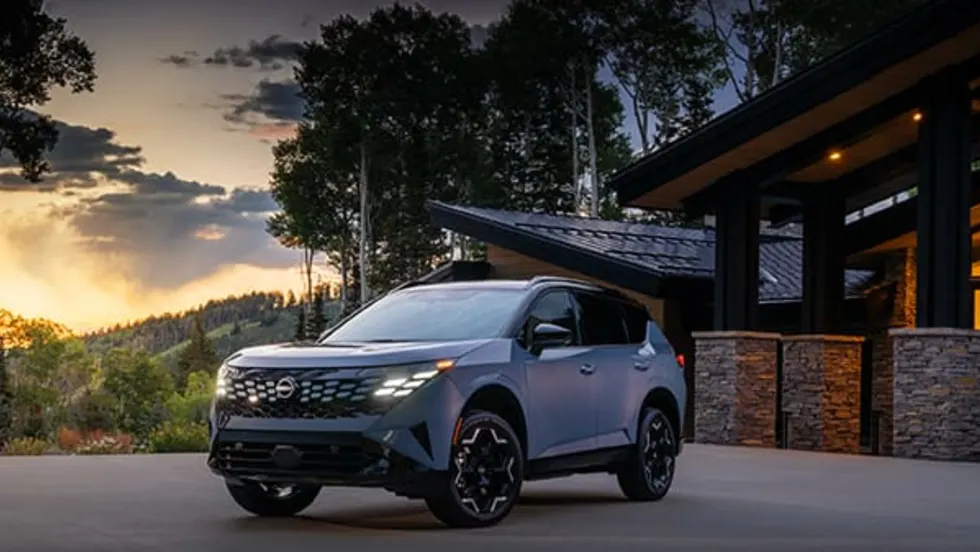
2027 Nissan Rogue Hybrid Adds e-POWER, Standard AWD
The new Rogue Hybrid uses Nissan’s e-POWER system with dual electric motors, offers an estimated 40 mpg and starts at $35,490.
Read More →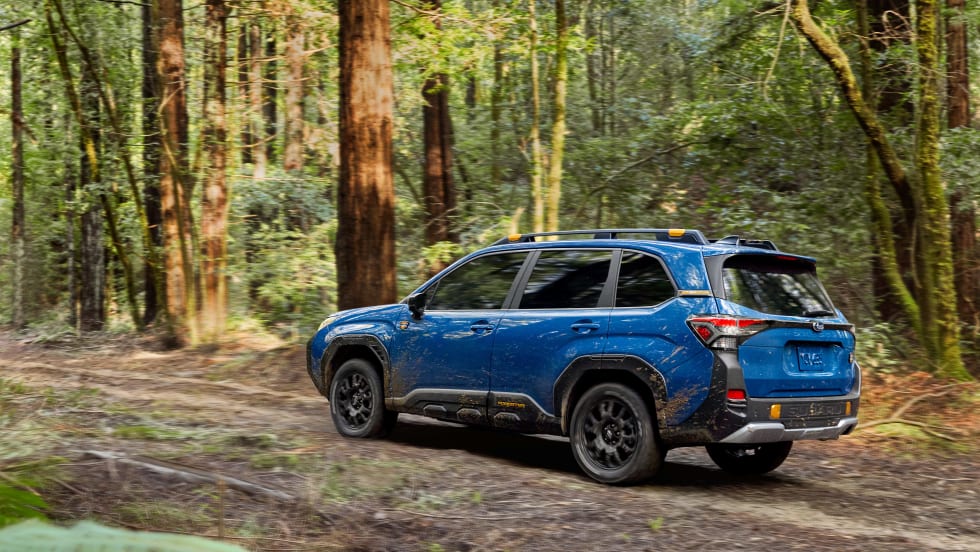
2027 Subaru Forester Adds First Wilderness Hybrid
The 2027 Forester lineup starts at $29,995 and adds a Wilderness Hybrid with 194 combined horsepower and 9.3 inches of ground clearance.
Read More →
EV Realty Names Henrik Holland President as Charging Platform Expands
The former Prologis Mobility and Shell executive will help expand EV Realty’s truck charging business and move its power-first infrastructure model into autonomous vehicle depots and other fleet sectors.
Read More →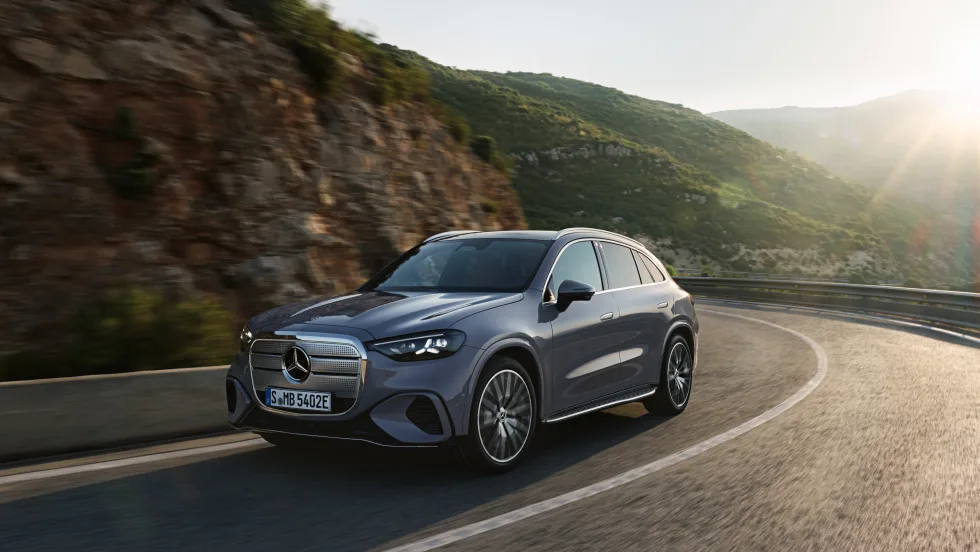
Mercedes-Benz Introduces Electric GLC With Up to 350 Miles of Range
The GLC 400 4MATIC Electric features an 800-volt architecture, 330-kW DC fast charging and a 94-kWh battery, along with Mercedes-Benz's new MB.OS operating system.
Read More →
Fleet Has a Talent Pipeline Problem, not a Talent Problem
Where will the next generation of fleet leaders come from, and what does the industry need to do differently to find them?
Read More →