





Learn More:Where's The Fleet Pain on Tariffs?
2026 MY Vehicle Prices Rise Across The Market
Of 31 major brands tracked by Kelley Blue Book, only five recorded transaction prices in August lower than year-ago levels.
September 10, 2025
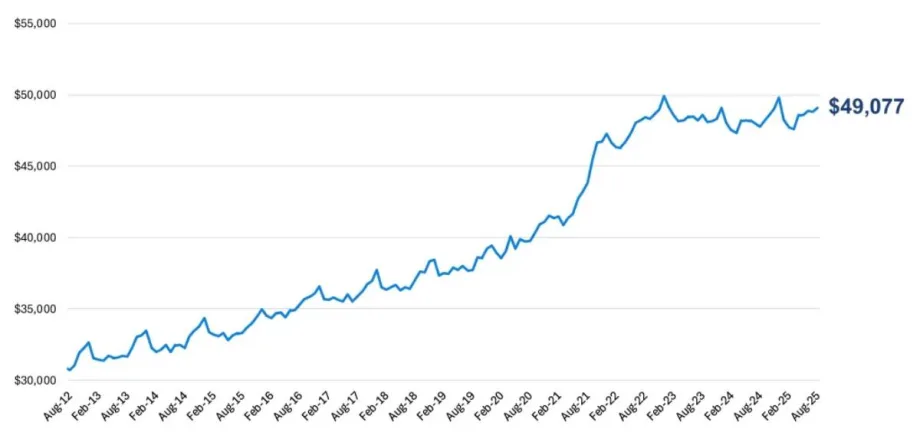
The new-vehicle ATP was $49,077 in August, up 0.5% from July ($48,841) and higher year over year by 2.6%. The annual gain of 2.6% in August was the largest gain in more than two years, although it remains below long-term averages.
Graphic: Cox Automotive
4 min to read
New-vehicle prices moved higher in August as more model year 2026 vehicles hit dealer lots and automakers work to offset higher costs, according to estimates from Kelley Blue Book released Oct. 10.
Price increases accelerated in August as both key measures – average transaction price (ATP) and manufacturer’s suggested retail prices (MSRPs) – increased month over month and year over year. Despite higher prices, retail sales in August climbed by 2.5% versus year-ago levels.
The new-vehicle ATP was $49,077 in August, up 0.5% from July ($48,841) and higher year over year by 2.6%. The annual gain of 2.6% in August was the largest gain in more than two years, although it remains below long-term averages.
The average new-vehicle MSRP – commonly called “the asking price” – in August was $51,099, an increase compared to July and higher year over year by 3.3%, a rate of increase very close to long-term averages and the largest gain in 2025.
Incentives spending softened, falling to 7.2% of ATP in August from 7.3% in July. Compared to a year ago, new-vehicle incentive spending is mostly unchanged. In fact, over the past year, incentive spending has held relatively steady, averaging 7.2% of ATP, with the highest incentive spending in the final months of 2024 and the lowest in April 2025.
Most automakers posted price increases year over year in August. Of 31 major brands tracked by Kelley Blue Book, only five recorded transaction prices in August lower than year-ago levels. Acura (down 6.5%) and Tesla (down 5.5%) led the way, with three Stellantis brands all lower by less than 1%: Dodge, Ram and Chrysler. All other major brands saw prices increase in August. Seventeen brands saw price gains in excess of 3%.
Full-size pickups, now commonly available with EV and hybrid powertrains, continue to push the industry’s ATP higher. Of the 10 best-selling vehicles in the U.S., four are full-sized pickup trucks, with the Ford F-Series ($66,934) and Chevrolet Silverado ($61,023) firmly in the top two spots. The GMC Sierra ($70,150) is No. 7 on the list. The Ram pickup ($65,849) is No. 9. (Note: The Kelley Blue Book ATP is an average of all vehicles sold each month, so big sellers influence the number more than low-volume vehicles.)
“While new-vehicle prices continue their upward trajectory, the pace of change remains relatively measured, more a gradual correction than a seismic shift," said Erin Keating, executive analyst of Cox Automotive, in a Sept. 10 news release. "Costs are clearly increasing for automakers, dealers, and buyers alike. This month’s increase aligns with our expectations, reflecting a market that’s adjusting to new production realities and consumer preferences without tipping into volatility.”
Electric Vehicle Sales Hit New Record in August
Sales of electric vehicles reached a record 146,332 in August, according to initial Cox Automotive estimates. EV share last month was a record 9.9% of total sales and higher than the July share of 9.1%. With government-supported EV tax credits set to expire at the end of September, current sales trends suggest Q3 2025 will set an all-time record for EV sales in the U.S. (The current record is Q4 2024: 365,824.)
The initial estimate of the EV average transaction price in August was $57,245, up 3.1% from the revised lower EV ATP of $55,562 in July. Year over year, EV prices were mostly unchanged, lower by 0.1%. The higher volume of EV sales helped push the overall industry ATP higher as well.
EV incentives in August were down from the July record, but at 16% of ATP, EV incentives remain more than twice as high as the overall market. The average incentive package on a new EV was more than $9,000 in August. A year ago, incentive packages for EVs averaged 13.6% of ATP.
Tesla, the leading EV seller in the U.S. by far, saw ATPs climb 2.9% in August to $54,468. Compared to a year ago, ATPs in August were lower by 5.5%. Tesla’s sales last month were lower year over year by 6.7% and the EV leader’s share of all EV sales in the U.S. fell to 38% last month, the lowest point in the modern EV era.
“The one constant in the automotive business is that fresh product sells well," said Stephanie Valdez Streaty, senior analyst at Cox Automotive. "While Tesla’s Model Y update has slowed the company’s sales decline, it’s not getting easier for the EV pioneer because the market is flooded with all-new, fresh EVs from mainstream competitors — consumers have more choice than ever. The surge in EV sales is being driven by product innovation, motivated dealers, and an urgency ahead of the IRA tax credit phase-out.”
More Vehicle Research

Hall of Fame Inductee: John Dmochowsky
The longtime Mondelēz International fleet executive joins the Automotive Fleet Hall of Fame.
Read More →
Hall of Fame Inductee: Lee Miller
After more than four decades at Boehringer Ingelheim, Lee Miller leaves a legacy built on fleet expertise.
Read More →
Hall of Fame Inductee: Mark F. Petersen
From managing fleets of thousands of vehicles to advancing safety and mentoring fellow professionals, Mark F. Petersen made his mark across both the corporate and supplier sides of fleet.
Read More →
When Charger Downtime Becomes a Fleet Availability Problem
As EV deployments move beyond pilot programs, charger reliability can directly affect vehicle readiness, driver productivity and route scheduling.
Read More →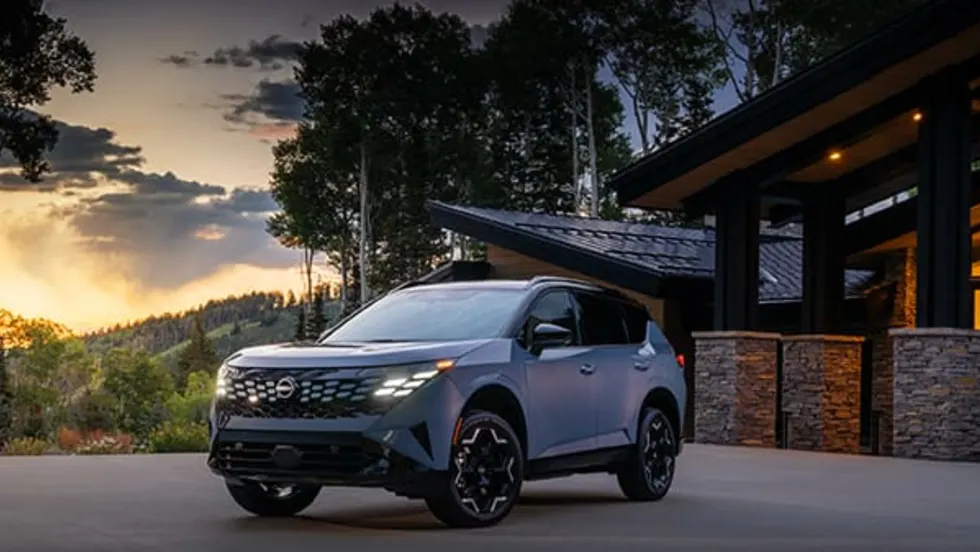
2027 Nissan Rogue Hybrid Adds e-POWER, Standard AWD
The new Rogue Hybrid uses Nissan’s e-POWER system with dual electric motors, offers an estimated 40 mpg and starts at $35,490.
Read More →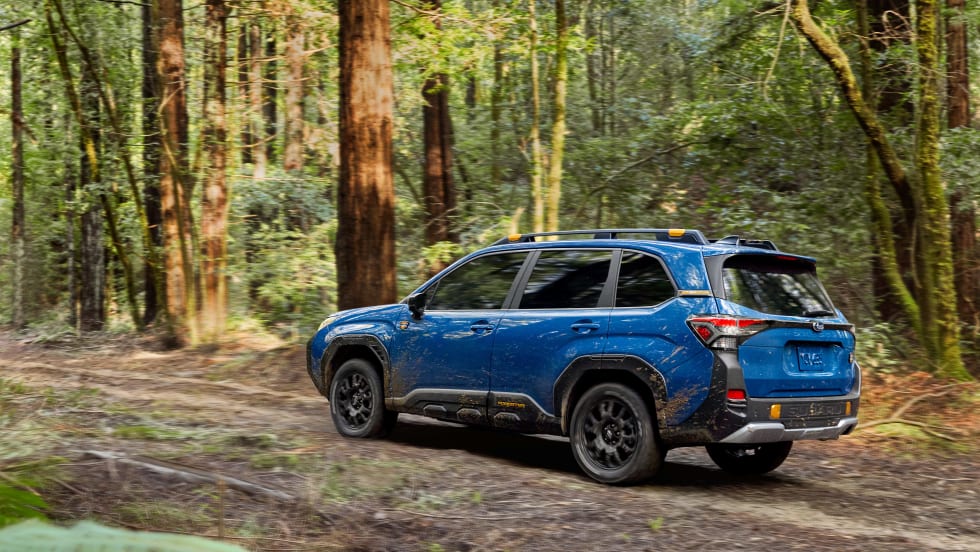
2027 Subaru Forester Adds First Wilderness Hybrid
The 2027 Forester lineup starts at $29,995 and adds a Wilderness Hybrid with 194 combined horsepower and 9.3 inches of ground clearance.
Read More →
EV Realty Names Henrik Holland President as Charging Platform Expands
The former Prologis Mobility and Shell executive will help expand EV Realty’s truck charging business and move its power-first infrastructure model into autonomous vehicle depots and other fleet sectors.
Read More →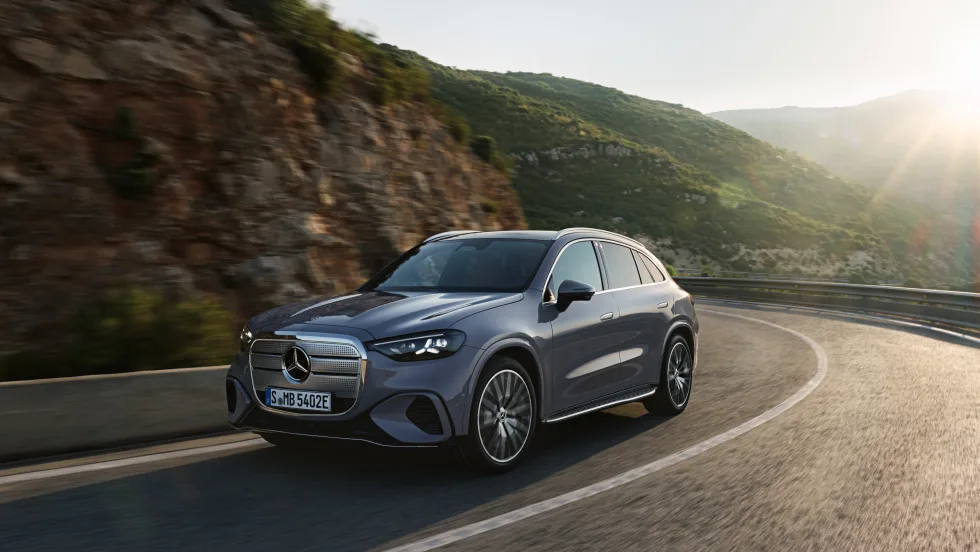
Mercedes-Benz Introduces Electric GLC With Up to 350 Miles of Range
The GLC 400 4MATIC Electric features an 800-volt architecture, 330-kW DC fast charging and a 94-kWh battery, along with Mercedes-Benz's new MB.OS operating system.
Read More →
Fleet Has a Talent Pipeline Problem, not a Talent Problem
Where will the next generation of fleet leaders come from, and what does the industry need to do differently to find them?
Read More →
Fleet Hacks: What Are You Still Doing Manually?
From daily recaps to repeatable workflows, fleet professionals share how AI can cut through busywork while keeping human judgment at the center.
Read More →