





Read More: NTSB Recommends Technology in New Cars to Reduce Speeding
IIHS Requests Automakers, Fleet Operators to Promote Speed Limiters
IIHS is calling on automakers, regulators, and fleet operators to promote technologies to help curb an epidemic of speeding.
December 8, 2023
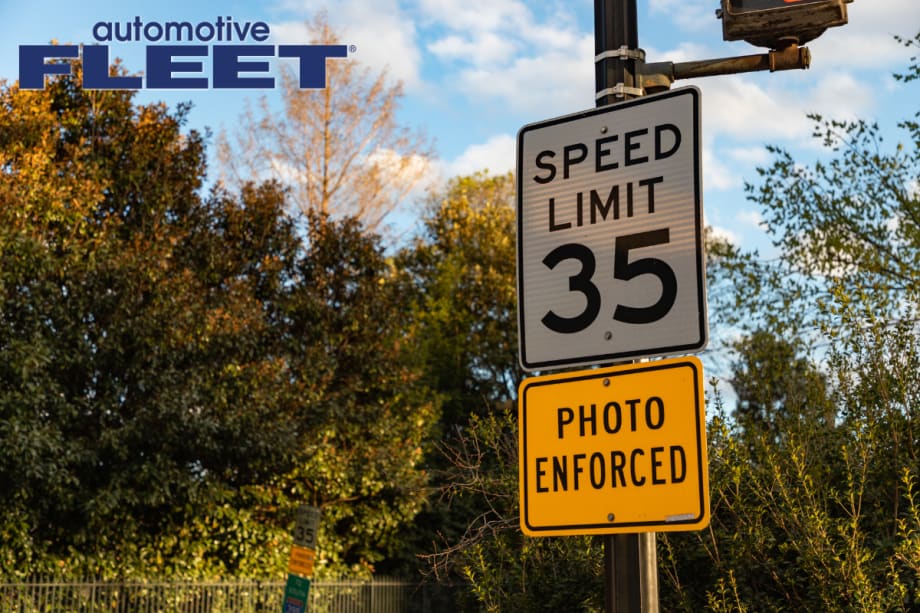
For commercial operators and public fleets, the coalition recommends promoting ISA or speed limiters.
Photo: Canva
2 min to read
The Insurance Institute for Highway Safety (IIHS) and other members of the Road to Zero Coalition are urging automakers, regulators, and fleet operators to promote intelligent speed assistance (ISA) and speed limiters to help curb an epidemic of speeding that has contributed to a spike in traffic deaths since 2020, according to the institute's news release.
“Speeding causes more than a quarter of all crash deaths every year, accounting for more than 12,000 lost lives in 2021,” said Jessica Cicchino, vice president of research at IIHS. “In-vehicle technologies can be an important part of the solution.”
How ISA Works
ISA uses a camera that reads posted signs or GPS mapping software to identify the prevailing speed limit and alerts drivers when they’re going too fast. Some systems also discourage speeding more aggressively by reducing power to the engine once the driver crosses the limit.
For all U.S. drivers, the coalition’s Accelerating Technology Working Group recommends warning-based, or “advisory,” ISA systems as a starting point.
Such systems will be required for all new vehicles in the European Union in 2024. For commercial operators and public fleets, the coalition recommends promoting ISA or speed limiters, which prevent the vehicle from exceeding a preset maximum speed.
Organizations Embracing Technologies
Some organizations already use one or the other, and the goal is to increase the number of fleets that embrace the technologies.
Led by the National Safety Council, the Road to Zero Coalition is committed to reducing traffic fatalities to zero by 2050. IIHS is a member of the steering group, along with other industry associations and safety organizations.
Members will also urge the National Highway Traffic Safety Administration to set performance standards for ISA technology that provides a warning when the vehicle exceeds the speed limit, require all new vehicles to be equipped with ISA, and add an ISA evaluation to the New Car Assessment Program.
The working group also recommended steps to promote both technologies for high-risk groups like repeat speeding offenders and teen drivers. Teens are more likely than any other age group to be speeding when they are involved in a crash, according to the IIHS.
Cars driven by repeat speeding offenders and teens could be equipped with aftermarket ISA systems that reduce power to the engine. Smartphone apps and in-vehicle systems that warn drivers when they exceed a preset speed could also help curb teen speeding.
More Safety

Does Your Fleet's Culture Encourage Distracted Driving?
What happens when the people responsible for enforcing safety rules are the ones setting the wrong example? The answer may reveal why some of the biggest risks to fleet drivers have little to do with what's written in the employee handbook.
Read More →
Sponsored•October 1, 2026
Fleet Manager’s Ultimate Playbook: Navigating the New Standard in OEM Connectivity
Rising operating costs, driver safety concerns, and unplanned downtime are putting unprecedented pressure on modern fleets. Discover how fleet managers use embedded OEM connectivity and real-time vehicle data to cut TCO, prevent downtime, and protect drivers without aftermarket telematics hardware.
Read More →
From Driver Well-Being to EV Charging | AF News Recap
Mental health belongs in the fleet safety conversation. This week, we’re looking at five ways fleets can support employee well-being before a crisis, plus Holman’s expansion in Mexico, new one-day Fleet Forward passes, and why EV charging demand is outpacing infrastructure growth.
Read More →
Nexar-Nauto Merger Aims to Give Fleets Better Safety Intelligence Through Larger Driving Dataset
Stefan Heck tells Automotive Fleet that combining more than 10 billion miles of driving history with Nexar's AI models will give fleets deeper insights into driver risk and roadway conditions than either company could provide independently.
Read More →
Don't Wait for a Crisis: 5 Ways to Build Mental Health Into Your Fleet Safety Program
For Suicide Prevention Month, fleet and safety leaders have an opportunity to put mental health where it belongs: at the center of workplace safety.
Read More →
How Camera Data Can Strengthen a Fleet’s Insurance Renewal
Insights from a commercial insurance carrier and a broker show how fleets can turn video telematic data, driver coaching, and improved claims results into a stronger case at insurance renewal.
Read More →
The Safest Fleets Aren’t the Ones with the Most Technology
You’ve made the telematics investment. Here’s how to capture the other half of its value and build the safest fleet on the road.
Read More →
Sponsored•August 7, 2026
Hidden in Plain Sight: Fleet Compliance Risks
Fleet compliance isn't just about having policies — it's about consistently enforcing them. This practical guide reveals six hidden compliance risks common in public sector and shared fleet operations and outlines proven strategies to improve visibility, accountability, and audit readiness
Read More →
NETS Sets 2026 Fleet Safety Benchmark Conference for Indianapolis
The Sept. 15–17 program will feature fleet benchmarking data, case studies, emerging technologies, and implementation strategies while running alongside the NSC Safety Congress & Expo.
Read More →
Off-the-Job Crashes Account for 43% of Employers’ $61.7 Billion Crash Burden
NETS quantifies costs dispersed across fleet, risk, HR, and other departments while providing new per-crash benchmarks for employers.
Read More →